
You probably already handle rent payments and maintenance requests online, so why is your screening process stuck in the past? The rental industry is evolving, and reusable tenant screening reports are the next logical step in creating a modern, seamless experience. This isn't just a trend; it's a more secure and efficient way to find qualified tenants. When you accept reusable tenant screening report online, you reduce administrative work and give applicants more control over their sensitive data, which builds trust from day one. In this guide, we’ll show you how to make this simple but powerful upgrade to your leasing workflow.
Think of a reusable tenant screening report, also known as a portable tenant screening report (PTSR), as a renter's universal application key. Instead of paying for a new background check every time they apply for a property, a renter can purchase one comprehensive report and share it with multiple landlords. This modern approach streamlines the application process for everyone involved, making it faster and more efficient to find the right tenant for your property.
The traditional screening process can feel clunky. A prospective tenant finds your property, fills out an application, and pays a fee of anywhere from $15 to $40 for you to run their background check. If they're applying to five different places, those fees add up quickly. A reusable report changes the game. The applicant pays once for a report that’s typically valid for 30 days. They can then share that same report with you and other landlords, saving them significant money. This updated process means you get the information you need without the applicant feeling the financial pinch of multiple fees.
Beyond the cost savings, a portable report empowers renters by giving them more control over their personal data. They decide who sees their information and for how long. This level of security and transparency is a huge draw for responsible, high-quality applicants. For you as a landlord, accepting a Portable Tenant Screening Report signals that you're a modern, fair, and efficient property manager. It helps you attract a wider pool of great candidates who appreciate a streamlined and respectful application experience, ultimately helping you fill vacancies with trustworthy tenants faster than ever.
Think of a reusable screening report as a complete rental resume. It’s a single, verified document that gathers all the essential information a landlord needs to make a confident decision. Instead of just a credit score, it provides a holistic view of an applicant's reliability and financial stability. These reports are designed to be comprehensive, pulling together critical data points into one easy-to-understand package. The real power lies in their standardization and trustworthiness. Because the information is sourced directly from official providers like Experian and verified through secure channels, both landlords and renters can be sure it's accurate and current.
For landlords, this means you receive a consistent, high-quality profile for every applicant, making your evaluation process fair and efficient. You no longer have to chase down different documents or try to interpret varied report formats. For renters, it means you can present a full, professional picture of your qualifications without filling out endless applications and paying multiple fees. A Portable Tenant Screening Report typically includes a deep dive into an applicant’s financial health, a thorough background and rental history check, and direct verification of their income. It’s everything you need, all in one place.
A key component of any screening report is a detailed look at the applicant's financial habits. This goes far beyond a simple three-digit credit score. The report includes a full credit history, which tells the story of how a person manages their financial obligations. You’ll see their payment history on loans and credit cards, their total amount of debt, and any significant public records like bankruptcies or collections. This information helps you gauge an applicant's track record of paying bills on time, which is often a strong indicator of their ability to pay rent consistently. Our comprehensive reports provide this complete context, allowing you to make a fair and well-rounded assessment.
Beyond the financials, a reusable report provides crucial background information to help you protect your property and ensure a safe environment for all tenants. This section typically includes a nationwide criminal background check and a search for any prior evictions. An eviction history check reveals if an applicant has ever been legally removed from a property for violating a lease agreement, such as for non-payment of rent. The criminal background check screens for relevant convictions in accordance with local and federal laws. By providing this information in a standardized format, the report helps you perform your due diligence consistently and fairly for every applicant, simplifying your risk management process.
Perhaps the most important question a landlord has is, "Can this applicant afford the rent?" A reusable screening report answers this with reliable, verified data. Instead of relying on paper pay stubs, which can be easily altered, modern reports use secure technology to verify income directly from the source. This often involves a payroll report that confirms regular deposits from an employer or a cash flow analysis of the applicant's bank account. This analysis provides a clear picture of their income streams and spending habits, confirming they have a stable financial foundation to handle monthly rent payments. This direct verification gives you confidence in the applicant's stated income and protects their sensitive information with bank-level security.
Adopting reusable tenant screening reports is more than just keeping up with new laws; it’s a strategic move that can significantly improve your rental business. By making the application process simpler and more affordable for renters, you create a better experience that directly benefits you as a landlord or property manager. This simple shift can help you fill your properties faster, attract more qualified applicants, and reduce your administrative workload. It’s a modern approach that creates a win-win scenario, setting the stage for a positive landlord-tenant relationship from the very beginning.
Every day a property sits empty, it costs you money. Reusable screening reports help you shorten that vacancy period by removing friction from the application process. When prospective tenants can use a single, comprehensive report for multiple applications, they can submit their information to you instantly, without the delay of filling out new paperwork and paying another fee. This streamlined approach means you receive more completed applications in less time. In busy rental markets, this gives you a larger pool of qualified candidates to choose from, allowing you to find the right tenant and sign a lease much faster.
The best tenants are often the most prepared, organized, and financially savvy. These are the applicants who appreciate efficiency and respect for their time and money. By accepting a portable screening report, you signal that you are a modern, fair, and considerate landlord. This simple policy can make your rental listing stand out from the competition. It shows applicants you value their privacy by giving them more control over their personal information. This small change can make a big difference, attracting a higher caliber of applicants who are serious about finding their next home and more likely to be responsible tenants.
Let's talk about two of your most valuable resources: time and money. Reusable reports help you save both. Since the applicant purchases their own report and shares it with you, you no longer have to handle application fees or pay for screening services out of pocket. This is a significant shift from the traditional model, where applicants might pay $15 to $40 for every single application. You also save valuable administrative time. The process for landlords is simplified because applicants are responsible for managing their reports, freeing you from the work of collecting data and running checks yourself so you can focus on managing your properties.
Reusable reports are a fantastic way to make your application process more efficient, but it’s important to remember that your legal responsibilities as a landlord don’t change. Staying compliant isn't just about ticking boxes on a form; it's about protecting your business, building trust with applicants, and ensuring a fair process for everyone. When you accept a portable screening report, you're still handling sensitive information that influences someone's ability to find a home, so treating that data with care is essential.
Think of compliance as your framework for making sound, legal, and ethical decisions. While the report itself is generated by the applicant, you are the one using it to make a rental decision, which means you must adhere to all relevant regulations. The good news is that services like Portable Tenant are built with compliance in mind, helping you meet your obligations without adding extra work to your plate. By understanding the specific laws in your area, upholding fair housing standards, and prioritizing data protection, you can confidently integrate reusable reports into your workflow. Let’s walk through the three main pillars of compliance you need to keep in mind to ensure your process is both smooth and legally sound.
The rules around reusable tenant screening reports can vary significantly depending on where your property is located. Some states, like Colorado, have laws that require landlords to accept them, while others simply permit their use. Because these regulations can differ from state to state, and even city to city, you can't assume a one-size-fits-all approach. Before you start accepting portable reports, take some time to research the specific landlord-tenant laws in your jurisdiction. If you’re ever unsure, it’s always a smart move to consult with a local attorney who specializes in property law to get clear, accurate advice for your situation.
Accepting a reusable report doesn’t change your obligations under the Fair Housing Act. Your screening criteria must be applied consistently and fairly to every single applicant, regardless of where their report comes from. This means you cannot discriminate based on race, color, religion, sex, national origin, familial status, or disability. If you decide to deny an applicant based on information found in their screening report, you are also required by the Fair Credit Reporting Act (FCRA) to provide them with an adverse action notice explaining the decision. This ensures transparency and gives the applicant a chance to dispute any inaccuracies.
One of the biggest advantages of a reusable report is how it handles sensitive information. Platforms like Portable Tenant are designed with bank-level security, and the applicant maintains control over who sees their data. This actually reduces your risk as a landlord. Since you receive the report through a secure portal and don't have to collect or store documents with Social Security numbers or bank details, you minimize your liability. The process ensures the applicant’s personal information is protected, and you get the verified information you need without the burden of storing it securely yourself. It’s a win-win for privacy and peace of mind.
Accepting a reusable tenant screening report is a smart move, but just like any part of the rental process, it requires a bit of due diligence. You still need to make sure the information is accurate, current, and from a trusted source. Think of it as a quick quality check that protects you, your property, and the applicant. Verifying a report doesn't have to be complicated. By focusing on a few key areas, you can confidently review the information and keep your leasing process moving smoothly and securely.
First things first, look at where the report came from. A legitimate report will always be from a reputable screening provider. You’ll also want to check the date it was generated. Most reusable reports are considered valid for about 30 days, so confirming it’s current ensures you’re seeing the most up-to-date information. At Portable Tenant, our reports are powered by Experian and designed for easy verification, giving you peace of mind that the data is both secure and reliable. A quick check of the source and date is your first line of defense in ensuring a trustworthy screening process.
Once you’ve confirmed the source, take a moment to compare the report’s details with the information on the rental application. Do the names, dates, and histories line up? Small discrepancies can happen, but significant differences in job or rental history are worth a closer look. It’s also a good practice to independently verify a few key details, like contacting the current employer or previous landlord listed. This step isn’t about distrust; it’s about being thorough. Cross-referencing information helps you build a complete picture of the applicant and ensures you’re making a decision based on accurate information.
While fraud is a concern for some property managers, you can easily spot potential issues. Be on the lookout for reports that seem incomplete or have major sections missing, like income verification or a background check. You have the right to reject a report if it’s more than 30 days old or if it doesn’t meet your standard screening criteria. A professional report should be comprehensive. If anything feels off, don’t hesitate to ask the applicant for clarification or additional documentation. Knowing what to look for helps you protect your investment while still embracing the efficiency of reusable reports.
Adopting any new process comes with a learning curve, and accepting reusable screening reports is no different. While they offer incredible benefits, you might have questions about a few practical details. The good news is that the most common challenges are easy to manage once you know what to look for. Let's walk through how to handle concerns about fraud, outdated information, and varying report formats so you can feel confident in your screening process.
It’s completely understandable to worry about fraud when you receive a report directly from an applicant. Your top priority is protecting your property, and you need to trust the information you’re given. The key to peace of mind is verifying the report’s source. A legitimate report will come from a reputable screening company, not a document someone created themselves. Reputable providers like Portable Tenant issue secure, verifiable reports that can be traced back to them. Always check for a direct link to view the report on the provider’s website or look for other security features that confirm its authenticity. This simple step ensures you’re working with credible, unaltered data.
A screening report is a snapshot in time, and an applicant's financial and rental situation can change. That’s why most reusable reports are considered valid for about 30 days. Accepting a report older than that means you could be making a decision based on outdated information. To handle this, establish a clear policy in your rental criteria stating the maximum age for any report you’ll accept, which is typically 30 days. This protects you and sets clear expectations for applicants from the start. When you receive a report, the first thing you should check is the date it was generated. This ensures you’re getting a current and relevant picture of the applicant’s qualifications.
Since applicants can get their reusable reports from various providers, you’ll likely see a few different layouts. This can feel inconsistent at first, but the core information should always be there. A comprehensive reusable tenant screening report will always include the essentials: a credit check, nationwide criminal history, and an eviction report. Get familiar with what a complete report looks like so you can quickly spot if anything is missing. While the design may vary, your screening standards shouldn't. As long as the report contains all the information you need to make an informed decision, the format itself is secondary. Focus on the quality and completeness of the data provided.
Once you’re ready to accept reusable screening reports, you need to let prospective tenants know. Clear communication is key to attracting qualified applicants and making your rental process as smooth as possible. Being upfront about your policy not only saves everyone time but also positions you as a modern, considerate landlord. By advertising that you accept portable reports, you’ll appeal to organized renters who are ready to move quickly.
There are several simple yet effective ways to get the word out. You can update your online listings, mention it during property tours, and provide formal written guidelines. Integrating these steps into your process ensures every potential applicant knows they have a more convenient and affordable option when applying for your property. This transparency builds trust from the very first interaction and helps you fill vacancies faster.
Your property listing is the first place potential tenants will look for information, so it’s the perfect spot to announce your policy. Most states with portable screening laws actually require you to tell applicants upfront if you accept reusable reports. A simple line in your listing description is all it takes.
Consider adding a clear and friendly statement like, “We accept reusable tenant screening reports to save you time and money,” or simply, “Portable screening reports welcome.” This small addition can make your property stand out on crowded listing sites. It signals to renters that you value their resources and are easy to work with, which can attract a wider pool of responsible applicants. You can also direct them to our page for landlords if they have questions about the process.
A property showing is your chance to connect with a potential renter and build rapport. It’s also an excellent opportunity to mention your acceptance of reusable screening reports in person. While you’re walking them through the property, you can bring it up naturally in conversation.
For example, when discussing the application process, you could say, “To make things easier, we accept portable screening reports. If you already have one from a trusted provider, you can submit it with your application.” This personal touch shows that you’re transparent and accommodating. It opens the door for questions and clarifies the application steps right away, helping you and the applicant get on the same page from the start.
To ensure there’s no confusion, it’s best to provide your screening criteria in writing. In fact, many jurisdictions require landlords to give applicants their rental rules, such as minimum income or credit score requirements, before accepting an application fee. This is the perfect document to include your policy on reusable reports.
Create a simple handout or a dedicated page on your website that outlines your criteria. Specify that you accept reusable reports, what information they must contain (credit, criminal, and eviction history), and that they must be recent, typically within the last 30 days. This document not only keeps you compliant with fair housing standards but also sets clear expectations for every applicant, ensuring a fair and consistent process for everyone.
Adopting reusable tenant screening reports is a fantastic move, but to really get the most out of them, it helps to have a solid game plan. A clear and consistent process not only makes your life easier but also creates a better experience for potential renters. Think of it as setting up the foundation for a smooth and efficient leasing cycle. When applicants know what to expect and your team handles every report with confidence, you’ll find you can fill vacancies faster with qualified tenants.
The best approach comes down to three key areas: establishing clear policies, making sure your team is on the same page, and fitting the process into your existing workflow. By focusing on these practices, you can confidently accept reusable reports while maintaining your screening standards and staying compliant. It’s all about working smarter, not harder, to build a system that benefits both you and your future tenants. This approach helps you stay organized and positions you as a modern, fair-minded landlord, which is a huge draw for top-tier applicants.
The first step is to be upfront about your process. Most states with portable screening laws actually require you to tell applicants that you accept reusable reports, so it’s a good idea to create a clear policy from the start. This transparency builds trust and shows applicants you’re running a professional operation. Your policy should outline which reports you accept, the maximum age of the report (e.g., 30 days), and any other requirements you have. Put this information directly in your rental listings and on your application forms. When everyone knows the rules, it cuts down on confusion and saves time for both you and the applicant.
If you have a leasing team, consistency is key. Make sure everyone who interacts with applicants understands your policy on reusable reports and knows how to handle them. This includes knowing how to verify a report’s authenticity and what to do if an applicant has questions. It’s also important to stay current on local tenant screening laws to ensure your process is always fair and effective. Holding brief, regular training sessions can help your team feel confident and equipped to manage reusable reports properly. This ensures every applicant receives the same great experience and that you’re always operating in compliance.
To make accepting reusable reports truly seamless, you’ll want to integrate them into your existing workflow. Manually tracking reports can get messy, so finding a way to fold them into your property management system or digital application process is a game-changer. A streamlined system helps you stay organized, review information efficiently, and keep everything documented in one place. This is exactly how it works with a fully managed screening service. By combining reusable reports with a smart system, you can maintain high standards, get reliable information, and keep your rental process moving smoothly from start to finish.
Adopting reusable screening reports doesn't mean you have to reinvent your entire leasing process. It’s about making a few smart adjustments to your current system. By updating your workflow, using smart verification methods, and sticking to your standards, you can easily integrate portable reports and start seeing the benefits right away. These simple steps will help you stay compliant, attract great tenants, and streamline your operations.
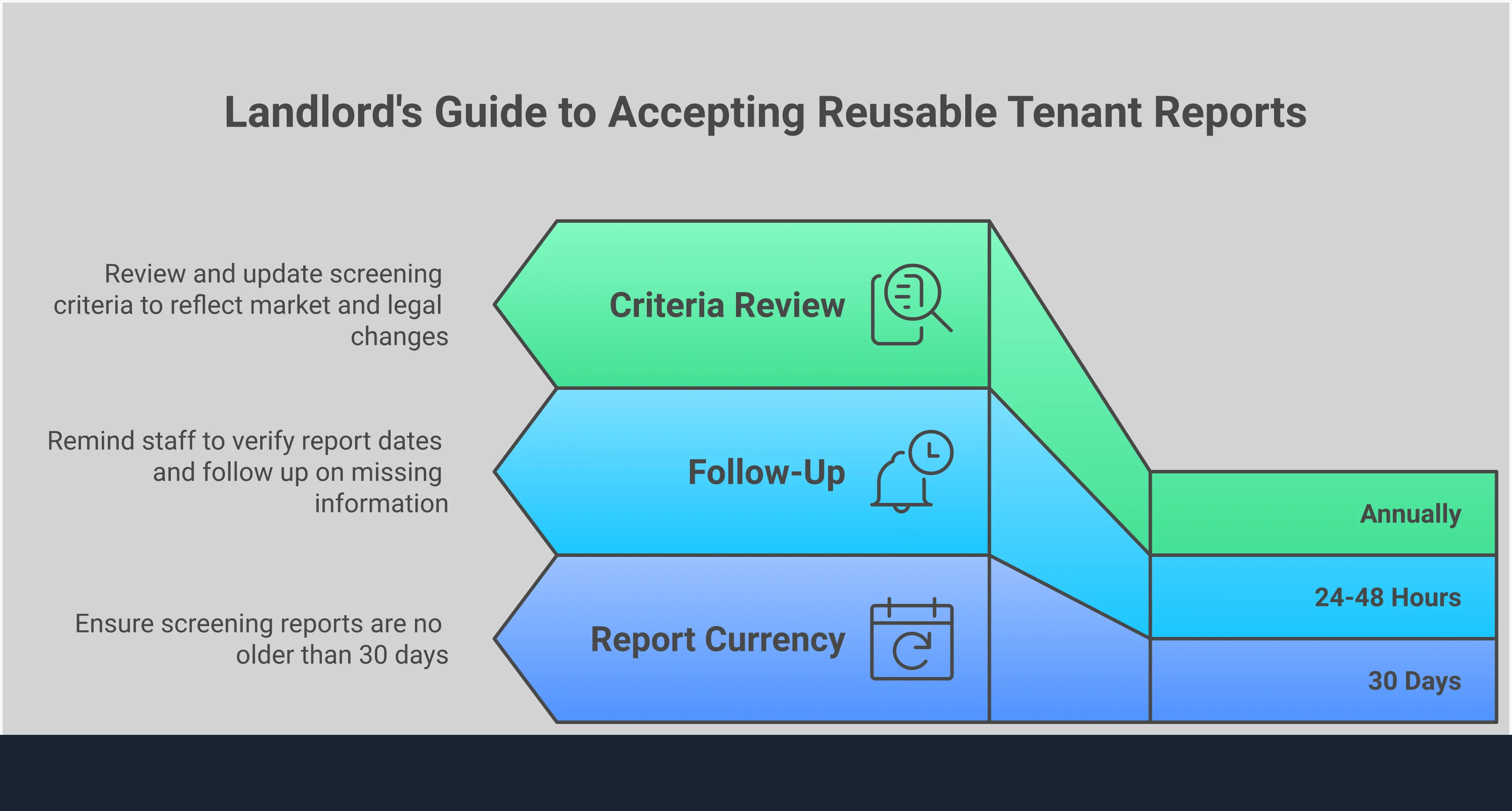
The first step is to let applicants know you accept reusable reports. In states like Colorado, landlords are now required to inform prospective tenants that they can provide their own screening report. The easiest way to do this is by updating your rental listings and application materials to include a clear statement. For example, you could add a line like, "We accept portable tenant screening reports." This simple update ensures you’re compliant and shows applicants you’re a modern, flexible landlord. It sets a transparent tone from the start and can make your property more appealing to organized, prepared renters.
Accepting a reusable report doesn't mean you skip your due diligence. Think of the report as a comprehensive starting point. You should still verify the most critical information yourself. For instance, take a few minutes to call the employer and previous landlord listed on the application to confirm the details match. It's wise to "look closely at reusable reports for any red flags, like dates that don't match up or gaps in rental or job history." Cross-referencing key details gives you peace of mind and ensures the information is accurate and up-to-date.
Using reusable reports shouldn't change your core rental criteria. Your standards for income, credit history, and rental background should remain the same for every applicant. This is a great opportunity to review your screening policies and make sure they are clear, fair, and applied consistently. Having a written policy helps you make objective decisions and stay compliant with fair housing laws. By focusing on your established criteria, you can confidently evaluate every applicant equally, whether they use a portable report or go the traditional route.
Am I legally required to accept a reusable screening report? This depends entirely on your location. Some states, like Colorado, have specific laws that require landlords to accept portable reports that meet certain criteria. However, even if it’s not mandated in your area, accepting them is a smart business decision. It makes your property more attractive to top-tier applicants and streamlines your leasing process, which benefits you regardless of local regulations.
How can I be sure the report an applicant provides is legitimate? This is a valid concern, but it’s easy to manage. A legitimate report will always come from a reputable, third-party screening service, not a document the applicant created themselves. Look for reports that are shared through a secure online portal or have clear branding from a trusted provider. A quick check of the source is your best tool for confirming the information is authentic and unaltered.
What if the report seems old? Is there a time limit on its validity? Yes, a screening report is only a snapshot in time. The industry standard is that a report is considered current and valid for about 30 days from the date it was generated. It's a good practice to establish a clear policy in your written rental criteria stating that you will only accept reports created within the last 30 days. This ensures you are making decisions based on the most recent information available.
Does it cost me anything to accept a reusable report? No, it actually saves you time and money. With a reusable report, the applicant pays a one-time fee to the screening provider and then shares the report with you. This means you no longer have to collect application fees or pay for screening services yourself. It removes the administrative work of handling payments and running checks, freeing you up to focus on other aspects of your business.
If I accept a reusable report, do I have to change my screening standards? Not at all. Your rental criteria for things like income, credit history, and background should remain exactly the same for every applicant. The source of the report doesn't change your standards. Applying your criteria consistently is essential for complying with fair housing laws and ensuring you make objective, fair decisions for everyone who applies to your property.