
In the past, verifying a tenant's address meant collecting paper utility bills or photocopies of a driver's license—a process that was both clunky and not very secure. Today, there are much smarter and safer ways to confirm an applicant's information. Using modern tools not only streamlines your workflow but also gives you greater confidence that the details you have on file are accurate. A secure, digital process to check a tenant's registered address respects their privacy while giving you the verified information you need for a smooth tenancy. We’ll explore the most effective and compliant methods available, from comprehensive screening reports to other digital verification tools, so you can manage your properties more efficiently.
Think of a tenant's registered address as their official point of contact for your entire landlord-tenant relationship. It’s the address they provide on their application and lease, and it’s where you’ll send any and all important correspondence. This isn't just about sending a holiday card; this address is the cornerstone of legal and administrative communication. From rent reminders and maintenance updates to more serious legal notices, this is the address that counts.
Having the correct registered address on file is crucial for maintaining a clear line of communication and fulfilling your duties as a landlord. It ensures that your tenant receives critical information in a timely manner, which can prevent simple misunderstandings from escalating into complicated disputes. If you ever need to send certified mail or official court documents, using the registered address is a non-negotiable step to prove you’ve made a good-faith effort to contact them. It’s a simple piece of information that carries significant weight, protecting both you and your tenant throughout the lease term and even after they move out. Without it, you risk notices being undelivered, deadlines being missed, and finding yourself on the wrong side of a legal issue simply because of a communication breakdown.
As a landlord, you’re entrusted with sensitive personal information, and you have a legal duty to protect it. Tenant confidentiality laws are clear: you cannot share one tenant's personal details, including their address, with another tenant or an unauthorized third party without their explicit consent. This information must be handled with care to respect your tenant’s right to privacy. This obligation extends beyond just their address; landlords are also prohibited from monitoring or spying on tenants while they are using the property. Upholding these privacy standards isn’t just good business—it’s the law.
When you need to send an important letter, you have to be certain it will reach your tenant. The registered address is essential for delivering official notices, such as letters about late rent, lease violations, or eviction proceedings. Using this address for certified mail creates a paper trail that can be vital if a dispute ends up in court. It proves you followed the proper channels for communication. Remember, it’s also a violation of privacy laws to open or read mail addressed to someone else, even a former tenant. Always forward their mail or return it to the sender to maintain professional and legal boundaries.
Your responsibilities don’t end when a tenant hands over the keys. After they move out, you’ll need their new forwarding address to return their security deposit, a process governed by strict state deadlines. Asking for this address during the move-out inspection is the best way to ensure you can send their deposit back promptly and avoid potential legal penalties. This forwarding address is also necessary for sending any final utility bills or important documents that may arrive after they've left, such as W-2s or other tax forms. Handling this final step correctly helps you close out the tenancy on good terms.
Confirming a potential tenant's address is a fundamental step in the screening process. It helps protect you from fraud and ensures you have accurate contact information for legal notices, returning a security deposit, or any other official communication down the line. While it might seem straightforward, there are several ways to approach it, each with its own pros and cons. Let’s walk through the most common methods so you can choose the one that best fits your needs while keeping the process smooth and compliant for everyone involved.
The traditional way to verify an address is by requesting official documents. You can ask an applicant to provide a copy of their driver’s license, a recent utility bill, or a bank statement. These are often called Proof of Address (PoA) documents and are standard practice for many types of verification. While this method is widely understood, it has its downsides. It puts the burden on the applicant to gather and send sensitive paperwork, and there's always a risk of documents being outdated or even fraudulent. It’s a decent starting point, but more secure and efficient methods are now available.
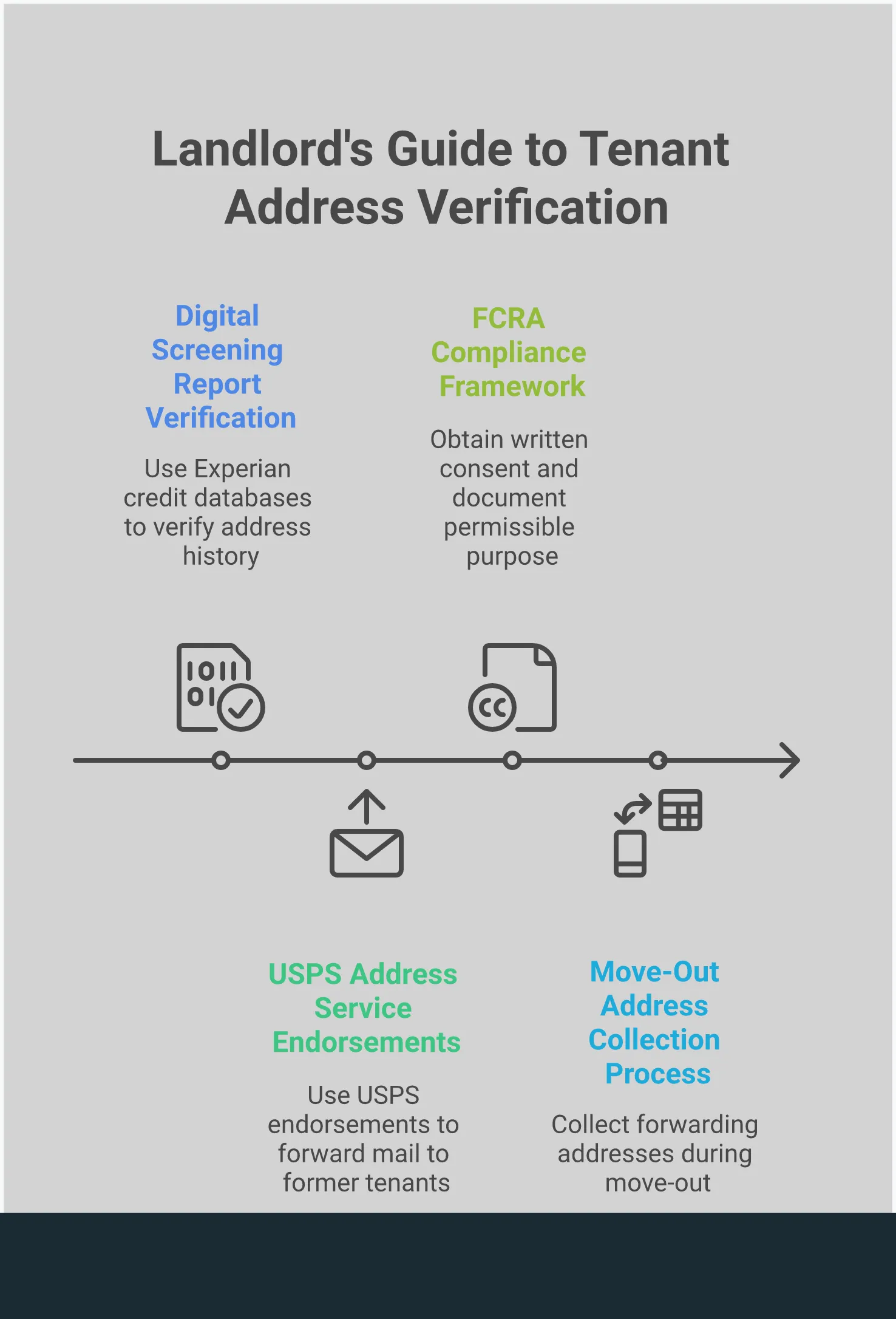
A comprehensive screening report is the most reliable way to verify an address. Instead of collecting paper documents, you can use a service that pulls verified information directly from trusted sources. For example, a Portable Tenant Screening Report includes an Experian credit report, which contains a detailed address history. Using digital tools for background checks makes the process simpler, faster, and more secure for everyone. The applicant has full control over their data, and you receive a verified, compliant report without having to handle sensitive documents yourself. This approach streamlines your workflow and gives you greater confidence in the information you receive.
Another modern option is to use specialized identity verification software. These tools work by cross-referencing an applicant's information with official databases. Instead of asking for paper bills, this software can get address information from sources like credit records or the electoral roll. This is a quick and effective way to confirm that a person is who they say they are and that their address is legitimate. While these services are powerful, they often focus solely on identity, so you may still need a separate report to get the full picture of an applicant's rental and financial history.
For a more hands-on approach, you can search public records yourself. Addresses might be found in legal documents from lawsuits, property records, or other government databases. This method can sometimes uncover information you wouldn't find elsewhere, but it comes with significant drawbacks. It’s time-consuming, and the information you find can be outdated or incomplete. You also have to be extremely careful to respect privacy laws and FCRA regulations when gathering information this way. For most landlords, relying on a professional, compliant screening service is a much safer and more efficient choice.
Verifying a tenant's address isn't just about finding the right information—it's about handling that information legally and ethically. As a landlord, you're responsible for protecting your tenant's personal data, and a misstep can lead to serious legal trouble. Following a few key principles will help you stay on the right side of the law, build trust with your tenants, and run your business smoothly. Think of it as a framework for respectful and responsible property management. When you prioritize compliance, you protect both your tenant and your investment.
The Fair Credit Reporting Act (FCRA) is a federal law that regulates how consumer credit information is collected, accessed, and used. If you use a third-party service to run a background or credit check on an applicant, you must comply with the FCRA. This means you need a “permissible purpose,” like screening a rental application, to access their report. You can't pull someone's information out of simple curiosity. Since these reports often contain address histories, using them for verification purposes places you squarely under these rules. Always ensure your screening process is FCRA-compliant to avoid hefty fines and legal action.
Beyond the FCRA, you have a general obligation to protect your tenant's privacy. Their address, Social Security number, and financial details are all sensitive personal information that must be kept confidential and secure. Many states and even cities have their own landlord-tenant laws that provide additional protections for renters. These rules can govern everything from how you store tenant files to what information you can share. Staying informed about the specific regulations in your area is essential. Using a secure, compliant platform helps ensure you meet these standards and treat your tenant's data with the care it requires.
The simplest way to avoid legal issues is to be transparent and get permission. Before you run any background checks or attempt to verify personal information, you should obtain clear, written consent from the applicant. This is typically done as part of the rental application itself. By having the tenant authorize the screening process, you create a clear record that you have a permissible purpose under the FCRA. This step is fundamental to a trustworthy landlord-tenant relationship. Services like Portable Tenant are built on this principle, empowering renters to share their information securely and with full consent.
What happens when you receive mail for a former tenant? This is a common situation, but it's also a legal minefield. It is a federal offense to open, destroy, or intentionally hold mail that isn't addressed to you. If you have a forwarding address, you can simply forward the mail to your previous tenant. If you don't, write “Not at this address” or “Return to sender” on the envelope and place it back in the mail. Never open it or throw it away. Handling a former tenant's mail with respect and confidentiality is a critical part of your legal duty to protect their privacy, even after they've moved out.
There are times when a tenant moves out, and you realize you don’t have their new address. This can become a real headache, especially when you need to handle the security deposit, send a final statement of charges, or follow up on unpaid rent. Staying on top of these loose ends isn't just good practice; it's often a legal requirement. Failing to properly return a security deposit or provide an itemized list of deductions within your state's deadline can lead to significant penalties.
Fortunately, you have several options for tracking down a former tenant's new address. The best method depends on your specific situation, from how cooperative the tenant was when they left to whether you need to take legal action. We’ll walk through the most effective strategies, starting with the simplest and moving to the more advanced options for when you’ve hit a dead end. Think of this as your step-by-step guide to finding the information you need so you can close out the tenancy professionally and legally.
The easiest and most straightforward way to get a former tenant’s address is to ask for it before they’re even a former tenant. Make it a standard part of your move-out process. During the final walkthrough or when they come to drop off the keys, simply ask for their forwarding address. Most tenants will provide it without any issue, as they know you need it to mail their security deposit refund.
To make this even smoother, include a line for their new address on your move-out checklist or a formal forwarding address form. Having them write it down and sign it creates a clear record and reduces the chance of errors. This simple step can save you a ton of time and effort later on.
If your tenant left without providing a new address, the U.S. Postal Service can be a surprisingly effective and low-cost tool. If you suspect the tenant filed a change of address, you can send a letter to their old rental unit and write “Address Service Requested” below the stamp. For a small fee, the USPS will forward the mail to the tenant’s new location and send you a notification with their new address.
This is one of several Ancillary Service Endorsements the USPS offers. It’s a simple trick that many seasoned landlords use to get the information they need for official correspondence. It only works if the tenant has officially updated their address with the post office within the last year, but it’s often worth a try before moving on to more expensive methods.
When you’ve exhausted other options and the stakes are high—for instance, if you need to serve legal papers for eviction or collect a large debt—it might be time to hire a professional. A private investigator (PI) or a process server can perform what’s known as skip tracing to locate your former tenant. These professionals have access to specialized databases and resources that aren't available to the public, allowing them to find people quickly and efficiently.
While it might sound expensive, hiring a professional can be more affordable than you think, sometimes costing less than $100. This is a serious step, so it’s best reserved for situations where you have a compelling financial or legal reason to find the tenant and other methods have failed.
Your final option is to turn back to the original rental application. The emergency contacts and personal references the tenant provided can be a valuable resource. When you reach out, it’s crucial to be polite, professional, and discreet. You can simply explain that you are the tenant’s former landlord and need to mail them important documents, such as their security deposit disposition.
Avoid discussing any sensitive information, like unpaid rent or damages. Your only goal is to obtain a current mailing address. People are generally more willing to help if the request seems routine and non-confrontational. Remember to respect their privacy and keep the conversation brief and to the point. This method should be used as a last resort after you've tried less intrusive options.
Discovering you have the wrong address for a current or former tenant can be incredibly frustrating, especially when you need to send important documents like a security deposit refund or a notice to pay. But don't panic—you have clear, legal steps you can take to manage the situation and protect yourself. It all comes down to handling returned mail properly, documenting everything, and knowing your options for more serious issues like recovering unpaid rent. Taking a few preventative steps can also save you a lot of headaches down the road.
If mail for a former tenant shows up at your property, your first instinct might be to open it to look for clues. Resist that urge. Opening mail addressed to someone else is a federal offense and a serious violation of privacy laws. The correct and legal way to handle it is simple: write "Return to Sender" or "Not at this Address" clearly on the front of the envelope and place it back in a mailbox. You can’t file a change of address on their behalf; only the tenant or their legal representative can authorize that change. By returning the mail, you’re doing your part without overstepping any legal boundaries.
When you send a legal notice or your tenant’s security deposit statement, meticulous record-keeping is your best friend. If you suspect the address is incorrect or if mail gets returned, you need to prove you made a good-faith effort to communicate. Keep digital and physical copies of every notice you send and take a photo of the sealed, stamped envelope before you mail it. If a piece of mail comes back, keep it in your files—unopened. This paper trail is crucial evidence if you end up in court, as it demonstrates you followed proper procedures and did everything in your power to reach the tenant at their last known address.
What if a tenant leaves owing you money and seems to have vanished? An incorrect address complicates things, but it doesn’t mean you’re out of options. Even if you can't find a new address, you can still start court proceedings or send the debt to a collection agency. These professionals often have access to tools that can locate people. While serving someone with a lawsuit is easier with a current address, courts have alternative procedures for these situations. Don’t write off the debt immediately. Talk to a legal professional or a reputable collection agency to understand the best path forward.
The easiest way to deal with an incorrect address is to avoid the problem in the first place. Many landlords find themselves needing a former tenant's new address to take them to small claims court after they’ve already left. Make collecting a forwarding address a non-negotiable part of your move-out process. Include a specific spot for it on your move-out checklist. You can also start the tenancy off on the right foot by using a comprehensive screening service. A Portable Tenant Screening Report, for example, provides verified information from the start, creating a more reliable foundation for your landlord-tenant relationship.
What's the most reliable way to verify a tenant's address from the start? While asking for a copy of a utility bill or driver's license is a common practice, the most secure and efficient method is to use a comprehensive screening report. A service that pulls information directly from a credit bureau like Experian gives you a verified address history without you having to handle sensitive personal documents. This approach streamlines the application process and gives you greater confidence that the information is accurate and up-to-date.
What should I do if a tenant won't provide a forwarding address when they move out? This can be tricky, but you have options. A great first step is to send a letter to their old address with "Address Service Requested" written on the envelope. If the tenant filed a change of address with the post office, the letter will be forwarded, and you'll receive a notice with their new location. If that doesn't work and you need to send legal documents or a final bill, you can then try reaching out to the references they provided on their initial application.
Can I send official notices like a rent reminder or eviction notice via email or text? While email and text are perfect for casual communication like scheduling maintenance, you should be very cautious about using them for official notices. Most state laws have strict requirements for how legal documents must be delivered, and this often means certified mail sent to the tenant's registered address. Using the proper channels creates a legal paper trail that protects you if a dispute ever arises. Always check your local landlord-tenant laws to be sure.
What's the first thing I should do if mail I sent to a tenant is returned as undeliverable? The most important thing is not to open it. Keep the unopened, returned envelope in the tenant's file. This serves as proof that you made a good-faith effort to contact them at their last known address. After that, you should document the date the mail was returned and begin taking other steps to find a correct address, especially if the correspondence is time-sensitive, like a security deposit disposition.
Is it okay to contact a tenant's emergency contact if I can't reach the tenant? This should be treated as a last resort after you've tried all other direct methods of communication. If you do decide to reach out, be professional and discreet. Simply explain that you are the tenant's former landlord and need to send them an important document. You should never discuss sensitive details like unpaid rent or damages with the emergency contact. The sole purpose of the call is to obtain a current mailing address.