
Applying for a new apartment means sharing some of your most sensitive personal information, from your Social Security number to your entire financial history. Handing that data over to multiple landlords can feel risky. The Colorado portable tenant screening report offers a modern, secure solution that puts you back in control. With a PTSR, you own your report. You decide which landlords can see your information and can revoke access at any time, ensuring your private data isn't left sitting in a filing cabinet. This guide explains how this secure system works, giving you peace of mind while saving you money on application fees.
If you’re apartment hunting in Colorado, the Portable Tenant Screening Report (PTSR) is about to become your best friend. Think of it as a reusable background check that you purchase once and can use for multiple rental applications within a 30-day period. Instead of paying a separate, non-refundable fee to every landlord for every apartment you like, you get one comprehensive report that you control. This approach saves you significant money and simplifies the application process. For landlords, it means getting verified, high-quality information quickly, which helps them fill vacancies with qualified tenants faster. It’s a smarter, more efficient way to rent for everyone.
The process is refreshingly simple. As a renter, you order your report from a qualified consumer reporting agency. Once you have it, you can provide it to any landlord as part of your application. Under Colorado law, landlords are required to accept a valid PTSR and cannot charge you an additional application or screening fee. This levels the playing field, allowing you to apply to several places without the financial burden of repeated fees. Understanding how it works is the key to a less stressful and more affordable apartment search, giving you more control over your rental journey.
So, what information does a PTSR actually contain? A compliant report provides a complete and verified snapshot of your history as a renter. It’s designed to give landlords all the information they need to make a confident decision. A valid Colorado PTSR must include your credit report, a nationwide criminal background check, and a search of eviction records. It also includes verification of your income and employment, confirming you can afford the property. This comprehensive report ensures landlords have a clear picture, while you maintain control over your sensitive personal data throughout the application process.
A Colorado Portable Tenant Screening Report is designed to be a complete package. It gives landlords a standardized, comprehensive look at your qualifications as a renter, all in one secure document. Think of it as your rental resume, containing all the key information a property manager needs to review your application fairly and efficiently.
By law, these reports must include specific categories of information to be considered valid. This ensures that every landlord receives the same core details, making the process more transparent and consistent for everyone. Let’s break down exactly what you’ll find inside a compliant PTSR.
First, the report provides a clear picture of your financial health. This section includes a full credit report from a major credit bureau like Experian. It shows landlords your payment history, any outstanding debts, and your overall credit score. This information helps them understand how you manage your financial responsibilities, which is a good indicator of whether you’ll pay rent on time. It’s a standard part of any rental application, and the PTSR simply bundles it into a reusable format that you control.
Next, a PTSR includes a nationwide background check. This part of the report details any past criminal convictions, giving landlords important information they need to maintain a safe community for all residents. Alongside the criminal history, the report also includes a search of eviction records. This shows if you have ever been formally evicted from a rental property in the past. Both pieces of information are crucial for landlords when assessing an applicant’s reliability and history as a tenant. Portable Tenant provides a comprehensive screening that covers both of these critical areas.
Finally, the report verifies your ability to pay rent and your track record with previous landlords. This section confirms your current employment status and income, assuring the property manager that you have a stable financial foundation to afford the rent. It also includes your rental history, which can feature information from past landlords about your tenancy. This might cover whether you paid rent consistently, took good care of the property, and followed the terms of your lease. Together, these details complete the picture, showing you’re a responsible and qualified applicant.
Colorado's laws around portable tenant screening reports are designed to make the rental process more transparent, affordable, and efficient for everyone. Whether you're a renter tired of paying multiple application fees or a landlord looking to streamline your process, understanding these rules is key. The regulations set clear expectations for when reports must be accepted, how long they last, and what fees are permissible.
Starting January 1, 2026, the game changes for rental applications in Colorado. Landlords will generally be required to accept a valid Portable Tenant Screening Report (PTSR) provided by a prospective tenant. This means you, as a renter, can pay for one comprehensive report and reuse it with multiple landlords, saving you significant money on individual application fees. For property owners, this shift means adapting to a new, more streamlined system. Accepting a PTSR from a reputable provider ensures you get the verified information you need while complying with state law. It’s a straightforward way for landlords to fill vacancies quickly and efficiently.
Your PTSR is now valid for 30 days from the date it was generated. This is a helpful update from the previous 30-day window, giving you more breathing room during your housing search. With a two-month validity period, you can take your time finding the right place without the stress of your report expiring mid-search. This extended timeframe allows you to apply for several properties with a single, up-to-date report. The process is simple: you generate your report, and for the next 30 days, you can securely share it with any landlord you choose, directly from your screening provider.
One of the biggest benefits of using a PTSR is the cost savings, and Colorado law protects this. If you provide a landlord with a valid and complete PTSR, they generally cannot charge you an additional application or screening fee. The law is clear: landlords can't double-dip by charging you again for information you've already provided. They also cannot charge you a separate fee just to access or review your portable report. This ensures the one-time cost of your PTSR is the only screening expense you'll have, making your apartment hunt much more affordable and predictable.
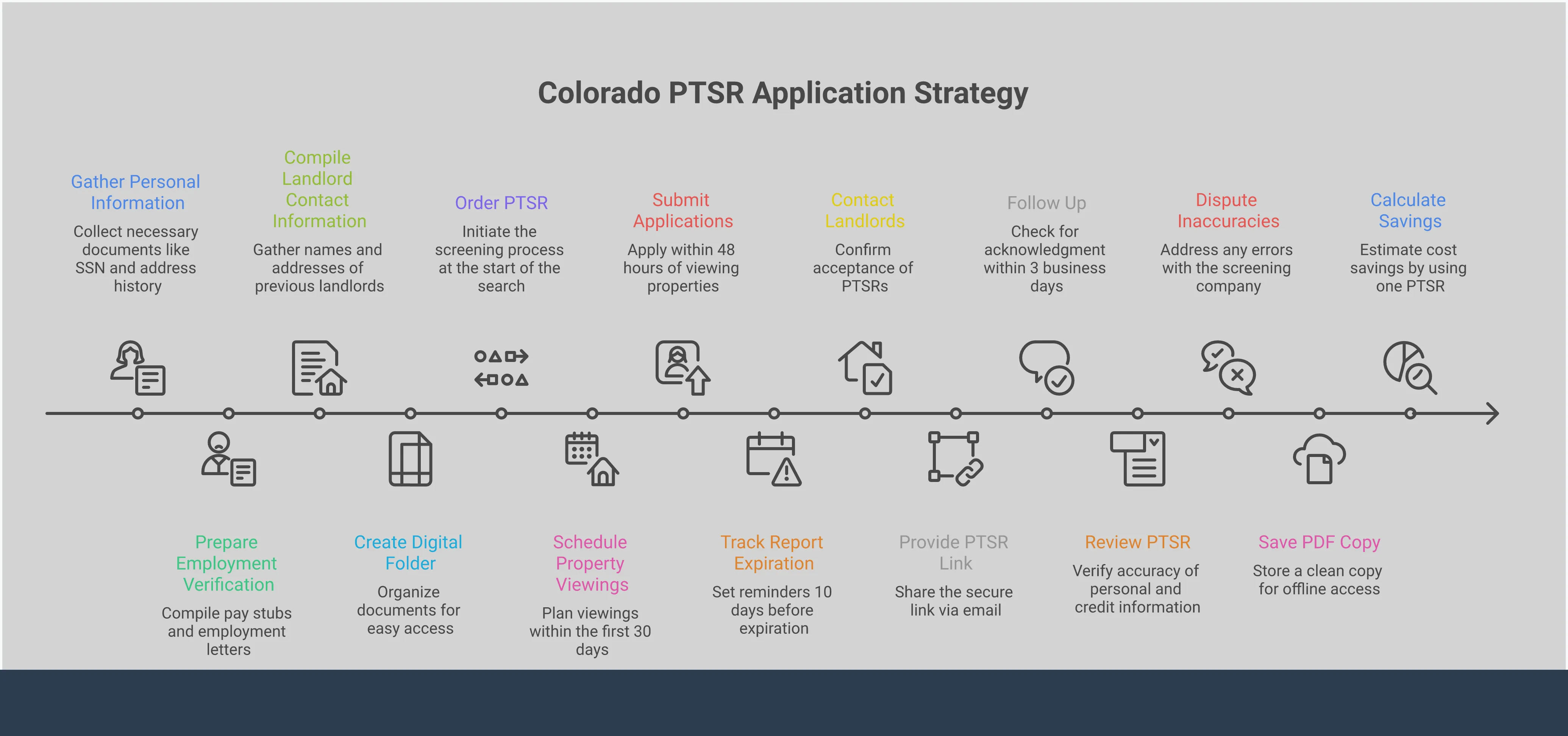
Getting your Portable Tenant Screening Report is a straightforward process that puts you in control of your rental search. Instead of paying a new application fee for every apartment, you get one comprehensive report to share with multiple landlords, saving you time and money. The process involves three simple steps: choosing a compliant service, gathering your documents, and reviewing your report for accuracy. Here’s exactly how to get your PTSR and apply for your next home with confidence.
First things first, you need to get your report from a service that creates PTSRs that follow Colorado law. This is a non-negotiable step. A compliant report is the only kind that landlords are legally required to accept, so using the right provider ensures your report is valid. When you use a compliant screening service, you’re getting a document with all the state-required information, from credit history to eviction records. This guarantees that landlords have everything they need, making the process smoother and preventing you from wasting money on a report that won't be accepted.
To make the screening process as quick as possible, it helps to have all your information ready to go. You’ll need to provide some basic personal details to verify your identity and pull your records accurately. This includes your full legal name, Social Security Number, date of birth, and your current and previous addresses. You may also need a valid form of government-issued identification. Having this information on hand before you start will help you fly through the request form without having to stop and search for documents.
Once your report is generated, take a few minutes to review it carefully. This is your financial and rental history, and you want to make sure it’s 100% correct. Mistakes on screening reports can happen, and an error could unfairly impact a landlord’s decision. Check all the details, from your personal information to your credit and background history. If you spot anything that looks wrong, you have the right to dispute it immediately with the screening company. A clean, accurate report is your best tool for securing your next rental.
You’ve done your part and handed over your Portable Tenant Screening Report (PTSR). So, can a landlord just say no? The short answer is yes, but not without a good reason. While Colorado’s PTSR law is designed to make renting easier and more affordable, it also includes important protections for landlords to ensure they receive accurate and reliable information. This balance is key to making the system work for everyone involved in the rental process. A landlord can’t reject your report simply because they prefer their own screening service or want to collect an application fee. They must have a specific, legally valid reason for the denial, which is clearly outlined in the state’s regulations.
Understanding these rules is your best defense against a frustrating and unfair application experience. It empowers you to have confident conversations with potential landlords and ensures you’re treated fairly from the moment you express interest in a property. Knowing what makes a report acceptable versus what could get it rejected helps you prepare a perfect application package every time. This way, you can avoid common pitfalls and move through the process with less stress and fewer surprises. Let's walk through the specific, valid reasons a landlord might not accept your PTSR.
One of the most common reasons for rejection is a report that’s either out of date or missing key information. Your PTSR is a snapshot in time, so Colorado law requires it to be no more than 30 days old. If your report is older than that, a landlord can ask for a new one. They can also reject it if it’s incomplete. For example, if it’s missing a nationwide criminal background check or a credit history, it doesn’t meet the legal standard. Before you apply, always review your report to confirm it’s recent and contains all the required components to avoid any preventable delays.
Landlords have a right to protect their property, which includes making sure your screening report is legitimate. If a landlord has reason to believe your PTSR is fraudulent, they are allowed to reject it. The law gives them the ability to contact the screening company that issued the report to verify its authenticity. This is why it’s so important to use a trusted, compliant provider for your PTSR. A report from a reputable source is easily verifiable, giving the landlord peace of mind and ensuring your application is taken seriously. A verifiable report is your best tool for building trust from the start.
The law is designed to save you money on application fees, and landlords have to play by the rules. If you provide a complete and valid PTSR, a landlord cannot charge you an application fee. They also can’t charge you a separate fee just to access or review your report. However, if your report is rejected for a valid reason, like being outdated or incomplete, the landlord can then require you to pay their standard application fee and use their screening service. Knowing the rules for landlords helps you stand up for your rights and ensures you aren’t charged unnecessary fees during your apartment search.
Switching to a Portable Tenant Screening Report (PTSR) makes the rental process smoother for everyone involved. Instead of starting from scratch with every application, a PTSR creates a single, secure, and reusable report that streamlines everything from the initial search to signing the lease. It’s a modern approach that saves time, reduces costs, and puts control back where it belongs: with you. Whether you’re looking for your next home or the perfect tenant for your property, understanding these benefits is the first step toward a much simpler rental experience. Let’s look at what makes a PTSR a smart choice for both renters and landlords.
The apartment hunt can feel like a marathon of paperwork and fees. A PTSR changes that by letting you apply smarter, not harder. The biggest advantage is saving money. Instead of paying a separate application fee for every apartment you’re interested in, you pay for one comprehensive report and can reuse it for 30 days. This means you can apply to multiple properties without your budget taking a hit. The process is also much faster. With a completed report ready to go, landlords can review your information almost instantly, helping you get a decision sooner. You also get to see your report before you share it, so you can check for any errors and know exactly what a potential landlord sees.
For landlords and property managers, time is money. A vacant property means lost income, and a lengthy application process can deter great tenants. Accepting a PTSR helps you fill your vacancies faster and more efficiently. Since you don't have to run a new background check for every single applicant, you save valuable time. This streamlined approach also widens your pool of potential renters. When applicants don't have to worry about paying multiple fees, they are more likely to apply to your property. This gives you a larger selection of qualified candidates to choose from, increasing your chances of finding the perfect long-term tenant without the administrative headache. It’s a simple way to make your property more competitive in a busy market.
In any rental transaction, trust and security are essential. A PTSR provides peace of mind for both parties by offering better security and data control. For renters, you own your report. You decide who sees your sensitive information and for how long, with the ability to revoke access at any time. This is a huge step up from handing over your Social Security number on paper applications. For landlords, you receive a verified, tamper-proof report from a compliant screening service. These reports are powered by trusted sources like Experian and adhere to the Fair Credit Reporting Act (FCRA), ensuring the information is accurate and legally compliant. This system reduces risk and builds a foundation of trust from the very first interaction.
Portable Tenant Screening Reports are a game-changer for renters, but like any new process, there’s some confusion about how they work. It’s easy to get your hopes up, thinking a PTSR is a magic key that opens every door. While they streamline the application process and save you money, it’s important to have realistic expectations. Let’s clear the air and bust a few common myths so you can apply for your next home with confidence.
Understanding the facts helps you plan your apartment hunt more effectively. Knowing what a PTSR can and can’t do will save you time, prevent surprises, and make your interactions with potential landlords much smoother.
This is one of the biggest misconceptions. While Colorado law requires landlords to accept a PTSR if they use screening reports and charge an application fee, there are nuances. Some larger apartment complexes or property management companies may have exclusive contracts with their own screening services and might not be set up to accept outside reports. Smaller, independent landlords are often more flexible. The best approach is to always ask a landlord upfront if they accept PTSRs before you apply. This simple step can save you from any potential confusion down the line.
A PTSR is designed to cover the cost of the screening itself, which is often the biggest part of an application fee. However, it doesn't always eliminate fees entirely. Some landlords may still charge a separate, smaller administrative or processing fee to cover the time it takes to handle your application. The law allows this as long as the fee isn't for the screening report itself. While you’re still saving a significant amount by not paying for a new report every time, it’s good to be aware that other small charges might pop up.
Submitting a comprehensive, accurate PTSR definitely puts your best foot forward, but it doesn’t automatically guarantee you’ll be approved for the rental. Landlords still have their own rental criteria they must apply to every applicant consistently. They can still deny your application based on information in the report, such as a poor credit history, prior evictions, or a relevant criminal record. A PTSR provides landlords with the verified information they need to make a decision; it doesn't make the decision for them. Understanding how it works from start to finish can help clarify the report's role in the application process. Think of it as your complete rental resume, not an acceptance letter.
How is a PTSR different from the background checks I've paid for in the past? Think of a traditional background check as a single-use ticket. You pay a landlord, they run your information, and that report stays with them. A Portable Tenant Screening Report, or PTSR, is more like a monthly pass. You purchase it once from a compliant service, and you get to present that same report to as many landlords as you like within a 30-day period. You own and control your information, which saves you from paying repeated screening fees.
What should I do if I find an error on my screening report? That's a great question, and it's important to act quickly. If you review your report and notice incorrect information, you have the right to dispute it directly with the screening company that issued the report. They are required by law to investigate your claim and correct any verified inaccuracies. Getting this fixed before you share the report with landlords ensures they see the most accurate version of your rental and financial history.
How do I share my report with a landlord securely? When you get your PTSR from a compliant provider, you'll receive a secure, shareable link to your report. You can email this link directly to a landlord or property manager as part of your application. This method is much safer than sending documents with sensitive information, like your Social Security number, as attachments. Plus, you maintain control and can often see when the landlord has viewed your report.
Can a landlord still deny my application even if my PTSR is perfect? Yes, they can. A PTSR provides a landlord with all the necessary information to review your application, but it doesn't guarantee approval. Landlords must apply their rental criteria consistently to all applicants. They can deny your application based on factors like income that doesn't meet their requirements or a rental history that doesn't align with their policies, even if the information in your report is accurate.
Do I have to get a new report every time I start a new apartment search? Not necessarily. Your Colorado PTSR is valid for 30 days from the date it's created. If your apartment search falls within that two-month window, you can continue using the same report. This gives you plenty of time to find the right place without the stress or cost of ordering a new screening for every application. If your search extends beyond 30 days, you will need to get an updated report.