
The rental application process often feels like you’re giving away your most sensitive information with little say in who sees it or how it’s used. The Colorado PTSR changes that dynamic by putting you back in control of your personal data. Instead of landlords running separate background checks you never get to see, you initiate one secure, comprehensive report yourself. You can review it for accuracy, correct any errors, and then decide which landlords you want to share it with. This system not only protects your privacy but also ensures you’re presenting the most accurate version of your rental history, making your apartment search more transparent and secure.
If you’ve ever felt the sting of paying application fee after application fee while searching for a new place, you’ll want to know about the Colorado Portable Tenant Screening Report, or PTSR. Think of it as your universal rental application and background check, all rolled into one. Instead of paying a new fee to every landlord you apply with, you purchase one comprehensive report and reuse it for multiple applications within a 30-day window.
This simple but powerful idea is changing the rental game in Colorado. A PTSR is a reusable, renter-initiated background check that includes all the information a landlord needs to make a decision: your credit history, a nationwide criminal and eviction report, and income verification. You get to see exactly what’s on your report and control who you share it with. For renters, this means saving a significant amount of money and time. For landlords, it means receiving a complete, verified report directly from a trusted source, which helps streamline their process. It’s a modern solution that makes renting fairer and more efficient for everyone involved.
The traditional rental process can be a real grind. You find a place you love, fill out a lengthy application, and pay a non-refundable fee, only to repeat the entire process if you don’t get it. A PTSR cuts through that frustrating cycle. The biggest advantage is the cost savings. By paying for one report that you can reuse, you can apply to several properties without racking up hundreds of dollars in fees.
Beyond the savings, a PTSR gives you more control and speeds up your search. You can apply to apartments faster since your report is ready to go. Plus, you own your data. You decide which landlords see your information and can instantly revoke access if you change your mind. This system simplifies the entire rental journey, making it less stressful and more transparent.
This whole system isn't just a good idea; it's the law in Colorado. The change came from a piece of legislation known as HB23-1099, which requires landlords to accept a PTSR from any prospective tenant. The law specifies that these reports must contain key information, including your rental and credit history, proof of income, and a criminal background check.
Most importantly, the law states that if you provide a landlord with a valid PTSR, they cannot charge you an application fee. This provision is the heart of the law, designed to reduce the financial burden on renters. It ensures that landlords take these reports seriously and that you can confidently use your PTSR across your entire apartment search. This legal backing is what makes the portable screening report a reliable and effective tool for every renter in Colorado.
Think of a Portable Tenant Screening Report (PTSR) as your complete rental resume, all bundled into one secure, reusable package. Instead of filling out a new application and paying a fee for every apartment you like, you have one comprehensive report that gives landlords everything they need to know. The goal is to provide a full, transparent picture of you as a potential tenant, covering the key areas that every landlord reviews before handing over the keys.
A compliant Colorado PTSR isn't just a simple credit check. It’s a collection of verified documents that paint a clear picture of your financial responsibility, background, and rental history. This standardization is what makes the report so powerful. Every landlord gets the same high-quality information, which helps them make fair and quick decisions. For you, the renter, this means you can confidently share your information knowing it meets legal standards and protects your sensitive data. Below, we’ll break down the three main parts of the report so you know exactly what you’re sharing.
The first piece of the puzzle is your financial history, which is primarily shown through a credit report. This report gives a landlord a look at your financial habits, including your payment history on loans and credit cards, any outstanding debts, and your overall credit score. Landlords use this to gauge your financial reliability and see if you have a track record of making payments on time. It’s a standard part of almost every rental application.
A PTSR pulls a full credit report from a major credit bureau like Experian. This isn’t just a score; it’s the detailed report behind it. Seeing a healthy credit history gives a landlord peace of mind that you’re likely to pay your rent consistently.
Next up is your background and rental-specific history. This section includes a nationwide criminal background check and a search for any past eviction filings. The criminal check looks for past convictions that could be relevant to your tenancy, helping landlords maintain a safe environment for all residents. It’s an important step for community safety and liability.
The eviction history is just as crucial. It shows a landlord if you have ever been formally evicted from a property. Since a past eviction can be a strong indicator of future rental issues, it’s one of the most significant factors a landlord considers. Including this information upfront helps build trust and shows you’re being transparent, while also adhering to fair housing guidelines that ensure the information is used properly.
Finally, a PTSR confirms that you can comfortably afford the rent and have been a good tenant in the past. The income verification component proves your current employment and earnings, usually through pay stubs or other official documents. Landlords typically look for an income that is about three times the monthly rent, so this section is key to showing you’re a financially sound applicant.
Your rental history acts as a reference from previous landlords. It can confirm whether you paid your rent on time and took good care of the property. This part of the report helps a landlord understand what kind of tenant you’ll be. A positive rental history is one of your best assets when applying for a new place, as it shows you’re responsible and respectful.
This is one of the most common questions we get, and the short answer is yes. In Colorado, landlords are generally required by law to accept a Portable Tenant Screening Report (PTSR) that you provide. This law was designed to make the rental process fairer and more efficient for everyone involved. It means you don't have to fill out a new application and pay a new fee for every single apartment you're interested in.
However, there are a few conditions. The report has to be current, comprehensive, and from a reliable source. Let's walk through exactly what the law says, how it saves you money, and what makes a report legitimate in the eyes of a landlord.
In Colorado, a landlord must accept your PTSR as long as it meets a few key requirements. First, the report must be no more than 30 days old. Second, it has to come from a reputable, third-party screening company that complies with the Fair Credit Reporting Act (FCRA). This ensures your data is handled securely and accurately. When you use a trusted provider, you can be confident your report meets all the legal standards, making it easy for landlords to accept. The law is clear: if you hand over a valid report, the landlord is obligated to accept it and consider your application.
Here’s the best part for renters: if you provide a valid PTSR, the landlord cannot charge you an application fee. Think about how much money that can save you during an apartment search. Instead of paying $40, $50, or even more at every property, you pay once for a report that you can reuse for 30 days. This rule is a game-changer, turning a potentially expensive process into a much more affordable one. It puts you in control of your spending and allows you to apply to multiple places without breaking the bank. Our simple pricing is designed to help you take full advantage of this benefit.
For a PTSR to be considered valid, it needs to contain all the information a landlord would typically look for. It’s not just a simple credit check. A compliant report must include a comprehensive look at your rental-readiness. This means it needs to have your credit report, a nationwide criminal background check, and a search of eviction history. It also needs to provide verification of your income and employment. This complete package gives a landlord the confidence they need to make an informed decision. You can see exactly how it works and what’s included to ensure your report is official and ready to go.
Finding a new place to live can feel like a full-time job, complete with endless paperwork, surprise fees, and a lot of waiting. But if you're renting in Colorado, the process just got a whole lot smoother. The state's adoption of the Portable Tenant Screening Report (PTSR) is a game-changer, designed to make your apartment hunt fairer, more affordable, and less stressful. Using a PTSR isn't just about following a new rule; it's about giving you more power and peace of mind during your search. Think of it as your rental passport, a single, secure document that you control and can present whenever you find a place you love. This system simplifies things for everyone involved, but the biggest wins are for you, the renter. It puts you in the driver's seat by cutting down on repetitive costs, protecting your personal information, and helping you move faster in a competitive market. Instead of starting from scratch with every application, you come prepared, showing landlords you're a serious and organized applicant. Let's look at the three biggest reasons you'll want to start using a PTSR for your next move.
One of the most frustrating parts of searching for a rental is paying application fees over and over again. At $30 to $50 a pop, those costs add up fast. With a PTSR, you can say goodbye to that cycle. You purchase one comprehensive report and can reuse it for multiple applications within a 30-day window. Best of all, Colorado law is on your side. If you give a landlord a valid portable screening report, they cannot charge you an application fee. This simple change makes the rental process much more affordable, allowing you to apply for several places without draining your bank account. It’s a straightforward way to keep more of your money while you find your perfect home.
Your personal information is valuable, and you should have a say in who sees it and when. A PTSR gives you that control. Before you share your report with any potential landlord, you get to review it first. This gives you the chance to spot and correct any errors, ensuring landlords see the most accurate version of your history. With a service like Portable Tenant, you can even revoke access after a landlord has reviewed your information, keeping your data secure. This transparency is a huge step up from the old process, where you might never see the report a landlord runs on you. It’s about making sure you can present yourself fairly and protect your privacy.
In a competitive rental market, timing is everything. Having a PTSR ready to go makes you a prepared and attractive applicant. Instead of waiting for a landlord or property manager to run a new background check for every application, you can provide your complete report instantly. This allows landlords to review your information faster, which can shorten the decision-making process and help you secure a lease before someone else does. By eliminating the typical delays, you streamline the entire process. You can move quickly when you find a place you love, turning a weeks-long search into a much faster and more efficient experience.
While Colorado law makes it clear that landlords must accept a Portable Tenant Screening Report (PTSR), the rules aren't entirely black and white. The legislation was designed to be fair to everyone, which means there are a few specific situations where a landlord isn't required to accept your report. Understanding these exceptions is helpful for both renters and
Think of these as specific carve-outs for unique circumstances, not loopholes for landlords to avoid the system. For renters, knowing these scenarios can help you anticipate when a landlord might have a valid reason to ask for something different. For landlords, it’s crucial to know your rights and obligations so you can manage your properties confidently and compliantly. Let’s walk through the main reasons a landlord might be able to refuse a PTSR.
The law recognizes that an independent landlord renting out their basement apartment operates differently than a large property management company. Because of this, there are specific exemptions for smaller-scale landlords. A landlord does not have to accept a PTSR if they are renting out a single unit, like a single-family home or a condo, and do not use a professional screening company to review applicants.
Additionally, if a landlord has a policy of only accepting and reviewing one application at a time for a property and doesn't charge an application fee for it, they are also exempt. These rules are in place to avoid placing an undue burden on landlords who manage their properties on a very small scale.
A landlord can’t refuse your report just because they prefer their own system, but they can push back if the report is incomplete. A compliant PTSR must contain specific information, including a credit report, a national criminal history check, and an eviction history search. If the report you provide is missing any of these required components, a landlord has the right to ask you to provide the missing details.
This isn't an outright refusal of your report. Instead, it’s a request to complete your application package. As a renter, you can avoid this by making sure your PTSR provider gives you a comprehensive, compliant report from the start. This ensures the landlord has everything they need to make a fair decision without any delays.
Beyond the exceptions for small landlords, the law includes another important provision related to how applications are processed. According to the Colorado General Assembly, a landlord is not required to accept a PTSR if they only charge an application fee to one prospective tenant at a time for a specific unit.
This means if a landlord has a strict "first-come, first-served" policy where they fully process one application before moving to the next, they can stick to their own screening process. This rule prevents landlords from being overwhelmed with multiple PTSRs for a single vacancy while they are already committed to reviewing a specific applicant. It’s a key detail that focuses on the landlord’s process rather than their size.
Portable Tenant Screening Reports are designed to make your rental search easier, faster, and cheaper. But like any new process, you might encounter a few bumps along the way. The good news is that most issues are easy to solve with a little preparation. Think of this as your friendly guide to clearing those hurdles, so you can get back to finding a place you love. We’ll walk through how to handle landlords who are new to the idea and what to do when dealing with larger property management companies.
While PTSRs are standard in Colorado, you might still come across a landlord who isn’t familiar with them, especially if they manage only a few properties or are based out of state. They might be hesitant simply because it’s a process they don’t recognize. The key here is clear and friendly communication. When you submit your application, you can include a brief note explaining that you have a comprehensive, reusable report that meets all state requirements. You can also point out how it saves both of you time and money. By explaining the benefits to landlords, you can help them feel more comfortable and confident in accepting your report.
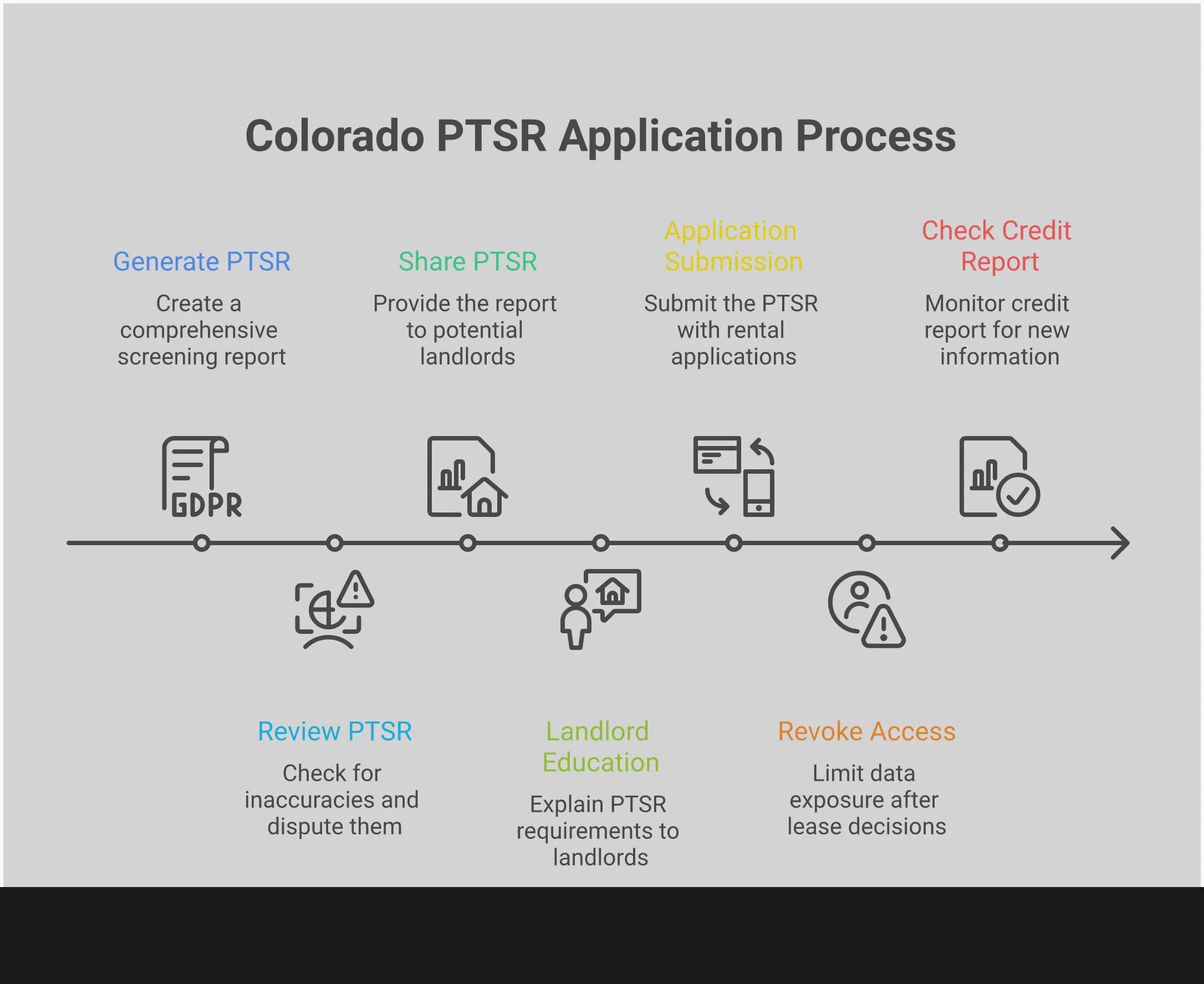
Getting your own PTSR is a straightforward process. First, you’ll need to choose a trusted screening service that complies with Colorado law. Once you’ve picked a provider, you’ll enter your personal information, like your name, address, and Social Security Number, to generate the report. Before you send it to anyone, take a moment to review it carefully for any errors. If you spot something that doesn’t look right, you can dispute it. Finally, you can share your report, which is usually done through a secure link. Just remember that landlords are only required to accept reports that are less than 60 days old, so keep an eye on the date.
You may find that some large apartment complexes or corporate property managers are resistant to accepting a PTSR. This is often because they have existing partnerships with their own screening companies and prefer to use their internal system. They might even try to charge you separate "admin" or "processing" fees. In these situations, it’s helpful to know your rights. Politely and firmly remind them that under Colorado law, they are required to accept a valid PTSR. Having your report ready to share and documenting your conversations can make the process smoother. If you run into trouble, you can always check a help center for more guidance on handling these specific situations.
Having your Portable Tenant Screening Report is a great first step, but knowing how to present it makes the process seamless. Some landlords may be new to the PTSR law, so a little preparation helps make their job easier. Here’s how to handle the conversation with confidence and get your report accepted every time.
When you share your PTSR, frame it as a benefit for everyone. You can explain that Colorado’s PTSR law makes renting more efficient for both renters and landlords. For them, accepting your report saves time since they don’t have to run a new background check. It also widens their pool of potential renters because it makes applying easier. Plus, by accepting a compliant report, they’re staying on the right side of state law. It’s a win-win that streamlines their process and helps them find a great tenant faster. You can even direct them to resources that explain how it works for landlords.
Build trust by anticipating a landlord’s questions about your PTSR. Let them know your report is recent (from the last 60 days) and comes from a verified Consumer Reporting Agency, a key legal requirement. It’s also helpful to mention that they can still use their standard screening criteria, like credit history, as long as they apply those rules fairly to all applicants. By showing you understand how it works from their perspective, you prove you’re a responsible applicant. This proactive approach makes it easy for them to say "yes" and move forward.
Getting your PTSR accepted is usually straightforward, but a few steps can guarantee a smooth experience. First, always get your report from a trusted provider that creates compliant PTSRs. Before sharing, review your report for any errors and dispute them right away if needed. Finally, remember that if you provide a valid PTSR, landlords in Colorado cannot legally charge you an application fee. If it comes up, you can politely mention this. A simple, "My understanding is that the application fee is waived since I've provided a portable report," is usually all it takes.
Not all screening reports are created equal. To make sure your Portable Tenant Screening Report (PTSR) is accepted, it needs to meet specific legal standards in Colorado. Think of it like a passport for renting: if it’s missing a page, you won’t get very far. Using a report that checks all the right boxes saves you from headaches and extra fees. This quick checklist will help you confirm your report is official, compliant, and ready to go, so you can confidently hand it over to any landlord.
A legitimate PTSR is more than just a credit score. To be considered valid under Colorado law, it must be a comprehensive screening report that gives landlords a complete picture. Before you share yours, double-check that it includes these key pieces of information:
If your report is missing any of these components, a landlord isn't required to accept it.
Your personal information is sensitive, and a compliant PTSR process protects it. The report must be generated by a trusted, third-party screening agency, not by you or the landlord directly. This ensures the information is unbiased and secure. When you use a service like Portable Tenant, you also gain control over your data, with the ability to see who views it and revoke access at any time. This process is designed to maintain your privacy while ensuring landlord compliance with fair housing laws. It’s a secure and standardized way to share your information without giving up control.
One of the best parts of using a PTSR is its reusability. In Colorado, a valid report is good for 60 days from the date it was generated. This is a huge advantage, as it gives you two full months to apply for multiple properties without paying a new application fee each time. This extended timeframe allows you to be more thoughtful in your apartment search and not feel rushed. By using the same report for every application within that window, you can save money and streamline your search, making the entire process much less stressful.
Colorado is part of a growing movement to make renting fairer and more efficient. The idea of a portable screening report isn't unique to the Centennial State; it's a solution that’s gaining traction across the country as renters and landlords look for ways to save time and money. While the core concept is the same, each state puts its own spin on the rules.
Understanding these differences can help you see why Colorado’s law is a big step forward and what to expect if you’re renting or managing properties in other states. It also highlights the importance of using a report that meets the specific requirements of your state’s laws. Let's look at how Colorado's approach compares to others.
At least seven states currently allow Portable Tenant Screening Reports (PTSRs). While the specifics vary, there's a common thread: if a landlord accepts a PTSR, they usually can't charge the renter an application fee. This is a huge win for renters, who can avoid paying multiple fees during their apartment search. Washington, for example, has had a similar law for years, helping pave the way for states like Colorado. This trend shows a clear shift toward giving renters more control over their personal information and reducing the financial burden of finding a new home.
The biggest difference between states often comes down to whether a landlord must accept a report. Starting in 2026, Colorado’s law will feature mandatory acceptance, meaning landlords have to accept a PTSR if it meets state guidelines. In Illinois, landlords must accept a report if it’s less than 30 days old and provided at no cost to them. Washington’s law is a bit different; if a landlord accepts a PTSR, they can’t charge a screening fee. And in California, the focus is on processing applications in the order they’re received and refunding fees to applicants who aren't chosen. These variations show why a trusted PTSR provider is essential for navigating local rules.
Feeling ready to simplify your apartment hunt? Getting your own Portable Tenant Screening Report is a game-changer, putting you in the driver's seat. The process is straightforward and designed to save you time, money, and stress. Here’s a quick look at how to get your report and what you can expect along the way.
Your first step is to choose a screening service that understands and follows Colorado's PTSR laws. This is non-negotiable, as landlords are only required to accept reports from compliant sources. Look for a provider that offers a comprehensive screening, including your credit history, nationwide criminal and eviction records, and income verification. Using a compliant provider like Portable Tenant ensures your report meets all legal standards and that your personal data is handled with bank-level security. This way, you can share your information with confidence, knowing your report is both official and secure.
Once you've picked a provider, the process is simple. You’ll pay a single, affordable fee for a report you can reuse for 60 days, saving you from paying separate application fees for every apartment you like. You'll provide basic information like your name, address, and SSN to generate the report. Before you start sharing it, take a moment to review everything for accuracy. If you spot any errors, you can dispute them. Then, you can instantly share your report with landlords through a secure link, speeding up your search and helping you land your next home faster.
What if a landlord still tries to charge me an application fee even after I provide a PTSR? This can happen, especially if a landlord isn't fully up to speed on the law. Your best approach is to be polite but firm. You can simply state that under Colorado law, providing a valid portable report means the application fee is waived. It often helps to have a link to the state legislation handy or mention that your report comes from a compliant provider. Most of the time, a friendly reminder is all it takes to clear up the confusion.
How long can I actually reuse my report? Your Portable Tenant Screening Report is valid for 30 days from the date it was created. This gives you a full month to apply to as many properties as you like without paying for a new report each time. This 30-day window is a key part of the law, designed to give you enough time to conduct a thorough apartment search while keeping your costs down.
Can I see my report before a landlord does? Absolutely. In fact, that’s one of the biggest benefits of the entire process. You get to review your complete report before you share it with anyone. This gives you the chance to check it for accuracy and dispute any errors you might find. It ensures you’re presenting the most correct version of your history and puts you in complete control of your personal information.
What makes a PTSR different from a free credit report I can get online? A free credit report is just one piece of the puzzle. A compliant PTSR is a comprehensive package that includes everything a landlord needs to make a decision. In addition to your full credit history, it contains a nationwide criminal background check, a search for any past evictions, and verification of your income. This complete, verified bundle is what makes the report official and legally acceptable to landlords.
Are these portable reports only useful in Colorado? While Colorado has a strong law requiring landlords to accept them, the concept is catching on elsewhere. States like Washington, Illinois, and Maryland have similar laws that support reusable screening reports. The specific rules can vary from state to state, but the trend is moving toward giving renters more control and making the application process more affordable across the country.