
Apartment hunting in Colorado can be a whirlwind of applications, fees, and waiting. It often feels like you’re spending a small fortune just for the chance to be considered. Thankfully, the state has put rules in place to protect you from excessive costs and unfair practices. The Portable Tenant Screening Report (PTSR) is a game-changer, allowing you to reuse one report for multiple applications. Understanding your rights under the Colorado tenant screening laws is the key to a smoother, less expensive search for your next home. This guide will walk you through exactly what those rights are and how you can use them.
If you’re a landlord or renter in Colorado, understanding the state’s tenant screening laws is key for a smooth and fair rental process. These regulations are in place to protect applicants from discrimination, reduce the financial burden of application fees, and create a more transparent system for everyone involved. The cornerstone of these laws is the Portable Tenant Screening Report (PTSR), which has changed how landlords and renters approach applications.
Let's break down what you need to know, from the core rules you must follow to recent updates that have further defined the screening process.
At the heart of Colorado's regulations is the requirement for landlords to accept a valid Portable Tenant Screening Report (PTSR). If a renter provides a report that is less than 30 days old, you cannot charge them an application fee. A compliant report must include the applicant's name, contact information, income and employment verification, and their rental, credit, and criminal histories.
Another major provision involves criminal background checks. Colorado law does not prohibit landlords from asking about criminal history, but it strictly limits how criminal records may be used in tenant screening.
Landlords may not consider:
Arrest records that did not result in a conviction, or
Most criminal convictions that are more than five years old.
These rules are designed to ensure applicants are evaluated fairly and that outdated or irrelevant criminal records are not used to deny housing.
Colorado’s rental laws are regularly updated to better serve both landlords and tenants. A significant update took effect in August 2023, which now requires landlords to proactively inform potential tenants of their right to provide a PTSR. This disclosure must be included in the rental listing and on your website (if any).
Another key change addresses credit requirements for applicants receiving housing assistance. If a tenant has a housing subsidy, you cannot make decisions based on their credit score or any adverse information on their credit report. Colorado also has a law that you cannot require their income to be more than double their portion of the rent. You can however set the security deposit to double the rent amount.
These laws are primarily designed to protect renters from unfair or discriminatory practices. A major focus is on preventing discrimination against applicants who use housing assistance programs, such as Section 8 vouchers. Landlords must treat income from these programs the same as any other source of income and cannot deny an application simply because the renter uses a subsidy.
Furthermore, the laws protect these applicants from blanket denial policies. For example, you cannot enforce a universal minimum credit score for applicants who receive housing assistance. Instead, you must assess each application individually, considering all qualifying factors. This ensures that a low credit score doesn’t automatically disqualify an otherwise qualified tenant.
Think of a Portable Tenant Screening Report (PTSR) as your universal rental application. Instead of paying a separate fee and filling out new paperwork for every apartment you like, you get one comprehensive report that you can reuse with multiple landlords for up to 30 days. It’s a system designed to save you time, money, and the headache of repetitive applications. For landlords, it means receiving a standardized, thorough report from a qualified applicant right from the start.
This concept is a core part of Colorado's recent housing legislation, which aims to make the rental process more efficient and fair. A PTSR contains all the essential information a landlord needs—like your credit history, income verification, and rental and criminal background - all bundled into a single, secure document. Our reusable report is designed to meet all of Colorado's requirements, empowering you with control over your personal information and reducing the financial burden of apartment hunting.
Under Colorado law, landlords must inform prospective tenants that they have the right to provide a PTSR. If a renter provides a valid report, the landlord is required to accept it and cannot charge an application fee.
For a PTSR to be considered valid, the state legislation specifies that it must:
These rules ensure landlords receive reliable, up-to-date information while protecting renters from unnecessary fees.
This system is a win-win. For renters, the most significant benefit is cost savings. Applying for multiple apartments can get expensive fast, and PTSRs eliminate those redundant application fees. It also gives you more control over your personal data, since you decide who sees your report and when.
For landlords, PTSRs streamline the screening process. You receive a comprehensive, professionally compiled report without having to manage application fees. This can lead to a larger pool of qualified applicants, as the lower barrier to entry encourages more people to apply. It also helps landlords stay compliant with Colorado law, promoting a transparent and fair evaluation process for every applicant.
We designed Portable Tenant to make using a PTSR as simple as possible. Renters can order one comprehensive, Experian-powered report and share it instantly with any landlord or property manager. Our reports meet all of Colorado's legal requirements, so you can be confident you’re providing a valid document.
When you share your Portable Tenant report, the landlord receives it directly from us, fulfilling a key legal condition. This means they are required to accept it and cannot charge you an application fee. With a clear, one-time pricing structure, you know exactly what you’re paying for. You get a secure, reusable report that puts you in control of your rental search.
Navigating the financial side of renting can be stressful, but Colorado has put some clear rules in place to protect both renters and landlords. From application fees to security deposits and income requirements, understanding these regulations is key to a smooth and fair rental process. These laws are designed to make housing more accessible and transparent, so let’s break down exactly what you need to know.
Applying for multiple apartments can get expensive fast, with application fees adding up. Colorado law offers a straightforward solution. If you provide a landlord with a Portable Screening Report (PTSR), they are legally prohibited from charging you an application fee. This rule is a game-changer, designed to cut down on the repetitive, costly process of applying for housing. For renters, it means you can apply to more places without draining your bank account. For landlords, accepting a PTSR streamlines your process and shows you're up-to-date with state laws, attracting more qualified applicants who appreciate a modern, efficient approach.
Finding the cash for a security deposit is often one of the biggest hurdles to moving. Thankfully, Colorado has put a limit on how much landlords can ask for. As of August 2023, landlords are restricted from requesting a security deposit that costs more than two months' rent. This cap helps make housing more accessible by preventing security deposits from becoming an insurmountable barrier for otherwise great tenants. It ensures that you can secure a new home without having to come up with an excessive upfront payment, making the moving process a little less financially daunting for everyone.
Ever felt like income requirements were impossibly high? Colorado law now addresses this to ensure fairness in the screening process. The law stipulates that landlords cannot require tenants to earn more than two times the annual rent if they are using credit and rental history as screening criteria. This rule is even more specific for tenants receiving housing assistance. In that case, the income requirement can't be more than twice the portion of the rent the tenant is personally responsible for paying. This thoughtful distinction helps ensure that income rules don't unfairly penalize applicants who use housing vouchers or other support.
Colorado's "Ban the Box" laws are designed to give every rental applicant a fair shot by changing when a landlord can look into their criminal history. The goal is to prevent automatic denials based on a past mistake before a landlord has even reviewed an applicant's qualifications. Instead of evaluating criminal history based on the last 7 years, you can only consider the last 5 years.
This approach ensures you evaluate candidates based on their merits as a potential tenant—like their ability to pay rent on time and their history with previous landlords. Only after you’ve determined they are otherwise qualified and have made a conditional rental offer can you review their criminal record. This process helps create a more equitable screening environment and aligns with broader fair housing regulations that protect applicants from discrimination. It’s a fundamental shift from "Can I rent to this person?" to "Is there a legitimate, relevant reason why I can't?"
Blanket policies that automatically deny anyone with a criminal record are not allowed. Instead, landlords must perform an individual assessment for each applicant. This means you have to thoughtfully consider the context of any conviction. When reviewing a record, you should look at the nature and severity of the crime, how long ago it occurred, and what the person has done since. For example, a minor offense from a decade ago is very different from a recent, serious conviction. This case-by-case review ensures your final decision is fair, relevant, and directly related to the safety and security of your property and other tenants.
Screening potential tenants involves more than just reviewing an application; it’s a process governed by specific legal rules designed to protect everyone involved. Following these steps isn’t just about staying compliant—it’s about creating a fair, transparent, and respectful process from the very beginning. When you handle screening correctly, you set the foundation for a positive landlord-tenant relationship built on trust. It shows applicants that you're a professional who takes their rights seriously, which can attract higher-quality tenants in the long run.
In Colorado, the law outlines a clear path for landlords to follow. This includes getting the applicant's permission before digging into their history, communicating clearly if you decide not to move forward, and treating all sources of income equally. Think of these rules as your guide to making informed decisions while upholding the rights of every applicant. Each step is designed to prevent misunderstandings and potential legal trouble down the road. Using a compliant screening service can help you manage these steps seamlessly, ensuring all your bases are covered. By understanding and adhering to these legal requirements, you can find the right tenant for your property while operating your rental business ethically and effectively.
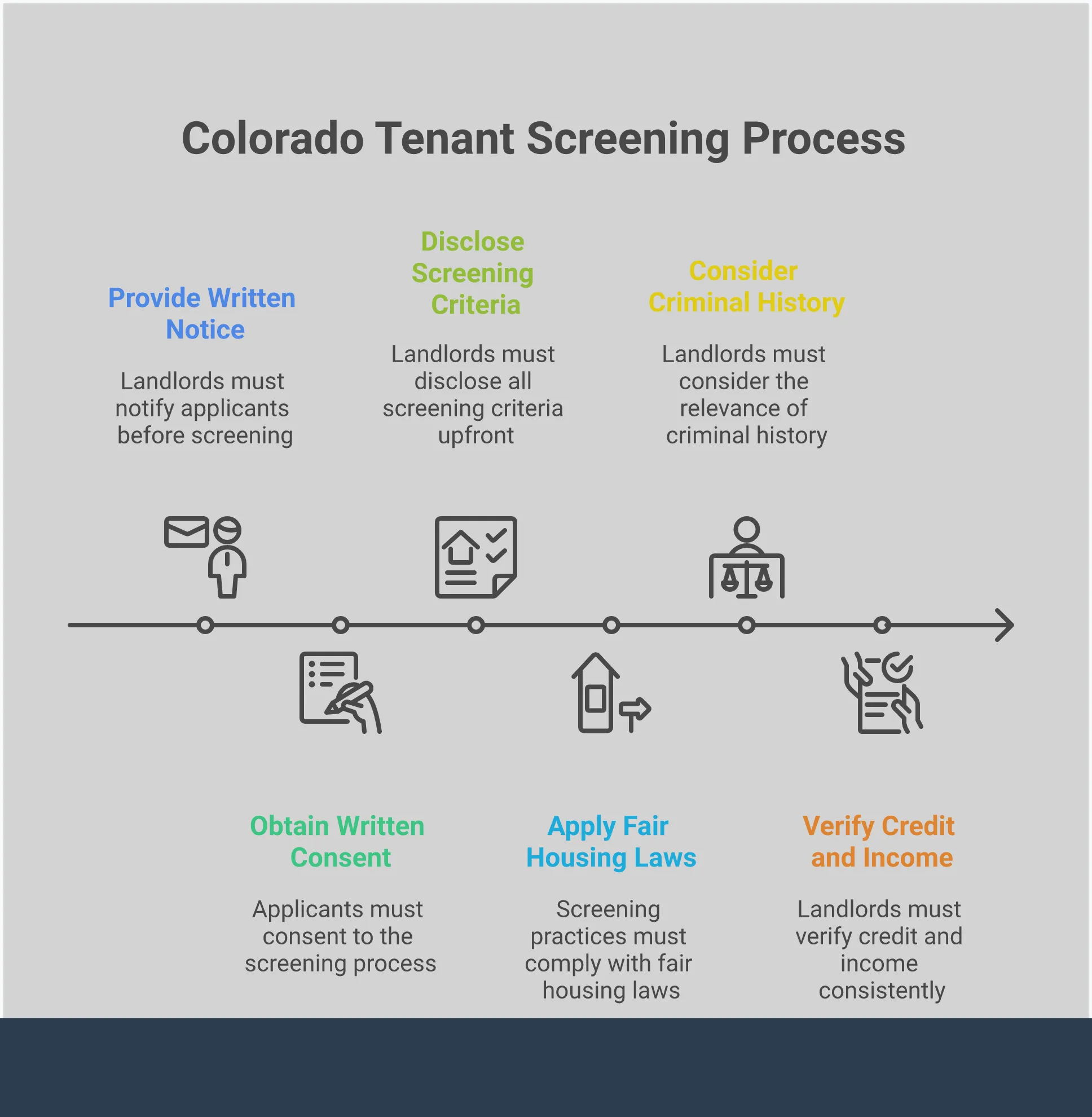
Before you run a credit check or look into an applicant’s background, you absolutely must get their permission in writing. This is a non-negotiable first step. According to state guidelines, you need to get written permission from an applicant before you can check their credit report. This is typically a clause included in the rental application that the prospective tenant signs.
This requirement ensures transparency and protects the applicant's privacy. It confirms they are aware that you will be reviewing their personal and financial information as part of the application process. Skipping this step is a serious violation of both Colorado law and the federal Fair Credit Reporting Act (FCRA), so always make sure you have a signed application in hand before proceeding.
If you decide to deny an applicant based on information found in their screening report, you can’t just ghost them. The law requires you to send them a formal notification called an "adverse action notice." This applies whether you’re denying their application, requiring a co-signer, or charging a higher security deposit. The notice must explain the reason for the decision. For example, if you deny someone due to their criminal history, you must tell them in writing within 20 days.
This notice gives the applicant a chance to see the information and correct any potential errors on their report. It’s a crucial part of a fair screening process and demonstrates that your decision was based on legitimate, documented criteria.
In Colorado, you cannot refuse to rent to an applicant simply because they use a housing voucher or another form of rental assistance. Source of income is a protected class, which means it is illegal to discriminate against applicants who use housing assistance programs, like Section 8.
When you assess an applicant's ability to pay, you must consider their housing assistance as part of their total income. These payments must be treated the same as other income, like a salary from a job. This ensures that all qualified applicants have an equal opportunity to secure housing, regardless of where their rental income comes from. Evaluating every application based on the same financial criteria is key to fair and lawful tenant screening.
When it comes to tenant screening in Colorado, there’s a lot of information floating around—and not all of it is accurate. Misunderstandings about the law can lead to headaches for both renters and landlords. Let's clear up some of the most common myths so you can feel confident in your rental process.
It’s a common misunderstanding that a portable tenant screening report (PTSR) is valid for 60 days in Colorado. While a 60-day period was proposed in legislation, it didn't pass into law. The actual validity period for a PTSR is 30 days. This means renters can use their report for multiple applications within that month, and landlords must accept it as long as it’s current. For landlords, this 30-day window is important because it guarantees the information—like credit history and income verification—is recent. For renters, it provides a reasonable amount of time to apply for several properties without paying new fees each time. Acting within this timeframe is a key part of the PTSR process.
Another persistent myth is that landlords can automatically deny an applicant because of their criminal history. The reality is more nuanced. While Colorado rental laws permit landlords to consider an applicant's criminal record, they can't have a blanket policy of denial. Instead, landlords must perform an individual assessment for each applicant. This involves looking at the nature of the crime, when it happened, and whether it poses a direct threat to the property or other residents. It’s about looking at the whole person, not just one part of their past, and making an informed, case-by-case decision rather than relying on assumptions.
Some landlords believe they can deny an applicant simply because they don't have a social security number. This isn't true. Landlords must provide a valid, non-discriminatory reason for turning down any application based on a background check. All decisions must comply with the Fair Housing Act, which protects applicants from discrimination based on race, religion, national origin, and other protected classes. There are many myths about tenant screening, but understanding the rules around legal denials is crucial. It helps landlords stay compliant and ensures a fair, transparent process for everyone involved in the rental application journey.
Colorado’s tenant screening laws are more than just guidelines—they’re firm rules with significant consequences for non-compliance. For landlords, a simple mistake in the application process can lead to steep fines and legal headaches. Understanding the potential penalties isn't about fear-mongering; it's about protecting your rental business and ensuring you treat every applicant fairly and lawfully.
These laws are designed to create a more transparent and equitable rental market. By following them, you not only avoid penalties but also build trust with prospective tenants and streamline your own leasing process. It shows you're a professional who takes their responsibilities seriously, which can be a major selling point for high-quality renters. Whether it’s mishandling an application fee or failing to provide a required notice, the state has clear enforcement measures in place. Let’s walk through what happens when these rules are broken and, more importantly, how you can correct a mistake if one occurs.
Ignoring Colorado's screening laws can be a costly mistake. If a landlord improperly handles a portable tenant screening report—for instance, by charging an application fee when a valid one is provided—they can be fined $2,500, plus court costs and the applicant's attorney fees. This isn't a slap on the wrist; it's a substantial penalty designed to ensure compliance.
However, the law does offer a chance to make things right. If a landlord is notified of a violation and corrects the problem within seven days, the penalty is significantly reduced. In that case, the landlord would only have to pay the renter $50. This "cure" period highlights the importance of responding quickly and professionally to any applicant concerns.
Beyond state-mandated fines, landlords can face other potential legal consequences for failing to follow proper screening procedures. For example, you must get written consent from an applicant before running any background or credit checks. Failing to do so can open the door to a lawsuit.
Similarly, if you deny an applicant based on information found in their screening report, you are legally required to provide them with an adverse action notice. Skipping this step is a common but serious violation that can lead to legal challenges from the applicant. These lawsuits can be time-consuming and expensive, creating stress and financial strain that could have been easily avoided by following the correct protocol from the start.
If you realize you've made a mistake, the key is to act quickly. The most common misstep is failing to notify an applicant properly after a denial. If you decide not to move forward with an applicant because of their credit history, criminal record, or another item in their screening report, you must send them an “Adverse Action” notice.
This notice officially informs the applicant of your decision and includes the name and contact information of the screening company you used. It also lets them know they have the right to obtain a free copy of the report and dispute any inaccurate information. Sending this notice promptly is not only a legal requirement but also a critical step in correcting a violation and potentially reducing your liability.
Staying on top of tenant screening laws can feel like a full-time job, but you don’t have to figure it all out alone. Whether you’re a landlord managing your first property or a renter trying to understand your rights, several resources can provide clarity and support. From legal professionals to state-run websites and specialized screening services, getting the right help makes the entire process smoother and ensures you’re following the rules. Think of these resources as your compliance toolkit, ready to help you make informed and confident decisions.
While online guides are a great starting point, they can’t replace personalized legal advice. If you have specific questions about your lease agreements, application process, or a unique tenant situation, it’s wise to consult a Colorado real estate attorney. A lawyer can review your documents and practices to ensure they align with current laws, helping you avoid potential disputes or legal trouble. Think of it as a proactive step to protect your investment and ensure you’re treating all applicants fairly and legally. A small investment in legal advice now can save you significant time and money later.
For the most accurate and up-to-date information, always go straight to the source. The state of Colorado provides official resources that outline landlord and tenant rights and responsibilities. The Colorado Division of Housing is an excellent place to find publications, FAQs, and the full text of relevant statutes. These official sites are the ultimate authority on the law, including the rules requiring landlords to accept a valid Portable Tenant Screening Report that is no more than 30 days old. Bookmarking these pages ensures you have direct access to the information that governs the rental process in the state.
A reputable screening service does more than just run background checks—it helps you stay compliant. These platforms are designed with state-specific laws in mind, guiding you through the necessary steps. For instance, a key rule in Colorado is getting written permission from an applicant before running any reports. A service like Portable Tenant for landlords builds this consent directly into the process, so you don't have to worry about missing a step. Using a dedicated screening service provides peace of mind by automating many of the legal requirements, ensuring you receive comprehensive reports while respecting applicants' rights and adhering to the law.
Navigating tenant screening laws can feel complicated, but it doesn't have to be. Whether you're a landlord aiming for a smooth, legal process or a renter who wants to know your rights, this checklist breaks down the essentials for compliant screening in Colorado. Think of it as your go-to guide for keeping things fair, transparent, and straightforward for everyone involved.
Staying compliant protects your business and helps you build trust with potential tenants. Here’s a quick rundown of the key rules to follow in Colorado.
Knowing your rights is the first step to a fair and stress-free apartment search. Here’s what you should be aware of as a renter in Colorado.
If I have a portable screening report, does a landlord really have to accept it? Yes, that’s the law in Colorado. If you provide a landlord with a valid Portable Tenant Screening Report (PTSR) that was completed within the last 30 days, they are required to accept it. More importantly, they are legally prohibited from charging you an application fee. This rule was created to reduce the financial burden on renters during their housing search.
As a landlord, when am I actually allowed to run a criminal background check? You can only run a criminal background check after you have reviewed all other aspects of an application and made a conditional offer to rent. This means you must first assess an applicant's income, credit history, and rental references. If they meet your qualifications based on those factors, you can then make an offer that is contingent on the results of the criminal history screening.
What does it really mean to do an "individual assessment" of a criminal record? An individual assessment means you can't have a blanket policy that automatically disqualifies anyone with a criminal record. Instead, you must look at the context of the conviction. You should consider what the crime was, how serious it was, how long ago it occurred, and whether it is relevant to the person's ability to be a safe and responsible tenant. It’s about making a thoughtful, case-by-case decision rather than applying a rigid rule.
What if my portable screening report is more than 30 days old? The 30-day validity period is key because it ensures the information, like credit and eviction history, is current. If your report is older than 30 days, a landlord is no longer required to accept it and can ask you to pay their standard application fee to run a new one. To avoid this, it’s best to get a fresh report right as you begin your apartment search.
What should I do if a landlord tries to charge me an application fee even though I have a valid portable report? First, you can politely remind them of Colorado's law regarding Portable Tenant Screening Reports. It's possible they may not be fully aware of the most recent regulations. If they still insist on charging a fee, you should know that the law includes penalties for non-compliance. You can document the interaction and consider seeking guidance from a local housing authority or tenant rights organization.