
Handing over your Social Security number and other sensitive details to multiple strangers is a nerve-wracking part of apartment hunting. In the traditional model, you have little say over how your data is stored or protected. A better, more secure method puts you back in the driver's seat. The primary difference between regular and portable tenant screening is control over your personal information. This guide explains how a portable report allows you to share your verified background check through a secure link, which you can revoke at any time, giving you complete peace of mind while simplifying compliance for landlords.
If you’ve ever applied for an apartment, you’re probably familiar with the traditional tenant screening process. It’s the standard method landlords use to vet potential renters before handing over the keys. Think of it as the landlord’s version of a job interview background check, where they’re looking for reliable, responsible tenants who will pay rent on time and take good care of the property. This process involves digging into a few key areas of your personal history, and it happens every single time you apply for a new place.
For landlords, it's a crucial part of protecting their investment. For renters, however, it can feel like a frustrating cycle. You find a place you love, fill out a lengthy application, hand over your personal documents, and pay a fee, only to repeat the entire process a week later for another property. This old-school way of doing things can be slow, repetitive, and expensive, especially for renters in a competitive market. It creates a system where your sensitive information is shared with multiple parties, and your wallet gets a little lighter with every application. Let's break down what typically happens behind the scenes with this traditional approach.
A big piece of the traditional screening puzzle is checking your credit and criminal background. Landlords run these reports to get a sense of your financial responsibility and to check for any past behavior that might be a red flag. A credit report shows things like your payment history and debt levels, giving a landlord clues about whether you’re likely to pay rent on time. A criminal history check looks for past convictions that could indicate a risk to the property or other tenants. In the traditional model, a landlord runs a brand new set of reports for every single applicant, which takes time and costs money.
Beyond credit scores, landlords want to confirm you have a good track record as a renter and can actually afford the place. This usually means they’ll try to verify your rental history by contacting previous landlords for references and checking for any past evictions. They also need to verify your income to make sure it meets their requirements, which is often two to three times the monthly rent. You’ll likely be asked to provide recent pay stubs, bank statements, or even an offer letter from your employer. Gathering and submitting these documents for every application can feel like a part-time job.
Here’s the part that stings most renters: you’re the one who pays for all this screening. With each application, you’ll typically pay a non-refundable fee that covers the landlord’s cost for running your credit and background checks. These fees can range from $25 to $75 or more per person. If you’re applying for multiple apartments, those costs add up fast, and you never get that money back, even if you don’t get the place. This traditional, one-off approach is exactly what portable screening reports are designed to fix, saving you both time and money.
If you’ve ever felt the sting of paying application fee after application fee while apartment hunting, you’re going to love this. A Portable Tenant Screening Report, or PTSR, is a reusable screening report that you, the renter, purchase once and can then share with as many landlords as you like within a 30-day window. Think of it as your rental passport. Instead of having every potential landlord run a separate, costly background check, you provide them with one comprehensive, verified report.
This approach is quickly becoming the new standard, and for good reason. It saves everyone time and money. For renters, it means no more throwing away hundreds of dollars on redundant fees. For landlords, it means getting all the information they need to make a decision almost instantly, without waiting for a traditional screening to process. The best part? You control your personal information. A PTSR puts you in the driver's seat, allowing you to see exactly what a landlord sees and decide who gets access to your data. It’s a smarter, fairer, and more efficient way to handle the rental application process, which is why how it works is so simple.
A credible PTSR is much more than just a credit score. It’s a complete picture that gives landlords the confidence to make a quick and informed decision. A comprehensive report, like the one from Portable Tenant, bundles all the essential information into one easy-to-read document.
Here’s what’s typically inside:
This package gives landlords everything they need, all while ensuring the data is accurate and secure.
Sharing your PTSR is designed to be both simple and secure, putting your data privacy first. Once you get your report, you don’t send attachments or hand over paper copies of your sensitive information. Instead, you generate a unique, secure link to your report. You can then text or email this link to any landlord or property manager you’re applying with.
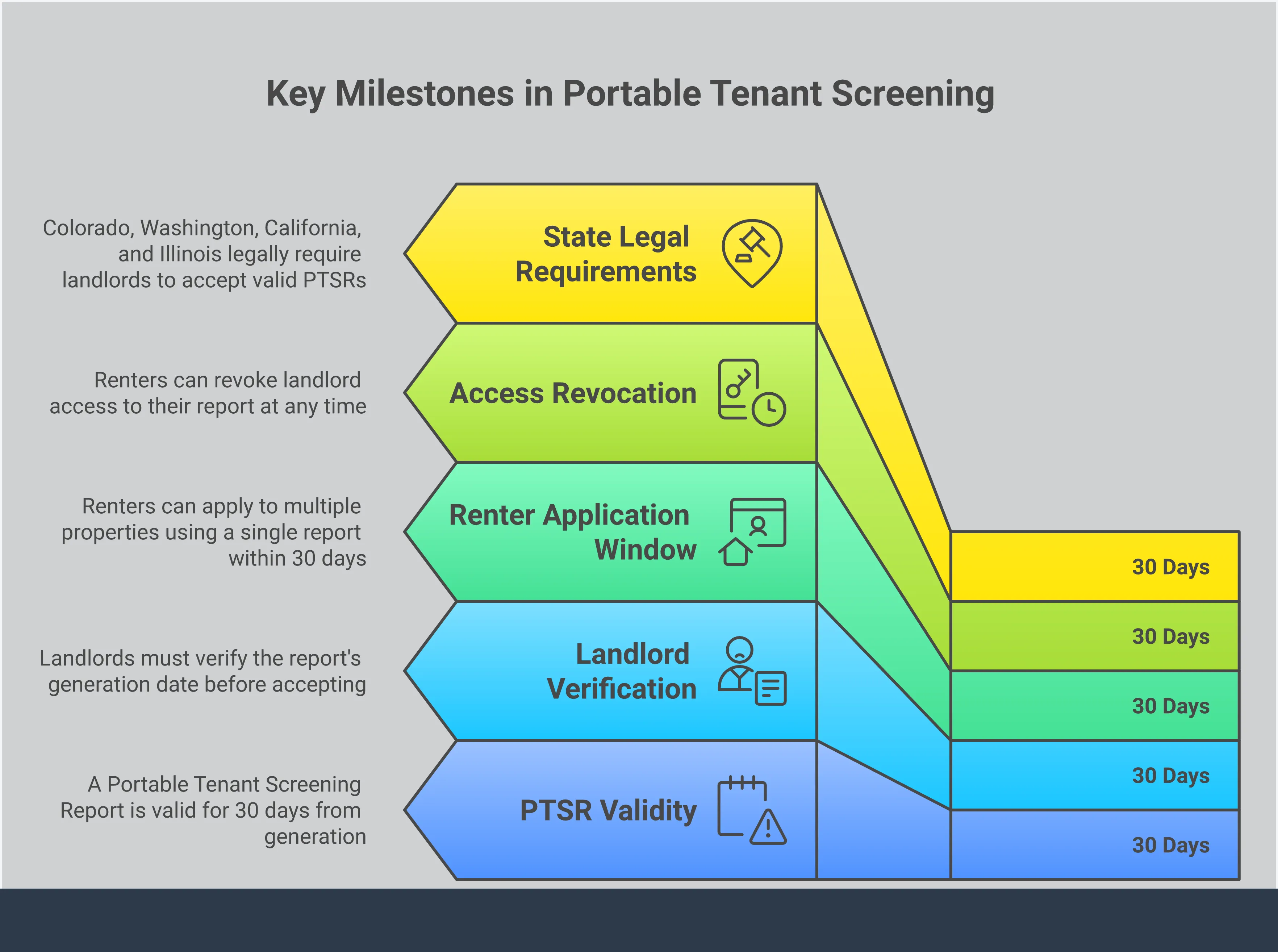
This digital key gives them temporary access to view your screening results through a secure online portal. You remain in complete control. You can see who has viewed your report and, most importantly, you can revoke access at any time. If you’ve decided not to move forward with a property or the 30-day application window closes, you can shut off access with a click, ensuring your personal data doesn't remain in someone else's hands indefinitely.
At first glance, traditional and portable screening seem to do the same thing: find a qualified renter. But the process you choose impacts everything from costs and timelines to data security for everyone involved. Understanding these key differences is the first step toward a smoother, more modern rental experience. Let's break down exactly how these two methods stack up against each other.
If you’ve ever applied for multiple apartments in a competitive market, you know how quickly application fees add up. With traditional screening, you pay a separate fee, often between $30 and $75, to every single landlord you apply with. This is because each landlord runs their own background and credit check. A Portable Tenant Screening Report (PTSR) changes the game. Instead of paying over and over, you pay a single, affordable fee for one comprehensive report. You can then reuse that same report for multiple applications within a 30-day window, helping you save money on application fees and avoid multiple hard inquiries on your credit history.
The traditional screening process is repetitive. Every time you apply for a new place, you fill out the same information and authorize a new background check. It’s inefficient for you and the landlord. A PTSR, on the other hand, is designed to be a reusable background check for renters. Think of it as your rental resume. You get one complete report that includes your credit, criminal, and eviction history, and you can share it with as many landlords as you like. This means you only have to go through the process once, making the entire experience more efficient for everyone involved.
Waiting to hear back about a rental application can be stressful. Traditional screening often involves a waiting period of several days while the landlord or property manager requests and reviews your information. This delay can mean missing out on a great apartment. Portable reports can significantly speed up the application process because the information is available instantly. As a renter, you can share your completed report with a potential landlord the moment you see a listing. Landlords can then review your information immediately, helping good tenants secure housing faster and landlords fill vacancies without unnecessary delays.
In a traditional application process, you hand over sensitive personal information, like your Social Security number, to multiple strangers. You have no control over how that data is stored or who has access to it. This can leave you vulnerable to data breaches. A PTSR puts you back in control of your personal data. With a service like Portable Tenant, you purchase your own report and share a secure link with landlords. They can view the report, but they don't get to keep your sensitive information. Best of all, you can revoke access at any time. This system simplifies compliance for landlords and reduces their liability, creating a safer process for everyone.
Navigating the legal side of tenant screening can feel like a full-time job, but it’s one of the most important parts of being a landlord. The rules are there to ensure a fair process for everyone, and following them protects you from potential disputes and legal headaches. While portable tenant screening reports (PTSRs) streamline the application process, they don’t give you a pass on compliance. In fact, in many states, they introduce a few new rules you need to know.
Think of it this way: your core responsibilities under laws like the Fair Housing Act remain the same, but how you handle applications involving a PTSR might change. You still need to apply your screening criteria consistently and handle rejections properly. On top of that, you’ll need to understand your state’s specific stance on accepting portable reports and what that means for charging application fees. Getting these details right from the start builds trust with applicants and keeps your rental business running smoothly and ethically. We’ll walk through the key legal areas you need to keep on your radar.
The golden rule of tenant screening is to be consistent. The Fair Housing Act prohibits discrimination based on race, color, religion, sex, disability, familial status, or national origin. The best way to comply is to establish written screening criteria and apply them uniformly to every single applicant. This means deciding on your minimum credit score, income requirements, and other qualifications before you even list your property.
Whether an applicant submits a PTSR or you run your own report, your standards should not change. Documenting your criteria and applying it equally to everyone creates a clear, defensible process. This consistency is your best protection against accusations of discrimination and ensures you’re making decisions based on legitimate business reasons, not personal bias.
If you decide to deny an applicant, require a co-signer, or charge a higher security deposit based on information in their screening report, you are taking what’s legally known as an "adverse action." Under the Fair Credit Reporting Act (FCRA), you are required to notify the applicant. This is done by sending an adverse action notice.
This notice must inform the applicant that they were denied because of information in their report. It also needs to include the name and contact information of the screening company that provided the report (like Portable Tenant) and clarify that the screening company did not make the rental decision. This gives the applicant a chance to review their report for inaccuracies.
This is where things get specific. While the concept of a PTSR is gaining ground everywhere, the actual laws governing them vary by location. Several states, including Colorado, Washington, California, and Illinois, have passed legislation that legally requires landlords to accept PTSRs as long as they meet certain conditions. For example, in Colorado, you must accept a report if it was generated within the last 30 days and includes all the necessary background and credit checks.
As a landlord, it’s your responsibility to know the rules in your city and state. Rejecting a valid PTSR in a state where they are legally protected could lead to complaints with housing authorities. Checking your local landlord-tenant laws is a crucial step to ensure you’re fully compliant.
One of the biggest legal shifts that comes with PTSRs involves application fees. In states that mandate the acceptance of portable reports, you generally cannot charge an applicant a fee if they provide you with a valid, complete, and recent PTSR. For instance, California’s Assembly Bill 2559 explicitly requires landlords to accept these reports and waive the corresponding fee.
The goal of these laws is to reduce the financial burden on renters who are applying to multiple properties. Of course, this only applies if the report meets the legal standards. If a renter’s PTSR is outdated or missing key information, you can still require them to pay for a new screening through your preferred service. It’s all about making the process more efficient and affordable without compromising on the quality of your screening.
The rental process can often feel like a tug-of-war, with landlords and renters on opposite sides. But it doesn’t have to be that way. Portable tenant screening reports, or PTSRs, create a smoother, more efficient system where everyone comes out ahead. By shifting the process to be more transparent and renter-driven, PTSRs build trust and save valuable resources for both parties. It’s a modern approach that streamlines applications, protects sensitive information, and ultimately helps great tenants find great homes faster.
For renters, the financial strain of application fees adds up quickly. Paying a separate fee for every apartment you see is not only expensive but also results in multiple hard inquiries that can ding your credit score. A portable report changes the game completely. You pay once for a comprehensive screening report that you can reuse for multiple applications within a 30-day window, saving you time and money.
For landlords, this is just as beneficial. When you accept PTSRs, you instantly make your property more appealing to a wider pool of qualified applicants. Great tenants who are tired of shelling out cash for fees will be more likely to apply to your vacancy. It signals that you’re a modern, fair-minded landlord, which helps you attract the best renters and fill your units without delay.
In a traditional application process, renters hand over their most sensitive personal information, like their Social Security number and income details, to multiple strangers with little control over how that data is stored or protected. Portable screening puts the power back where it belongs: with the renter. You own your report and grant temporary, secure access to potential landlords.
With a service like Portable Tenant, you can revoke access at any time, giving you complete peace of mind. For landlords, this is a huge relief. You get the verified information you need to make a confident decision without the liability of storing applicants' personal data. This reduces your risk of data breaches and simplifies your compliance with privacy regulations, making it a secure process for everyone involved.
In a competitive rental market, speed is everything. Landlords need to fill vacancies quickly to avoid lost income, and renters need to secure a home before someone else does. Portable screening accelerates the entire timeline. Instead of waiting days for a background check to clear, landlords receive a complete, verified report from the applicant instantly.
This allows landlords to make informed decisions in a matter of hours, not days. You can quickly vet qualified candidates and extend a lease offer to your top choice while they are still highly interested in your property. For renters, this means no more anxious waiting. You get a clear yes or no much faster, allowing you to either sign a lease or confidently move on to the next opportunity without losing momentum.
The administrative side of managing rental applications can be a major time sink for landlords and property managers. Chasing down application fees, manually entering data, and filing paperwork takes you away from more important tasks. When you accept PTSRs, the applicant does the heavy lifting by providing a complete, ready-to-review report.
This streamlined workflow means less administrative work for you and a simpler, more convenient experience for your potential tenants. By reducing the friction in the application process, you not only save yourself time but also create a positive first impression. Renters appreciate a straightforward system, and a hassle-free application can set the stage for a great landlord-tenant relationship from day one. It’s an easy way to improve your rental management process.
Portable screening reports are making the rental process much smoother, but it’s smart to know the rules of the road. Whether you're a renter saving on application fees or a landlord filling a vacancy, a few key details make all the difference. Paying attention to the report's age, its source, and its contents ensures the process is fair and secure for everyone. Think of it as a quick checklist to run through before you proceed. This helps you avoid common pitfalls and make the most of this modern approach to renting.
A key feature of a portable screening report is its reusability, but it does have an expiration date. A PTSR is valid for 30 days from when it was generated. For renters, this is your window to apply for multiple properties with one report, saving you time and money. For landlords, this means you should always check the date on any report you receive. If it’s older than 30 days, the information may be outdated, and you can request a more current one. This 30-day rule balances convenience for the applicant with the need for accurate, timely information for the property owner.
The quality of a screening report is non-negotiable. While some services offer free or cheap reports, they often leave out critical information. A bare-bones report might be missing a nationwide eviction history or a complete criminal background check, leaving landlords with an incomplete picture. As a landlord, you aren't obligated to accept a report that doesn't meet your standards. Renters should also be wary, as submitting a flimsy report could lead to a quick denial. It's always better to use comprehensive screening reports that cover all the necessary details from the start.
For a portable screening report to be legally valid, it must come from a certified consumer reporting agency. State laws specify what must be included, such as a credit report, criminal background check, and eviction history. If a report is missing any of these required components, a landlord can reject it. To avoid problems, renters should choose a provider that guarantees its reports meet local regulations. Landlords should also know their state's requirements to ensure you're compliant when accepting and reviewing PTSRs. This protects both you and the applicant.
New processes always come with questions, and portable tenant screening reports are no exception. If you're a landlord, you've probably heard a few things about PTSRs that gave you pause. It's completely normal to be cautious when it comes to your rental business. Let's clear the air and walk through some of the most common myths so you can feel confident about how these reports work.
This is a big one, and the answer isn't a simple yes or no. Your ability to reject a PTSR depends entirely on your local and state laws. In states with portable screening legislation, like Colorado, you are generally required to accept a report from a prospective tenant as long as it meets certain criteria, such as being from a qualified provider and generated within the last 30 days. The goal of these laws is to reduce the financial burden on renters. Before you decide to reject a report, it's essential to understand the specific rules for landlords in your area to ensure you remain compliant and avoid any legal trouble.
It’s smart to question the quality of any screening report. However, the idea that PTSRs are less reliable is a misconception. A report from a reputable provider contains the exact same depth of information you’d get from a traditional screening service. For example, a Portable Tenant report is powered by Experian and includes a full credit report, a nationwide criminal and eviction history, and income verification. The data is comprehensive and secure, giving you a complete picture of the applicant. The only difference is that the renter initiates the report and shares it with you, which actually streamlines the entire process.
This is simply not true. Accepting a portable report is just the first step in your review process; it does not obligate you to approve the applicant. You still have the complete authority to review the information provided in the PTSR and measure it against your own established, fair, and non-discriminatory rental criteria. Think of it as receiving the application packet. You still need to read through it and decide if the applicant is a good fit for your property based on your standard qualifications. Accepting the report just means you agree to review it. You can find more answers to common questions in our help center.
While renters definitely benefit by saving time and money on application fees, landlords see significant advantages, too. Accepting PTSRs means you get screening information almost instantly, allowing you to make decisions much faster and fill vacancies sooner. Since the renter provides their own report, it also cuts down on your administrative work. You spend less time collecting fees and running reports yourself, and our pricing model means there's no cost to you. This efficiency gives you a competitive edge by creating a smoother leasing experience that attracts responsible tenants.
Whether you use a traditional screening service or accept a portable report, a few key practices can make the process smoother and fairer for everyone. Following a consistent, transparent process doesn't just help you find a great tenant; it also keeps you compliant with housing laws and protects you from potential disputes. Think of these steps as your foundational guide to smart and responsible tenant screening. They ensure you’re making decisions based on clear criteria while respecting the applicant's rights, which is always a winning strategy.
A screening report is only as reliable as its source. Before you review the details, confirm that the report comes from a reputable consumer reporting agency. A professional report from a trusted provider ensures the data is accurate and legally compliant. Just as important is the date it was generated. Most states with portable screening laws specify that a report must be no more than 30 days old. This is a good rule of thumb for any report, as it ensures you’re looking at the most current picture of an applicant’s financial and rental history. An old report might not reflect recent changes, leaving you with an incomplete puzzle.
Before you even post a rental listing, you should have your screening criteria written down. This document should outline your requirements for credit score, income, rental history, and criminal background. The key is to apply these standards equally to every single applicant. Having clear, documented criteria is one of the best ways to stay compliant with Fair Housing laws and avoid accusations of discrimination. It removes guesswork and subjectivity from your decision-making process, ensuring you treat everyone fairly. This isn't just about legal protection; it’s about creating a transparent and ethical rental process from the start.
To prevent confusion and save everyone time, state your screening policy clearly in your rental advertisement. If you accept portable tenant screening reports, say so! In states like Colorado and California, landlords are legally required to accept a PTSR if it meets the state’s requirements. Being upfront about this shows you’re a modern, compliant landlord. By clearly communicating which reports you accept, you streamline the application process for prospective tenants and position yourself as an informed property manager. This simple step helps attract prepared applicants and sets a positive tone for your future landlord-tenant relationship. You can learn more about how this benefits landlords on our site.
While a PTSR is comprehensive, there are times when you might need more information. For example, if a report is older than 30 days, it's perfectly reasonable to ask the applicant to provide a more current one. You should also be cautious of altered documents. A legitimate report should always come directly from the screening service, not as a forwarded email or PDF from the applicant. Services like Portable Tenant send a secure link directly to you, which prevents tampering and confirms the report's authenticity. This secure process gives you confidence that the information you’re reviewing is accurate and has not been modified.
This is a great question for both renters and landlords. If you're tired of the old, repetitive, and often expensive rental application cycle, a portable screening report might be the change you need. For renters, it means applying to multiple homes without paying multiple fees. For landlords, it means getting comprehensive, verified information faster so you can fill your vacancies with qualified tenants. It’s about making the entire process more efficient, secure, and fair for everyone. Let's look at how this works in practice.
One of the biggest concerns for landlords is whether a renter-provided report is reliable. A Portable Tenant Screening Report (PTSR) is a certified, reusable screening document that includes everything you need: credit history, a nationwide background check, and eviction records. To be valid in states with PTSR laws, a report must contain a credit report, criminal background check, eviction history, and verification of income and identity. This ensures you receive a complete picture of the applicant. With a provider like Portable Tenant, you can be confident the information is accurate and comes directly from a trusted source like Experian, giving you the same quality data you'd get from a traditional screening, but in a more streamlined format.
The most obvious benefit of portable screening is the savings. Renters use them to save money on application fees because they aren't paying for a new report for every place they apply to. You pay for one report and can use it for multiple applications within 30 days. This also means fewer hard inquiries on your credit. For landlords, the savings come from time. Because renters can share their report instantly, you can make decisions faster and reduce the time your property sits vacant. It streamlines your workflow, letting you focus on finding the right tenant instead of waiting for screening results to come back from different services.
What if a renter hands me a report that seems incomplete or has been altered? A legitimate portable report should never be a PDF or a forwarded email from the applicant. A secure provider will send you a unique link to view the report directly on their platform, which ensures the information is authentic and hasn't been changed. If a report is missing required information, like a credit check or eviction history, or if it's older than 30 days, you are not obligated to accept it.
What should I do if a landlord won't accept my portable report? First, it helps to know the laws in your state. In places like Colorado, Washington, and California, landlords are legally required to accept a valid portable report. If you're in one of those states, you can politely inform the landlord of the law. If you're elsewhere, remember that while many landlords appreciate the efficiency, they aren't always required to accept them. The good news is that as more people use them, acceptance is becoming much more common everywhere.
How is my sensitive information actually protected when I share a report? This is one of the biggest benefits. Instead of giving your Social Security number and other personal details to multiple people, you share a secure, temporary link. The landlord can view your report through a protected portal, but they don't get to download or keep your sensitive data. You stay in control and can even revoke access at any time, which is a level of security you just don't get with traditional paper applications.
If I use a portable report, does that mean I'm more likely to get the apartment? Using a portable report doesn't guarantee you'll be approved, but it does give you a strong advantage. It shows you're a prepared and serious applicant, and it allows the landlord to review your information almost instantly, which can help you get noticed first. However, the landlord will still review your information against their standard rental criteria, so the final decision will always be based on your qualifications.
Are these reports only useful in the few states that have laws about them? Not at all. While the laws in certain states make it a requirement for landlords to accept them, the benefits of portable screening are universal. Renters everywhere can save money on fees, and landlords everywhere appreciate a faster, more streamlined application process. Accepting a portable report is a sign of a modern, efficient landlord, which helps them attract great tenants in any market.