
You hit ‘submit’ on a rental application and the waiting game begins. You know a landlord is looking at your credit, but what do they actually see? It can feel like your financial life is being judged from behind a curtain. Often, what they’re reviewing is an Experian credit report for rental application purposes, which is a detailed summary of your financial habits. Understanding what’s inside this report isn’t just for satisfying curiosity; it’s about taking back control. We’ll break down what landlords look for, how to fix errors, and how you can present your best financial self with confidence.
When you apply for a new apartment, there's a good chance the landlord will ask to see your credit report. Often, this report comes from Experian, one of the three major credit bureaus in the U.S. Think of an Experian credit report as a financial resume. It gives a potential landlord a snapshot of your financial habits and helps them feel confident that you'll pay your rent on time. It’s a standard part of the rental process designed to protect both you and the property owner, creating a foundation of trust from the very beginning.
Experian offers specific tenant screening services that package this information for landlords and property managers. These reports go beyond just a credit score. They can include details about your payment history, current debts, and sometimes even verification of your income and employment. For you as a renter, understanding what’s in this report is the first step to putting your best foot forward. It’s not about judging you; it’s about building trust with your future landlord by showing you’re a reliable applicant. Knowing what they see allows you to prepare, fix any errors, and present a complete picture of your financial health. This proactive approach can make a huge difference in a competitive rental market.
Experian isn't the only name in the game; it works alongside Equifax and TransUnion. While all three bureaus collect similar information about your credit history, the way they calculate your score can vary slightly. Most landlords look at scoring models like FICO® Score 8 or VantageScore®, which both use a scale from 300 to 850. Generally, a score of 670 or higher is considered 'good.'
The key factors influencing your Experian score include your payment history, how much of your available credit you're using, the age of your credit accounts, recent applications for new credit, and the different types of credit you have. Understanding these components helps you know what landlords are looking for when they check your credit.
From a landlord's point of view, the main goal is finding a tenant who will pay rent consistently and on time. A credit check is one of the best tools they have to predict this. Landlords trust Experian because it provides a detailed, third-party look at an applicant's financial responsibility. It’s less about your exact income and more about how you manage your financial obligations.
Experian also offers landlords ways to automatically verify your income and employment, which saves everyone time and adds a layer of security. While a standard credit report doesn't show your rent payment history, some specialized screening services can. This helps landlords identify responsible renters and gives you a chance to be rewarded for your good history. For landlords, using a compliant and thorough service is key, which is why many turn to trusted solutions to screen tenants.
Think of your credit report as your financial resume. It tells a much deeper story than your three-digit credit score alone. When a landlord reviews your Experian report, they’re looking at the specific details to get a sense of your financial habits and reliability. Understanding what’s in that report is the first step to putting your best foot forward in a rental application. It’s not about having a perfect history; it’s about being prepared and knowing what your landlord sees. Let's break down the key sections you'll find.
This is the heart of your report. It lists your current and past credit accounts, like credit cards, student loans, and car payments, and shows how consistently you've paid them. Landlords pay close attention to this because a strong record of on-time payments suggests you'll pay your rent on time, too. While your credit score gives a quick summary, the report itself shows the details. A landlord can see if a late payment was a one-time slip-up or part of a pattern. They're looking for a reliable payment history, which is one of the best indicators you'll be a great tenant.
This section shows how much credit you're using compared to how much you have available. It’s often called your credit utilization ratio. For example, if you have a credit card with a $10,000 limit and a $1,000 balance, your utilization is 10%. Landlords look at this because high balances across your accounts can suggest you're stretched thin financially, even if you haven't missed a payment. Keeping your amounts owed low is a good strategy, as it shows you manage your finances without relying too heavily on credit. It gives a landlord confidence that you have room in your budget to comfortably handle rent each month.
This part of the report lists financially related information from public records. This can include things like bankruptcies, accounts sent to collections, or civil judgments. These are significant red flags for landlords because they often point to serious financial difficulties. It's also where errors can cause major headaches. If you find a mistake, you have the right to dispute it. In fact, if a landlord rejects your application because of information in your report, they must give you an adverse action notice. This notice allows you to get a free copy of the report and correct any inaccuracies, so you can fix the issue for your next application.
Your Experian credit report tells a story about your financial habits, and landlords read it to gauge your reliability. They look for a history of on-time payments and responsible credit use to feel confident you’ll be a great tenant. While a high score helps, it’s not the only thing that matters. Understanding what landlords look for, what your rights are, and how to present your financial picture in the best light can make all the difference in your apartment search.
There isn't one specific credit score you need to rent an apartment, as requirements change based on the property and landlord. While landlords check your credit, it’s just one piece of the puzzle. Generally, a score in the 600 to 650 range can improve your chances, but it’s not a strict cutoff. Most landlords use common scoring models like FICO Score 8 or VantageScore. Don't lose hope if your score is lower than you’d like; it's still possible to rent an apartment even with a challenging credit history.
One of the biggest myths is that rent payments don't affect your credit. In reality, consistent, on-time rent can be a huge asset. You don’t need a mortgage to prove you’re financially responsible; your rent can serve as a powerful tool to demonstrate reliability. When landlords see a positive rental payment history, it gives them confidence that you’ll pay on time. This is especially helpful if you have a limited credit history or are working to improve your score, as it directly reflects your ability to handle your most important bill.
If a landlord rejects your application because of your screening report, it’s called an "adverse action." By law, they must notify you. This is important because it triggers your right to request a free copy of the report from the screening company. If you find accurate negative marks, like a past late payment, be ready to explain the situation honestly. Providing context around what happened and what you’ve done to resolve it can show a landlord that you’ve learned from the experience and are a responsible applicant today.
Seeing your credit report laid out in black and white can feel a little intimidating, but think of it as a starting point. Your score isn't set in stone, and with a bit of planning, you can present the best possible version of your financial self to potential landlords. Taking these steps before you start your apartment hunt can make the application process much smoother. It’s all about being proactive and putting yourself in the driver's seat.
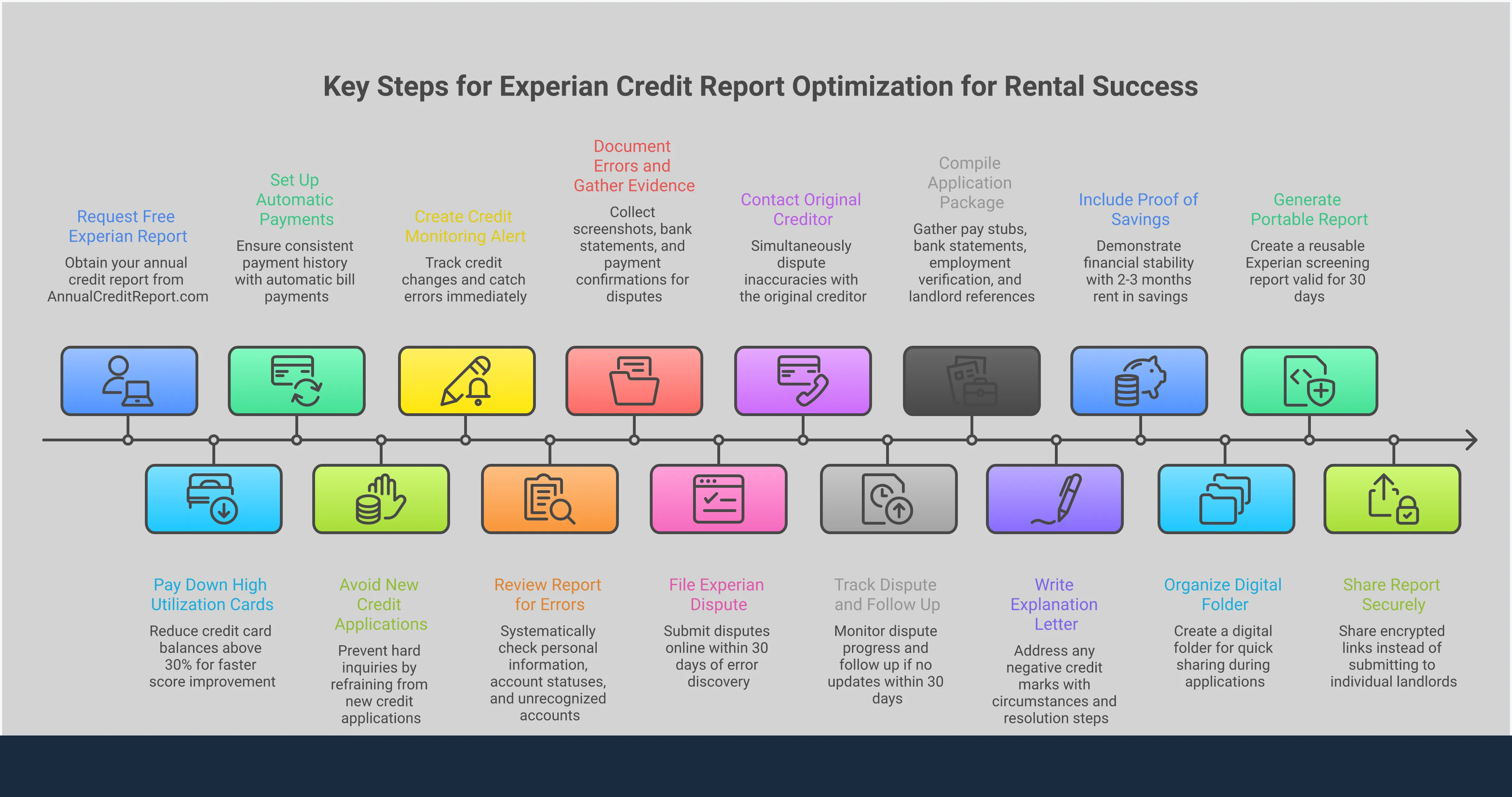
One of the quickest ways to influence your credit score is to address your credit card balances. Landlords and credit models look at your credit utilization ratio, which is just a fancy way of saying how much of your available credit you're using. High balances can lower your score, so if you can, focus on paying down the cards with the highest balances first. Even small payments can make a difference. If you're working on rebuilding your credit, making consistent, on-time payments is the most important habit you can form.
You might be surprised to learn that credit reports can have mistakes, and those errors could be holding your score down. Reviewing your report early gives you time to spot and correct any issues before a landlord ever sees them. Look for accounts you don't recognize, incorrect payment statuses, or personal information that isn't yours. If a landlord denies your application because of something on your report, they are required to tell you. This gives you a chance to see the report they used for free and correct any errors that shouldn't be there.
When you're actively searching for a new place, it's wise to put a temporary pause on other major financial moves. Applying for a new credit card or a car loan triggers a hard inquiry on your credit report, which can cause a temporary dip in your score. While one inquiry isn't a big deal, several in a short period can look like a red flag to landlords. The simple solution is to wait until after you’ve signed your new lease to apply for new lines of credit. This small bit of patience ensures your credit score is as stable as possible when it matters most.
Heading into your apartment search without knowing what’s on your credit report is like going on a road trip without a map. You might get there, but you could hit some unexpected bumps. Taking a look at your Experian report beforehand gives you the power to fix any errors and prepare for any questions a landlord might have. It’s a simple step that can make your rental application process much smoother. Think of it as a sneak peek that helps you put your best foot forward.
Before you even start browsing listings, it’s smart to get a clear picture of your credit. You are entitled to a free credit report from each of the three major bureaus (Experian, Equifax, and TransUnion) once a year. You can request your reports through the official government-mandated site, AnnualCreditReport.com. This gives you a chance to see exactly what potential landlords will see.
Another great option is using a service like Portable Tenant. When you generate your reusable report, you get a comprehensive, Experian-powered screening that you control. This way, you not only see your credit information but also have a secure, shareable report ready for your applications, saving you from paying multiple application fees.
Once you have your report, review it carefully. First, check that all your personal information is correct. Then, look through your accounts. Are there any late payments you don't recognize? Or accounts that aren't yours? These errors can drag down your score and need to be corrected. Pay attention to your credit utilization rate, which is the amount of credit you're using compared to your total limit; landlords often see a high rate as a risk.
If you find negative information that is accurate, like a past late payment or an account in collections, don't panic. The Consumer Financial Protection Bureau advises that you should be prepared to explain the situation to the landlord. Sometimes, a good explanation and proof of your current financial stability can make all the difference.
Finding an error on your credit report can be stressful, but you have the right to an accurate report under the Fair Credit Reporting Act (FCRA). If you spot a mistake on your Experian report, you can and should dispute it. The process is straightforward. First, gather any documents you have that support your claim. Next, you’ll need to file a dispute directly with Experian, which you can do online, by mail, or by phone.
It's also a good idea to contact the company that reported the incorrect information. The Federal Trade Commission provides a clear, step-by-step guide on how to dispute credit report errors. The credit bureau generally has 30 days to investigate and must correct any proven inaccuracies.
A low credit score or a thin credit file can feel like a huge hurdle in your apartment search, but it doesn't have to be a dealbreaker. While landlords look at your Experian credit report, your score is just one piece of the puzzle. Many are willing to look at the bigger picture, especially if you can show them you’re a responsible person. It’s all about knowing how to present yourself and your financial situation in the best possible light. Let's walk through how you can build a strong application, even if your credit isn't perfect.
If you know there are some dings on your credit or rental history, the best strategy is to be upfront. Don't wait for the landlord to discover a past late payment and draw their own conclusions. Instead, prepare a brief, honest explanation. You can write a short letter to include with your application that details what happened and the steps you've taken to resolve it. The Consumer Financial Protection Bureau suggests explaining the situation to give a landlord the context they need to make a fair decision. This proactive approach shows maturity and proves you’re not hiding anything.
Your credit score doesn't tell the whole story, so give your application some backup. Focus on highlighting other areas where you shine financially. First, provide clear proof of income that shows you comfortably earn enough to cover rent, ideally three times the monthly amount. You can also offer to pay more upfront, like a larger security deposit or a couple of months' rent. Another great move is to gather letters of recommendation from previous landlords or your current employer who can speak to your reliability. Combining these elements with a letter explaining any past credit issues can create a compelling case for why you're the right tenant.
Remember, a landlord's main goal is to find a tenant who will pay rent on time. While an Experian credit check is standard, experienced landlords know it doesn't show your rental history. They understand that a credit score is just one factor in a complete risk assessment. Many landlords, especially independent owners, are more interested in your income stability and positive references from past landlords. By presenting a comprehensive application that includes income verification and personal references, you give them the full picture they need to feel confident in choosing you.
Finding the perfect rental is exciting, but the application process can feel like a marathon of paperwork and fees. You find a place you love, fill out a detailed application, pay a fee, and wait. If it doesn't work out, you start all over again with the next property. This cycle is not only draining, but it can also get expensive fast. What if you could streamline the whole thing?
There’s a much more efficient way to handle your rental applications, one that puts you in control while giving landlords the information they need. By combining the detailed data from an Experian report with the flexibility of a portable screening report, you can completely change your apartment-hunting experience. Instead of applying from scratch every time, you use one comprehensive, secure report for multiple listings. This approach saves you time, money, and a lot of headaches, letting you focus on finding a place you’ll be happy to call home.
When a landlord reviews your application, they’re looking for assurance that you’ll be a reliable tenant. That’s why so many of them trust Experian’s tenant screening services to get a clear picture of an applicant's financial history. When your screening report is powered by Experian, it carries a level of credibility that landlords recognize and respect.
A portable report takes this a step further. Instead of a landlord running a new check for every application, you own a single, reusable report. You get to see exactly what’s on it and can share it securely with any landlord you choose. This gives you transparency and control over your personal information, all while providing property managers with the trusted, in-depth data they need to make a confident decision.
Think about the last time you applied for a rental. You probably had to enter your name, address history, employment details, and income verification over and over again. It’s a tedious process that can make an exciting apartment search feel like a chore. A portable tenant screening report eliminates this repetitive work. You fill out your information just once to generate a comprehensive report.
From there, you can share your report with as many landlords or property managers as you like. This is especially helpful in competitive rental markets where you might need to apply for several places at once. Instead of juggling multiple applications and paying separate fees for each, you have one secure, shareable document. It simplifies the process for everyone and lets you move quickly when you find a place you love.
The most obvious benefits of a portable report are the savings in time and money. Application fees, which can range from $30 to $75 or more, add up quickly. With a portable report, you pay one flat fee for a report you can use for 30 days. You can see how the cost savings become significant after just one or two applications.
The time savings are just as valuable. Most reports are generated within minutes, so you don’t have to wait around to submit your application. In a fast-moving market, being able to provide a complete, verified screening report on the spot can be the very thing that sets you apart from other applicants. It shows you’re prepared, serious, and ready to move forward, giving you a major advantage.
What if my credit score isn't great? Will I automatically be denied? Not at all. While a high score is helpful, most landlords understand that a three-digit number doesn't tell your whole story. They also look at your income stability, references from past landlords, and your overall financial picture. If you know your credit has some blemishes, the best approach is to be upfront. Consider writing a brief, honest letter to include with your application that explains any past issues and highlights the steps you've taken to get back on track.
Does applying to multiple apartments hurt my credit score? It can, yes. When a landlord runs a credit check for a rental application, it often results in a "hard inquiry" on your report. While one or two won't cause much harm, several hard inquiries in a short period can temporarily lower your score. This is one of the main benefits of using a portable screening report. You generate your report once and can then share that single, secure document with multiple landlords, which avoids the problem of repeated hard inquiries.
I found a mistake on my report. What's the fastest way to fix it? Finding an error is more common than you might think, and you have the right to get it corrected. The most direct way to fix it is to file a dispute with the credit bureau that issued the report, in this case, Experian. You can do this on their website. Gather any documents you have that prove the information is wrong, as this will help speed up the investigation. The bureau typically has 30 days to look into your claim and remove any confirmed inaccuracies.
Why do I have to pay a separate fee for every single application? That fee usually covers the cost for the landlord or property manager to run your background and credit check through their chosen service. Since each property manager runs their own independent check, you end up paying their specific fee every time you apply. This is exactly the problem a reusable report solves. You pay one time for a comprehensive report that you control, and you can then share it with as many landlords as you need to for a set period, saving you from those repeated costs.
How does a portable report give landlords what they need? A quality portable report provides landlords with the same trusted information they would get from running their own check. A comprehensive report powered by Experian includes your credit history, payment patterns, and any public records, which are the key things landlords look for. It also often includes verified income and a nationwide eviction history, giving them a complete and reliable picture of you as an applicant. It delivers everything they need in one secure, easy-to-review package.