
Submitting a rental application can feel like sending your personal information into a black box. You hit "submit" and hope for the best, with no idea what a landlord will see or if the information is even accurate. What if there’s a mistake on your record you don’t even know about? An error could cost you the perfect apartment. This is why I decided to get my own tenant screening report before I even started my search. It allowed me to review everything, fix any inaccuracies, and approach landlords with total confidence. This guide will show you how to read your report, correct errors, and use transparency to build trust and make a great first impression.
Think of a tenant screening report as a background check specifically for renters. When you apply for an apartment, landlords use this report to get a clear picture of your history as a tenant and your financial reliability. It’s their way of making an informed decision about whether to approve your application. The report gives them a snapshot of your credit, criminal, and eviction history, helping them feel confident they’re choosing a responsible person to live in their property. It’s a standard part of almost every rental application process.
Traditionally, you pay an application fee for each apartment, and every landlord runs this check on their own. But here’s a smarter approach: getting your own report first. In a competitive rental market, being prepared can make all the difference. When you run your own screening, you take control of the process. You know exactly what’s on your report before a landlord ever sees it, and you can use that single report for multiple applications. This is especially true with a portable screening report, which is designed to be shared securely with as many landlords as you need. It saves you time, money, and a lot of stress by eliminating repetitive fees and paperwork.
A comprehensive tenant screening report usually pulls together information from a few key areas to give landlords a full picture. While the exact format can vary, you can expect it to include these four main parts:
Walking into an apartment viewing with your screening report already in hand is a powerful move. It immediately shows the landlord that you’re organized, transparent, and serious about the rental process. This simple step can set you apart from other applicants right away. More importantly, it gives you a crucial opportunity to review your own information. You can check your report for any errors, like an incorrect debt or a past address that isn’t right, and get them fixed before they cause any issues with your application.
Knowing what’s on your report also helps you prepare. You can see if your credit score and income align with what landlords in your area are looking for. If there’s a blemish on your record, you’ll have the chance to prepare a thoughtful explanation for it. Instead of being caught off guard by a landlord’s questions, you can address any potential concerns proactively, showing maturity and responsibility.
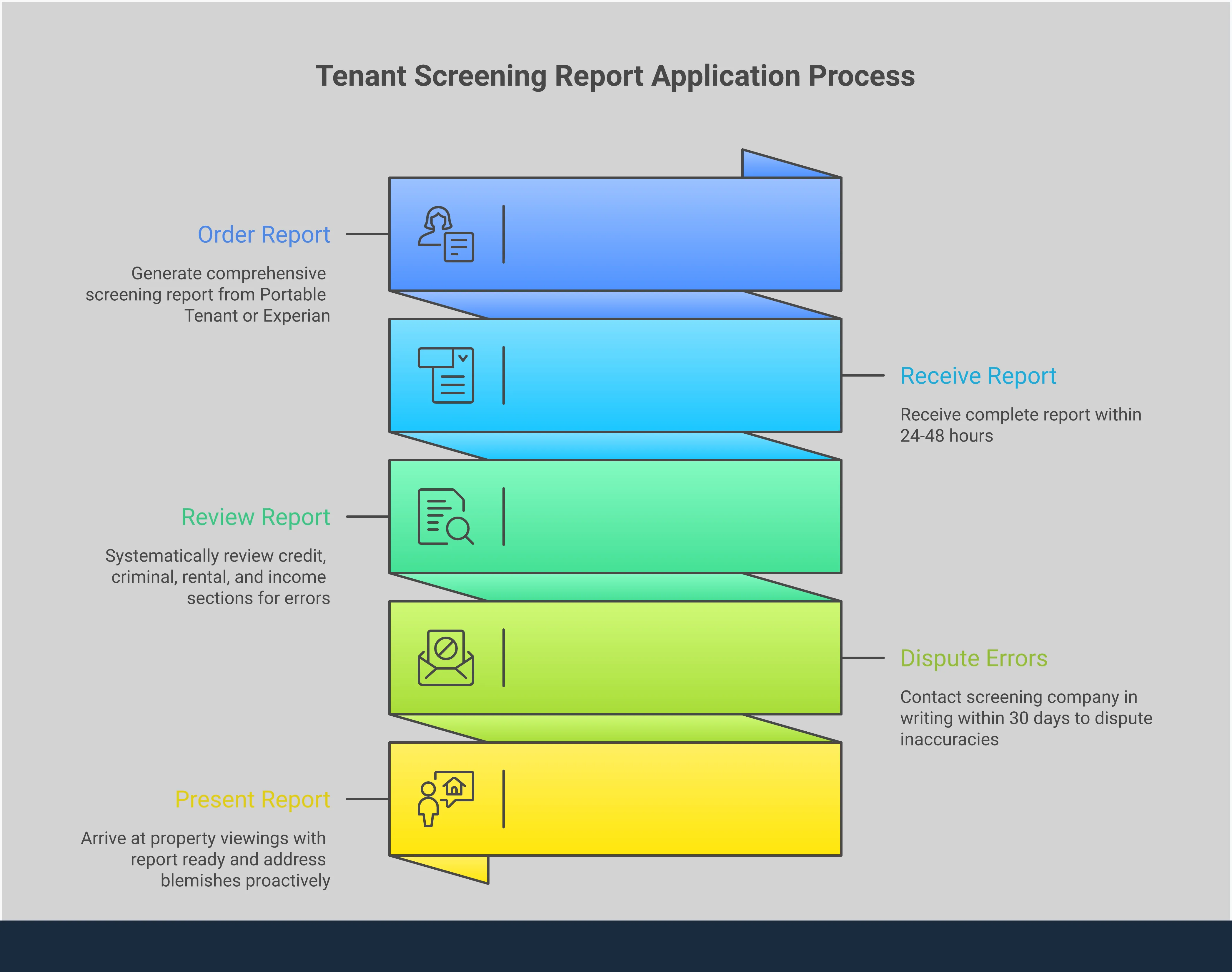
Getting your hands on your tenant screening report before you even start applying for apartments is one of the smartest moves you can make in your rental search. It puts you in the driver's seat, allowing you to check for errors and address any potential red flags ahead of time. The good news is, the process is more straightforward than you might think. Whether you use a portable report service or go another route, here’s how you can get a copy of your own report.
The easiest way to get your screening report is by using a service that creates a Portable Tenant Screening Report (PTSR). Think of a PTSR as your rental resume; it includes your credit history, background check, and eviction history all in one secure file. With Portable Tenant, the process is straightforward. You create an account, verify your identity, and generate a comprehensive report powered by Experian. The best part? You pay for it just once and can share it with as many landlords as you like for 30 days. This saves you from paying separate application fees for every apartment you’re interested in and gives you total control over who sees your personal information.
Traditionally, landlords are the ones who run screening reports on applicants through their own preferred screening companies. If a landlord runs a report on you and decides not to offer you a lease based on its contents, you have a right to request a copy. This is crucial, as it’s your first line of defense against inaccuracies. However, this approach is reactive. You’re waiting to see what a landlord finds instead of getting ahead of the process. Getting your report after the fact means you’ve already lost out on that specific rental, so it’s always better to review your information before you start applying.
To generate an accurate screening report, you’ll need to provide some key personal information. Having these details ready will make the process quick and seamless. It’s a good idea to gather everything before you start so you aren’t scrambling for documents later.
Here’s a quick checklist of what you’ll typically need:
The cost of a tenant screening report is a key part of budgeting for your apartment search. While some landlords might cover the fee, it’s common for applicants to pay for their own screening. This means you could be paying for a new report with every single application you submit. In a competitive rental market, those fees can add up quickly. Understanding the costs upfront helps you plan your move and find ways to save money. Let’s break down what you can expect to pay and how a portable report completely changes the game.
A Portable Tenant Screening Report (PTSR) is a single, comprehensive background check that you can reuse for multiple rental applications. Instead of paying a new fee to every landlord, you pay once for a report that includes your credit history, criminal background, and eviction records. This reusable report puts all your essential information in one secure place. You purchase it, you own it, and you decide when to share it with potential landlords. It’s a smarter, more efficient way to handle the application process, saving you from the hassle and expense of repeated screenings.
Application fees can stack up fast. A standard background check for a rental application typically costs between $30 and $75. If you apply for three or four different apartments, you could easily spend over $200 on screening fees alone. Since landlords order these reports individually, you pay the price each time. With a service like Portable Tenant, you pay a single, transparent flat fee for a report you can use for 30 days. This approach not only saves you money but also simplifies your search by eliminating surprise costs along the way.
You might be wondering if you can get these reports for free. Under the Fair Credit Reporting Act (FCRA), you are entitled to a free copy of your credit report from each of the major credit bureaus once a year. However, a full tenant screening report is more than just a credit check; it’s a detailed package that includes eviction and criminal history. Compiling this complete picture is a service that tenant screening companies provide. So, while you can access pieces of your financial data for free, a comprehensive, landlord-ready screening report typically comes with a fee.
Okay, you’ve got your report in hand. Now what? At first glance, it might look like a lot of official-looking jargon, but don't worry. Breaking it down is easier than you think. Understanding each section is key to presenting yourself as a great applicant and catching any potential errors before a landlord does. Think of it as your rental resume. Let's walk through the main parts so you know exactly what you're looking at and what landlords are looking for.
This part of your report gives a snapshot of your financial habits. It shows potential landlords how you handle your financial responsibilities, including your history of paying bills, how much debt you carry, and any major events like bankruptcies. Landlords look at this to gauge how likely you are to pay your rent on time each month. A strong credit history can make your application stand out, while a few hiccups might need some explaining. Review this section carefully to make sure all the accounts and payment histories listed are accurate and belong to you.
The background check is all about safety and responsibility. It typically includes a search of national criminal records, the sex offender registry, and any past eviction filings or housing court history. Landlords use this information to ensure they’re renting to someone who will be a safe and reliable member of their community. It’s a standard part of the process, so don’t be alarmed. Just review it to confirm that the information is correct and pertains to you. An error here, like a case of mistaken identity, is something you’ll want to clear up right away.
Think of this as your renting resume. This section lists your previous addresses and sometimes includes feedback from past landlords. A potential landlord will look at this to see your track record. They’re checking for stability, like how long you stayed at each place, and looking for any red flags, such as a history of evictions. If the report includes landlord references, it will confirm details like whether you paid rent on time and took good care of the property. Make sure your address history is accurate and that there are no surprises you weren't expecting.
This section is straightforward: it’s all about proving you can afford the rent. Your report will include information to verify your income, which might be based on documents you provided, like recent pay stubs, bank statements, or a new job offer letter. Landlords are looking for a stable income that’s high enough to cover rent and other living expenses comfortably. A common guideline they use is an income of at least three times the monthly rent. Double-check that the income reported is correct, as a simple typo could cause a landlord to overlook your application.
Screening reports are powerful, but they aren't perfect. Errors can and do happen. You might find outdated information, accounts that don't belong to you, or even incorrect public records. A simple mix-up of names or a clerical error could lead to a landlord unfairly denying your application. That’s why reviewing your report is so important. If you spot something that doesn’t look right, you have the right to dispute the errors. Catching these mistakes early puts you in control and ensures your report is a fair and accurate reflection of you as a tenant.
Finding a mistake on your tenant screening report can feel like a major setback, but don't panic. Errors happen, and more importantly, they are fixable. A simple typo, outdated information, or a case of mistaken identity can unfairly impact your rental applications. The good news is that you have the right to a fair and accurate report, and there’s a clear process for correcting any inaccuracies you find.
Think of it this way: your screening report is your rental resume. You wouldn't send out a resume with a glaring error on it, and the same principle applies here. Taking the time to review your report and dispute any mistakes is one of the most powerful steps you can take in your apartment search. It ensures landlords see the real you, not a version distorted by bad data. The law is on your side, and with a little diligence, you can get your report cleaned up and get back to finding your next home.
Correcting a mistake on your report involves a few straightforward steps. First, get a copy of your tenant screening report and review it line by line. Look for anything that seems off, from misspelled names and incorrect addresses to debts you don't recognize or eviction records that aren't yours. Once you’ve identified an error, document it clearly. Finally, you’ll need to formally file a dispute in writing with the screening company that generated the report. Be specific about what is wrong and why.
If a landlord denies your application because of something in your report, they are legally required to provide you with an "adverse action" notice. This notice must include the name and contact information of the screening company they used. This is your starting point. When you contact the screening company, do it in writing (email or certified mail is best for record-keeping). State your name, the report number if you have it, and clearly explain which items you are disputing. The screening company is then required by law to investigate your claim, typically within 30 days.
To make your dispute successful, you need to provide proof. Think of yourself as building a case. If the report shows a late payment you made on time, find the bank statement or canceled check that proves it. If it lists an eviction that was dismissed, get a copy of the court record. Any documentation you have, like old lease agreements or letters from previous landlords, can serve as powerful evidence to support your claim. After you submit your dispute and evidence, don’t be afraid to follow up. A polite phone call or email can help ensure your case is moving forward and gets the attention it deserves.
Understanding your rights is one of the most powerful tools you have as a renter. When it comes to tenant screening, federal law provides specific protections to ensure the process is fair and transparent. Knowing these rules helps you protect your personal information, correct inaccuracies, and approach your housing search with confidence. It’s not just about finding a place to live; it’s about making sure you’re treated fairly every step of the way.
The Fair Credit Reporting Act (FCRA) is a federal law designed to protect your information in consumer reports, and that includes tenant screening reports. Under the FCRA, you have the right to know what’s in your file and to access your own report. This means you can, and should, see the same information a potential landlord sees. This law ensures that the companies compiling these reports follow reasonable procedures for accuracy and that you have a way to dispute any incorrect information you find. It’s your data, and the FCRA gives you the power to review it.
If a landlord denies your application, asks for a co-signer, or requires a larger deposit because of something in your screening report, it’s called an "adverse action." Landlords are legally required to notify you if they take any adverse action based on your report. This notice must include the name of the screening company they used and inform you of your right to get a free copy of that report within 60 days. This is a critical protection because it gives you the chance to see exactly what information led to the denial and check it for errors.
You have the right to privacy and control over your personal data. The FCRA empowers you to challenge and correct inaccurate or outdated information on your screening report. But why wait for a problem to arise? Using a portable screening report puts you in the driver's seat from the start. Instead of having multiple landlords run your information, you control a single, secure report that you can share and revoke access to at any time. This proactive approach not only protects your privacy but also ensures you’re presenting the most accurate version of yourself to every potential landlord.
If you’ve ever applied for an apartment, you know the drill: you find a place you love, fill out a lengthy application, and pay a non-refundable fee for a background and credit check. If you don’t get it, you start the whole expensive, time-consuming process over again for the next place. A portable tenant screening report completely changes this outdated model. Instead of applying and paying over and over, you get one secure, comprehensive report that you can use for multiple applications, putting you in the driver's seat of your apartment search.
Imagine completing the screening process just once. That’s the core benefit of a portable report. You order one comprehensive report that includes your credit history, a nationwide criminal background check, and any eviction records. This report is then valid for 30 days, allowing you to share it with as many landlords or property managers as you need to. Instead of starting from scratch with every application, you have a ready-to-go screening package. This lets you move quickly when you find the perfect place, which is a huge advantage in a competitive rental market. It streamlines your search and eliminates the repetitive work of traditional applications.
In the past, submitting a rental application often felt like sending your personal information into a void. You had no idea who was seeing it or how it was being stored. A portable report gives you complete control over your information. You are the one who purchases the report, so you get to review it for accuracy before any landlord sees it. When you’re ready to apply for a property, you grant the landlord access. You decide who sees your data and when. Even better, you can revoke access at any time, ensuring your sensitive information remains private and secure once you’ve found your new home.
Application fees can be a major financial hurdle during an apartment search. With fees often ranging from $30 to $75 per person, applying to just a few places can cost hundreds of dollars. A portable report replaces those repetitive costs with a single, one-time fee. You pay once for a report that you can reuse for 30 days, saving you a significant amount of money. It also saves you valuable time. You won’t have to repeatedly fill out your personal history, employment details, and rental background for every new application. This efficiency makes your apartment hunt less stressful and much more affordable.
Once you have your tenant screening report in hand, it becomes more than just a collection of data; it’s your key to navigating the competitive rental market. Instead of waiting for a landlord to run their own check and interpret the results on their own, you can take charge of the narrative. Presenting your own comprehensive report shows that you’re prepared, transparent, and serious about your application. It’s about turning a standard screening process into an opportunity to build trust and make a fantastic first impression. By knowing exactly what’s on your report, you can confidently address any questions and highlight your strengths as a reliable tenant, putting you miles ahead of other applicants who are just starting from scratch.
The best way to handle any potential issues on your report is to find them before a landlord does. When you get your screening report first, you have the chance to review your credit, eviction, and criminal history for any mistakes. Finding an error early means you can start the process to dispute inaccuracies and get them corrected. This proactive step ensures that the report you share is an accurate reflection of you. It prevents any unwelcome surprises during the application process and lets you present a clean, verified report that makes a landlord’s decision easy. It’s a simple move that shows you’re organized and on top of your responsibilities.
Life happens, and sometimes a report might have a legitimate blemish, like a late payment or a low credit score from a past hardship. Seeing this ahead of time gives you the power to frame the story. Instead of letting a landlord draw their own conclusions, you can prepare a brief, honest explanation. For example, you could mention a past medical bill or job loss and show how your financial situation has since improved. If a landlord denies your application based on your report, it’s called an “adverse action,” and they are required to tell you. Knowing this helps you prepare a thoughtful explanation for any potential concerns, showing maturity and accountability.
Imagine walking into a property viewing not just with questions, but with answers. Handing a potential landlord your complete, ready-to-go portable screening report instantly sets you apart. It shows you’re a serious applicant who respects their time and comes prepared. A Portable Tenant Screening Report provides a full picture of your rental, credit, and criminal history, giving a landlord everything they need in one secure package. This level of preparation can make you a more attractive candidate than someone who is just starting the application process. You’re not just another applicant; you’re the organized, transparent, and ideal tenant they’ve been looking for.
What if my report isn't perfect? Can I still rent an apartment? Absolutely. Very few people have a flawless record, and landlords know this. The key is to get your report first so you can see exactly what a landlord will see. This gives you the chance to prepare a brief, honest explanation for any issues, like a past late payment or a lower credit score due to a specific event. Being upfront and showing you’ve taken steps to improve your situation demonstrates responsibility, which can often be more impressive to a landlord than a perfect score.
Is a tenant screening report the same as a simple credit check? No, it’s much more comprehensive. While your credit history is a major component, a full tenant screening report also includes a nationwide criminal background check and a search for any past eviction records. It’s designed to give a landlord a complete picture of your reliability and history as a tenant, not just your financial habits. Think of the credit check as one chapter in the story; the screening report is the whole book.
Do all landlords have to accept my portable report? In states with portable tenant screening report laws, like Colorado and Washington, landlords are generally required to accept a valid report from a qualified provider. In other areas, it can vary. However, presenting a comprehensive, pre-paid report from a trusted source like Portable Tenant shows you are a serious and organized applicant. It saves the landlord time and effort, which is a compelling reason for them to accept it, regardless of local regulations.
How is getting my own report different from just letting the landlord run one? The biggest difference is control. When you get your own report, you see the information first. This allows you to check for and dispute any errors before a landlord ever sees them. You also control who you share your sensitive information with and can revoke access at any time. When a landlord runs the check, you are reacting to their findings and have no say in how your data is handled or stored.
How long is my portable report valid, and what happens after it expires? Your Portable Tenant Screening Report is valid for 30 days from the time you generate it. This window is designed to give you plenty of time to apply for multiple properties during an active apartment search. If your search takes longer, you can easily purchase a new, updated report to ensure landlords are seeing your most current information.