
If you’ve ever applied for multiple apartments, you know how quickly those application fees add up. Paying $50 here and $75 there just to be considered feels like a waste, especially in a competitive market. This cycle of paying for a new background check with every application is outdated and expensive. The modern solution is a single, reusable report that you can share with as many landlords as you like. It’s a smarter approach that saves you serious time and money. This article will break down what these reports are, why they matter, and exactly how to get my own renter screening report. You can stop throwing money away on fees and start applying with one comprehensive report that works for you.
If you’ve ever applied to rent an apartment, you know the drill: you fill out an application, pay a fee, and wait. During that waiting period, the landlord or property manager runs a renter screening report. Think of it as a background check specifically for renting. It’s a standard tool landlords use to get a clear picture of who you are as a potential tenant, helping them verify that you’re reliable, will pay rent on time, and will take care of their property.
While it might feel like just another hurdle in the apartment hunt, this report is incredibly important. It’s the primary document a landlord uses to make their decision. A great report can put you at the top of the pile, while a report with unexpected issues can get your application tossed aside. Understanding what’s in your report and making sure it’s accurate gives you a major advantage. It allows you to present the best version of yourself and address any potential red flags before they can sink your application. Knowing your own report puts you in the driver's seat of your rental search.
A renter screening report is essentially a resume of your financial and rental history. It pulls together information from different sources to give a landlord a comprehensive overview. While the exact format can vary, most reports include the same key pieces of information.
A typical screening report contains:
Each part helps a landlord assess risk and decide if you’re a good fit for their property.
Your screening report is one of the most critical factors in a landlord’s decision. A strong report with a solid credit history and no evictions can make your application stand out, while a report with negative marks can lead to a quick rejection. Landlords are looking for responsible tenants, and this report is their main tool for finding them.
The good news is that you have rights. Under the Fair Credit Reporting Act (FCRA), if a landlord denies your application because of something in your report, they are required to tell you. They must also provide you with the name of the screening company they used and inform you of your right to get a free copy of the report and dispute any inaccurate information.
Why wait for a potential landlord to run your report? Getting a copy for yourself before you even start applying is one of the smartest moves you can make. Reports can contain errors, like incorrect names, outdated debts, or information that belongs to someone else. These mistakes can unfairly cost you a great apartment.
When you check your own report first, you can spot and fix these errors ahead of time. This proactive step saves you from wasting money on application fees for places you might not get due to a simple mistake. It also gives you a chance to prepare explanations for any legitimate issues on your report, so you can address them with confidence when you talk to a landlord.
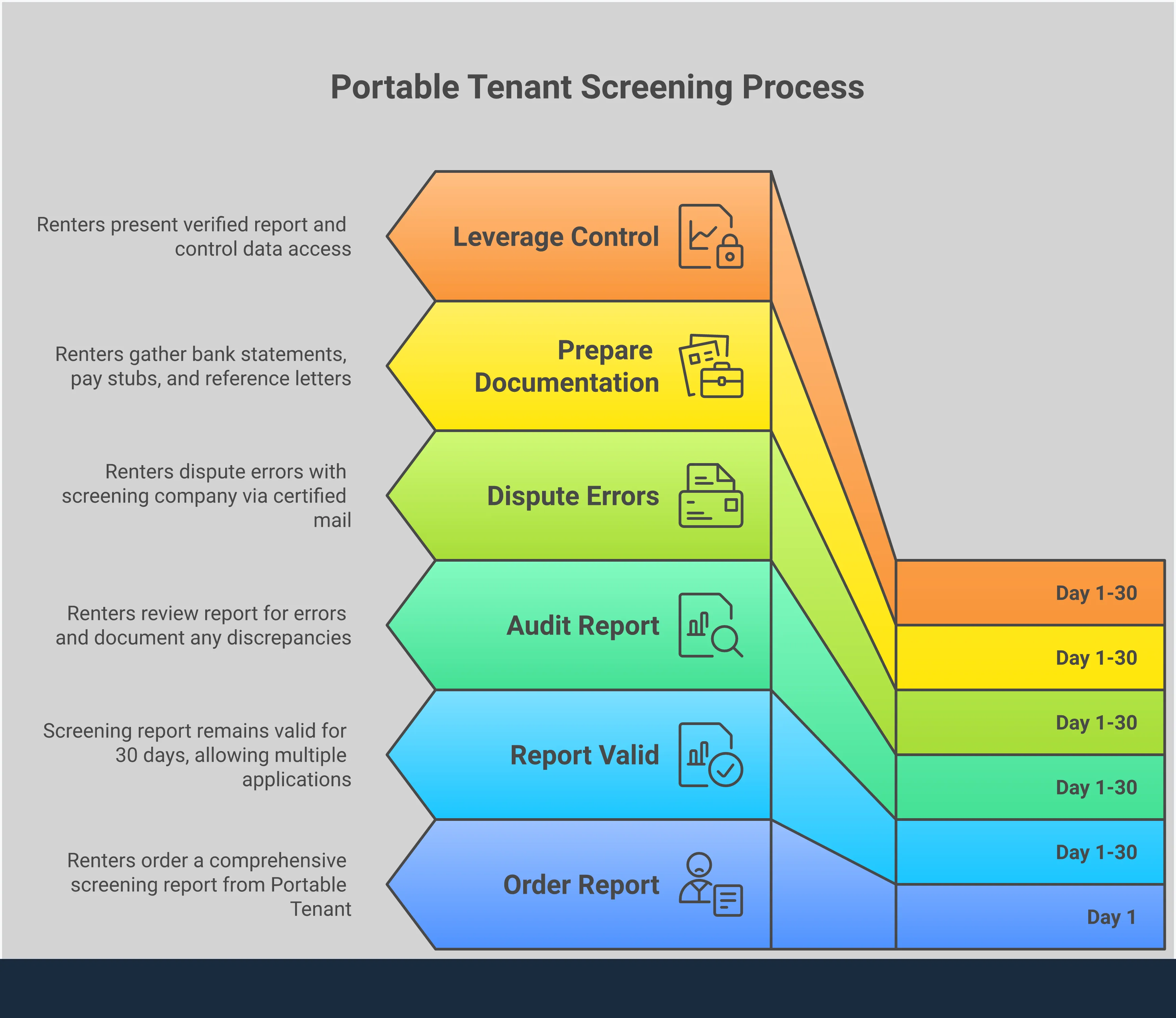
Getting a copy of your renter screening report is one of the smartest moves you can make during your apartment search. It lets you see exactly what landlords see, giving you a chance to spot errors and prepare for any tough questions before you even apply. Think of it as a sneak peek that puts you in the driver's seat. There are a couple of ways to get this information, from the traditional route of asking a landlord to the more modern approach of generating your own reusable report. Let's walk through the steps for each method.
If you’re applying for a specific apartment, a good first step is to simply ask the landlord or property manager which screening company they use. Landlords don't create these reports themselves; they hire third-party companies that gather your personal information and use their own scoring systems to assess you as a potential tenant. Knowing the name of the screening service gives you a starting point. You can look up that company to understand its process or know who to contact if you need to dispute information later on. It’s a simple question that can give you a lot of clarity.
The old-school way to see your report is to wait until after a landlord has run a check on you. In many states, if a landlord denies your application based on information in a screening report, they are legally required to give you a copy. This is your right under the Fair Credit Reporting Act (FCRA). The downside is that this method is reactive. You only see the report after a decision has been made, which is too late to fix a costly error that might have led to the denial in the first place. It’s helpful for future applications, but it doesn’t help you with the apartment you just missed out on.
A much better approach is to generate your own portable tenant screening report. This is a comprehensive background check that you order for yourself and can share with multiple landlords. Instead of paying an application fee for every apartment, you pay once for a report that you control. This proactive method lets you review your credit, criminal, and eviction history before any landlord sees it. You can find and fix mistakes ahead of time, ensuring your application is as strong as possible. This is exactly how our service works to save you time, money, and stress during your search.
To get your own screening report, you’ll need to provide some basic personal information to verify your identity. It’s a secure process, similar to checking your credit score. Be prepared to share your full legal name, date of birth, Social Security number, and current and previous addresses. You may also need to provide details about your employment and income to complete the verification process. Having this information handy will make generating your report quick and easy, so you can get back to your apartment hunt with your report in hand and ready to share.
One of the biggest benefits of a portable report is the cost savings. Instead of paying a new application fee, which can range from $30 to $75 or more, for every single place you apply to, you pay a single, transparent fee for a report that is typically valid for 30 days. You can check out our straightforward pricing to see how it works. The process is also incredibly fast. You can usually generate your complete, shareable report in just a few minutes, which means you can submit applications faster and get ahead of the competition for that perfect apartment.
A renter screening report is basically a deep dive into your background that helps a landlord decide if you’d be a reliable tenant. It pulls together a few key documents to paint a picture of your financial and personal history. While it might sound a little intimidating, knowing exactly what’s inside can help you feel prepared and confident during your apartment search. Think of it as your rental resume. It’s your chance to show a potential landlord that you’re a responsible person who will pay rent on time and take care of their property.
Landlords use these reports to get a consistent, fair look at every applicant. They’re checking for patterns that point to a reliable tenant, like a history of on-time payments and a stable income. For you, the renter, understanding your own report is a huge advantage. It lets you spot any errors before a landlord does and gives you a chance to prepare explanations for any weak spots in your application. Instead of being a mysterious document you never see, your screening report can be a tool that you use to your advantage. Let’s break down the four main parts you’ll find in a typical report.
Think of your credit report as your financial report card. It shows landlords how you’ve handled your financial responsibilities in the past, including any loans, credit cards, and other bills. Landlords look at your credit history to gauge how likely you are to pay your rent on time each month. A strong payment history and a healthy credit score can make you a more attractive applicant. If your score is on the lower side, it might signal a potential risk to them. That’s why it’s so helpful to see your report first, so you know exactly what they’re looking at and can prepare to explain any blemishes if needed.
This section of the report details your life as a renter. It lists your previous addresses, how long you lived there, and sometimes includes contact information for past landlords. Most importantly, it will show any formal eviction proceedings you’ve been involved in. For a landlord, your rental history is one of the best predictors of your future behavior as a tenant. A clean record with positive references suggests you’re a responsible renter. An eviction, on the other hand, is a major red flag for property managers, so it’s crucial to know if one is on your record and to have a clear explanation for the circumstances surrounding it.
A criminal background check scans public records for any criminal history, including both misdemeanors and felonies. Landlords run these checks to ensure the safety and security of their property and the other tenants in the community. They are looking for convictions that might indicate a risk to others or the property itself. It’s important to know that there are laws, like the Fair Housing Act, that regulate how landlords can use this information in their decision-making process. They can’t have a blanket policy of denying anyone with a record; their decision must relate directly to the safety of the property and its residents.
Finally, a screening report includes income verification. This part confirms that you have a steady and sufficient source of income to comfortably afford the rent. Landlords typically want to see that your monthly income is about three times the monthly rent, though this can vary. You’ll usually provide recent pay stubs, bank statements, or an offer letter from your employer to prove your income. For a landlord, this is the final piece of the puzzle. It confirms you have the financial stability to meet your monthly rent obligations, which is a top priority. Portable Tenant’s screening process makes it simple to securely provide this information.
Going through the rental screening process can feel like you’re under a microscope, but it’s not a one-way street. As a renter, you have specific rights that protect you and ensure the information used to evaluate your application is fair and accurate. Understanding these rights is key to feeling confident and in control during your apartment search. It helps you spot issues, correct errors, and present yourself as the best possible applicant. Think of it as your personal toolkit for a smoother, more transparent rental experience.
When you apply for an apartment, you’re handing over a lot of personal information. It’s only fair that you know how that information is being used and have a say in its accuracy. Knowledge is your best asset here. It transforms the application process from something that happens to you into something you actively participate in. By knowing your rights, you can make sure you’re being treated fairly and that a simple mistake on a report doesn’t stand between you and your next home.
There’s a powerful federal law on your side called the Fair Credit Reporting Act (FCRA). This act was designed to protect your privacy and make sure the information that consumer reporting agencies gather about you is accurate. Tenant screening companies are considered consumer reporting agencies, so they have to follow these rules. The FCRA gives you the fundamental right to know what’s in your file and to see the report that landlords use to make decisions. It ensures that you’re not left in the dark and that your personal data is handled with care and fairness throughout the application process.
If a landlord denies your application based on information in your screening report, they are legally required to tell you. They must also provide you with the name and contact information of the screening company they used and inform you of your right to get a free copy of that report within 60 days. If you review your report and find something that isn’t right, you have the legal right to dispute any inaccuracies. The process generally involves gathering your proof, writing a formal dispute letter to the screening agency, and following up to ensure the correction is made.
A portable screening report puts you in the driver’s seat. Instead of having multiple landlords run separate checks, you order one comprehensive report and share it with as many properties as you like. This model gives you complete control over your personal data. You see everything the landlord sees, and you can even revoke access once a decision is made. In states like Colorado and Washington, landlords are required to accept reusable reports, which means you don’t have to pay a new application fee every time you apply for a place. It’s a smarter, more secure way to handle your sensitive information while saving time and money.
Getting your screening report is the first step. The next, and arguably most important, is using that information to your advantage. Think of it as your chance to review your application before the landlord does. This proactive approach allows you to catch and correct any mistakes, prepare explanations for any blemishes, and walk into your apartment search with confidence. By taking control of the narrative, you can present the strongest possible version of yourself as a potential tenant.
You might be surprised how often errors pop up on screening reports. It’s not uncommon to find simple typos in your name or address, outdated information about old debts that have since been paid, or even records that belong to someone else with a similar name. These small mistakes can have a big impact, potentially leading a landlord to reject your application without a second thought. Carefully review every section of your report, from your personal information to your credit and rental history. Catching these issues early gives you the chance to fix them before they become a roadblock in your housing search.
If you find an error on your report, don’t panic. You have a legal right to dispute errors under the Fair Credit Reporting Act (FCRA). The process is straightforward. First, gather any documents that prove the information is incorrect, like payment receipts, court records, or emails from a previous landlord. Next, write a clear, concise letter to the screening company that generated the report. Explain each mistake and include copies (never originals) of your proof. Send this letter via certified mail so you have a record that they received it. The company then has 30 days to investigate your claim and must remove or correct any information they can't verify.
Knowing exactly what’s in your report empowers you to communicate more effectively with potential landlords. If your report is glowing, you can use it as a key selling point to show you’re a reliable and responsible applicant. It might even give you a little leverage to discuss lease terms. If your report has a minor issue, like a single late payment from years ago, you can address it upfront. Explaining the situation honestly shows transparency and helps build trust. Instead of letting a landlord discover it and draw their own conclusions, you get to frame the story yourself.
If you know there’s a blemish on your record, being prepared is your best strategy. Landlords appreciate honesty, so it’s better to address any issues directly in your application. For example, if a past eviction was the result of a difficult situation with a roommate, explain that briefly. To support your case, gather any documents that show you’re a great tenant now. This could include recent bank statements showing a healthy balance, proof of on-time rent payments for the last year, or a glowing letter of recommendation from your current landlord. Showing what landlords are looking for proves that past issues don’t define your current reliability.
If you’ve ever applied for multiple apartments at once, you know the drill. You find a place you love, fill out the application, and pay a non-refundable fee, only to repeat the entire process a few days later for another unit. Those fees add up quickly, and it feels like you’re just throwing money away. Plus, you’re handing over your most sensitive personal information again and again, with little control over who sees it or for how long.
This is where a portable tenant screening report completely changes the game. Instead of paying for a new background check with every application, you get one comprehensive, reusable report that you control. It’s a modern approach that saves you time, protects your wallet, and puts you in charge of your own data. Think of it as your rental passport, ready to go whenever you find the perfect place. This simple shift makes the entire apartment hunt less stressful and much more efficient, for both you and your potential landlord.
The most immediate benefit of a portable screening report is the savings. In a competitive rental market, you might apply to five or even ten different apartments. If each application comes with a $50 screening fee, you could easily spend hundreds of dollars before you even sign a lease. A portable report cuts out these repetitive costs. You pay one flat fee for a comprehensive report that includes your credit history, criminal background check, and eviction history. This report is then yours to share with as many landlords as you like for up to 30 days. Our transparent pricing means you know exactly what you’re paying for, with no hidden fees.
Handing over your Social Security number and other private details to multiple strangers can feel unsettling. With the traditional screening process, you have no idea where your information ends up. A portable report puts you back in control. Instead of giving landlords your raw data, you provide them with secure access to your completed report. You decide who sees it and for how long. Once a landlord has made their decision, or if you’re no longer interested in a property, you can instantly revoke their access. This is a core part of how it works and ensures your sensitive information remains private and secure, exactly where it belongs: with you.
Walking into a showing with your screening report in hand makes you a standout applicant. It shows you’re serious, organized, and prepared. In a fast-moving market, this can give you a significant edge. You can submit your application on the spot, speeding up the entire process. Landlords appreciate this, too. They receive a standardized, easy-to-read report from a trusted source, which simplifies their decision-making. It’s a win-win that reduces friction for everyone involved. By providing a verified report upfront, you make the process smoother for landlords and get yourself one step closer to landing your new home.
What if my credit isn't great? Will that automatically disqualify me? Not necessarily. While a high credit score is helpful, landlords look at your entire application. A lower score doesn't have to be a dealbreaker, especially if you're proactive about it. When you get your report first, you can prepare an explanation for any issues. You might also consider offering a larger security deposit or finding a co-signer to strengthen your application. Being honest and prepared shows a landlord that you're responsible, which can often outweigh a less-than-perfect credit history.
How long can I use my portable report, and do all landlords have to accept it? Your portable screening report is typically valid for 30 days, which gives you plenty of time to apply to multiple properties without paying new fees. In states with portable screening laws, like Colorado and Washington, landlords are required to accept a valid report from a qualified provider. In other areas, acceptance can vary. However, presenting a complete, verified report upfront always makes you a more organized and serious applicant, which gives you an advantage no matter where you're searching.
Is it safe to enter my personal information to get one of these reports? Yes, it's a very secure process. Reputable services use bank-level security to protect your sensitive data, like your Social Security number and date of birth. In many ways, it's safer than the traditional method of handing your personal information over to multiple landlords or property managers. With a portable report, you control who sees your information and can revoke access at any time, which keeps your private data much more protected.
Can I really see my report before a landlord does? Absolutely, and that's one of the biggest benefits. The entire point of getting your own portable report is so you can review it first. This gives you the chance to see exactly what a potential landlord will see, check for any errors that need correcting, and prepare explanations for any blemishes on your record. It puts you in control of the narrative and helps you submit the strongest, most accurate application possible.
What's the difference between a renter screening report and a standard credit report? A standard credit report is just one part of a comprehensive renter screening report. While your credit history is important, landlords need a more complete picture to assess an applicant. A full screening report also includes a nationwide criminal background check and a search for any past eviction filings. It bundles all the key information a landlord needs into a single, easy-to-read document.