
Handing over your Social Security number, bank statements, and personal history to a new person every time you apply for an apartment can feel unsettling. In a typical rental search, your sensitive data is copied and stored in multiple places, leaving you with little control over who sees it or how it’s protected. It’s a process that hasn’t kept up with our expectations for data privacy. A portable screening report changes that dynamic completely by putting you in charge. When you get a tenant report for multiple applications, you control a single, secure document. You decide who to share it with and can revoke access anytime, ensuring your private information stays private.
If you’ve ever applied for an apartment, you’ve probably been asked for a tenant screening report. So, what is it, exactly? Think of it as a background check specifically for renters. It’s a comprehensive document that gives a landlord a snapshot of your history as a tenant and consumer. Landlords use this information to get a better sense of who you are before handing over the keys. It helps them verify that you are who you say you are and that you have a track record of being a responsible renter. Understanding what goes into this report is the first step to navigating the rental process with confidence.
A good screening report pulls together all the essential information a landlord needs in one place. Your report will include your full name, contact information, and past addresses. It also verifies your employment and income to show you can afford the rent. A big piece of the puzzle is your rental history, which details your past tenancies. Finally, it includes a credit report and a check for any relevant criminal history. A portable screening report gathers all these details so you have a complete, verified package ready to go for any application, putting you in control of your own data.
Landlords ask for a screening report because they’re making a big decision. Renting out a property is a significant investment, and they need to feel confident about who they’re renting to. These reports help them assess risk and choose reliable tenants who are likely to pay rent on time and take care of the property. Unfortunately, as the Consumer Financial Protection Bureau points out, errors on these reports can sometimes lead to unfair denials. That’s why using a service where you can see and manage your own report is so important. It streamlines the process for landlords and gives you peace of mind that the information they see is accurate.
A reusable screening report simplifies your apartment search by consolidating your information into a single, secure document. Instead of starting from scratch with every application, you create one report and share it with multiple landlords. This approach saves you time, money, and a lot of repetitive paperwork. It’s a modern solution designed to make the rental process more efficient and fair for everyone involved.
Think of a reusable tenant screening report as your complete rental resume. It’s a single, comprehensive background check that includes all the information a landlord needs to review your application. This includes your credit report, nationwide criminal history, job and income details, and your past rental and eviction history.
Instead of paying a new screening fee for every apartment you’re interested in, you complete the process just once. You pay a single fee for a thorough report that you can then share with as many landlords or property managers as you need to within a 30-day period. This puts you in control of your personal information and streamlines your apartment hunt from start to finish.
The most immediate benefit of using a single report is saving money. Application fees can add up fast, especially in a competitive market where you might apply for several places at once. A reusable report eliminates those repetitive costs, potentially saving you hundreds of dollars during your search.
Beyond the savings, this approach makes the entire application process faster and less stressful. With your report ready to go, you can submit applications the moment you find a place you love, giving you an edge over other applicants. It also simplifies things for landlords, who receive a complete, verified report instantly. This efficiency helps everyone move forward more quickly, getting you into your new home sooner.
Apartment hunting can feel like a full-time job, and the costs can add up faster than you’d expect. One of the most frustrating expenses is the application fee you have to pay for every single place you like. If you’re applying to multiple apartments in a competitive market, you could spend hundreds of dollars before you even sign a lease. A reusable report completely changes this outdated and expensive process by letting you pay once and apply many times.
Typically, when you apply for a rental, the landlord or property manager charges you a fee to run a background and credit check. This fee can range from $25 to $75 or more, and you have to pay it for every application you submit. It’s their way of covering the cost of screening, but it puts the entire financial burden on you.
A reusable report flips that model on its head. Instead of paying every landlord, you pay a single, flat fee for your report directly from a screening provider. You get a comprehensive, secure report that you control. Then, you can share that same report with as many landlords as you need to within a certain time frame, usually 30 days.
Let's do some quick math. Imagine the average application fee in your city is $50. If you find five apartments you love, you’re looking at spending $250 on fees alone, with no guarantee you’ll get any of them. That’s money you could be using for your security deposit or moving expenses.
With a portable report, you pay one time. For example, a comprehensive report might cost around $55. You can then share that report with all five of those landlords, and any others you find, for no extra charge. In this scenario, you’ve already saved nearly $200. The savings are immediate and substantial, taking a lot of the financial pressure off your apartment search.
A portable screening report is your key to applying for multiple properties efficiently, but its power depends on one crucial factor: trust. For a landlord to accept your report, they need to be confident that the information is accurate, complete, and reliable. The great thing is, you’re in the driver’s seat. By taking a few proactive steps, you can ensure your report is a perfect reflection of you as a responsible tenant, making your apartment search that much smoother. Think of it as preparing your best self on paper. When you present a polished and error-free report, you’re not just saving a landlord time; you’re showing them you’re organized, thorough, and serious about your application. Let’s walk through exactly how to make sure your report is ready for any landlord who sees it.
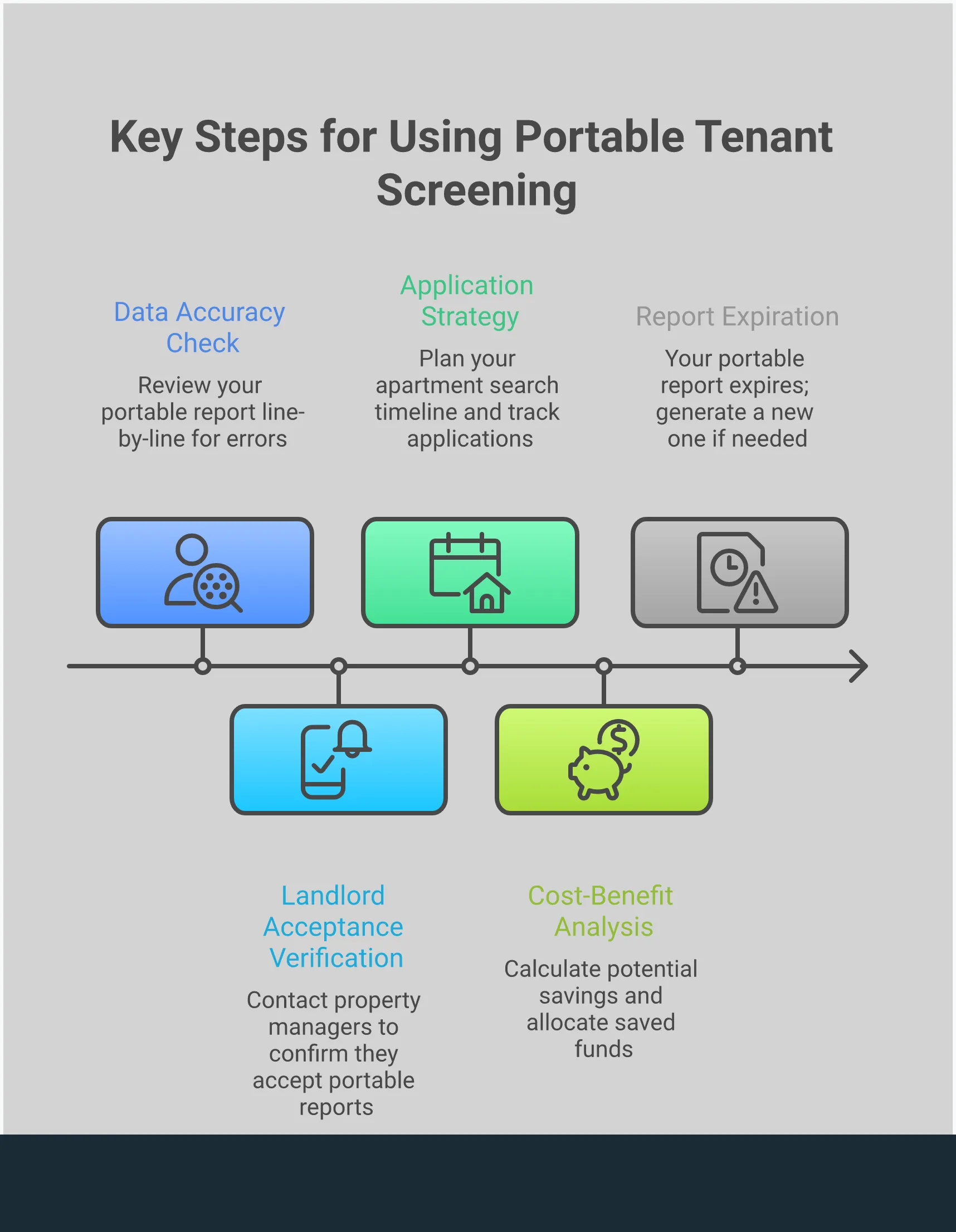
Before you share your report with anyone, treat it like your resume and give it a thorough review. The smallest error can create unnecessary delays or cause a landlord to second-guess your application. Go through every line item carefully, paying close attention to your full legal name, date of birth, and previous addresses. An incorrect address could accidentally link you to another person’s eviction history, while a misspelled name can make it difficult for a landlord to verify your identity. Ensuring you provide a correct and complete report from the start prevents these simple but frustrating setbacks. This simple step helps you make a great first impression and shows landlords that you’re a detail-oriented applicant.
If you review your report and find a mistake, don’t worry. This is a fixable problem, and you have rights that protect you. The Fair Credit Reporting Act (FCRA) gives you the right to dispute any inaccurate information with the company that created the report. If a landlord denies your application based on the report, you can request a free copy within 60 days to see the exact information they used. Once you have it, you can review your rental background check and formally dispute any errors. The screening company is then required to investigate your claim. Acting quickly to correct mistakes ensures your report is accurate for your next application.
Misinformation can make the rental process confusing, so let’s clear up a few common myths. One is that a landlord running a credit check will hurt your credit score. In reality, tenant screenings use a soft inquiry, which does not impact your score, unlike the "hard inquiries" used for loan applications. Another myth is that you must have a Social Security Number to rent a property. This isn't true; landlords can use other identifiers to verify your background and financial stability. For example, many applicants use an Individual Taxpayer Identification Number (ITIN) instead. Understanding these facts can help you feel more confident as you navigate the application process.
The idea of a reusable screening report is gaining traction, and several states have passed laws to make the rental process smoother and more affordable. Since the rules can change depending on where you live, it’s helpful to understand the legal landscape. These laws are designed to protect both you and the landlord, creating a more transparent system for everyone involved. Knowing the specifics can help you apply for your next home with confidence, armed with the knowledge of how these regulations work in your favor.
Laws for portable tenant screening reports vary by state, so it’s always a good idea to check your local regulations. California, for example, has a law known as AB 2559, which allows renters to use a single, reusable tenant screening report for multiple applications. This means you can purchase one comprehensive report and share it with several potential landlords, saving you from paying separate application fees every single time. States like Colorado, Washington, and Illinois have similar protections in place, all aimed at reducing the financial burden on renters during their housing search and streamlining the entire application process.
It's important to know that in most places with these laws, landlords aren't required to accept a portable report. Instead, they can choose to "opt-in" to the practice. While this means acceptance isn't guaranteed, many landlords appreciate the efficiency and reliability of a standardized report. For landlords who do accept them, there are rules to follow. In California, for instance, a landlord who doesn't comply with the regulations could face significant penalties. This encourages them to follow the process correctly, which is great news for you. We make it simple for landlords to accept your report while staying fully compliant.
These laws are here to empower you. The most obvious benefit is saving money and time, but your rights go further than that. If a landlord denies your application or increases your rent or deposit because of something in your screening report, they are legally required to tell you. They must also provide the name, address, and phone number of the company that issued the report. This gives you the power to review your rental background check and dispute any inaccuracies you find. It’s your information, and you have the right to make sure it’s correct.
Getting your hands on a reusable tenant screening report is a straightforward process that puts you firmly in control of your rental search. Instead of filling out a new application and paying a separate fee for every apartment you like, you complete the process just once. This single, comprehensive report can then be shared with multiple landlords, saving you a significant amount of time and money. Think of it as your universal key to applying for rentals, making your apartment hunt much more efficient.
Ready to get started? Here’s everything you need to know to get your report and use it effectively.
The beauty of a portable report is its simplicity. The entire process is designed to be quick and user-friendly, so you can focus on finding the right place to live. Here’s a simple breakdown of how the process works.
A little preparation can make your rental application process even smoother. Following a few best practices will help you avoid common hiccups and present yourself as an organized, responsible applicant. Keep these tips in mind as you start sharing your report.
Even with a streamlined process, you might run into a couple of bumps in the road. The good news is that these are common situations with straightforward solutions. Knowing what to expect and how to respond can make your apartment search feel much smoother. Let's walk through two potential hurdles: dealing with a hesitant landlord and managing your report's timeline.
You might find that some landlords aren't familiar with portable screening reports yet. In states with these laws, landlords can choose whether or not to accept them; it's an opt-in system. So, if a landlord says no, it’s not a reflection on you. They simply may not have opted into the system. If they do accept them, they are usually required to state this clearly on their property listings.
If you encounter a landlord who seems unsure, you can politely explain that your report is a comprehensive, verified document from a trusted source. You can even direct them to information specifically for landlords that explains how the process works and benefits them. This simple step can help clear up any confusion and show that you're a proactive and organized applicant.
Your portable screening report is designed for an active apartment search, which is why it's valid for 30 days from the day you generate it. Think of this as your one-month application pass. To make the most of it, it’s a good idea to get your report right when you’re ready to start seriously submitting applications. This timeline gives you plenty of opportunity to apply to multiple places without paying a new fee each time.
Before you start sharing your report, take a moment to review it carefully for any errors. If you spot something that doesn't look right, you have the right to correct it. You can get help with the dispute process to ensure your information is accurate. An accurate report is your best tool for making a great first impression on every application you submit.
How long is my reusable report valid? Your report is designed for an active apartment search, so it remains valid for 30 days from the date you generate it. This gives you a full month to apply to as many properties as you need without paying extra fees. To make the most of this window, it’s best to get your report right when you’re ready to start seriously looking and submitting applications.
Will using a portable screening report affect my credit score? No, it will not. Tenant screenings use what’s called a soft credit inquiry, which is different from the hard inquiry used when you apply for a loan or credit card. Soft inquiries are only visible to you and do not impact your credit score at all, so you can share your report with confidence.
What should I do if I find an error on my report? If you spot any incorrect information, you have the right to get it fixed. Under the Fair Credit Reporting Act (FCRA), you can dispute any inaccuracies directly with the company that provided the report. Acting quickly to correct mistakes ensures that every landlord sees the most accurate version of your information.
Are landlords required to accept my portable report? In states with portable screening laws, landlords can choose whether or not to accept these reports; it is typically an opt-in system for them. While many landlords appreciate the convenience of a standardized, verified report, they are not legally required to accept one. It's always a good idea to confirm with a property manager beforehand.
What information is actually included in the report? A comprehensive screening report gives a landlord a complete picture of your background as a renter. It includes your credit report, a nationwide criminal and eviction history check, and verification of your income and employment. It also contains your rental application with details like your past addresses and personal information, all in one secure package.