
The traditional rental application process can be a headache for everyone. Renters fill out endless forms and pay separate fees for every property, while landlords are left to sort through inconsistent information. There’s a much better way to handle screening. Modern solutions streamline this process, making it more efficient and fair for all parties involved. If you’re wondering how can I check tenant eviction history without frustrating your best applicants or drowning in paperwork, you’re thinking about the future of renting. This guide will introduce you to a more modern approach, showing you how to get comprehensive, compliant reports that save you time and help you secure great tenants faster.
When you’re screening potential tenants, you’re essentially trying to piece together a story. You look at their credit report, verify their income, and check references to get a sense of who they are and how they’ll treat your property. An eviction history is a critical chapter in that story. It’s a formal record of any time a landlord has had to legally remove a tenant from a property. For landlords, this information is a key indicator of potential risk. It helps you find reliable tenants who are likely to pay rent on time and respect their lease agreement.
But this isn't just about risk assessment. For renters, understanding what’s in your eviction history is just as important. It gives you a chance to address any past issues, correct potential errors, and present your application with full transparency. A past eviction doesn’t always tell the whole story, but ignoring it isn’t an option. A comprehensive tenant screening report provides the clear, factual details both parties need to move forward with confidence, ensuring the rental process is fair and informed from the start.
So, what exactly shows up on an eviction record? It’s more than just a simple "yes" or "no." An eviction report is a detailed summary of a formal court proceeding. It typically includes the tenant's name, the name of the landlord or property management company that filed the eviction, and the address of the rental property in question. You’ll also see important dates, like when the case was filed with the court.
The report outlines which court handled the case and, most importantly, what the final judgment was. This tells you whether the court sided with the landlord, the tenant, or if the case was dismissed for another reason. Think of it as the official record of events, providing a clear, unbiased look at a tenant’s rental past.
Choosing not to check an applicant's eviction history is a gamble that can cost you dearly. The eviction process itself is often stressful, time-consuming, and expensive for landlords. By reviewing an applicant's history, you can identify patterns that might signal future problems, helping you find tenants who will pay rent consistently and take good care of your property.
The financial hit from a single eviction can be significant, with costs for legal fees, lost rent, and repairs averaging around $3,500. A thorough eviction check is one of the most effective ways for landlords to protect their investment. It’s a proactive step that helps you avoid preventable headaches and secure a stable, positive rental experience for everyone involved.
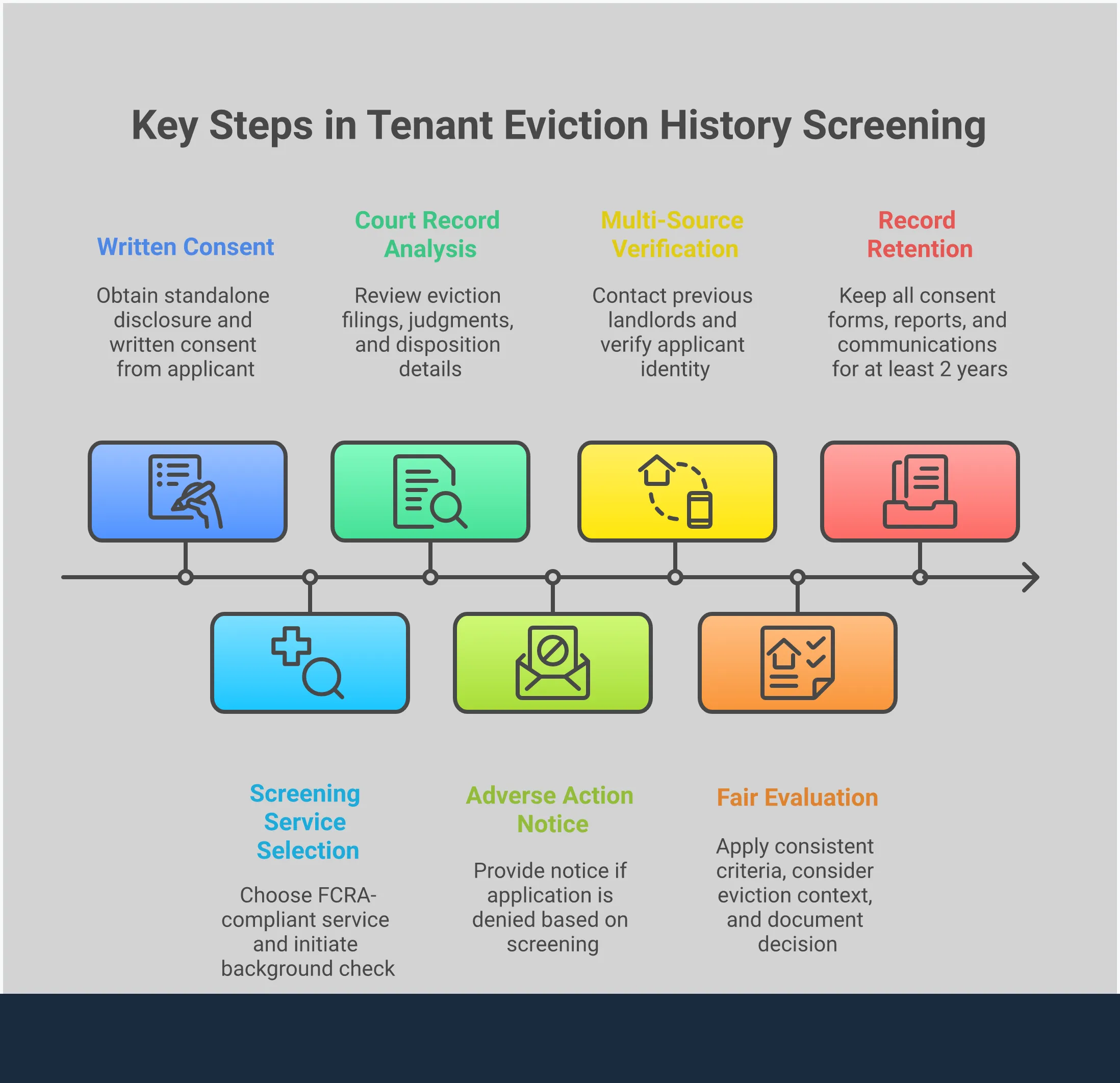
Running an eviction check isn't a free-for-all. It's a process governed by specific laws designed to protect both you and your potential tenants. Think of these rules as your roadmap to fair and legal screening. Following them not only keeps you out of legal trouble but also helps build a foundation of trust with your applicants from day one. When you handle sensitive information responsibly, you show that you’re a professional and trustworthy landlord.
The good news is that these rules are straightforward. They mostly come down to being transparent, getting permission, and using a reliable service that understands the legal landscape. Let’s walk through the key regulations you need to know.
The Fair Credit Reporting Act, or FCRA, is the main federal law that oversees background checks, including eviction history. Its primary goal is to ensure the information used for screening is accurate, fair, and private. For landlords, this means you have a few key responsibilities. Before you even think about looking into an applicant's past, you must provide them with a clear written notice that you intend to run a background check. When you do run the check, you have to use legitimate tenant screening services that are FCRA-compliant. This isn't just a suggestion—it's a legal requirement that protects you from potential lawsuits and ensures the data you receive is obtained legally.
While the FCRA sets the national standard, many states and cities have their own layers of rules. These local laws can sometimes be even stricter, placing further limits on how you can use eviction records or other personal information during your screening process. For example, some jurisdictions might have rules about how far back you can look at an applicant's eviction history or may even seal certain records after a period of time. It's essential to get familiar with the various state and local laws where your property is located. Staying informed helps you conduct a fair screening process that respects local regulations and protects applicant privacy.
This is one of the most critical steps in the entire screening process: you must get clear, written consent from your applicant before running any background checks. The FCRA is very specific about this. You need to give the applicant a clear, standalone disclosure that a background check will be performed. This can't be a hidden clause in the middle of a long rental application; it needs to be its own separate document. This ensures the applicant knows exactly what information you're requesting and gives them the chance to consent knowingly. It’s a simple but powerful step that keeps your process transparent and fully compliant.
Once you understand the legal framework, you can move on to the practical steps of checking an applicant's rental history. There are three main ways to find eviction records, and using a combination of them will give you the most complete picture of a potential tenant. Each method offers a different piece of the puzzle, from official court documents to firsthand accounts, helping you make a well-informed decision.
One way to find eviction information is by going directly to the source: public court records. Most state and county courts maintain online databases where you can search for civil cases, including evictions. You can typically find your local court through a state court directory. To be thorough, you should search for all names the applicant might have used, like a maiden name or common nicknames. When you find a record, try to access the full court document. This gives you important context about why the eviction was filed, which is often more telling than the filing itself. This method requires some legwork, but it provides direct access to official information.
For a more streamlined and comprehensive approach, using a professional tenant screening service is your best bet. These services do the heavy lifting for you, pulling eviction records from nationwide databases as part of a full background check. This means you get eviction history alongside credit reports and criminal records, all in one place. A major advantage is that reputable services are built to comply with the Fair Credit Reporting Act (FCRA), which takes the compliance burden off your shoulders. Using a service like Portable Tenant gives you a secure, detailed, and compliant report so you can make decisions with confidence.
Official records tell one side of the story, but talking to previous landlords can provide valuable, real-world context. A quick phone call can give you firsthand insight into an applicant's reliability. Were they a good communicator? Did they pay rent on time? How did they maintain the property? It’s helpful to prepare a short list of questions before you call to keep the conversation focused. While this step is subjective, it complements the data from court records and screening reports, helping you build a more nuanced understanding of the applicant before you hand over the keys.
When you run an eviction check, you get more than a simple "yes" or "no." An eviction report is a detailed summary of legal filings pulled from public court records. Think of it as the official story of a landlord-tenant dispute that went to court. Understanding what’s inside is crucial for landlords who want to make fair, informed decisions and for renters who need to know what’s on their record.
A comprehensive tenant screening report organizes this information so you can see the full picture. It doesn’t just show an outcome; it provides the context behind it. This includes who was involved, where it happened, and the specific legal details of the case. By breaking down the components, you can move past the stigma of an eviction filing and focus on the facts. Let’s look at the key pieces of information you’ll find.
Every eviction report starts with the basics: the who, what, when, and where. You’ll see the names of the plaintiff (the landlord or property manager) and the defendant (the tenant), along with the address of the rental property in question. The report also includes the name of the court that handled the case and a unique case or docket number for official reference.
One of the most important details is the filing date. This is the date the landlord officially started the legal eviction process. It’s a critical piece of information because it marks the beginning of the court record, which may be different from when a tenant actually moved out. Understanding these foundational details helps you piece together the timeline of events.
This is the heart of the report, as it details the outcome of the court case. An eviction report will show if a "final judgment" was reached, which means the court made an official ruling. Not all eviction filings end with the tenant being forced to leave. The report will specify the result, which could be a judgment in favor of the landlord (granting them possession of the property), a judgment in favor of the tenant (meaning the case was dismissed), or a settlement agreed upon by both parties. This context is vital for understanding what actually happened.
Accuracy is everything when it comes to screening. The report confirms the identities of everyone involved by listing their full names and connecting the legal action to a specific property address. This information is essential for verifying that the eviction record actually belongs to your applicant and isn’t a case of mistaken identity due to a common name. For renters, it’s a way to ensure the information on their record is correct. The Fair Credit Reporting Act (FCRA) gives you the right to dispute any inaccuracies you find.
When you’re ready to check an applicant's eviction history, you’ll find plenty of services ready to help. The key is finding one that is thorough, compliant, and fits your process. Most landlords use a dedicated tenant screening service because it bundles eviction history with other essential checks, like credit and criminal background reports. This gives you a complete picture of an applicant in one go. Let's look at a few different types of services so you can find the right fit for your rental business.
A newer, more efficient option is the portable tenant screening report. With this model, the applicant purchases one comprehensive, reusable report and can securely share it with multiple landlords. This saves everyone time and money on application fees. These reports are thorough, containing everything you need to make an informed decision, including a nationwide eviction history, credit report, and criminal background check. For landlords, this streamlines the application process and ensures you receive a compliant, verified report. It’s a modern approach that simplifies how tenant screening works for everyone involved.
If you prefer a more traditional route, services like TransUnion SmartMove or Zillow Rental Manager are popular choices. With these platforms, the landlord typically initiates and pays for the screening for each applicant, though the cost is often passed on as an application fee. These services make it easier to run national eviction searches and usually bundle them with credit and criminal background checks. This method gives landlords direct control over initiating each screening, which can be a good fit if you have a very established, hands-on process for every new applicant you consider for your properties.
As you compare services, pay close attention to their features and pricing models. Some providers offer different screening packages, allowing you to choose how much information you want based on your needs and budget. Others might charge a flat fee per report. With a portable screening report, the applicant typically pays a single fee for a report they can reuse, which can make your property more attractive to renters. Consider what works best for your business and what creates the smoothest experience for the qualified tenants you want to attract.
Getting an eviction report back can feel like a final answer, but it’s really just the beginning of the story. An eviction filing on its own doesn’t tell you everything you need to know. To make a fair and informed decision, you need to look closely at the details, understand the context, and verify that the information belongs to your applicant. A thorough review helps you see the complete picture, ensuring you treat every applicant equitably while still protecting your investment. Think of it less as a pass/fail test and more as a detailed history that requires careful interpretation.
When you look at an eviction report, you’ll see key details like the names of the tenant and landlord, the property address, and the date the case was filed. But the most important piece of information is the final judgment. An eviction filing is not the same as a completed eviction. Many cases never result in a tenant being forcibly removed. The case might have been dismissed because the issue was resolved, or it could have been settled out of court. A comprehensive screening report will show you the final disposition, which tells you what the court ultimately decided. This detail is crucial for understanding whether the issue was a one-time dispute or a judgment against the tenant.
Context is everything when it comes to an applicant’s rental history. A single eviction filing from five years ago caused by a documented job loss is very different from a recent pattern of non-payment or property damage. While past behavior can be an indicator of future actions, it’s important to consider the circumstances. Was the eviction for a minor lease violation or a more serious issue? How long ago did it happen? Some landlords find it helpful to have a conversation with the applicant to hear their side of the story. Creating a consistent screening process for how you evaluate these situations ensures you are being fair to every applicant while still gathering the information you need.
It sounds basic, but you have to be certain the eviction record you’re looking at actually belongs to your applicant. Common names can easily lead to mix-ups, so it’s essential to verify identity using more than just a name. Professional screening services cross-reference information like date of birth and previous addresses to confirm a match. It’s also important to remember that under the Fair Credit Reporting Act (FCRA), eviction records older than seven years cannot be used to deny a rental application. Using an FCRA-compliant service ensures the data you receive is accurate, up-to-date, and legally compliant, taking the guesswork out of the process.
Checking a potential tenant's eviction history is a standard part of the screening process, but it's surprisingly easy to get it wrong. Making a decision based on incomplete or misunderstood information can cause you to miss out on a great tenant or, even worse, land you in legal trouble. The key is to be thorough, fair, and compliant every step of the way.
Let’s walk through some of the most common pitfalls landlords encounter when reviewing eviction records. By understanding these mistakes, you can refine your screening process to be more effective and equitable. It’s all about gathering a complete picture of an applicant, not just a single snapshot. Avoiding these errors will help you make confident, well-informed decisions while protecting your investment and respecting applicants' rights.
One of the biggest misconceptions is that a standard credit report will tell you everything you need to know, including evictions. That’s simply not the case. As credit bureau Experian points out, "Evictions are not on your credit report." While a credit report is great for seeing how an applicant manages their debts, it won’t show filings or judgments from housing court.
To get the full story, you need a dedicated tenant screening report that specifically pulls public eviction records. Relying on credit alone means you’re missing a critical piece of the puzzle. A comprehensive report gives you a much clearer view of an applicant’s rental history, allowing you to make a decision based on all the relevant facts.
Seeing an eviction filing on a report can feel like an immediate red flag, but it’s crucial to look deeper. A filing doesn't automatically mean the tenant was at fault or was even removed from the property. As the experts at Landlord Studio advise, you should always try to "view the full eviction case record" to understand the circumstances.
For example, the case may have been dismissed because the tenant paid the rent they owed or reached an agreement with the landlord. Sometimes, a filing is made in error or is part of a dispute that was resolved in the tenant's favor. Looking at the final judgment and outcome of the case—not just the initial filing—is essential for fair and accurate screening.
The way you access and use an applicant's information is regulated by federal law, specifically the Fair Credit Reporting Act (FCRA). Using a screening service that isn't FCRA-compliant is a serious mistake that can lead to significant legal and financial penalties. You must use legitimate tenant screening services that are built to follow these strict regulations.
These rules are in place to protect consumer privacy and ensure accuracy. If you decide to deny an application based on information found in a screening report, the FCRA requires you to provide the applicant with an adverse action notice. This gives them the opportunity to see the report and dispute any inaccuracies. Sticking with a compliant service protects both you and your applicants.
Checking an applicant's eviction history sounds simple enough, but the process can be full of tricky spots. Public records aren't always as complete or straightforward as we'd like them to be. From missing information to simple typos, several issues can prevent you from getting a clear and accurate picture of a potential tenant's rental past. Understanding these common hurdles is the first step to making sure your screening process is both thorough and fair.
One of the biggest challenges is that not all evictions are formally documented in public court records. For instance, some situations are resolved directly between the landlord and tenant without court involvement. These informal arrangements or "self-help" evictions won't appear in a standard database search unless the tenant took legal action against the landlord. This means you could miss a critical piece of rental history if you rely solely on searching court websites. A comprehensive screening report pulls data from multiple sources to create a more complete picture, reducing the risk of overlooking these unrecorded events and giving you greater peace of mind.
Searching for records using just a name can quickly become complicated. People use nicknames, change their names after marriage, or have common names that return hundreds of results. To be truly thorough, you would need to search for every possible name an applicant has used, including maiden names and common variations. A simple typo in the court filing could also cause you to miss a record entirely. This is why professional screening services are so valuable for landlords and property managers; they use additional identifiers, like a Social Security number, to accurately match records to the right person, cutting through the confusion of name variations.
Timing is another factor that can complicate your search. After an eviction is filed, it can take 30 to 60 days for it to appear in public records. An applicant could be in the middle of an eviction process that hasn't shown up yet. Furthermore, the Fair Credit Reporting Act (FCRA) dictates that evictions can only stay on a tenant's record for up to seven years. You also need to consider an applicant's rental history across different cities or states, as a local search won't uncover an eviction that happened elsewhere. A nationwide search is essential for getting the full story on how long an eviction stays on a record and where it occurred.
When you're thinking about screening a potential tenant, cost is naturally a big question. The good news is that checking an applicant's eviction history is one of the most cost-effective ways to protect your investment. While the price can vary depending on the screening service and how detailed the report is, it’s a minor expense compared to the alternative.
The real cost to consider is the price of an eviction itself. Between legal fees, lost rent, and potential property repairs, a single eviction can set a landlord back thousands of dollars—the average is around $3,500. Suddenly, the small fee for a comprehensive screening report doesn't just seem reasonable; it seems essential.
Think of it as a small investment for significant peace of mind. By spending a little upfront, you get a much clearer picture of who you’re renting to and can avoid the financial and emotional drain of a difficult tenancy. Modern screening solutions have also made this process more affordable and accessible, often allowing renters to purchase a single, reusable report they can share with multiple landlords, saving everyone time and money.
A single, comprehensive tenant screening report, which includes an eviction history check, typically costs between $30 and $75. In most cases, this fee is paid directly by the rental applicant, so there’s no out-of-pocket expense for the landlord. When you frame it that way, it’s an incredibly low-cost tool for risk management. Compare that small fee to the staggering cost of an eviction, which can easily run into the thousands. A thorough screening is your first line of defense against late payments, property damage, and the lengthy legal process of removing a tenant.
If you’re a property manager or a landlord with multiple units, you’re likely screening applicants regularly. Many traditional screening services offer subscription plans or bulk pricing to lower the cost per report. However, this often means committing to a certain number of checks per month or year. An alternative approach is using a service that offers portable reports. With a model like Portable Tenant, the renter purchases their own comprehensive, reusable report. This streamlines the process for you, ensuring you get consistent, high-quality information for every applicant without managing multiple accounts or subscriptions. You can see how our simple pricing structure benefits everyone involved.
Absolutely. The cost of an eviction history check is a small price to pay for protecting your property and ensuring a steady rental income. Skipping this step to save a few dollars exposes you to significant financial risk. A tenant with a history of evictions is more likely to result in late rent, property damage, and another costly eviction process down the line. A thorough screening report gives you the confidence that you’re choosing a reliable tenant. It’s a fundamental part of your due diligence that helps you build a positive and professional relationship with your renters from day one, making it one of the smartest investments a landlord can make.
Running an eviction history check is just one piece of the puzzle. To protect your investment and treat every applicant fairly, you need a solid system in place. Adopting a set of best practices ensures you’re compliant with the law and making the best possible decisions for your property. A fair and thorough screening process helps you find reliable tenants while building a reputation as a trustworthy landlord. It’s about creating a clear, consistent, and comprehensive approach for every application you receive.
The key to fair screening is consistency. Establish a clear set of rental criteria and apply it uniformly to every applicant. This means deciding your standards for income, credit history, and past rental behavior ahead of time. Having written policies helps you avoid accusations of discrimination and makes your decision-making process straightforward. Many landlords use professional tenant screening services to get a full picture. These services bundle eviction history with credit reports and criminal background information into one comprehensive report, ensuring each applicant is measured against the same yardstick.
Staying on the right side of the law is non-negotiable. Landlord-tenant laws are strict, so you must keep detailed records of your entire screening process for every applicant. This includes the application, the signed consent form, the final screening report, and all communication about your decision. The Fair Credit Reporting Act (FCRA) requires you to inform applicants that you will be running a background check. Using a compliant screening service helps ensure you’re following all the rules. Proper documentation is your best defense if a rental decision is ever challenged.
An eviction record on its own doesn’t always tell the whole story. The best decisions come from looking at a complete applicant profile. A single issue from years ago might be less concerning when weighed against a long history of on-time rent payments and a stable income. A comprehensive report should give you a holistic view, including credit history, income verification, and landlord references. If you deny an applicant based on their screening report, you must follow the proper legal steps. The FCRA requires you to provide the applicant with an adverse action notice, which informs them of the denial and explains their right to dispute the information.
How long does an eviction stay on a tenant's record? Under the Fair Credit Reporting Act (FCRA), an eviction can remain on a tenant's record for up to seven years from the date it was filed. After that period, it should no longer appear on a compliant tenant screening report or be used as a factor in a rental decision. This seven-year window gives you a relevant look at an applicant's recent rental history.
If I see an eviction filing on a report, should I automatically deny the applicant? Not necessarily. An eviction filing is just the start of a legal process and doesn't always tell the full story. It's important to look at the final judgment of the case. The case may have been dismissed, settled between the parties, or even ruled in the tenant's favor. A single filing from years ago with a clear resolution is very different from a recent pattern of judgments for non-payment, so always consider the context before making a final decision.
Why can't I just rely on a credit report to find evictions? A credit report and an eviction report are two completely different documents. Your credit report tracks your history with lenders and financial institutions, but it does not include information from housing court. An eviction is a civil court proceeding, and those records are pulled from separate public databases. To get a complete picture of an applicant's rental history, you need a dedicated tenant screening service that specifically searches for eviction records.
What are my legal responsibilities if I deny an applicant because of their eviction history? If you decide to deny an applicant based on information found in their screening report, you are legally required to provide them with an adverse action notice. This is a formal notification that explains your decision and provides the name and contact information of the screening company you used. It also informs the applicant of their right to obtain a free copy of the report and to dispute any inaccurate information it may contain.
As a renter, what should I do if I know there's an eviction on my record? The best approach is to be transparent. When you apply for a new rental, it's helpful to address the situation upfront with the landlord or property manager. Be prepared to explain the circumstances that led to the eviction and provide any documentation that shows the issue has been resolved. Having a portable screening report ready allows you to review the information for accuracy and present it with your own context.