
TL;DR: The 9-to-5 job with a steady paycheck is no longer the only way people earn a living. More and more rental applicants are freelancers, gig workers, or self-employed entrepreneurs with fluctuating income streams. This new reality can make the verification process feel complicated, but it doesn’t have to be. Understanding how to assess non-traditional income is now an essential skill for any landlord or property manager. In this article, we’ll provide a clear roadmap for navigating these situations. You’ll learn how to verify income for tenant applicants with varied financial profiles, from commission-based salespeople to rideshare drivers, so you can find great, reliable tenants from today’s diverse workforce.
Before you hand over the keys to your property, you need to be confident that your new tenant can pay the rent on time, every month. That’s where tenant income verification comes in. Simply put, it’s the process of confirming that a potential renter’s stated income and employment details are accurate and current. Think of it as doing your due diligence to ensure the financial side of your rental agreement is built on a solid foundation. This isn't about being nosy; it's about making a sound business decision.
This step is more than just a formality; it’s a crucial part of a smart and responsible screening process. For landlords and property managers, it minimizes the risk of late payments, potential evictions, and the financial strain that comes with a vacant unit. For renters, it provides a clear, transparent way to demonstrate their financial reliability. A thorough income check helps create a stable and positive rental experience for everyone involved. By taking the time to verify income, you’re not just protecting your investment—you’re setting the stage for a successful landlord-tenant relationship from day one. It establishes a baseline of trust and ensures that the applicant is not overextending themselves financially, which is a benefit to them as well.
Verifying a tenant's income is one of the most effective ways to protect your rental property as a financial asset. When you confirm an applicant has a steady, sufficient income, you significantly reduce the risk of missed or late rent payments. This simple check helps you avoid the costly and stressful process of eviction. It’s also your first line of defense against application fraud. With realistic-looking fake pay stubs and employment letters becoming easier to create, confirming income directly with the source is essential for landlords. This step ensures you’re making a decision based on facts, not fiction, and safeguarding your investment for the long term.
A consistent income verification process is also key to meeting legal standards and maintaining fair practices. When you apply the same income criteria to every applicant, you ensure you’re complying with Fair Housing laws and treating everyone equally. Many landlords use the "30% rule" as a general guideline, suggesting that a tenant's gross monthly income should be at least three times the rent. While not a strict rule, this benchmark helps you objectively assess affordability. Furthermore, when applicants know their income will be verified, they are more likely to provide accurate information from the start. This transparency fosters trust and helps you find financially stable tenants who are more likely to care for your property.
Verifying an applicant's income isn't a one-size-fits-all process. The documents you'll need depend entirely on how they make their living. Someone with a steady 9-to-5 job will have different paperwork than a freelance graphic designer or a retiree living on investment income. Understanding what to ask for is the first step to accurately assessing if a potential tenant can comfortably afford the rent. Getting the right documents from the start saves you and your applicant time and helps you make a fair, informed decision. Let's walk through the essential paperwork for the most common employment situations.
For tenants with traditional employment, verifying income is usually straightforward. These applicants receive a regular paycheck from an employer, which makes their earnings consistent and easy to track. To get a clear picture of their financial stability, you can ask for a few key documents. It's standard practice to request the two most recent pay stubs, which show their current earnings and deductions. For a longer-term view, a W-2 form from the previous year confirms their annual salary. If they’ve just started a new job, an employment verification letter from their HR department can confirm their position, salary, and start date, giving you confidence in their future proof of income.
Verifying income for self-employed individuals or freelancers requires a bit more digging, as their earnings can fluctuate. Instead of pay stubs, you’ll need documents that show the health of their business over time. The most reliable document is their most recent tax return, which provides an official record of their annual income. To see their current cash flow, ask for the last two to three months of personal or business bank statements. A profit and loss statement can also offer a detailed look at their business's revenue and expenses. For freelancers, 1099 forms from their clients can help corroborate their self-employment income.
Many people have income that doesn't come from a traditional job or a business, and it's just as valid. It's important to know what to ask for to ensure you're following fair housing laws. For applicants receiving Social Security or disability benefits, an official benefits statement will show their monthly amount. If income comes from court-ordered payments like child support or alimony, you can request the legal documents along with bank statements showing consistent deposits. Other valid sources include retirement account distributions, pensions, or investment income, all of which can be verified with official statements from the financial institution managing the funds.
Once you have the documents, the next step is to make sure they’re legitimate. Unfortunately, fake pay stubs and bank statements are easy to create, so it’s wise to have a verification process in place. Taking a few extra minutes to confirm the details can save you from major headaches down the road, like dealing with missed rent payments or eviction proceedings. A solid verification process protects your investment and ensures you’re choosing a reliable tenant who can comfortably afford the rent.
Your goal is to confirm that the information provided is accurate and reflects the applicant's true financial situation. There are a few reliable ways to do this, from old-school phone calls to modern digital solutions. Combining these methods gives you the most complete picture and the confidence to approve your next tenant.
One of the most straightforward ways to verify employment is to contact the employer listed on the application. A quick phone call to the company’s human resources department or the applicant's direct supervisor can confirm their employment status, job title, and sometimes their rate of pay and hours worked. Before you call, make sure you have the applicant’s written consent to contact their employer—this is a standard part of most rental applications. While this method is direct, it can be time-consuming, as you might have to leave messages or wait for a call back. It’s a reliable step, but be prepared for potential delays in getting the information you need.
For a faster and more secure approach, you can use a third-party income verification service. These platforms connect directly to an applicant's payroll provider or bank account to verify their income instantly. This method is often considered the gold standard because it pulls data from the source, eliminating the risk of fraudulent documents. Services like Portable Tenant’s income verification use secure, bank-level technology to give you a clear and accurate report without you having to handle sensitive documents yourself. This not only saves you time but also adds a layer of security and compliance to your screening process, making it a win-win for both you and the applicant.
If you’re reviewing documents like pay stubs or bank statements yourself, it’s important to know what to look for. Paper documents are easier to fake, so a critical eye is your best tool. Check for common red flags like inconsistent formatting, spelling errors, or numbers and dates that don’t line up. For example, do the year-to-date earnings on a pay stub make sense with the stated salary? Does the applicant’s reported income seem to match their lifestyle and credit history? While manual review is helpful, it’s not foolproof. That’s why many landlords prefer to use it in combination with other methods, like a portable tenant screening report, to get a more reliable result.
The traditional 9-to-5 job with a steady paycheck is no longer the only way people make a living. From freelance creatives to gig economy drivers, more applicants are coming to you with varied and non-traditional income streams. While this can seem tricky to verify, it doesn't have to be. With the right approach, you can confidently assess these income sources and find great tenants who are more than capable of paying their rent on time. It’s all about knowing what to ask for and how to piece the information together.
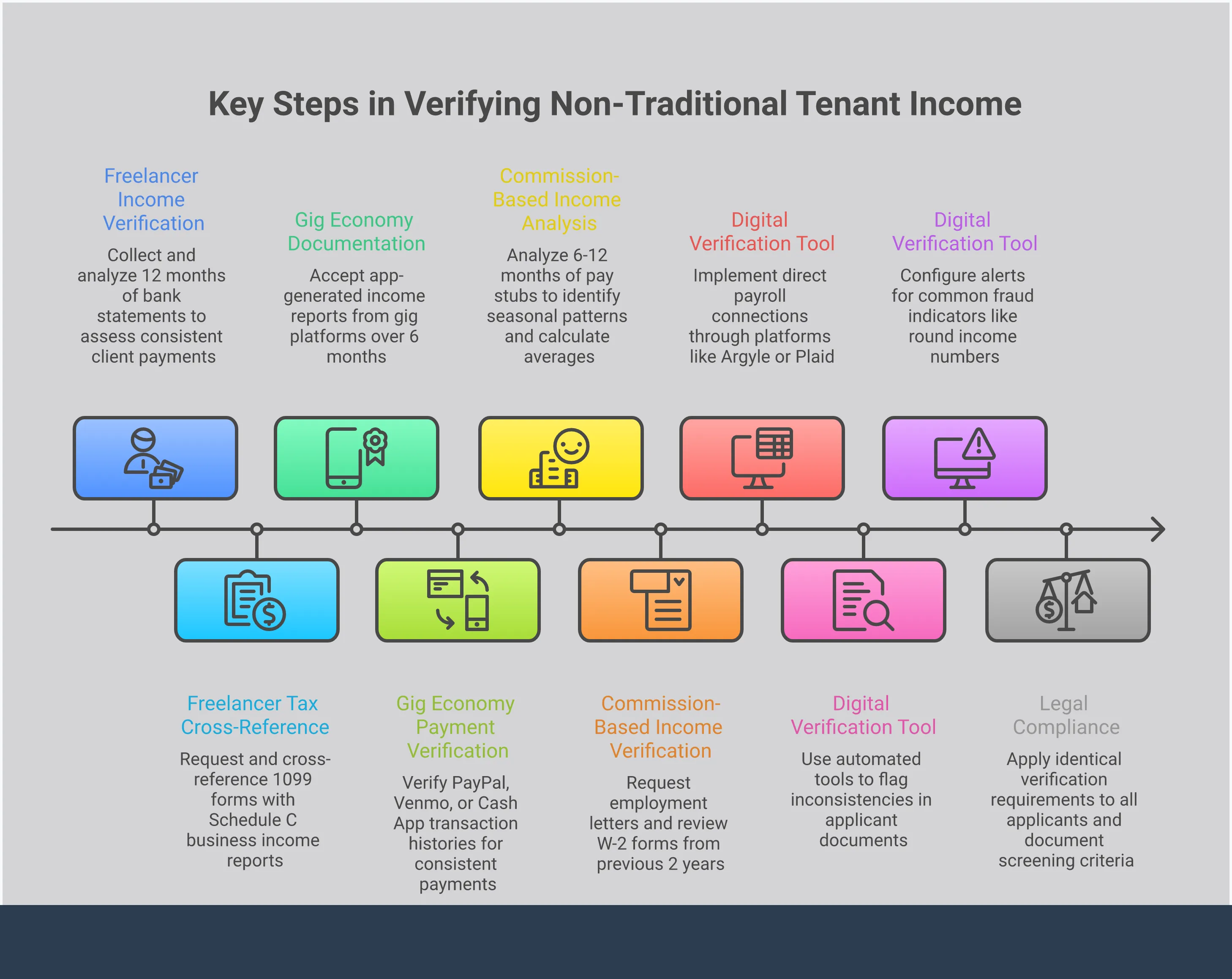
The gig economy is booming, which means you’ll likely see applications from freelancers, consultants, and drivers for services like Uber or DoorDash. Since they don’t receive regular pay stubs, you’ll need to look at other documents to understand their financial situation. Ask for their most recent tax returns (like a Schedule C), 1099 forms, or several months of bank statements. Many gig workers also receive payments through apps like PayPal or Venmo, which allow them to download income reports directly. Looking at these documents together will give you a comprehensive view of their earnings over time, rather than just a snapshot.
For salespeople or anyone whose income is largely commission-based, one month’s pay stub can be misleading. They might have a fantastic month followed by a slower one. To get an accurate picture, it’s best to look at their earnings over a longer period. Ask for at least three to six months of pay stubs to see the average income. You can also request a W-2 from the previous year or an employment letter from their manager that explains their commission structure. This approach helps you understand their typical earnings, smoothing out the natural highs and lows of a commission-based role and giving you a more reliable income figure.
Some applicants may use income from investments, rental properties, or trust funds to qualify for a lease. To verify this, you can ask for brokerage statements, 1099-DIV forms for dividends, or tax returns that detail capital gains. If an applicant has rental income, request a copy of the current lease agreement and bank statements showing consistent rent deposits. A smart practice, often used by mortgage lenders, is to consider only about 75% of the rental income to account for potential vacancies and maintenance costs. This conservative approach helps ensure the income is stable enough to cover their own rent with you.
Relying on a single document for any income type, especially a non-traditional one, can be risky. The best strategy is to use multiple methods to cross-reference information and build a complete financial picture. For example, you can match the deposits on a bank statement to the earnings reported on a 1099 form. This diligence is key to protecting your investment and ensuring your tenant can comfortably afford the rent. A widely accepted guideline is that an applicant's gross monthly income should be at least three times the rent. By thoroughly verifying their income, you can confidently apply this rule and maintain fair housing standards for all applicants.
Gone are the days of chasing down paper pay stubs and making endless phone calls to verify a tenant’s income. Technology has streamlined this process, making it faster, more secure, and less of a headache for everyone involved. Using modern tools not only saves you precious time but also reduces the risk of fraud and ensures you get a clear, accurate picture of an applicant's financial health.
For renters, this means a smoother, quicker application experience without having to dig up the same documents for every apartment they like. For landlords and property managers, it means making confident decisions based on reliable, verified data. These tools help you automate the tedious parts of screening so you can focus on finding the right person for your property. It’s a win-win that brings the rental process into the modern era, creating a better experience from the very first step.
One of the most efficient ways to handle verification is with a portable tenant screening report. Instead of you collecting and verifying documents, the applicant provides you with a single, comprehensive report they can reuse for multiple applications. This report is generated by a trusted third party and includes everything you need: a credit check, background and eviction history, and, most importantly, verified income.
This approach simplifies the entire process. You receive a complete package of information that has already been authenticated, saving you from the manual work of checking pay stubs or bank statements. It also empowers renters by giving them control over their personal information. They initiate the screening and share the secure report directly with you, which is how it works with modern, compliant systems.
Beyond portable reports, a growing number of digital platforms, often called property management technology (proptech), can automate income verification. These tools connect directly to an applicant's financial accounts to confirm their income securely and instantly. Many platforms use direct payroll connections, which are considered the gold standard for verification. This means the system links to the applicant's employer or payroll provider to pull real-time, accurate income data.
Using a digital platform dramatically reduces the risk of fraudulent documents like fake pay stubs or altered bank statements. It gives you a direct line to the source of the information, providing a level of accuracy that’s difficult to achieve manually. This technology makes the process faster and more reliable, helping you build a more efficient screening system.
Automated systems take the best parts of digital verification and make them even easier for landlords. These platforms handle the entire workflow, from sending the request to the applicant to analyzing the data and delivering a clear, easy-to-read summary. Automation eliminates manual data entry and reduces the chance of human error, ensuring consistency across all your applications.
For applicants, this means a quick and seamless experience they can complete on their phone in minutes. For you, it means getting verified results back almost instantly. Investing in a good automated system protects your business from financial losses and potential legal issues. It also shows applicants that you run a professional operation, which helps you attract high-quality, responsible tenants. These systems are especially helpful for landlords who want to save time while maintaining high screening standards.
Dealing with rental application fraud is a frustrating reality for landlords, but you don't have to be a detective to protect your investment. By learning to recognize common warning signs and using the right verification methods, you can confidently screen applicants and find a reliable tenant. It’s all about being thorough and knowing what to look for.
It might surprise you that over 90% of landlords have dealt with fraudulent rental applications. Since paper documents are notoriously easy to alter, it pays to review every submission with a critical eye. Look for inconsistencies that don't add up, like mismatched names or dates between a pay stub and an application. Other red flags include obvious formatting errors, blurry logos, or spelling mistakes. Be wary of income figures that are perfectly round numbers—real paychecks rarely are. A little scrutiny can help you spot fake pay stubs and other doctored documents before you make a costly mistake.
While manual checks are helpful, technology offers a more secure and efficient way to verify income. The most reliable method is a direct data connection to an applicant's payroll provider, which pulls verified information straight from the source. This eliminates the risk of forged documents entirely and speeds up the screening process for everyone. Modern screening solutions are designed to give you a clear, accurate financial picture so you can make decisions with confidence. This is a core part of how portable screening reports create a more trustworthy rental experience for landlords and renters alike.
Even when using a verification service, a few manual checks can add an extra layer of assurance. One of the most effective steps is to contact the applicant's employer. Be sure to look up the company’s official phone number online rather than using one provided on the application. You can also ask for multiple forms of documentation, like the last two pay stubs and the previous year's W-2. When you review them together, you can check for consistency in employer details, income, and dates. This comprehensive approach helps landlords build a complete picture of an applicant's financial stability.
Once you have all the necessary documents, you need a clear standard to measure them against. Setting consistent income requirements is key to a fair and effective screening process. It helps you quickly assess an applicant's financial stability and ensures you apply the same criteria to everyone, which is crucial for staying compliant with fair housing laws. While there’s no single magic number, a few common guidelines can help you establish a baseline for your properties. From there, you can decide how flexible you want to be based on the applicant's complete financial picture. This isn't just about finding someone who can pay rent this month; it's about finding a reliable tenant for the long term.
One of the most common guidelines in property management is the "3x rent rule." This simple benchmark suggests that a tenant's gross monthly income should be at least three times the monthly rent. For example, if your property rents for $2,000 a month, you'd look for an applicant earning at least $6,000 a month. The logic is that if rent takes up no more than about 30% of their income, they'll have enough left over for other living expenses and unexpected costs. While this is a great starting point for assessing affordability, remember that it’s a guideline, not a strict law. Some landlords prefer a 2x or 2.5x ratio, especially in areas with a higher cost of living.
While the 3x rule is a helpful shortcut, relying on it alone can give you an incomplete picture of an applicant's financial health. A single ratio doesn't account for things like debt, savings, or consistent employment history. To make a more informed decision, it’s wise to look beyond that one number. For instance, requesting two or three months of pay stubs helps you see if their income is stable, not just a one-time fluke. A comprehensive tenant screening report can provide a more holistic view, showing you their credit history and other factors that speak to their overall financial responsibility. This broader approach helps you evaluate an applicant's ability to pay rent reliably over time.
If a promising applicant doesn't quite meet your income threshold, don't disqualify them immediately. There are several ways to move forward that can protect you while giving them a fair shot. You could ask for a co-signer or guarantor—a financially stable person who agrees to cover the rent if the tenant cannot. You can also consider other sources of income, such as savings, investments, or government assistance. Looking at their rental history and credit score can also provide valuable context. If they have a stellar record of on-time payments, it might outweigh a slightly lower income. In some cases, you might request a larger security deposit (be sure to check your local laws on limits) to add an extra layer of security.
Verifying a tenant's income is a critical step, but it's just as important to handle the process legally and ethically. Getting this part wrong can lead to serious legal trouble, so it’s essential to understand the rules. Following a consistent, fair process for every applicant protects you from potential lawsuits and helps you build a reputation as a trustworthy landlord. These legal guidelines are your roadmap for fair screening. They ensure every applicant gets an equal opportunity and that their sensitive personal information is handled with care. Let's walk through the key legal areas you need to keep in mind.
At the heart of tenant screening are the fair housing laws that prohibit discrimination. This means treating all sources of income equally. You cannot legally deny an applicant because their income comes from Section 8 vouchers, disability benefits, or child support. The key is to verify that the income is consistent and sufficient to meet your requirements, regardless of where it comes from. Advertising that you won't accept certain income types is a direct violation, so always focus on the amount and reliability of the income, not the source.
When you ask an applicant for pay stubs or bank statements, you're handling highly sensitive personal data. It's your responsibility to protect it. The best way to do this is by creating a clear, written policy that outlines how you collect, store, and use this information. This policy ensures you respect the privacy of every applicant and shows them you take your role seriously. Securely storing documents and shredding them when they're no longer needed are simple but crucial steps. Being transparent about your process builds trust and keeps you compliant.
While federal laws provide a baseline, rental regulations can vary by location. It's crucial to be familiar with the specific laws in your state and even your city, as they may offer additional protections for tenants. For example, some states have stricter rules about what documents you can request or how you must treat income from rental assistance programs. Staying up-to-date on these local rules is non-negotiable. A quick search for your state's landlord-tenant laws or consulting a local housing authority can help ensure your process is fully compliant.
Verifying a tenant's income doesn't have to be a complicated or uncertain part of your screening process. With the right approach, you can make it both straightforward and highly secure. Moving away from stacks of paper documents and manual checks is the first step. Instead, you can use property management technology to automate many of these tasks, including income verification. Digital tools help you collect documents, check financial data in real-time, and spot inconsistencies much more easily than the naked eye ever could. This not only streamlines your workflow but also adds a critical layer of security, reducing the risk of human error or falling for forged documents.
For the highest level of accuracy, many landlords now use Direct Payroll Connections. This method is often considered the gold standard because it connects directly to an applicant's employer or payroll provider to confirm their income. It provides a real-time, verified snapshot of their earnings, leaving little room for doubt. Using a direct connection means you no longer have to worry if the pay stub you were handed is genuine. This modern approach to tenant income verification ensures the information you receive is accurate and up-to-date.
Adopting these tech-forward methods does more than just protect your investment—it also sets a standard of transparency. When applicants know their income will be thoroughly and professionally checked, they are more likely to be honest and forthcoming from the beginning. This helps you build a foundation of trust and ultimately leads to a more reliable and secure tenant selection process for everyone involved. By leveraging technology, you can confidently verify proof of income while making the entire screening experience simpler and more effective.
Is the "3x rent rule" a legal requirement? No, it's not a law. Think of it as a widely used industry guideline to help you quickly gauge if an applicant can comfortably afford the rent. While it's a solid starting point, it's best used as one part of your overall assessment. A truly fair evaluation also considers an applicant's credit history, savings, and track record of paying rent on time.
What's the most reliable way to verify income and avoid fake documents? While calling employers and checking pay stubs can be helpful, they aren't foolproof. The most secure method is using a service that connects directly to an applicant's payroll or bank account. This approach pulls verified data straight from the source, which completely removes the risk of you being handed a doctored pay stub or a fake bank statement.
Can I refuse an applicant if their income comes from sources like gig work or government assistance? You cannot legally refuse an applicant based on the source of their income. Under Fair Housing laws, all legal and verifiable income sources must be treated equally, whether they come from a traditional salary, freelance work, child support, or a housing voucher. Your job is to confirm that the total income is consistent and sufficient to cover the rent, not to judge where it comes from.
What should I do if a great applicant is just a little short of my income requirement? If an applicant is a strong candidate in every other way but falls slightly below your income standard, you have a few options. You could ask them to bring on a qualified co-signer or guarantor who agrees to be financially responsible for the lease. You can also look at their savings or ask for a slightly larger security deposit, as long as it complies with your local laws.
How long do I need to keep an applicant's sensitive financial documents? It's your responsibility to protect an applicant's private information. For applicants you decline, you should securely destroy their financial documents as soon as a decision is made to prevent any data privacy issues. For the tenant you approve, their application and verification documents become part of their official tenant file, which you'll keep for the duration of their tenancy and for a period afterward as required by your state's laws.