
As a landlord, protecting your investment is your top priority. You likely have insurance for fires and a plan for maintenance, but what about your legal risks? One of the biggest liabilities for any housing provider is a non-compliant tenant screening process. A single misstep can lead to discrimination claims, steep government fines, and expensive lawsuits that can threaten your business. The Fair Housing Act has strict rules, and ignorance isn’t a valid defense. To safeguard your assets and your reputation, you need a clear understanding of the HUD tenant screening guidance. This guide will walk you through the requirements to ensure your process is both effective and legally sound.
When you're screening potential tenants, it's easy to focus on finding someone who will pay rent on time and take care of your property. But there's another crucial piece of the puzzle: making sure your process is fair and compliant with federal law. The U.S. Department of Housing and Urban Development (HUD) has issued specific guidance to help landlords and property managers avoid discrimination, whether it's intentional or not. This guidance isn't about making your job harder; it's about ensuring everyone has equal access to housing.
Understanding these rules helps you protect your business from legal trouble and build a reputation as a fair and trustworthy landlord. It clarifies how the long-standing Fair Housing Act applies to modern screening methods, including the use of third-party screening companies and automated software. Following this guidance is key to creating a screening process that is both effective and equitable for every applicant.
At its core, HUD's guidance is about upholding the principles of the Fair Housing Act. The main goal is to protect applicants from screening practices that could be discriminatory. This means ensuring that every person has the same opportunity to rent a home, regardless of their race, color, religion, national origin, sex (including gender identity and sexual orientation), familial status, or disability.
The guidance specifically addresses how modern tenant screening, which often relies on algorithms and third-party reports, can sometimes create unfair barriers for certain groups. HUD wants to make sure that the tools and criteria you use are genuinely related to an applicant's ability to be a good tenant and don't inadvertently filter out qualified people based on protected characteristics.
The legal foundation for HUD's guidance is the Fair Housing Act (FHA). This federal law applies to all housing-related decisions, from advertising a rental to screening applicants and managing tenants. It doesn't matter if you're a landlord with one property or a large management company using sophisticated software; the rules are the same.
This means both you (the housing provider) and any tenant screening company you partner with are responsible for ensuring the process is non-discriminatory. If an algorithm or AI tool produces a biased outcome, you can still be held accountable. The law is clear: technology doesn't get a pass on fairness, and everyone in the housing chain has a duty to comply.
One of the biggest pitfalls in tenant screening is using criteria that seem neutral but have a discriminatory effect. For example, relying too heavily on credit scores can unfairly penalize applicants from different economic backgrounds without giving a full picture of their ability to pay rent. A low score doesn't always mean someone is a financial risk.
Another common mistake is having overly rigid rules, like an automatic denial for any criminal record, without considering the nature or age of the offense. HUD recommends focusing only on factors that directly predict whether an applicant can follow their lease agreement. By carefully reviewing your criteria and avoiding blanket policies, you can create a fairer process and reduce your risk of a compliance issue.
When you break it down, HUD’s guidance focuses on one core principle: fairness. The goal is to give every applicant a fair shot by making sure your screening process is consistent, transparent, and based on accurate information. This doesn’t mean you have to lower your standards. It just means you need to apply those standards equally to everyone. Following these requirements protects applicants from discrimination and protects you from potential legal trouble. It’s about creating a clear, documented process that treats everyone with respect.
The foundation of any fair screening process is accurate data. You need to make sure the information you use to evaluate an applicant is correct and up to date. This is true whether you’re pulling records yourself or using a third-party service. In fact, HUD is clear that landlords are ultimately responsible for their screening decisions, even when they hire another company to help. This responsibility extends to any automated tools or AI used in the process, which must not lead to discriminatory outcomes. Using a portable tenant screening report can help, as it puts the renter in control of their own verified information.
Imagine applying for a job without seeing the job description. It would be confusing and frustrating, right? The same goes for renting a home. You should have a written policy that clearly outlines your screening criteria. This includes your requirements for income, credit history, and rental history. By establishing these rules beforehand and applying them consistently to every single applicant, you create a transparent process. This helps potential renters understand your expectations from the start and serves as your best defense against claims of discrimination. It’s all about setting clear, fair benchmarks and sticking to them.
A criminal record shouldn’t automatically disqualify an applicant. HUD advises against blanket bans on applicants with any kind of criminal history. Instead, the guidance recommends an individualized assessment. This means you should consider the nature and severity of the crime, how long ago it occurred, and what the person has done since. It’s also important to remember that other laws, like the Fair Credit Reporting Act (FCRA), have rules that apply here. Any screening practice that is prohibited by any applicable law will not be considered a legitimate reason for denial under the Fair Housing Act.
Everyone makes mistakes, and screening reports are no exception. Sometimes, they contain outdated or just plain wrong information. That’s why it’s essential to give applicants a chance to review and correct any inaccuracies in their reports, especially if those errors lead to a denial. If you decide not to rent to someone based on their screening report, you must let them know. You also have to provide them with an opportunity to see the report and dispute any incorrect information. This isn’t just good practice; it’s a fundamental part of ensuring the entire process is fair and based on facts, not falsehoods.
As technology becomes a bigger part of our lives, it’s no surprise that it’s changing the rental industry. Automated screening tools, AI, and algorithms can make the application process faster, but they also introduce new complexities when it comes to fair housing. It’s easy to assume that a computer-generated decision is automatically objective, but that’s not always the case.
HUD has made it clear that fair housing laws don’t get a pass just because technology is involved. Whether you’re using a simple online background check or a sophisticated algorithm, the same rules apply. This means you, as the landlord or property manager, need to understand how your tools work and ensure they aren't creating discriminatory outcomes, even unintentionally. The key is to use technology as a tool to support a fair and consistent process, not as a replacement for thoughtful, compliant decision-making.
If you use software to help screen tenants, it’s important to remember that you can't hide behind the technology. HUD’s guidance is firm on this point: the Fair Housing Act still applies, even when you use AI or algorithms. This means if your screening software produces a discriminatory result, you are responsible, not the software company. Think of these tools as assistants, not decision-makers. They can gather and organize information, but the final call, and the legal responsibility that comes with it, rests on your shoulders. You need to ensure any automated system you use aligns with your fair and legal screening criteria.
Automated tools can sometimes create bias by using broad filters that disproportionately affect certain protected groups. For this reason, HUD advises landlords to be extra careful when screening based on credit history, eviction records, or criminal backgrounds. A policy that automatically rejects anyone with a credit score below a certain number or any past eviction could be seen as discriminatory if it doesn't consider individual circumstances. The best practice is to use screening reports to conduct an individualized assessment for each applicant. This approach allows you to look at the whole picture, ensuring your decision is both fair and well-informed.
Hiring a third-party screening service can save you a lot of time, but it doesn’t transfer your legal obligations. Even if you use another company for screening, you are still legally responsible for the decisions made. Both you and the screening company have a duty to ensure the process is free from discrimination. This is why choosing the right partner is so important. You need a screening service that is not only accurate and efficient but also deeply committed to compliance. By working with a compliant screening partner, you can feel more confident that the information you receive is gathered and presented in a way that supports a fair housing process.
Understanding the rules is one thing, but knowing the real-world consequences of getting them wrong is what truly drives the point home. Non-compliance with HUD's guidance isn't just a minor slip-up; it can have serious and lasting effects on your business and reputation. Let's break down exactly what's at stake.
Ignoring the Fair Housing Act (FHA) can lead to some hefty penalties. The U.S. Department of Housing and Urban Development (HUD) has issued guidance emphasizing that discriminatory tenant screening practices can violate the FHA. This is all about protecting applicants from being treated unfairly because of their race, color, religion, sex, national origin, disability, or familial status. If you're found in violation, you could face serious legal action, steep fines, and significant damage to your reputation as a trustworthy housing provider. It’s a risk that’s simply not worth taking, especially when compliant screening is so accessible.
You might think that hiring a third-party company to handle your tenant screening gets you off the hook, but that’s not the case. You are still legally responsible for any discrimination that happens during the process. HUD has been very clear that housing providers must ensure that the AI tools and algorithms used for screening don't create biased outcomes. The responsibility to follow FHA rules stays with you, whether you screen applicants yourself or pay someone else to do it. This means you need to choose your screening partners very carefully.
Beyond the legal headaches, failing to comply with screening regulations can hit your wallet hard. Landlords and property managers must follow strict legal requirements governing how they obtain and use consumer reports during the application process. A misstep here can lead to expensive lawsuits, government fines, and costly settlements. Using screening tools with hidden biases only increases this risk, opening you up to more legal challenges and financial trouble. Protecting your business means protecting every applicant's rights, which starts with a fair and compliant screening process from top to bottom.
Staying on top of HUD guidance and Fair Housing laws can feel like a full-time job, but you don’t have to figure it all out on your own. Plenty of resources are available to help you create a screening process that is fair, consistent, and fully compliant. From official government training to specialized courses and partners, getting the support you need is easier than you might think. The key is knowing where to look and what to look for.
Using these resources can help you protect your business, treat applicants equitably, and build a reputation as a trustworthy landlord. Let’s look at some of the best places to find help.
When it comes to compliance, going straight to the source is always a good idea. The U.S. Department of Housing and Urban Development provides a wealth of information directly to landlords and property managers. The HUD Exchange offers a variety of training opportunities designed to help you "develop skills, build knowledge, and expand your capacity" for administering your housing programs correctly. These resources include webinars, online courses, and guidebooks that cover everything from the basics of the Fair Housing Act to the specifics of using criminal records in tenant screening. Tapping into these official materials ensures you’re getting the most accurate and up-to-date information available.
Beyond government websites, you can find many courses and programs designed specifically for landlords. These resources often break down complex legal topics into practical, easy-to-understand lessons. They focus on tenant screening compliance requirements, which are the "legal requirements that govern how a landlord or property manager obtains, uses, and acts on consumer reports." Enrolling in one of these programs can give you the confidence that you’re not just following the rules but also implementing best practices. Look for courses offered by local landlord associations or reputable online real estate education platforms to get targeted, actionable advice for your business.
Many landlords rely on third-party services for tenant screening, but remember, you are ultimately responsible for their actions. That’s why choosing the right partner is so important. When evaluating a screening company, you should ask how it ensures its reports are accurate, nondiscriminatory, and in line with all federal, state, and local laws. A trustworthy partner will be transparent about their processes and how they comply with HUD guidance. At Portable Tenant, we build compliance into our platform, giving you peace of mind that the reports you use are both comprehensive and fair, helping you make informed decisions while respecting applicants' rights.
Staying compliant with HUD's guidance isn't about memorizing legal texts; it's about building a fair, consistent, and transparent process. When you treat every applicant the same and make decisions based on relevant, accurate information, you're on the right track. Think of it as a clear roadmap for how you evaluate potential tenants. This protects you from legal trouble and helps you find the best residents for your properties. The key is to be intentional and consistent. Here are three practical steps to ensure your screening process is fair and compliant.
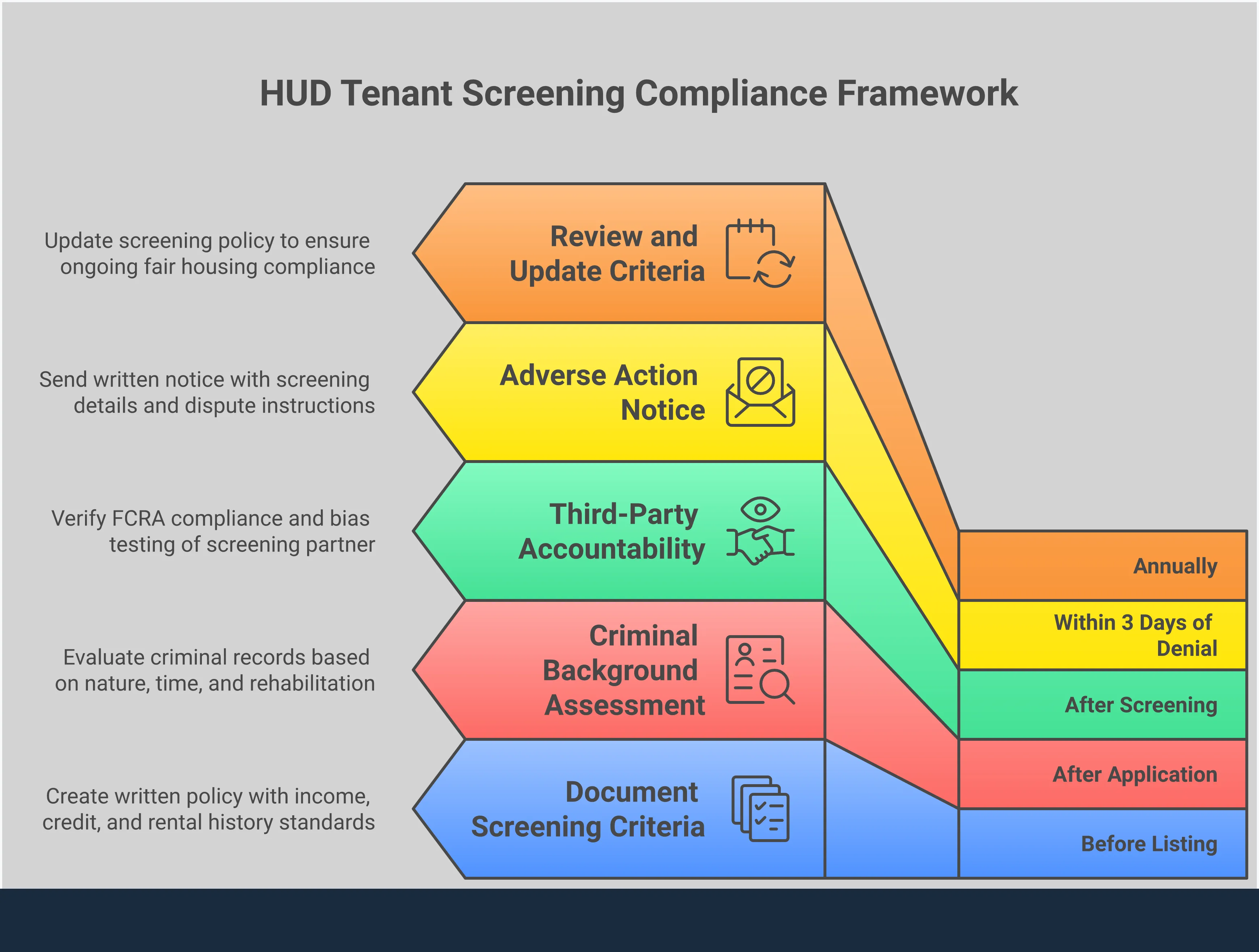
First, write down your screening criteria. This is a foundational step for fairness. Your written policy should outline exactly what you look for, from income requirements to credit history. This ensures you apply the same standards to every applicant, which is a cornerstone of fair housing. When you make a decision, especially a denial, document the specific reasons based on your criteria. This creates a clear record showing your process was objective and based on legitimate business needs, not personal bias. A documented process is your best defense.
The screening report you use is only as good as its data. You have a responsibility to use a service that provides accurate, up-to-date, and compliant information. Don't be afraid to ask a screening provider how they ensure their data is correct and free from bias. A reliable partner will be transparent about their methods and provide a compliant screening solution. It's also crucial that your process allows applicants to see and correct any errors in their reports. This opportunity is a key part of HUD's guidance and a requirement under the Fair Credit Reporting Act.
Avoid blanket policies that lead to automatic denials. For example, a policy that rejects anyone with any kind of criminal record is likely to be seen as discriminatory. Instead, HUD guidance encourages an individualized assessment. This means you should consider the whole picture: the nature of an offense, how long ago it happened, and what the applicant has done since. The goal is to only use information that genuinely predicts whether someone will be a good tenant. Evaluating each person's unique circumstances against your written criteria leads to a more informed and fair decision.
Is this HUD guidance a new law I have to follow? Think of it less as a new law and more as an official explanation of how the existing Fair Housing Act applies to modern tenant screening. The core rules about preventing discrimination have been in place for decades. This guidance simply clarifies how those long-standing principles relate to the tools we use today, like third-party screening reports and automated software.
Can I still deny an applicant based on their criminal history? Yes, you can, but you need to be thoughtful about it. The guidance advises against blanket policies that automatically disqualify anyone with a criminal record. Instead, you should perform an individual assessment. This means considering the nature of the offense, how long ago it occurred, and whether it directly relates to the applicant's ability to be a responsible tenant. The goal is to evaluate actual risk, not to penalize someone for a past mistake that poses no threat to your property or community.
If I use a third-party screening service, am I still responsible for their mistakes? You are. Using a screening service is a great way to save time, but it doesn't transfer your legal responsibility. You, the housing provider, are ultimately accountable for ensuring the entire process is fair and non-discriminatory. This is why choosing a reputable and compliant screening partner is so important. You need to be confident that the information they provide is accurate and gathered in a way that respects fair housing laws.
What should I do if an applicant says their screening report is wrong? You are legally required to give them an opportunity to correct it. If you deny an application based on information in a screening report, you must provide the applicant with an adverse action notice. This letter informs them of the denial, identifies the screening company you used, and explains their right to get a copy of the report and dispute any inaccuracies. This is a critical step in maintaining a fair and transparent process.
What's the most important first step I can take to make my screening process compliant? The single best thing you can do is to write down your screening criteria before you list your property. Create a clear, objective policy that outlines your requirements for income, credit, and rental history. By establishing these standards upfront and applying them consistently to every single applicant, you build a strong foundation for a fair and legally defensible screening process.