
The days of paper applications and endless phone calls are over. Technology has transformed how we manage rental properties, offering smarter ways to find qualified tenants without the administrative headache. The key is moving from a repetitive, landlord-led process to a modern, applicant-driven one. By embracing tools like online applications and reusable screening reports, you can attract serious candidates who have already taken the first step. This guide is focused on how to make tenant screening more efficient by adopting a forward-thinking approach. We’ll explore the tools that cut down on paperwork and help you focus on what truly matters: choosing the best tenant for your property.
An efficient tenant screening process isn't just about filling a vacancy quickly. It’s about creating a smooth, organized, and fair system that helps you find a reliable tenant without wasting anyone's time. When your process is streamlined, you can review applicants consistently, make informed decisions, and protect yourself legally. It all comes down to having a clear plan and the right tools in place from the very beginning. A well-oiled screening machine respects both your time and the applicant's, leading to better outcomes for everyone involved.
Before you even think about posting your rental listing, you need to decide what you’re looking for in a tenant. Setting clear, objective criteria is the first step to an efficient process because it gives you a consistent benchmark for every applicant. Think about things like income requirements (a common standard is an income of three times the rent), a minimum credit score, and your policy on pets or smoking. Writing these down ensures you apply the same standards to everyone, which is crucial for staying compliant with the Fair Housing Act. This simple step prevents you from making subjective decisions and helps you quickly filter applicants who don’t meet your baseline requirements.
To compare applicants fairly, you need to gather the same information from everyone. Using a standardized rental application is the best way to do this. Make sure every interested person fills out the exact same form, and don't start the screening process until the application is complete. Some landlords even see a fully completed application as a mini-test of an applicant's thoroughness and attention to detail. An incomplete form or missing information can be an early sign that you’ll have to chase them down for details later. A consistent application process makes your job easier and ensures every applicant gets an equal opportunity.
An application gives you the tenant's side of the story, but a background check helps you verify it. A truly comprehensive screening report should include three key components: a credit report, a nationwide criminal history check, and a search for any past evictions. These reports give you a much clearer picture of an applicant's financial responsibility and rental history. Instead of gathering these yourself, use a trusted tenant screening service to pull accurate, compliant reports. This not only saves you a ton of time but also ensures you get reliable information to make the best possible decision for your property.
Keeping detailed records might feel like extra work, but it’s one of the most important parts of an efficient and legally sound screening process. Document every interaction, from phone calls and emails to the final decision. Keep copies of all applications, screening reports, and any notes you took along the way. If you decide to deny an applicant, make sure your reason is based on your pre-set criteria and that you have it in writing. This paper trail is your best defense against potential discrimination claims, as it proves you followed a consistent and fair process for every single applicant.
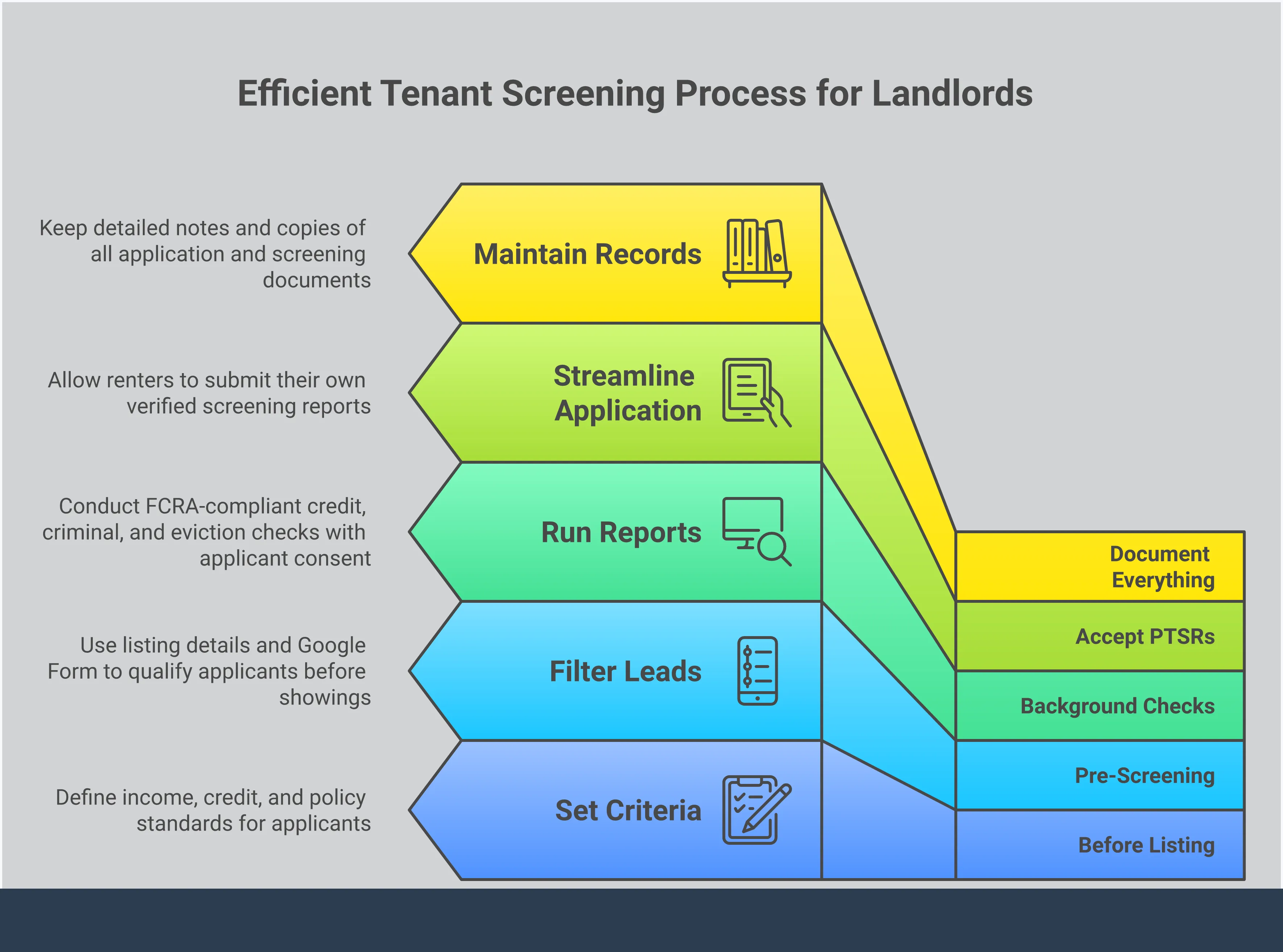
Pre-screening is your secret weapon for a more efficient tenant search. Think of it as a quick, informal interview that happens before you ever schedule a showing or accept a formal application. The goal is to gently filter out applicants who aren't a good fit early on, so you can focus your time and energy on the most promising candidates. It’s not about being difficult; it’s about being clear and saving everyone involved a lot of time and effort. A solid pre-screening process helps you attract serious renters who meet your criteria, leading to fewer vacancies and a smoother rental experience. By setting expectations from the very first interaction, you create a transparent and professional process. Let's walk through a few simple ways you can implement pre-screening and find your next great tenant without the usual headache.
Your property listing is the first point of contact, so make it work for you. A detailed and transparent ad acts as a natural filter. Be upfront about your main requirements so applicants can decide for themselves if they qualify before reaching out. Clearly state the monthly rent, security deposit, and your income requirements, which are often three times the rent. You should also include your pet policy, rules on smoking, and mention that a comprehensive background and credit check is part of the application process. When renters have this information from the start, it prevents a lot of back-and-forth and ensures that the people who do contact you are genuinely good candidates for your property.
When a potential tenant reaches out, a brief, friendly conversation can tell you a lot. Before you jump to scheduling a tour, take a moment to ask a few initial questions. Simple inquiries like, "What is your ideal move-in date?" or "Why are you looking to move?" can provide valuable insight. You can also confirm details they might have missed in the listing, like asking, "I see you have a dog, can you tell me the breed and size?" This isn't an interrogation; it's a quick chat to confirm they align with your basic criteria. This simple step helps you manage your properties more effectively by focusing only on well-qualified leads.
To add a bit more structure to your process, consider using a pre-screening questionnaire. This can be a simple online form you create with a tool like Google Forms. Before scheduling a showing, you can send a link to interested renters. In the form, ask them to confirm they meet the key criteria you outlined in your listing. You can ask for their estimated credit score, monthly income, number of occupants, and if they have any pets. This gives you a consistent way to review every inquiry at a glance and ensures you only spend time showing the property to people who are a strong match on paper.
In-person showings can take up a huge amount of your time. A great way to streamline this is by offering a virtual tour. You can film a simple video walkthrough of the property or use an app to create a 3D tour. Include the link in your rental listing and share it with anyone who inquires. This allows prospective tenants to get a real feel for the layout and condition of the home on their own time. As a result, you'll find that only the most serious renters will follow up to request an in-person visit, saving you from conducting tours for people who were never a great fit to begin with.
Screening tenants is a bit like matchmaking for your property. You’re looking for a great fit, and most of the time, you’ll find wonderful applicants. But every so often, you might come across an application that gives you pause. Learning to spot potential red flags isn’t about being cynical; it’s about being a diligent and responsible landlord. Paying attention to inconsistencies or warning signs early on can save you from major headaches down the road. Trust your instincts, but also back them up with a consistent process and a clear understanding of what to look for.
A single odd detail might not be a dealbreaker, but a pattern of them can be a clear signal to proceed with caution. For example, an applicant might have a reasonable explanation for a gap in their employment history. But if that’s combined with vague answers about their past rentals and a desire to pay only in cash, you have a collection of red flags that warrant a closer look. The goal is to gather enough information to make a confident and fair decision. Using a comprehensive screening report gives you the objective data you need to either verify an applicant’s story or confirm your concerns. This approach protects your investment, ensures you’re treating all applicants equitably, and helps you find a reliable tenant who will care for your property.
Gaps in a rental or employment history aren’t automatically a dealbreaker, but they are worth a closer look. A solid application should paint a clear picture of stability. If you notice unexplained periods of unemployment or frequent moves without a clear reason, it’s fair to ask for more information. The best way to verify the details is to do your homework. Contact their employer to confirm their position and income, and reach out to previous landlords. Ask about their experience with the tenant, focusing on payment history, property care, and whether they would rent to them again. A straightforward applicant will have no problem providing this context.
Pay attention to how a potential tenant communicates. Are their answers to your questions clear and direct, or are they evasive? If someone can’t give you a straight answer about why they’re moving or where they work, it might be a sign they’re hiding something. Another common red flag is an unusual sense of urgency. An applicant who pressures you for a same-day move-in could be trying to escape a bad situation, like an eviction. While you want to be helpful, it’s important not to let someone else’s rush compromise your screening process. Using a standardized application for everyone helps you gather the same information consistently, making it easier to spot when something is missing.
A credit report tells a story about a person’s financial habits. You don’t need to be a financial analyst to understand it, but you should know what to look for. Landlords check your credit to gauge the likelihood of on-time rent payments. A history of late payments on other bills, accounts in collections, or recent bankruptcies can be significant warning signs. A high amount of debt compared to their income is also something to note. A low credit score alone doesn't always tell the whole story, but a pattern of financial irresponsibility is a legitimate concern when you’re trusting someone with your property. A comprehensive screening report gives you this full picture so you can make an informed decision.
While it might seem convenient, an applicant who insists on paying their deposit and rent only in cash should give you pause. This is often a major red flag. It can suggest the person is trying to hide their income, or it could be a way to conceal other occupants who aren't on the lease. Accepting cash also creates a logistical and security nightmare for you. There’s no automatic paper trail, which can lead to disputes about whether rent was paid. It’s always better to set up clear, trackable payment methods, like online payment portals or checks. This protects both you and your tenant by creating a clear record of all transactions.
Gone are the days of sifting through stacks of paper applications and manually calling references. Technology offers a suite of tools that can make your tenant screening process faster, more organized, and much more thorough. Using the right platform not only saves you precious time but also helps you find qualified tenants while staying on the right side of the law. From simple online applications to comprehensive, reusable reports, there’s a solution that fits your needs as a landlord. Let's look at some of the most effective tools you can use to build a more efficient screening workflow.
If you're ready to move away from paper, online application platforms are a great place to start. Websites like Zillow have become a popular “one-stop shop” for many landlords, allowing you to manage everything from listing your property to collecting applications and running basic checks. These platforms centralize applicant information, making it easy to review and compare candidates without juggling emails and paper forms. By having every applicant fill out the same digital form, you create a consistent and organized process from the very beginning. This simple step can significantly cut down on administrative work and help you focus on finding the best fit for your property.
For a deeper look into an applicant's history, automated screening services are essential. These tools do the heavy lifting of pulling critical information for you. Reputable tenant screening tools provide comprehensive reports that often include credit history, nationwide criminal records, and past eviction filings. This gives you a much clearer picture of who you’re renting to. These services are designed to be compliant with the Fair Credit Reporting Act (FCRA), which helps you make informed decisions based on reliable data. Using an automated service ensures you get consistent, in-depth information on every serious applicant, making your final choice easier and more defensible.
If you manage multiple properties or simply want to automate as much as possible, property management software is a powerful option. Platforms like Avail (part of Realtor.com) go beyond just screening. They are all-in-one solutions that can handle online applications, verify income, contact previous landlords, and even transition seamlessly into generating a state-specific lease. This software integrates your entire rental management process, from the first inquiry to collecting monthly rent. For busy landlords, this level of automation is a game-changer, freeing you up to focus on growing your investment portfolio instead of getting bogged down in day-to-day tasks.
A modern and highly efficient approach is to accept Portable Tenant Screening Reports (PTSRs). With this model, the renter purchases a single, comprehensive screening report and can share it with multiple landlords. This is a win-win. You get serious applicants who have already invested in the process, and they save time and money by not paying for a new report with every application. For you, it means receiving a complete, verified report instantly, at no cost. Services like Portable Tenant provide Experian credit data, eviction history, and criminal background checks, giving you all the information you need. This approach respects the renter's time and money while streamlining your decision-making process.
If you feel like you’re stuck in a repetitive loop of collecting fees and running the same types of background checks for every applicant, there’s a much better way to operate. Reusable screening reports, often called Portable Tenant Screening Reports (PTSRs), are changing the rental game for both landlords and renters. They create a more efficient, fair, and secure process that cuts down on redundant tasks and paperwork. The core idea is simple: instead of you running a new report for every single applicant, renters provide you with a comprehensive, pre-verified report that they can share with multiple landlords.
This single change can completely transform your screening workflow. It shifts the initial administrative burden from you to the applicant, who is motivated to get their information in order. This frees you up to focus on what really matters: reviewing qualified candidates and finding the right match for your property. By adopting a system that uses reusable reports, you’re not just saving time; you’re modernizing your process to align with state laws and meet the expectations of today’s renters. It’s a forward-thinking approach that makes the rental journey smoother and more transparent from the very first interaction, building a better relationship with potential tenants before they even sign a lease.
The biggest difference with a PTSR is who holds the keys. In a traditional screening process, you collect an application and fee, then run your own background check. With a portable report, the renter takes the lead by getting their own screening done and receiving a comprehensive report they can share directly with you. This simple shift gives renters control over their screening data and allows them to apply to multiple properties without racking up separate fees every time. For you, this approach reduces redundant work and creates a more streamlined system for filling your vacancies with qualified candidates.
Think about all the small tasks that add up with every application: processing payments, running individual checks, and waiting for the results to come back. Reusable reports cut down on this administrative work in a big way. Since the applicant provides a ready-made report, you can review their complete profile almost instantly. This efficiency helps you fill vacancies faster, which means less potential income lost from an empty unit. Plus, as research from the National Multifamily Housing Council shows, this model can lead to significant cost savings by eliminating the need to run multiple checks. Renters save on application fees, and you save valuable time and resources.
When renters have ownership of their screening information, it helps build a foundation of trust from the very beginning. A PTSR allows an applicant to review their own report, check it for accuracy, and address any potential errors before you even see it. This transparency is a huge step forward in creating a fair rental process. As the Consumer Financial Protection Bureau highlights, giving renters access to their own reports helps them correct discrepancies, which leads to a more equitable experience for everyone. For you, this means you’re getting applications from informed, proactive candidates who are invested in presenting themselves accurately, which is exactly the kind of tenant you want.
Screening tenants efficiently is important, but doing it legally is essential. When you handle applications, you’re also handling sensitive personal data, which comes with serious responsibilities. A fair and compliant screening process protects you from potential lawsuits and fines, while also ensuring you treat every applicant with respect. Think of it as a non-negotiable part of protecting your rental investment. Sticking to the rules isn’t just about avoiding trouble; it’s about building a professional and sustainable rental business. Let’s walk through the key legal frameworks you need to have on your radar.
The federal Fair Housing Act is the foundation of non-discriminatory renting. It prohibits you from making any housing decisions based on a person's race, color, religion, national origin, sex (including gender identity and sexual orientation), disability, or familial status (having children). To comply, you must apply the same screening criteria to every single applicant, without exception. This means if you set a minimum credit score or income level, it must be the same for everyone. The best way to ensure fairness and consistency is to establish your rental criteria in writing before you even list your property and stick to it for every application you review.
If you use a third-party service to check an applicant's credit or run a background check, you must follow the rules of the Fair Credit Reporting Act (FCRA). First, you need to get the applicant's written permission before you run the report. If you decide to deny their application based on information found in that report, you are legally required to send them an "adverse action notice." This notice must inform them of the decision, provide the name and contact information of the screening company you used, and let them know they have the right to request a free copy of the report and dispute any inaccurate information. Using a compliant service helps you manage these important legal steps correctly.
A growing number of states, including Colorado, Washington, and California, have passed laws related to Portable Tenant Screening Reports (PTSRs). These laws require landlords to accept a reusable screening report provided by a prospective tenant, as long as it meets certain standards, like being recent and from a qualified source. This approach saves both you and the applicant time and money on redundant application fees. Because this is an evolving area of law, it’s crucial to stay informed about the specific requirements in your state. A reusable report empowers renters and simplifies the process for landlords who are up-to-date on their local obligations.
Beyond federal and state laws, many cities and counties have their own specific rules for tenant screening. For example, some jurisdictions have "first-in-time" ordinances, which require you to review complete applications in the order they are received. Others may have "ban the box" policies that limit when and how you can inquire about an applicant's criminal history. There may also be local restrictions on using eviction records or setting income requirements. Federal and state laws provide a baseline, but you must also research your local municipal codes to ensure you are fully compliant. Your local housing authority website is a great place to start.
Even the most experienced landlords can make mistakes during the screening process. While some errors just waste time, others can lead to difficult tenancies or even legal trouble. Steering clear of these common missteps will help you run a smoother, more effective, and legally sound screening process from start to finish.
It’s tempting to schedule a showing for every person who inquires about your rental, but that’s a fast track to burnout. Skipping a pre-screening step means you waste time on applicants who don’t meet your basic requirements. Before you even schedule a call, send interested renters a short pre-screening questionnaire. You can use a simple tool like a Google Form to ask qualifying questions about their desired move-in date, gross monthly income, and whether they have pets. This simple filter ensures you only spend your valuable time on serious, qualified candidates.
To screen tenants fairly and legally, you need a consistent process. The best way to do this is to decide on your tenant criteria before you list your property. For example, establish your minimum income-to-rent ratio, credit score, and pet policy. Then, apply these same standards to every single applicant, no exceptions. This objective approach not only helps you find the best fit for your property but also protects you from potential discrimination claims. Always make sure your criteria comply with all Fair Housing Act guidelines.
Proper documentation is your best friend in the rental business. From the very first interaction, keep a record of your process. Make sure every applicant fills out the application completely; some landlords see an incomplete form as an initial red flag for a lack of thoroughness. Keep copies of your communications, your screening criteria, and the legitimate, business-related reasons for your rental decisions. This paper trail creates a clear, professional record that can protect you if an applicant ever questions your choice.
Rental laws are not one-size-fits-all. They can change significantly from one state, county, or even city to the next. Forgetting to check your local regulations can lead to serious legal and financial consequences. For instance, some areas have specific rules about what you can ask or what information a background check can contain. It's your responsibility to understand the specific landlord-tenant laws in your area, including any portable screening laws that may affect your process. Staying informed is the best way to protect your investment.
What's the most important thing to do before I even list my property? Before you write a single word of your rental ad, you need to sit down and write out your tenant selection criteria. This means deciding on your minimum income requirements, credit score range, and policies on things like pets or smoking. Having these standards defined and in writing is the foundation of a fair and efficient process. It gives you an objective checklist to measure every applicant against, which helps you make consistent decisions and stay compliant with fair housing laws.
Is a low credit score an automatic reason to deny an applicant? Not necessarily. A credit score is just a single number, and it doesn't always tell the whole story. A comprehensive credit report gives you much more context, showing you an applicant's payment history, any accounts in collections, and their overall debt load. A person might have a lower score due to past medical debt but have a perfect history of paying rent on time. It's better to review the entire report to understand their financial habits rather than making a snap judgment based on the score alone.
How should I handle an applicant who seems great but has a few red flags? The key is to investigate consistently, not to make exceptions. If an applicant has a gap in their employment history or a vague reference, it's fair to ask for more context. However, you must give every applicant the same opportunity to explain any inconsistencies. Your job is to verify the information you're given, so follow through by contacting previous landlords and employers. If you can't verify their story or their explanation doesn't align with your pre-set criteria, you can move on confidently, knowing you followed your process.
Why should I accept a reusable report instead of running my own background check? Accepting a reusable report, or PTSR, streamlines your process significantly. You receive a complete, verified screening report from the applicant almost instantly, and it costs you nothing. This saves you the time and administrative work of collecting fees and running checks yourself. It also acts as a great filter for serious candidates, since the renter has already invested in the process. You get to fill your vacancy faster with a qualified person who is proactive about their rental search.
What's the biggest legal mistake landlords make when screening tenants? The most common and riskiest mistake is being inconsistent. This often happens when a landlord makes a decision based on a "gut feeling" rather than the objective criteria they established from the start. Applying your standards differently from one person to the next can easily lead to accusations of discrimination. To protect yourself and your business, you must treat every single applicant the same and document that you followed a fair, consistent process for everyone.