
Handing over your social security number and financial details for every rental application can feel unsettling. With traditional screening, your sensitive information is processed by multiple parties, and you rarely get to see the final report yourself. The Maryland reusable tenant screening report changes this by putting you in charge of your own data. You purchase one secure, verified report and control who gets to see it. You can review it for accuracy before sharing and even revoke access at any time. This modern approach gives you complete transparency and peace of mind, ensuring your personal information is handled securely throughout your housing search.
If you've ever felt the sting of paying application fee after application fee while apartment hunting, Maryland's reusable tenant screening report is for you. Think of it as your personal rental passport. It’s a comprehensive screening report that you, the prospective tenant, purchase from a certified provider. This single report contains all the essential information landlords need, including your credit history, a nationwide criminal background check, and any past eviction records.
The best part? It’s designed to be shared. Instead of paying a new fee to every landlord, you pay once for a report that’s valid for 30 days. You can then provide this same report to as many landlords as you like during that period, streamlining your search and saving you money. It’s a smarter, more efficient way to apply for a rental property. This system puts you in control of your personal information and makes the entire application process much less of a headache. With a portable report, you can focus on finding the right home, not on filling out endless paperwork.
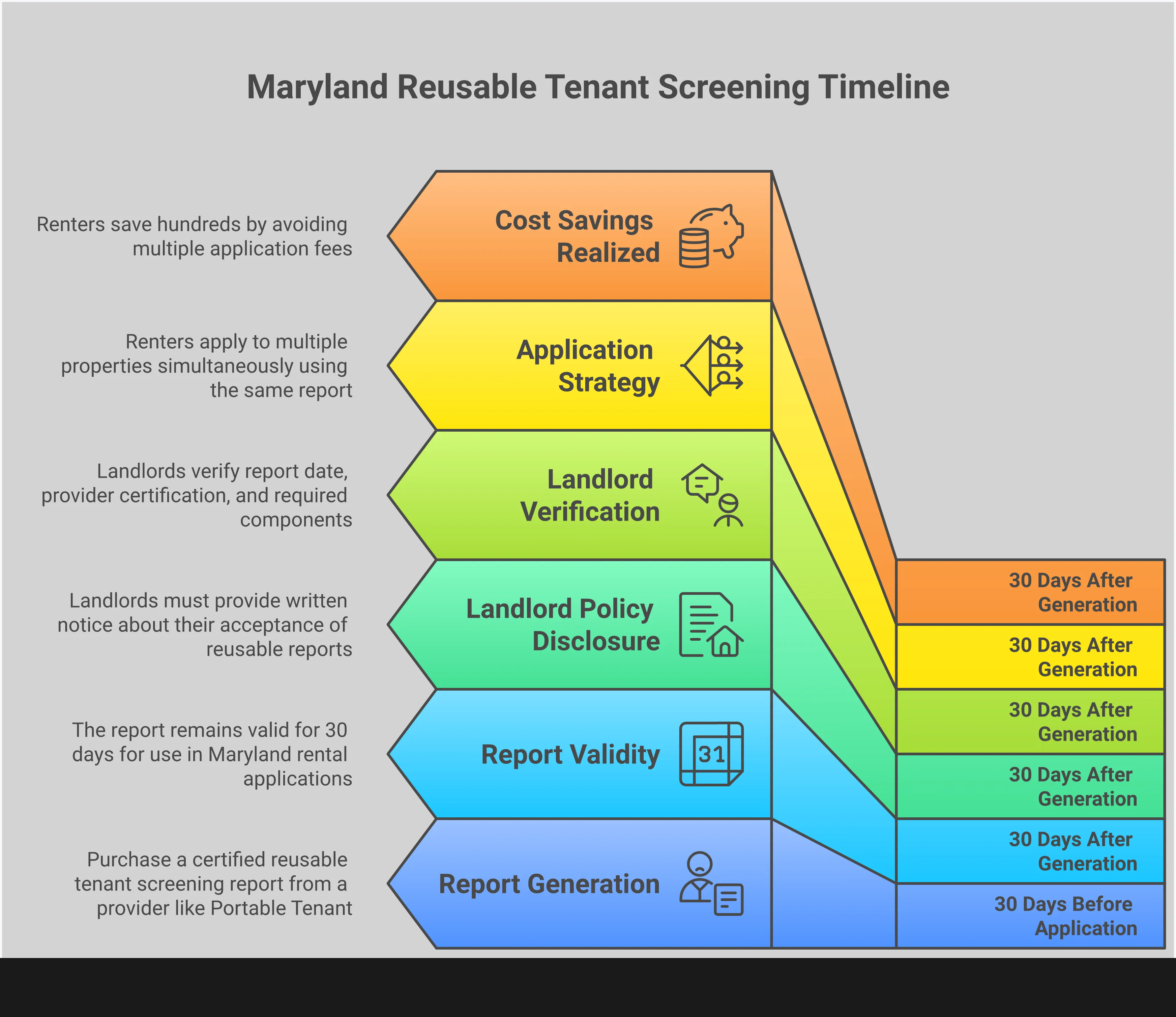
So, what does Maryland law say about these reports? The legislation gives landlords the option to accept a reusable tenant screening report from a prospective tenant. If a landlord chooses to accept your report, they are not allowed to charge you any additional application or screening fees. This is the core of the law: to reduce the financial burden on renters during their housing search.
The Maryland Reusable Tenant Screening Report law also gives you the right to dispute any information you believe is inaccurate. If you’re denied housing based on the report, you have the right to appeal that decision. The law is designed to create a fairer and more transparent process for everyone involved.
Let’s compare the old way of doing things with the new. With traditional screening, you find an apartment you love, fill out an application, and pay a non-refundable fee, usually between $35 and $75. If you don’t get it, you repeat the entire process, and the costs add up fast. It’s repetitive, expensive, and time-consuming.
A reusable report completely changes the game. You pay a single, flat fee for a report that you can use over and over for 30 days. This approach not only saves you a significant amount of money but also speeds up your search. You can apply to multiple properties at once without waiting for each landlord to run their own background check, giving you a competitive edge in a fast-moving rental market.
A Maryland reusable report is more than a simple background check. It’s a comprehensive, standardized document designed to give landlords a complete and fair picture of a potential tenant. The law is specific about what these reports must contain, ensuring every landlord receives the same high-quality information and every renter is represented accurately. This consistency streamlines the application process for everyone. Think of it as your complete rental resume, containing everything a landlord needs in one secure package that you control. Let's break down what you'll find inside.
A core component of a reusable report is a detailed look at your financial background. This includes a full credit report showing your credit history and score. For landlords, this is a key piece of the puzzle for understanding your financial reliability. For you as a renter, it’s an opportunity to present a clear snapshot of your financial health. A portable screening report gathers this information from a trusted source like Experian, so you can be confident the data is accurate and secure, saving you from having your credit pulled multiple times by different landlords.
The report also provides a thorough background check to help landlords feel secure. Maryland law requires this section to include a seven-year criminal history covering all federal, state, and local records from every place you've lived. It also includes a seven-year eviction history. This information helps landlords assess risk and make responsible decisions. By using a compliant screening service, landlords can be sure they are receiving legally permissible information, while tenants can trust their history is being reported accurately and within the bounds of the law, preventing unfair scrutiny.
Finally, a reusable report confirms you have the financial means to pay rent. It includes verification of your current employment and income, along with your current address and rental history. This saves you the hassle of digging up pay stubs and landlord references for every application. Instead, all of this essential information is neatly packaged in one verified report. It gives landlords the confidence that you can handle your rental obligations, making their decision process quicker. This allows you to move forward in your apartment search with a complete, ready-to-go application package.
If you’re a landlord in Maryland, you’ve probably heard about reusable tenant screening reports. The law around them is designed to make the rental process smoother and more transparent for everyone involved. It’s not about adding complicated new rules, but about creating a more efficient system. Understanding your responsibilities is the first step to making this law work for you, helping you find great tenants while staying compliant.
The main idea is to give landlords the option to accept a single, comprehensive report that a tenant can use for multiple applications. This saves you the hassle of running a new report for every single applicant. While you aren't forced to accept them, the law sets clear guidelines for what to do if you decide to. It also outlines what you can and cannot charge, and establishes penalties for not following the rules. Getting familiar with these requirements helps you avoid potential fines and simplifies your screening process. It’s all about making things fair and straightforward, which ultimately benefits both you and your prospective tenants.
First things first: landlords in Maryland are not required to accept a Portable Tenant Screening Report (PTSR). The choice is entirely yours. However, if you do decide to accept them, the law requires you to let potential tenants know. You must inform applicants in writing that you accept reusable reports. This can be a simple notice on your rental listing, your website, or as part of your application materials. The goal is transparency, ensuring renters know their options from the start. This simple step helps you attract well-prepared applicants and shows that you’re a modern, compliant landlord.
Here’s a key point that benefits renters directly. If you accept a valid PTSR from an applicant, you cannot charge them any additional screening or application fees for that report. Since the tenant has already paid for a comprehensive report, the law prevents them from being charged again for the same service. This rule is a cornerstone of the legislation, designed to reduce the financial burden on renters who are applying to multiple properties. For landlords, this means adjusting your fee structure if you choose to accept these reports. It simplifies the process by removing the need for you to handle screening payments for those applicants.
Maryland’s law has measures in place to ensure everyone follows the rules. Landlords who improperly refuse a valid PTSR without a legitimate business reason or who charge extra fees can face significant penalties. The law allows for fines of up to $2,500 for each violation. It’s a serious consequence that underscores the importance of understanding your obligations. However, the law also offers a chance to correct mistakes. If you fix the issue quickly, the fine can be reduced to just $50. If you ever have questions about compliance, our help center is a great resource for getting clear answers.
Reusable reports are a win-win, making the rental process smoother and more transparent for everyone involved. Instead of an adversarial back-and-forth, the system creates a straightforward exchange of information that benefits both renters and the landlords they want to rent from. It’s about saving resources, building trust, and getting you into your next home faster.
If you’ve ever been on a serious apartment hunt, you know how quickly application fees add up. Paying $50 to $100 for a background check at every single place you apply to is not only expensive but also time-consuming. The Maryland reusable report completely changes this. You pay once for one comprehensive report and can share it with as many landlords as you like for up to 30 days. This means you can apply to multiple properties without draining your bank account. It puts you in control of your search, allowing you to move quickly when you find a place you love without worrying about extra fees.
For landlords, reusable reports cut down on administrative work and speed up the leasing cycle. Instead of running individual background checks for every applicant, you receive a standardized, pre-vetted report directly from the tenant. This allows you to streamline your screening process and make decisions faster. Because the reports come from a certified provider, you can trust the information is accurate, secure, and compliant with state laws. Accepting a reusable report also means you can’t charge the applicant an additional screening fee, which can make your property more attractive to a wider pool of qualified renters.
Transparency is at the heart of the reusable report system. Both parties get to see the same verified information, which builds a foundation of trust from the start. A valid report provides a complete picture of an applicant, including their credit history, criminal and eviction records, and income verification. Because the report is generated by a secure, third-party source, landlords can be confident that the data hasn't been altered. Renters also have the chance to review their information for accuracy before sharing it, ensuring everyone is working with the same set of clear, reliable facts.
Getting your reusable report is a straightforward process that puts you in control of your apartment search. Instead of paying a new fee for every application, you get one comprehensive report to use multiple times. Following a few key steps ensures your report is compliant and ready for landlords. Here’s what you need to do.
Your first step is to work with a certified report provider. This isn't just a suggestion; it's a legal requirement in Maryland. A certified provider ensures your report is valid and contains all the information a landlord needs, including your verified identity, credit history, income details, and any criminal or eviction records from the last seven years. Think of them as the official source for your rental resume. Companies that offer a portable tenant screening report are set up to handle this, gathering information from trusted sources like Experian to build a complete and secure file that you control.
Timing is everything with your reusable report. According to Maryland law, your report is only valid for 30 days from the date it was created. This rule ensures landlords see the most current version of your information, which is fair to everyone. For you, this means you should generate your report right when you’re starting to actively apply for apartments. Submitting a report that’s more than 30 days old gives a landlord a valid reason to reject it. You can always read Maryland's official statute to see the exact wording for yourself.
Before your report ever reaches a landlord, you have the right to review it for accuracy. This is a huge perk of the process. Take the time to carefully check every detail, from the spelling of your name to the numbers in your financial history. An error on a credit report or a mix-up in public records could unfairly affect your application, and this is your chance to catch it. If you find something that doesn’t look right, your certified provider will have a process for you to dispute it. A good provider offers clear instructions for correcting inaccuracies, so check their help center for guidance.
It’s frustrating to find the perfect apartment, present your reusable screening report, and have the landlord turn it down. While this can be a setback, it doesn’t have to be the end of your search. Maryland law provides specific guidelines for both tenants and landlords, and understanding them is the first step to handling this situation. If a landlord refuses your report, you have rights and a clear path forward. Here’s what you need to know and what you can do next.
First things first, let’s talk about your rights. The most important one to remember is about fees. If a landlord agrees to accept your valid Portable Tenant Screening Report, they are not allowed to charge you any additional screening or application fees. This law exists to protect you from paying multiple application fees while you search for a home. You also have the right to receive the Maryland Tenants’ Bill of Rights from a prospective landlord, which outlines your protections throughout the rental process. Knowing these rules empowers you to stand up for yourself and ensures you aren't paying unnecessary costs.
So, what do you do when a landlord says no? It’s important to know that landlords in Maryland are not required to accept a reusable report. However, if they do have a policy of accepting them, they must let you know in writing. If you’re denied, start by politely asking for their screening policy. If they accept reusable reports but rejected yours, ask for a reason. If you were denied because of information that has since changed, you have the right to appeal their decision. Sometimes, a simple conversation can clear things up, especially if the landlord is unfamiliar with how easy it is to verify a report.
You don’t have to figure this out on your own. If you feel your rights have been violated or you just need advice, help is available. Local housing authorities and tenant advocacy groups are excellent resources. These organizations specialize in tenant law and can provide guidance on your specific situation and help you understand your rights. They can offer support and help you take the right next steps. For questions about your specific report from Portable Tenant, our help center is always available to provide clarity and assistance.
New laws often come with a bit of confusion, and Maryland's rules for reusable tenant screening reports are no exception. A few common myths are floating around that can trip up both renters and landlords. Let's clear the air on these points so you can feel confident in the process. Understanding the facts helps everyone stay compliant and makes finding or filling a rental much simpler.
This one is partially true, but there's an important detail you need to know. In Maryland, landlords can decide whether or not to accept a reusable report. However, they can't leave you guessing about their policy. If a landlord chooses to accept them (or not), they are required to inform prospective tenants in writing. This transparency is key. It means you should know upfront if your Portable Tenant Screening Report will be accepted, which helps you avoid wasting time and money. For landlords, having a clear, written policy is the best way to stay compliant.
Here’s a myth that could cost you money if you’re not careful. If a landlord accepts your valid reusable report, they cannot charge you an additional application or screening fee. That’s one of the biggest perks of this system. It’s designed to stop renters from paying separate fees for every single apartment they apply for. By using one report, you can save a significant amount of money during your housing search. Landlords who accept these reports benefit from a streamlined process and attract well-prepared applicants, but they must remember that tacking on extra fees is against the rules.
Not all screening reports are created equal. To be considered valid under Maryland law, a reusable report must come from a certified provider and contain specific, verified information. This includes your identity, credit history, criminal and eviction records from the past seven years, and proof of your income and employment. A flimsy, incomplete report just won't cut it. Using a comprehensive service ensures your report meets all legal requirements, giving landlords the detailed information they need to make a fair decision. This is why a trusted, compliant report is so important for a successful application.
Adopting reusable tenant screening reports can feel like a big shift, but it’s a change that simplifies your leasing process. To make the transition smooth, it helps to have a clear understanding of your responsibilities and how to handle these reports correctly. This guide walks you through the essentials of staying compliant, verifying information properly, and avoiding common pitfalls so you can fill your vacancies faster and with more confidence.
In Maryland, you aren't required to accept reusable screening reports. However, if you decide to, the law is clear: you must let applicants know in writing. This can be a simple statement on your rental listings or application materials. This transparency is key to building trust with potential tenants and ensuring you're following state guidelines. By clearly communicating your policy, you set clear expectations from the start. Our page for landlords offers more resources on how to integrate reusable reports into your workflow while staying compliant.
Once you receive a reusable report, a quick check ensures its validity. First, look at the date; the report must have been generated within the last 30 days. Next, confirm it comes from a reputable provider. A trustworthy report, like one from Portable Tenant, is comprehensive and powered by a major credit bureau like Experian. You can learn more about how it works to see the security measures involved. Finally, review all sections and compare the information against the tenant’s application. This simple cross-check helps you spot inconsistencies and make a well-informed decision.
Understanding the rules around reusable reports can save you from headaches and fines. If you accept these reports, you cannot charge an additional application fee. Refusing a valid report without a legitimate reason, like it being outdated or incomplete, can also lead to trouble. Maryland law imposes penalties of up to $2,500 per violation for these mistakes. The good news is that fines can often be reduced if you correct the issue quickly. The best approach is to establish a clear, consistent process for every applicant. If you have questions about compliance, our help center is a great resource.
If you've ever felt stuck in the endless cycle of rental applications, you know how draining it can be. Reusable tenant screening reports are more than just a convenience; they represent a fundamental shift in how renting works. This new approach simplifies the process for everyone involved, making it fairer, faster, and more transparent. It’s about giving power back to renters and providing landlords with reliable information without the usual hassle.
The old way of screening tenants was full of friction. You’d find a place you loved, pay an application fee, and hand over your personal information, only to repeat the entire process a week later for another property. Each application felt like a shot in the dark, with no way of knowing what the landlord saw on your report. Reusable reports change that. They give you the chance to review your own information and correct any errors before a landlord ever sees it. This simple step prevents misunderstandings and ensures your application is based on accurate, up-to-date details.
Imagine completing your screening paperwork just once and then using it for every apartment you apply to for the next 30 days. That’s the core idea behind reusable reports. Instead of paying separate fees and filling out new forms for each landlord, you get a single, comprehensive report that you can share multiple times. This "apply once, use everywhere" model saves you a significant amount of time and money during your housing search. It streamlines the entire experience, letting you focus on finding the right home instead of getting bogged down by repetitive administrative tasks. You can see exactly how the process works to simplify your search.
Your personal information is exactly that: personal. With traditional screening, your data was often passed along without your direct oversight. Reusable reports put you back in the driver's seat. You get to see your full credit, criminal, and eviction history before you even apply, giving you total transparency. More importantly, you control who gets to see your report and can revoke access at any time. This gives you peace of mind, knowing your sensitive data is handled with bank-level security and only shared when you say so. It’s a modern approach that respects your privacy and empowers you to manage your own information.
Do landlords in Maryland have to accept my reusable report? No, they are not legally required to accept one. The law gives landlords the choice to opt in. However, they must have a clear, written policy stating whether they accept reusable reports or not. This transparency means you should know their stance before you even apply, which helps you avoid any confusion.
What if a landlord accepts my report but still tries to charge me an application fee? This is not allowed under Maryland law. If a landlord agrees to use your valid reusable report, they cannot legally charge you any additional screening or application fees. You can politely remind them of the rule. If they insist, it might be a sign to look elsewhere, and you can always seek guidance from local tenant advocacy groups.
How can I be sure my personal information is secure when using a reusable report? Your security is a top priority. When you use a certified provider, your report is created with bank-level security to protect your sensitive data. You also have complete control over who sees your information and can revoke access at any time. This gives you a level of privacy and control that you simply don't get with traditional screening methods.
As a landlord, how do I know the report a tenant gives me is authentic? This is a valid concern. A legitimate reusable report comes directly from a certified, third-party provider, not the tenant's personal email. This process ensures the data is verified and has not been altered. You can also quickly check that the report is current (less than 30 days old) and contains all the legally required information, like a full credit check and background history.
What happens if I find an error on my report after I've already purchased it? One of the best parts of this process is that you get to review your own report before a landlord ever sees it. If you spot an inaccuracy, you have the right to dispute it. A certified provider will have a clear process to help you correct any errors, ensuring the information you share is accurate and presents you fairly.