
The world of online apartment hunting is full of myths. You might hear that all the best places are on one specific site, or that every listing you see is 100% accurate. Believing these can lead to frustration and missed opportunities. We’re here to set the record straight. We’ll bust the most common myths about property listing services and give you a clear-eyed view of how they really work. From understanding price estimates to knowing which platforms have the freshest information, you’ll learn how to be a more savvy, confident renter in today’s competitive market.
Think of property listing services as your digital home-finding headquarters. These are websites and apps that gather rental and for-sale listings, letting you browse available properties from the comfort of your couch. Instead of scouring newspaper ads or driving around neighborhoods looking for "For Rent" signs, you can explore hundreds of options in one organized place. These platforms act as a marketplace, connecting renters like you with landlords and property managers who have homes to fill.
The main goal of these services is to make your search easier and more efficient. They provide photos, detailed descriptions, pricing, and sometimes even virtual tours to help you get a feel for a place before you visit. Once you find a few places you love, the next step is usually the application process. This is where having a reusable screening report can save you time and money, allowing you to apply to multiple properties without paying separate fees each time. Understanding how it works can give you a major advantage in a competitive rental market.
The process is pretty simple. Landlords, property managers, or real estate agents post their available properties on the platform. They upload all the key details: rent price, number of bedrooms and bathrooms, square footage, amenities, and photos. As a renter, you can then search the site by typing in a city, zip code, or neighborhood. You can narrow your results even further using filters for your budget, pet policies, or specific features like in-unit laundry or a balcony. The best services update their listings almost instantly, so the information you see is fresh and accurate, which is crucial when a great apartment can be rented in a matter of hours.
As you start your search, you’ll notice a few different kinds of listing platforms. The most common are the large, national websites like Zillow and Apartments.com, which pull in listings from all over the country. These are great for getting a broad overview of what’s available. You’ll also find local Multiple Listing Service (MLS) platforms, which are often run by local real estate associations. These sites can be a goldmine for accurate, agent-verified listings that might not appear on the bigger sites right away. Finally, some landlords may use smaller, niche sites that cater to specific audiences, like students or those looking for luxury rentals.
Finding the right place to call home starts with knowing where to look. The internet is packed with property listing services, each with its own strengths and quirks. Getting familiar with the top players can make your search more efficient and a lot less stressful. From massive national databases to specialized rental sites, here’s a breakdown of the most popular platforms to help you find your next rental.
While not a traditional listing service, Portable Tenant is a key player in streamlining your rental search. Once you find a property you love on another platform, you can use your Portable Tenant Screening Report to apply. Instead of paying for a new background and credit check for every application, you use one comprehensive, secure report that you control. This saves you time and money, especially in a competitive market. It also gives landlords instant access to verified information, making your application stand out. Think of it as your universal key for rental applications.
Zillow is one of the biggest names in real estate, and its massive database makes it a go-to for many renters. You can find everything from apartments in large complexes to single-family homes for rent. However, its size can be a drawback. According to some industry analyses, listing information isn't always correct, and its price estimates can be confusing. While it’s a great tool for browsing what’s available in your target neighborhood, it’s smart to verify the details of any listing you’re serious about.
For those who prioritize accuracy, Realtor.com is a strong contender. It has a direct connection with the National Association of Realtors and, according to reports, updates its data from local Multiple Listing Services (MLS) every 15 minutes. This means you’re less likely to find outdated or "ghost" listings that have already been rented. Its close ties to real estate professionals make it a reliable source for current availability and details. The platform offers a robust search experience for renters who want to trust the information they’re seeing.
If you’re tired of sifting through for-sale properties, Apartments.com is a great choice because it focuses exclusively on rentals. The platform is known for featuring verified listings, particularly in managed apartment buildings, which adds a layer of security to your search. You can filter your search by amenities and other essential criteria to narrow down your options quickly. Many listings also feature high-quality photos and reliable 3D tours, giving you a clear picture of the space before you even schedule a visit.
As its name suggests, Rent.com is another platform dedicated solely to the rental market. It offers a straightforward search experience with tools designed to help you find apartments, condos, and houses for rent. A part of the Redfin network, it provides detailed listings with photos, floor plans, and information about neighborhood features. You can easily filter by location, price, number of bedrooms, and pet-friendliness. It’s a solid, focused tool for renters who want to skip the sales listings and get right to finding their next home.
The Multiple Listing Service (MLS) is the backbone of real estate data. It’s a private database created and maintained by real estate professionals to share information about properties. While you typically can’t search your local MLS directly as a renter, its data feeds into many other public sites, including Realtor.com. Listings that originate from the MLS are generally the most accurate and up-to-date. Understanding that the MLS facilitates cooperation among brokers helps you appreciate why some sites have more reliable information than others.
At first glance, most property listing websites seem to offer the same thing: a searchable database of available rentals. But when you dig a little deeper, you’ll find key differences that can seriously impact your search. The best platform for you depends on what you value most, whether it’s the most up-to-date listings, a great mobile app, or powerful search tools. Let’s break down how the top services stack up in the areas that matter most to renters.
A great rental search starts with great filters. The ability to narrow down thousands of listings to a handful of perfect matches is a huge time-saver. All major platforms let you filter by the basics like price, number of bedrooms, and location. But the best services go further, offering options for pet policies, in-unit laundry, parking, and specific amenities. Some local MLS sites even let you search by county or neighborhood to get super specific. The more detailed the filters, the more control you have over your search, ensuring you only see rentals that truly fit your needs.
Since you’ll likely be checking for new listings multiple times a day, a good mobile app is non-negotiable. A great app should be intuitive, fast, and make it easy to save your favorite properties and searches. Features like push notifications for new listings that match your criteria can give you a critical edge in a competitive market. For example, some real estate apps are known for making it simple to book tours and get alerts right from your phone. A clunky, slow, or confusing app will only add frustration to your search, so it’s worth finding one you genuinely enjoy using.
There’s nothing more disappointing than falling in love with a rental only to find out it was leased last week. This is why listing accuracy is so important. Some platforms pull data directly from the Multiple Listing Service (MLS), which is the database real estate agents use. Sites like Realtor.com update their listings as often as every 15 minutes, so you’re seeing information that’s practically in real-time. Other sites may have a lag, resulting in outdated or "phantom" listings. For the most current information, local MLS portals are often your best bet, as they are the direct source.
Once you find a place you like, the next step is reaching out. Different platforms handle this in different ways. Many allow you to contact the landlord or listing agent directly through a form on the site. This can be a fast way to ask questions or schedule a viewing. However, if you’re working with your own real estate agent, it’s always best to let them initiate contact. This keeps communication clear and ensures your agent can represent your best interests from the very beginning. A streamlined process prevents crossed wires and shows landlords you’re an organized and serious applicant.
Figuring out the financial side of your apartment search can feel a little murky. While browsing listings is almost always free, the costs can start to pop up once you’re ready to apply. From premium search features to non-refundable application fees, it’s smart to know what to expect. Understanding these potential expenses will help you budget effectively and avoid any unwelcome surprises as you find your next home.
Most property listing services let you search for free, but many also offer premium features for a price. These paid upgrades might give you early access to new listings, provide more in-depth neighborhood data, or remove ads from your search experience. While you can definitely find a great apartment using only free tools, it’s worth considering what you might be missing. Free platforms can sometimes have outdated information, which can impact the efficiency of your search. Paying for a premium service could give you a competitive edge in a fast-moving market, but it’s not a requirement for a successful hunt.
For renters, the "pay-per-listing" model usually translates to "pay-per-application." This is the most common approach, where you pay a separate application and screening fee for every apartment you apply to. These fees can range from $25 to $100 or more each, and they add up quickly. A more modern and renter-friendly approach is the portable screening report. With a service like Portable Tenant, you pay one fee for a comprehensive report that you can share with multiple landlords. This model saves you from paying repeated screening fees, putting a significant amount of money back in your pocket.
Hidden fees are one of the biggest frustrations for renters. Beyond the application fee, you might encounter administrative fees, processing fees, or holding fees to take a unit off the market. These charges aren't always advertised upfront on the listing. To protect yourself, always ask the landlord or property manager for a complete, itemized list of all potential costs before you submit an application. Don’t be afraid to ask what each fee covers and whether it’s refundable. Using a transparent service for your tenant screening also helps, as it consolidates those costs into one clear, predictable payment.
When you start looking for a new rental, you’ll quickly find two main types of listing services: the big national players and the smaller local specialists. Each has its own strengths, and knowing when to use which can make your apartment hunt a lot smoother. Think of it like shopping: sometimes you need the massive selection of a superstore, and other times you want the curated finds of a local boutique. Let's break down the pros of each so you can build the perfect search strategy.
The biggest advantage of using large, national platforms is their sheer size and scope. These websites give you a bird's-eye view of the market, letting you explore a huge number of rentals across different neighborhoods and even cities. This is especially helpful if you're moving to a new area and want to get a feel for what's available. Many of these sites also have powerful search filters and receive direct data feeds from real estate groups, with some updating as often as every 15 minutes. That means you get access to a massive, relatively current inventory all in one place, which is a great starting point for any search.
While national sites offer quantity, local services provide a more tailored and often more accurate experience. These platforms, like a regional Multiple Listing Service (MLS), focus on a specific city or area, so the listings are highly relevant. Because these are often the same systems local real estate agents use, the information is incredibly current. This can be a huge advantage in a competitive market, helping you avoid the disappointment of inquiring about a rental that’s already been leased. Using local real estate marketplaces can feel like having an inside scoop, showing you quality listings that might not have hit the bigger sites yet.
So, which one should you choose? The best approach is to use both. Start your search broadly on one or two national platforms to understand your options and narrow down your preferred neighborhoods and price range. Then, dive deeper with a local listing service to find hidden gems and the most up-to-date information. Using a couple of different platforms ensures you see the full picture and don’t miss out on the perfect place. Once you start finding properties you love, you can simplify the next step. With a reusable screening report, you can apply to rentals you find on any site without filling out new applications or paying extra fees each time.
Finding your next home can feel like a full-time job, but the right tools can make all the difference. Not all property listing services are built the same, and focusing on a few key features will help you search smarter, not harder. A great platform does more than just show you what’s available; it gives you the power to find a place that truly fits your life. From accurate details to powerful search filters, knowing what to look for will streamline your hunt and get you one step closer to signing a lease. Once you find the perfect spot, you can simplify the next steps with a reusable screening report that puts you in control.
There’s nothing more frustrating than falling in love with an apartment only to find out it was rented last week or the price is actually higher than listed. Outdated or incorrect information wastes your time and energy. The best listing services prioritize accuracy, with clear indicators showing when a listing was last updated. As one industry report notes, incorrect pricing information can cause major problems for everyone involved. Look for platforms that have a reputation for fresh, reliable listings. This small detail is often a sign of a quality service that respects your time.
Your time is valuable, so don't waste it scrolling through rentals that don't meet your needs. A top-tier listing service should offer robust search and filtering options that let you get specific. Beyond the basics like price and number of bedrooms, look for filters for pet policies, in-unit laundry, parking, air conditioning, and even specific keywords. The ability to save your searches and get alerts for new listings that match your criteria is also a huge plus. These tools help you cut through the noise and focus only on the properties that are a genuine fit for your lifestyle and budget.
In a world where you can tour a museum from your couch, you should be able to get a solid feel for an apartment without leaving your home. High-quality photos are the absolute minimum, but the best listings go a step further with virtual tours, 3D walkthroughs, or video tours. These features give you a realistic sense of the space, layout, and flow of a unit, helping you decide if it’s worth seeing in person. A listing with few, low-quality photos can be a red flag, so prioritize those that give you a clear and comprehensive look inside.
You aren’t just renting an apartment; you’re becoming part of a neighborhood. A great listing service understands this and provides valuable context about the surrounding area. Look for integrated maps that show local amenities like grocery stores, parks, and public transit stops. Features like Walk Score, school ratings, and local crime data can also be incredibly helpful in making an informed decision. While landlords are focused on price and timing, you’re focused on finding a community where you can thrive. The right platform will give you the insights you need to choose a location you’ll love.
Finding your next home online is convenient, but the sheer amount of information can be overwhelming. It’s easy to fall for common misconceptions about how property listing services work. Let's clear the air and bust a few myths so you can approach your apartment hunt with confidence and a healthy dose of skepticism.
It would be great if every listing was a perfect snapshot of reality, but that’s rarely the case. Information can be outdated, photos can be misleading, and prices can be incorrect. Sometimes it’s an honest mistake; other times a landlord might post a lower price to attract more attention. Incorrect pricing information can cause major headaches for everyone involved. The best approach is to treat every listing as a starting point. Always confirm important details like rent, availability date, and pet policies directly with the landlord or property manager before you get too invested.
Years ago, you might have needed an agent or broker to get the inside scoop on available rentals. Today, the internet has completely changed the game. Online listing services give you direct access to information about countless properties, putting the power right in your hands. While an agent can still be a valuable resource, especially in a fast-moving market or if you're relocating, they are no longer a requirement. You can absolutely find your next home by searching on your own, communicating directly with landlords, and managing your own application process. It just takes a bit of organization and persistence.
That price you see on the listing? Think of it as a suggestion, not a rule. While many landlords are firm on their price, others might have some wiggle room, especially if the unit has been vacant for a while or if you’re an ideal applicant. On the flip side, in a highly competitive market, you might find yourself in a bidding situation where the final rent is higher than what was listed. The key is to do your research on comparable units in the area. This will give you a better sense of a fair price and whether you have any room to negotiate.
It’s easy to assume that one rental site is just like another, but they can vary quite a bit. Some platforms pull listings from the Multiple Listing Service (MLS), while others allow anyone to post, which can lead to more scams or outdated ads. The features, user experience, and overall efficiency of real estate platforms can also differ significantly. That’s why it’s smart to use a few different services in your search. You’ll get a broader view of the market and can cross-reference information. Plus, some platforms offer unique tools, like a portable screening report that saves you time and money on application fees.
Finding your next home should be exciting, not exhausting. With so many listings scattered across different platforms, it’s easy to feel overwhelmed. But a little bit of strategy can transform your search from a stressful scroll-fest into a focused and successful mission. By creating a clear plan, using the right tools, and staying on top of new opportunities, you can find a place you love without all the hassle. These simple, actionable steps will help you streamline your search and move into your new home with confidence.
Before you even open a browser tab, take a moment to define what you’re looking for. A smart search strategy starts with a clear list of your must-haves and nice-to-haves. What’s your absolute maximum budget? Which neighborhoods are you considering? How many bedrooms do you need? Is a pet-friendly policy a dealbreaker? Answering these questions first will save you from wasting time on places that aren’t a good fit.
Having a plan helps you cut through the noise and avoid common property listing pitfalls like outdated information or misleading photos. Consider creating a simple spreadsheet to track the properties you like, noting the address, rent, pros, and cons. This keeps you organized and makes comparing your top choices much easier.
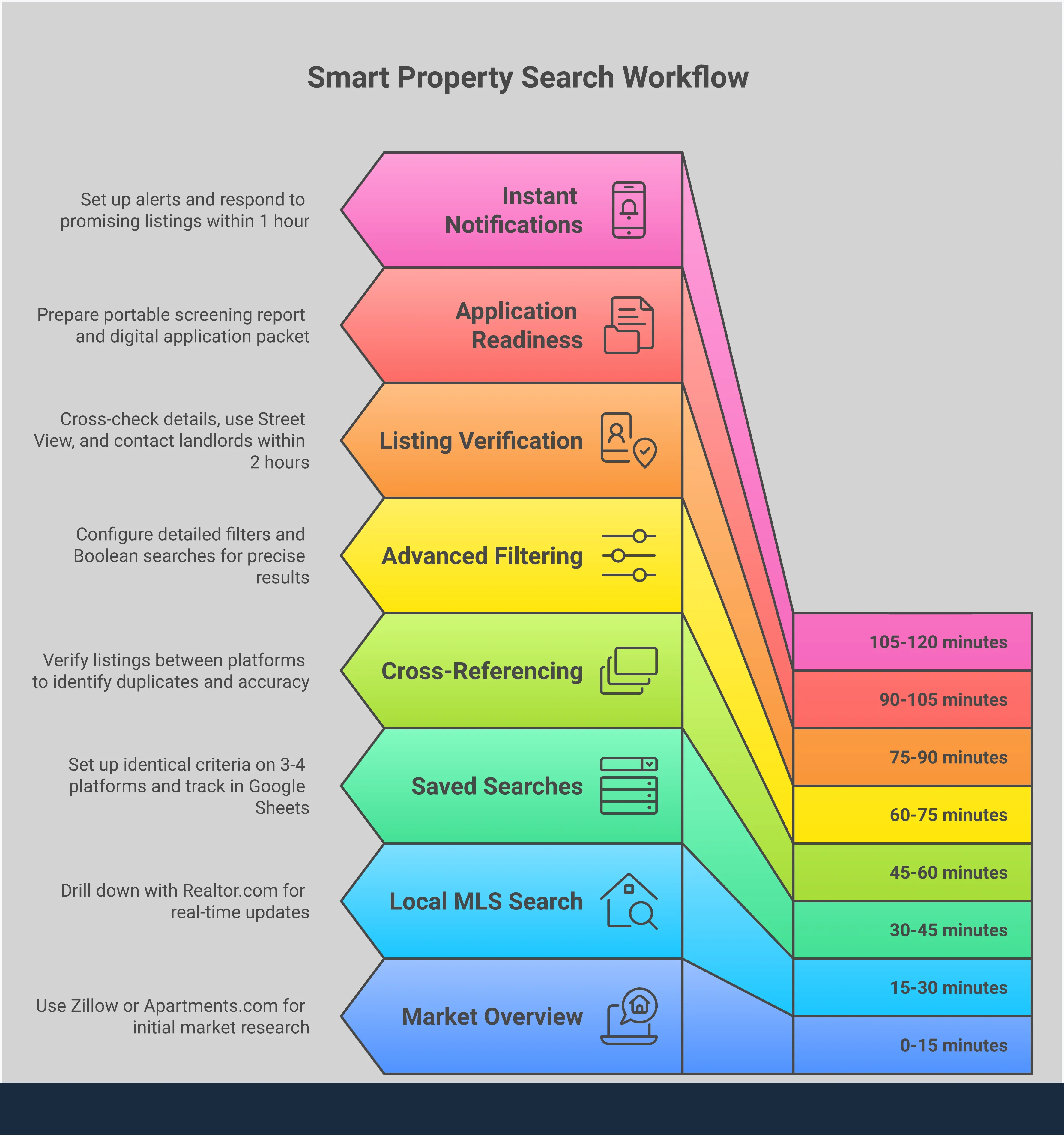
Don’t limit your search to a single website. While some platforms are massive, no single service has every available rental. Broaden your options by using a mix of national sites, local listing services, and even social media marketplaces. Each platform has its own strengths; some might have more user reviews, while others might feature exclusive listings directly from local landlords.
Exploring various platforms gives you a more complete view of the market and helps you find the best deals. While many services seem similar, the small differences can have a big impact on your search. Once you find a few places you love, you can simplify the next step with a portable screening report that works for any landlord, saving you time and application fees.
In a competitive rental market, the best places get snapped up quickly. To get a leg up, turn on instant alerts and email notifications on your favorite listing platforms. You can customize these alerts to match your specific search criteria, so you’ll get a notification the moment a property that fits your needs becomes available. This proactive approach means you can be one of the first to inquire and schedule a tour.
Think of it as having a personal assistant who scans the market for you 24/7. Instead of constantly refreshing pages, you can let the technology do the work. This ensures you stay informed about new listings and price drops in real time, giving you the best chance to secure your ideal rental before someone else does.
A listing can look perfect online, but it’s crucial to do your own homework. Information can sometimes be outdated or contain small errors, as landlords are often busy managing multiple properties and tasks. Before you get too attached, take a few extra steps to verify the details. Use Google Maps to check out the neighborhood and the building’s exterior. If the listing photos seem too good to be true, they just might be.
Most importantly, always try to see the property in person or through a live virtual tour. This is your chance to confirm the layout, check for any maintenance issues, and get a real feel for the space. Don’t be shy about asking the landlord or property manager to clarify details about utilities, fees, and lease terms. A little due diligence upfront can save you from major headaches down the road.
Why should I use more than one property listing site for my search? Think of it like shopping for anything else; you wouldn't just go to one store. No single website has every available rental. Using a large national platform gives you a great overview of the market, while a smaller, local service can uncover hidden gems and more current listings. Combining a couple of different platforms ensures you see the most complete picture of what's out there.
What is the most common mistake renters make when using these sites? The biggest mistake is assuming every detail in a listing is 100% accurate and up to date. Information about price, availability, or even pet policies can sometimes be incorrect or old. It's best to treat listings as a starting point. Before you get too excited, always contact the landlord or property manager directly to confirm the important details.
How can I avoid wasting money on application fees for multiple properties? Application fees can add up incredibly fast, especially in a competitive market. The most effective way to save money is by using a portable tenant screening report. Instead of paying a new fee to every landlord, you pay a single fee for one comprehensive report that you can securely share with as many properties as you apply to.
Are the rent prices I see on these websites final? Not always. While many landlords have a set price, some may have room for discussion, particularly if the property has been vacant for a while. It's always a good idea to research what similar units in the neighborhood are renting for. This gives you a better understanding of the market and helps you determine if there might be an opportunity to negotiate.
Besides photos, what's one feature that makes a rental listing truly helpful? A high-quality virtual tour or a 3D walkthrough is incredibly valuable. These features give you a much more realistic sense of the apartment's layout, size, and flow than static pictures ever could. It helps you weed out places that won't work for you without having to schedule an in-person visit, saving you a ton of time and energy.