
Let's be honest: there are a lot of myths and misconceptions surrounding the Section 8 program. It’s easy to get caught up in stereotypes, but it’s crucial to remember that a housing voucher is simply a form of payment, not a reflection of a person's character. The most successful landlords know that every applicant deserves to be evaluated on their own merits. Building a fair and objective process for screening Section 8 tenants is the best way to do this. It allows you to look past the noise and focus on what truly matters: credit history, rental background, and verifiable income.
If you’re a landlord, you’ve likely heard of the Section 8 Housing Choice Voucher Program. It’s a federal program from the U.S. Department of Housing and Urban Development (HUD) designed to help low-income families, the elderly, and people with disabilities afford safe and decent housing in the private market. For property owners, participating in the program can offer a steady source of rental income and access to a wider pool of potential tenants. Understanding how the program works is the first step to deciding if it’s a good fit for your rental business.
The program provides eligible families with a housing voucher. Instead of living in a specific public housing unit, the family can choose any rental property that meets the program's requirements, as long as the landlord agrees to participate. The local Public Housing Authority (PHA) receives federal funds from HUD to administer these vouchers. Once a family is approved and finds a home, the PHA pays a portion of the rent directly to the landlord each month. The tenant is then responsible for paying the difference, which is typically around 30% of their monthly adjusted income.
Eligibility for a Housing Choice Voucher is determined by the local PHA based on a family's total annual gross income and size. As HUD states, "Your family's income and size must meet certain limits." These limits are set by HUD and are generally very low, ensuring the program serves those with the greatest need. While you as the landlord will still conduct your own screening, you can be confident that the PHA has already verified the applicant's income eligibility according to strict federal guidelines. You can find the specific income limits for your area on the HUD website.
One of the biggest draws for landlords is the reliable payment structure. The housing subsidy is paid to you directly by the PHA on behalf of the participating family. The tenant then pays the remaining share of the rent. This means a significant portion of your rent is guaranteed to arrive on time every month, reducing the risk of non-payment. This direct deposit system provides a consistent income stream you can count on. It also encourages landlords to participate, which in turn helps increase the availability of quality, affordable housing in the community.
When you're screening a potential tenant who uses a Section 8 voucher, your process will look very similar to how you screen any other applicant. The key is to stay consistent and understand the specific legal framework that protects these applicants. Getting familiar with fair housing laws, local regulations, and HUD guidelines isn't just about checking boxes; it's about creating a fair process for everyone and protecting yourself as a landlord. Think of it as building a solid foundation for a successful tenancy. By applying the same criteria to every applicant, you ensure you’re making decisions based on qualifications, not on their source of income.
The cornerstone of your screening process should be the Fair Housing Act, which prohibits discrimination. Many states and cities have taken this a step further by adding "source of income" as a protected class. This means you cannot legally refuse to rent to an applicant simply because they receive housing assistance. The best practice is to screen Section 8 tenants using the exact same criteria you use for everyone else. If you have a minimum credit score or specific income requirements, apply them consistently across the board. This ensures you’re treating every applicant fairly and staying on the right side of the law.
While federal laws provide a baseline, housing regulations can vary significantly depending on where your property is located. Some states and municipalities legally require landlords to accept Section 8 vouchers, while others do not. It’s your responsibility to know the specific rules in your area. Before you even list your property, take some time to research your local and state-level housing laws. This simple step can save you from potential legal headaches down the road and helps you set clear, compliant policies for your rental business from the very beginning.
The Section 8 program is administered by the Department of Housing and Urban Development (HUD), which has its own set of rules. While the local Public Housing Authority (PHA) will verify an applicant's eligibility for the program, that doesn't replace your own screening process. You still need to do your due diligence. This includes running a background check, verifying employment and income (the tenant's portion), and checking references. Following HUD’s guidelines while also conducting your own thorough screening ensures you find a reliable tenant who is a good fit for your property.
Consistency is your best friend when it comes to tenant screening. To avoid any appearance of discrimination, you must apply your screening criteria uniformly to every single person who applies, whether they have a Section 8 voucher or not. A great way to do this is by creating a written policy with a checklist or a scoring system for all applicants. This not only keeps your process fair but also provides clear documentation of your decision-making. Using a standardized system like a Portable Tenant Screening Report can help you apply the same evaluation metrics to everyone, making your process transparent and defensible.
Just because an applicant has a Section 8 voucher doesn't mean you skip your standard screening process. In fact, applying the same criteria to every applicant is the cornerstone of fair housing compliance. Before you even list your property, you should have a clear, written set of rental standards. Think of this as your rulebook; it ensures every application is measured against the same objective benchmarks, which protects you legally and helps you find a reliable tenant.
Your criteria should cover the same core areas you'd check for any other applicant: their ability to pay their portion of the rent, their financial habits, their history as a tenant, and anything that might indicate a risk to your property or other residents. The key difference when screening a Section 8 applicant is how you assess their income, since the Public Housing Authority (PHA) covers a significant portion of the rent. However, for everything else, from credit checks to rental history verification, your process should remain identical. This consistency is not just good practice, it’s the law. By establishing and sticking to your criteria, you create a fair and transparent process that helps you confidently choose the best-qualified applicant for your property, regardless of their source of income.
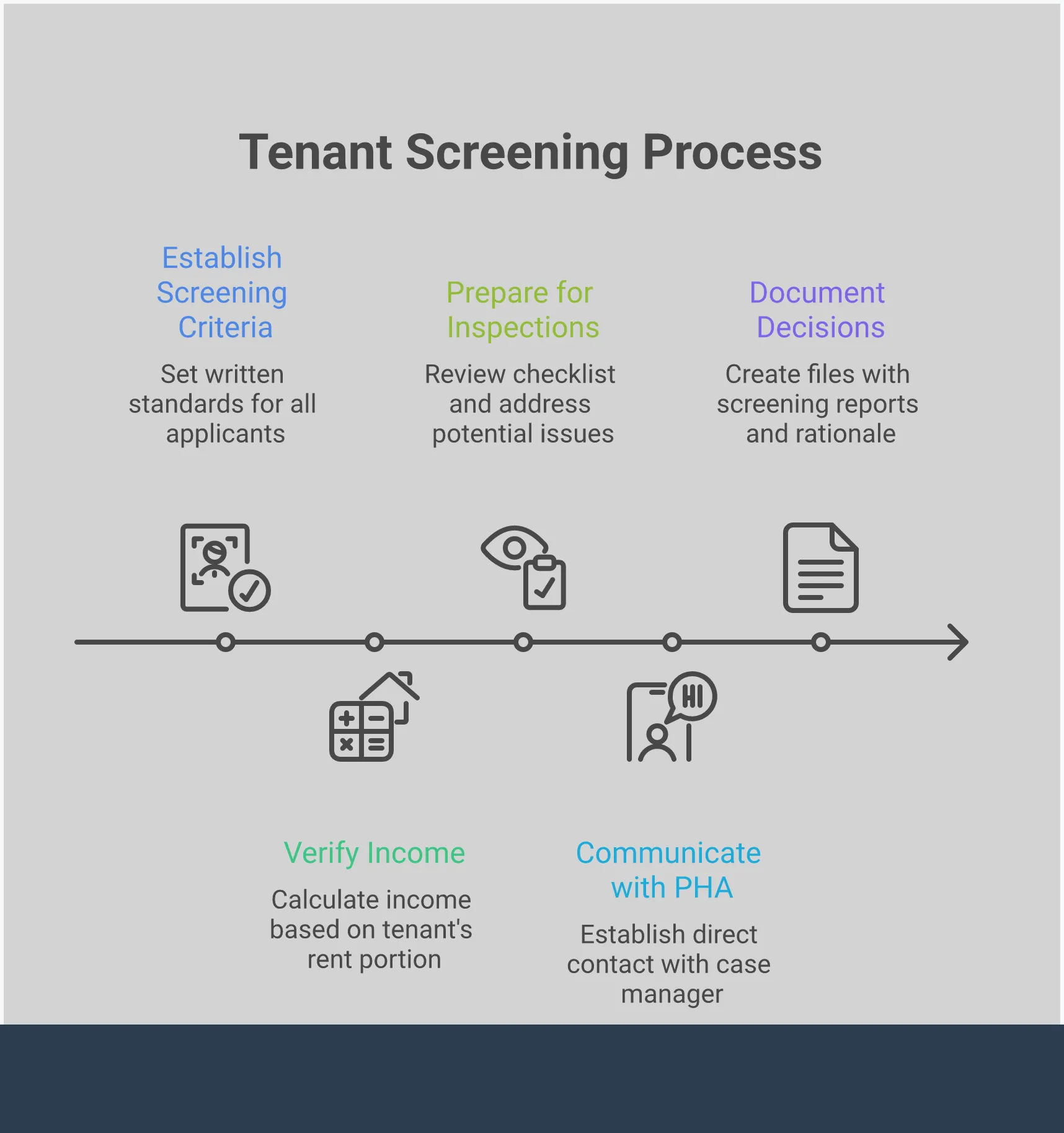
While the housing authority covers a large portion of the rent, the tenant is still responsible for their share. Your job is to confirm they can consistently cover that amount. You'll want to verify that the applicant has a steady source of income, whether from a job, disability benefits, or another source, that is sufficient to pay their part of the rent and other living expenses. A comprehensive tenant screening report can include income verification, which simplifies this step for you. Remember to calculate their rent obligation based only on the portion they are responsible for, not the total rent for the unit.
A credit report offers a snapshot of an applicant's financial responsibility. When you review their credit history, you're looking for patterns. Do they generally pay their bills on time? Are they overwhelmed with debt? While a perfect credit score isn't necessary, a history of late payments or accounts in collections could be a red flag that they may struggle to pay their portion of the rent on time. Using an Experian-powered report gives you a reliable look at their credit background, helping you assess their financial habits fairly and consistently across all applicants.
Past behavior is often the best predictor of future behavior. Contacting an applicant's previous landlords is one of the most valuable steps in the screening process. Ask direct questions: Did they pay rent on time? Did they take good care of the property? Were there any complaints from neighbors? Did they give proper notice before moving out? Getting answers to these questions provides insight you can't find on paper. This step helps you understand what kind of tenant they've been in the past and what you can likely expect, all while following fair housing guidelines.
Ensuring the safety of your property and your other tenants is a top priority. A criminal background check is a standard part of this due diligence. It's important to apply this check to every single applicant to avoid any claims of discrimination. When reviewing a report, focus on convictions that are recent and relevant, particularly those that could pose a threat to the safety of the property or other residents. It's wise to have a written policy that outlines what types of criminal history would disqualify an applicant, and be sure to follow HUD's guidance on using criminal records in your screening process.
An eviction on an applicant's record is a significant concern for any landlord. It indicates a serious breach of a past lease agreement, often related to non-payment of rent or property damage. A nationwide eviction search will show if an applicant has any formal eviction filings or judgments against them. While a single eviction from many years ago might be explainable, a recent or repeated history of evictions is a serious warning sign. A comprehensive screening report will include this crucial information, allowing you to make an informed decision about the potential risk of a tenancy.
While your core screening goals remain the same, the Section 8 process introduces a few extra steps and a key new partner: the Public Housing Authority (PHA). Think of it less as a completely different system and more as your standard process with an additional layer of verification and compliance. The main differences you’ll encounter involve the type of paperwork you’ll handle, the property inspections you’ll need to pass, and a timeline that’s often longer than you’re used to. Getting familiar with these distinctions from the start will make the entire experience much smoother for both you and your potential tenant.
When you receive an application from a Section 8 voucher holder, they will provide documents from the PHA. However, you still need to conduct your own thorough screening using your standard criteria. Make sure every applicant provides all the necessary documents you require, such as recent pay stubs for their portion of the rent, government-issued IDs, and a completed rental application. Having a consistent, written list of required documents for all applicants is a fair housing best practice. Using a service that provides a reusable screening report can streamline this step, ensuring you get a complete picture of each applicant efficiently.
The PHA is your partner in a Section 8 tenancy, and one of its primary roles is to ensure your property is a safe and healthy place to live. Before a lease can be signed and the housing assistance payments begin, your rental unit must pass a Housing Quality Standards (HQS) inspection. A PHA inspector will check that the property meets basic health and safety requirements. If they find any issues, you’ll need to make the necessary repairs before the unit can be approved. It’s a good idea to review the HQS inspection checklist ahead of time to address potential problems proactively.
Patience is key when screening a Section 8 applicant. The process typically takes longer than a standard rental application. While a background check might only take a few days, the full approval process involves multiple steps that add time. Coordinating with the PHA, scheduling the HQS inspection, waiting for the inspection results, and processing the final paperwork can extend the timeline from a few weeks to a month or more. Setting realistic expectations for yourself and communicating openly with the applicant about the timeline can help manage the process and reduce frustration for everyone involved.
Since you’ll be working with both the applicant and the PHA, clear and consistent communication is essential. The PHA case manager is your main point of contact for everything from scheduling the inspection to signing the Housing Assistance Payments (HAP) contract. Establish a good working relationship from the start by being responsive and organized. Don’t hesitate to ask questions if you’re unsure about a form or a step in the process. Keeping the lines of communication open with your local housing authority will help you resolve issues quickly and move the applicant into their new home without unnecessary delays.
Deciding whether to accept tenants with Section 8 vouchers is a significant choice for any landlord. Like any business decision, it comes with its own set of benefits and challenges. Understanding both sides can help you determine if participating in the Housing Choice Voucher program is the right move for your rental properties. It’s not just about filling a vacancy; it’s about finding a system that works for your long-term investment goals.
The program can offer a steady stream of income and pre-screened applicants, but it also involves working with a government agency and adhering to specific regulations. By looking at the full picture, you can create a rental strategy that aligns with your business, minimizes your risks, and helps you find great, long-term tenants. Let’s break down what you can expect.
One of the biggest draws for landlords is the promise of consistent, on-time rent payments. A portion of the rent is paid directly to you by the Public Housing Authority (PHA) each month, which significantly reduces the risk of non-payment. This can provide incredible peace of mind and financial stability for your business.
Additionally, PHAs often have a list of voucher holders actively looking for housing, which can lead to lower vacancy rates. Many Section 8 tenants also tend to stay in their homes longer, as finding a new rental that meets program requirements can be challenging. This results in more stable tenancies and less turnover, saving you the time and money associated with finding new renters.
Participating in the Section 8 program means your property must meet certain criteria. Before a tenant can move in, your unit has to pass a Housing Quality Standards (HQS) inspection to ensure it’s safe and habitable. If any issues are found, you’ll need to make repairs promptly. These inspections are typically conducted annually.
You can also expect some extra administrative work. There’s more paperwork involved, and you’ll need to communicate with the local PHA. The Department of Housing and Urban Development (HUD) also sets rent limits, which may be lower than the market rate in your area. While the process is generally smooth, it’s important to be prepared for these additional steps and requirements.
It’s easy to get caught up in stereotypes, but it’s crucial to remember that a Section 8 voucher is simply a form of payment. It doesn’t define the character of a tenant. Voucher holders are just as diverse as any other group of renters, and they should be evaluated on their individual merits, not on preconceived notions.
While the PHA does some initial screening, it’s not a substitute for your own due diligence. You should always conduct a thorough, consistent screening for every applicant, regardless of their income source. Using a portable tenant screening report allows you to review credit, criminal, and eviction histories fairly for everyone, ensuring you find a reliable tenant while remaining compliant with fair housing laws.
A well-defined screening process is your best defense against discrimination claims and your best tool for finding reliable tenants. When you screen Section 8 applicants, consistency isn't just good practice; it's a legal necessity. By treating every application with the same level of scrutiny and using the same objective criteria, you protect your business and ensure you’re complying with fair housing laws. Here’s how to build a process that is both fair and effective.
A uniform application is the foundation of a fair screening system. Every prospective tenant, regardless of income source, should complete the same form. It should ask for key details like employment history, verifiable income, landlord references, and permission for a background check. A standard application ensures you gather the same data from everyone, allowing for a true side-by-side comparison. This simple step removes guesswork and is your first line of defense in creating an equitable process.
You must evaluate all applications using a consistent set of rules. It is illegal to hold Section 8 applicants to a different or higher standard. Before listing your property, create written criteria for your ideal tenant. This might include a minimum credit score, a clean rental history, and sufficient income (remembering to include the housing voucher). Applying these same fair housing guidelines to every applicant is crucial for avoiding discrimination lawsuits and finding the best fit for your property.
Documentation is everything. For each applicant, keep a file with their application, your notes, all correspondence, and the screening report. To stay organized and objective, use a checklist or scoring system to grade applicants against your criteria. This creates a clear paper trail showing how you reached your decision. If an applicant files a complaint, these records are your proof of a consistent, non-discriminatory process. Using dedicated landlord-focused tools can simplify this record-keeping.
Your final decision must be based on facts, not feelings. Rely on the objective data you’ve collected and how it measures up against your established criteria. When you approve or deny someone, your reasoning should be clear and tied to your standards. For example, a denial should be for a concrete reason like a history of late payments, not a vague impression. This fact-based approach helps you make better business decisions and reinforces the integrity of your screening process.
Screening Section 8 applicants doesn’t have to be a complicated puzzle. With the right tools, you can streamline your process, stay compliant, and find reliable tenants efficiently. Using modern resources helps you gather all the necessary information in one place, saving you time and administrative headaches while ensuring you meet all legal requirements. This approach allows you to make fair, informed decisions with confidence.
A portable tenant screening report is a game-changer for landlords. Instead of running a new report for every applicant, you can accept a single, comprehensive report that the renter purchases and shares with multiple landlords. This saves everyone time and money. These reports bundle all the essential checks you need, including credit, criminal, and eviction history, into one secure package. For you, it means getting verified information quickly. For applicants, it reduces the financial burden of application fees, creating a more positive rental experience from the start. It’s an efficient and fair way to handle the screening process.
When you’re protecting your investment, you need the full picture. A comprehensive background check service gives you a detailed look at an applicant’s history, so you can make a well-informed decision. Professional services ensure the data is accurate and up-to-date, pulling from reliable sources for credit reports, nationwide criminal records, and eviction histories. Using a trusted service helps you apply your screening criteria consistently to every applicant. This not only protects your property but also ensures you’re following fair housing laws by treating everyone equally. It’s a non-negotiable step for any responsible landlord.
While the housing authority guarantees a portion of the rent for Section 8 tenants, you still need to verify that the applicant can afford their share. Manually collecting pay stubs and calling employers can be time-consuming. Modern screening platforms often include income verification tools that simplify this step. These tools can securely connect to an applicant's bank account to verify their income and account balances, giving you a clear and accurate financial snapshot. This helps you confirm that the applicant meets your income requirements without the hassle of chasing down paperwork, making your process faster and more reliable.
Your local Public Housing Authority (PHA) is your partner in the Section 8 program, not an obstacle. Start by registering your property with them and getting familiar with the program’s guidelines and inspection standards. Building a positive relationship with your PHA contact can make a world of difference. They are your resource for understanding payment processes, inspection schedules, and any other program requirements. Clear communication with the PHA helps ensure timely rent payments and a smooth tenancy. You can find your local PHA through the HUD website.
A fair and consistent screening process is your best tool for finding a reliable tenant. While you must treat every applicant equally, it’s also important to be thorough and look for potential warning signs. Think of these red flags not as automatic disqualifications, but as signals to pause and gather more information. A clear-eyed approach helps you protect your investment while ensuring you make a fair, informed, and compliant decision. Addressing these points early on can save you from future headaches and help you build a positive landlord-tenant relationship from the start.
Even though the Public Housing Authority (PHA) pays a significant portion of the rent, you still need to verify that the applicant can consistently cover their share. Look for steady employment and a reliable source of income that meets your criteria. If an applicant’s stated income doesn’t line up with their pay stubs or they have long, unexplained gaps in their employment history, it’s fair to ask for more details. A comprehensive tenant screening report can provide income verification, giving you a clearer picture of their financial stability. Don’t be afraid to request additional documents, like bank statements or a letter from their employer, to confirm they can comfortably afford their portion of the rent.
An applicant's past rental experiences can be a strong indicator of their future behavior as a tenant. Your screening process should always include a thorough look at their rental history. A pattern of late payments, property damage, or multiple evictions is a significant red flag. While a single issue from years ago might be explainable, a recent history of lease violations or poor references from previous landlords warrants careful consideration. Remember to look at the big picture. A comprehensive background check will include eviction reports and other details that help you assess an applicant’s reliability and respect for their rental obligations.
A rental application should be clear, complete, and accurate. Pay close attention to any inconsistencies, no matter how small. This could be a mismatched name between the application and their ID, conflicting dates for previous residences, or contact information for a previous landlord that doesn’t work. While some of these may be honest mistakes, they can also be attempts to hide negative information. Missing details can also cause significant delays, especially when coordinating with the PHA. If you find discrepancies, simply ask the applicant for clarification. Their willingness to provide correct information quickly can tell you a lot about their transparency and responsibility.
Clear and timely communication is the foundation of a good landlord-tenant relationship. This is especially true when working with a Section 8 tenant, as you, the tenant, and the PHA will need to be in regular contact. If an applicant is difficult to reach, ignores your calls or emails, or is evasive when you ask questions during the screening process, consider it a preview of what’s to come. You want a tenant who is responsive and easy to work with. An applicant who communicates poorly from the beginning may create unnecessary challenges down the road, from scheduling inspections to addressing maintenance issues.
Once you have your screening criteria in place, the final piece of the puzzle is managing the process in a way that protects you, your property, and your future tenant. A fair and consistent process isn't just about following the law; it's about building a strong foundation for a successful tenancy. By focusing on clear documentation, understanding your legal responsibilities, and fostering good communication, you can confidently manage your rental property and make informed decisions. These practices will help you create a transparent system that serves you and your applicants well.
Think of documentation as your business's best friend. Keeping detailed records of your screening process for every single applicant is one of the smartest things you can do as a landlord. This means writing down your screening criteria and applying it uniformly to everyone. A simple checklist or a scoring sheet can be incredibly helpful here. It allows you to evaluate each applicant against the same standards, creating a clear, objective record of why you made your decision. If an applicant ever questions your choice, you’ll have a complete paper trail to show your process was fair and consistent. This simple habit protects your investment and demonstrates your professionalism to every potential renter.
Staying on the right side of the law is non-negotiable. When screening tenants, especially those using Section 8 vouchers, you must apply your rules consistently. Using a different set of standards for voucher holders is a fast track to a discrimination claim. Your process for verifying income, checking rental history, and running background checks should be identical for all applicants. It's essential to stay current with HUD guidelines and local fair housing laws, as these regulations are in place to protect everyone. Using a compliant screening service can help you manage these requirements and ensure your process is always fair, transparent, and legally sound.
A great tenancy starts with clear communication. The screening process is your first opportunity to get to know a potential tenant and set clear expectations for living in your property. For Section 8 applicants, this communication is even more vital, as you'll also be coordinating with the Public Housing Authority (PHA). Being open and responsive from the beginning helps build trust and a positive relationship. Remember, the Section 8 program can connect you with stable, long-term tenants who have already been pre-screened by the housing authority. By focusing on a respectful and transparent process, you’re not just filling a vacancy; you’re starting a professional relationship on the right foot.
Do I have to accept Section 8 vouchers? This really depends on where your property is located. Many states and cities have laws that protect "source of income," which means you cannot have a blanket policy refusing to rent to tenants just because they use a housing voucher. The best and safest approach is to screen every applicant using the exact same criteria, regardless of where their rent money comes from.
If the housing authority already screened the applicant, why do I need to? This is a great question and a common point of confusion. The Public Housing Authority (PHA) screens applicants to confirm they are eligible for the Section 8 program, primarily based on their income. They do not screen for things like rental history or creditworthiness. It is still your responsibility to conduct your own thorough screening to make sure the applicant is a good fit for your property and meets your standard rental criteria.
How do I evaluate income for a Section 8 applicant? While the PHA covers a large part of the rent, the tenant is still responsible for their portion. Your job is to verify that they can consistently pay that amount. You should apply your standard income requirements, but only to the share of the rent the tenant has to pay. For example, if your rule is that income must be three times the rent, you would apply that rule to the tenant's portion, not the total rent for the unit.
What happens if my property fails the Housing Quality Standards (HQS) inspection? Don't panic if this happens. The PHA inspector will give you a detailed list of the required repairs and a reasonable deadline to complete them. The tenancy cannot begin until the property passes a follow-up inspection. Think of it as a helpful check to ensure your property is safe and habitable, which protects both you and your tenant in the long run.
Is the screening process for Section 8 tenants really that different? The core of your screening process should stay exactly the same. You'll still review credit, rental history, and criminal background for every applicant. The main differences are the extra steps involved, like coordinating with the PHA, preparing for the property inspection, and managing a timeline that is often a bit longer than you might be used to.