
Handing over your credit report can feel like sharing your diary. It’s packed with personal financial details, and you’re giving it to a near-stranger. While landlords need it to verify you can pay rent, the process can leave you feeling exposed. What happens to your Social Security number and account details after they’ve seen them? It’s a valid concern. The good news is you don’t have to just cross your fingers and hope for the best. Understanding how to send credit report to landlord safely puts you in control, protecting your sensitive data while still proving you’re a great applicant. This guide will walk you through the entire process, from verifying the landlord to choosing the most secure sharing methods.
It can feel a little invasive when a potential landlord asks for your credit report. You might wonder what your shopping habits have to do with renting an apartment. The good news is, they aren't interested in how much you spent on takeout last month. Landlords request a credit report to get a clear picture of your financial reliability. Think of it as a standard part of their business practice to assess risk.
A credit report gives them a snapshot of how you've handled financial obligations in the past. This history helps them gauge whether you're likely to pay your rent consistently and on time. It’s one of the main tools they use in the tenant screening process to find responsible and trustworthy tenants for their properties. While it’s a crucial step for them, it’s also important for you to understand what they’re looking at and why.
So, what exactly is a landlord looking for? A credit report doesn't show your bank account balance or every single purchase you've made. Instead, it focuses on your history with credit and debt. It reveals your payment history on loans and credit cards, how much debt you currently have, and if any of your accounts have gone to collections. It also lists major financial events like bankruptcies.
Beyond that, the report helps a landlord confirm that you are who you say you are. It includes your name, past addresses, and sometimes previous employers. This information helps them verify the details on your rental application, adding a layer of security to their decision-making process. You can learn more about what's included directly from a major credit bureau like Experian.
Landlords use your credit report as a key piece of the puzzle when deciding whether to approve your application. By reviewing your financial history, they can get a sense of your overall responsibility. A history of on-time payments suggests you're likely to treat your rent obligation the same way. On the other hand, a report with multiple late payments or accounts in collections might raise a red flag for them.
Ultimately, this practice helps landlords protect their investment. Choosing a tenant who is unable to pay rent can lead to financial losses and the stressful process of eviction. By reviewing a credit report, they can make a more informed decision and reduce the risk of renting to someone who might default on payments. This helps them run a smoother, more stable business, which is why it's a standard step for most property managers and landlords.
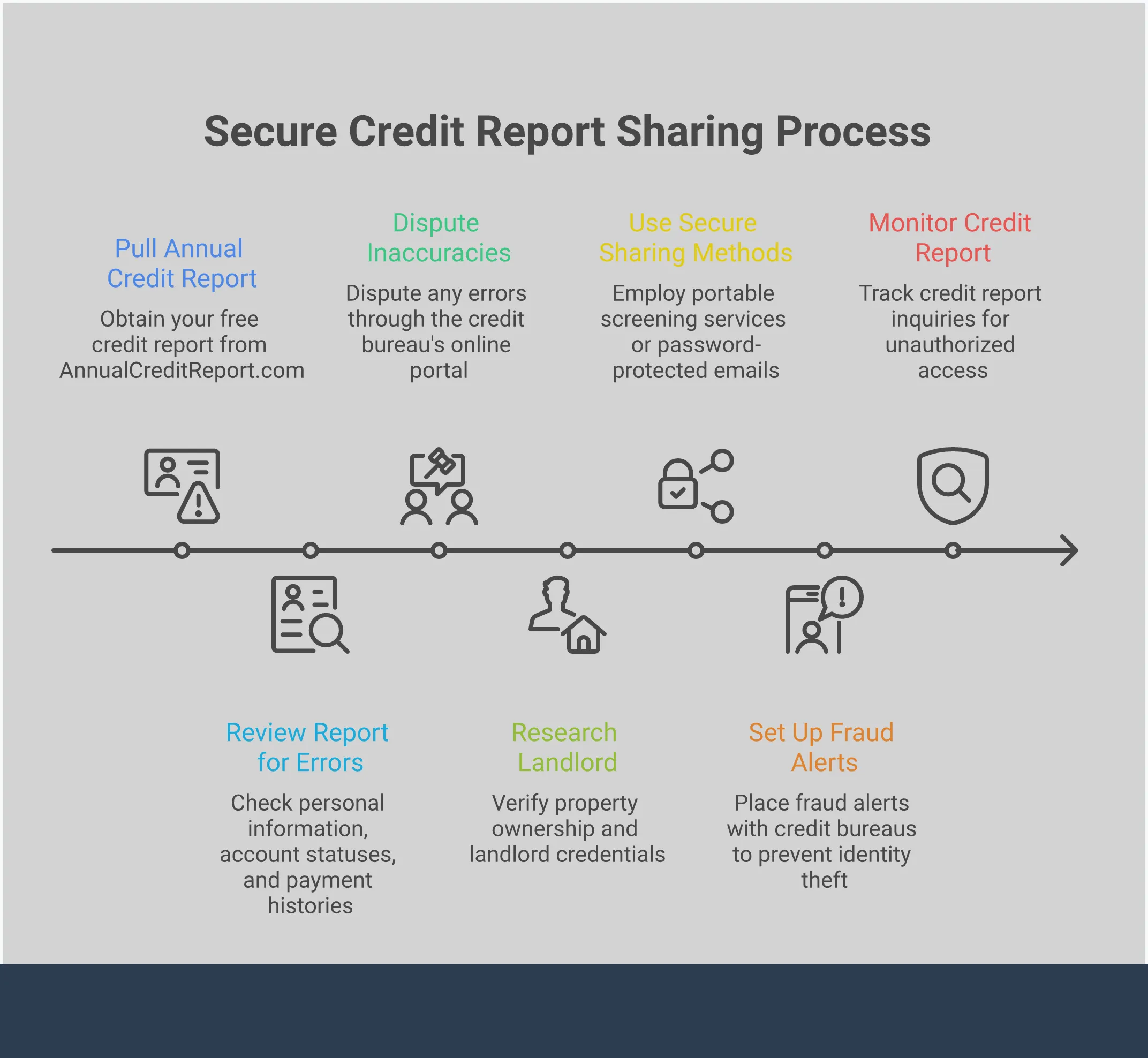
Before you send your credit report to a potential landlord, you need to get a copy for yourself. Reviewing your own report first is a critical step. It lets you see exactly what a landlord will see, check for any errors that could hurt your chances, and get ahead of any potential issues. Getting your report is straightforward, and you have rights that protect your information throughout the process. Let's walk through how to get your hands on your credit history securely and what you need to know to stay in control.
The best things in life are free, and that includes your credit report. Federal law gives you the right to a free copy of your credit report from each of the three major credit bureaus (Equifax, Experian, and TransUnion) every 12 months. The only official, government-authorized site to get them is AnnualCreditReport.com. Be wary of other sites that promise free reports but might have hidden fees or are just trying to sell you something. Thanks to a permanent change, you can now access your reports from all three bureaus for free every single week. This is a great way to monitor your credit health regularly, especially when you’re apartment hunting.
The Fair Credit Reporting Act (FCRA) is a federal law designed to protect you. It ensures that the information on your credit report is accurate, fair, and private. Under the FCRA, you have the right to know what’s in your file, dispute any inaccurate information you find, and give consent before anyone can pull your report. One of the most powerful tools the FCRA gives you is the ability to place a "security freeze" on your credit file. A freeze restricts access to your report, which means no one can open a new account in your name. This puts you in the driver's seat, giving you control over who sees your sensitive financial data.
When a landlord asks you to provide your own credit report, it can feel a bit strange. Landlords do this to save on screening costs, but it also creates a risk for them since a document you provide could potentially be altered. The free report you pull for yourself also contains more sensitive personal information than the one a landlord would get, like full account numbers. This is why using a secure, third-party service is often the best solution. It provides the landlord with a verified, authentic report while protecting your most sensitive data from being exposed. This approach builds trust and keeps your information safe.
Before you send your credit report to a potential landlord, it’s smart to give it a thorough review. Think of this as proofreading your financial resume. Taking a few minutes to scan for errors and understand what you’re sharing can make a huge difference. It ensures the landlord gets an accurate picture of your financial health and helps you protect your sensitive personal information. This simple step puts you in control of your rental application process, helping you present your best self and avoid unnecessary complications or delays in securing your next home. A clean, accurate report can be the key that opens the door to your new place.
Your credit report is a detailed history of your financial life, and mistakes happen more often than you might think. An account you closed years ago might still show a balance, a payment you made on time could be marked as late, or there might be an account listed that isn't even yours. Go through your report line by line, paying close attention to personal information, account statuses, and payment history. Verifying that all the information is accurate is crucial because this is the data a landlord will use to assess your application. The Consumer Financial Protection Bureau provides excellent guidance on how to read and understand your report.
If you find an error on your report, don’t worry, you have the power to fix it. The Fair Credit Reporting Act (FCRA) gives you the legal right to dispute any inaccurate information. To get started, you’ll need to contact the credit bureau that issued the report (like Experian, Equifax, or TransUnion) and the company that reported the incorrect data. You can typically file a dispute online, which is often the fastest method. The credit bureau has about 30 days to investigate your claim and must remove any information it finds to be inaccurate. Correcting these mistakes ensures a landlord makes their decision based on facts, not errors.
You are in control of your personal data. While landlords need to verify your ability to pay rent, you should be cautious about what you share and how you share it. Sending a full, unredacted credit report directly to a landlord can expose sensitive details like your Social Security number and full account numbers, putting you at risk. A better approach is to use a service that provides a comprehensive but secure screening report. This allows you to share all the necessary information without handing over your most private data. Our portable tenant screening report is designed specifically for this, giving landlords the verification they need while keeping your sensitive information safe.
Before you hand over your credit report, it’s smart to do a little homework on your potential landlord. Taking a few steps to confirm they are who they say they are can protect you from scams and give you peace of mind. A legitimate landlord will understand and respect your due diligence. After all, they’re asking you to trust them with your personal information and your future home. Here’s how you can confidently verify that a landlord is the real deal.
Trust your gut. If something feels off, it probably is. Be wary of anyone who pressures you to sign a lease or send money before you’ve even seen the property. Other major red flags include requests for payment via wire transfer or cash, and a refusal to meet in person. During the rental process, a landlord will handle a lot of your personal information. Be cautious if a landlord requests excessive details upfront or is unwilling to provide their own identification. Scammers often create fake rental listings with unusually low rent to lure you in, so if a deal seems too good to be true, proceed with caution.
A quick online search can reveal a lot. Start by Googling the landlord’s name and the property address to see what comes up. Before signing a lease, it’s essential to research both the property and the landlord. Look for online reviews from previous tenants and check local rental listings for duplicate or suspicious posts. You can also verify the ownership of the property through public records, which are often available online through the county assessor’s or recorder’s office. This simple step confirms that the person you’re dealing with actually has the authority to rent the property to you.
Don’t be afraid to ask for proof. A professional landlord or property manager should have no problem showing you their ID or providing a business card. If they claim to work for a property management company, you can call the company directly to verify their employment. You also have a right to request the landlord's credentials, including their real estate license number if they have one. Many states require property managers to be licensed, and you can often verify a license online through the state’s real estate commission website. A legitimate landlord will see your questions as a sign that you’re a responsible applicant.
Once you’ve verified the landlord is legitimate, it’s time to share your information. Sending sensitive documents like your credit report requires care. You want to make sure your personal data is protected every step of the way. Choosing the right method can give you peace of mind and help you maintain control over your information. Here are the most secure ways to deliver your credit report to a potential landlord.
The best way to protect your data is to never send your report directly. Instead, use a service that grants a landlord temporary, secure access. A portable tenant screening report lets you buy one comprehensive report and share it with multiple landlords for a set period. This method saves you money on application fees and, more importantly, keeps you in control. You authorize access for each landlord and can revoke it at any time. Services like Portable Tenant use bank-level security to protect your data, so you never have to worry about your Social Security number sitting in someone’s unsecured email inbox. It’s the modern, secure way to handle rental applications.
If you must email your credit report, never attach it as a standard file. Regular email is not a secure channel and can be intercepted. A safer approach is to password-protect the document itself. You can save your report as a PDF and add a strong password before attaching it. Then, share the password with the landlord in a separate message or over the phone. For even greater security, consider using an encrypted email service. According to the FTC, using encryption is a critical step to protect sensitive information while it’s in transit, ensuring only the intended recipient can view it.
Another solid digital option is a secure file-sharing platform. Services like Google Drive, Dropbox, or Sync.com allow you to upload your report and share a secure link with the landlord. This is generally safer than email because you have more control over the file. When sharing, be sure to use the platform’s security features. You can often set the link to expire after a certain date, require a password to open it, and disable the ability for the landlord to download the file. This ensures they can only view the report for a limited time, reducing the risk of your data being stored indefinitely on their computer.
Hand-delivering a physical copy of your credit report can feel like a secure option because you know exactly who you’re giving it to. If you choose this route, print the report and place it in a sealed envelope. When you meet the landlord, ask for a moment to watch them review it and request they return it to you afterward. If they insist on keeping a copy, ask how they plan to store it securely and when it will be shredded. While this method avoids digital risks, remember that a physical document can be lost, copied, or improperly discarded. It’s a decent fallback, but digital methods that allow you to revoke access are usually safer.
The rental application process can feel like you’re giving away a lot of personal information without much say. But you have more power than you think. Federal laws are in place to protect your privacy and ensure you’re treated fairly. Understanding these rights helps you spot red flags and move through your apartment search with confidence, knowing exactly what landlords can and can’t do with your data.
These aren’t just suggestions; they are legal requirements that every landlord must follow. Knowing them helps you protect your sensitive information and ensures you have a fair shot at landing your next home.
A landlord can’t just decide to run a background check on you. Under the Fair Credit Reporting Act (FCRA), they must get your written permission before pulling your credit report or ordering a background check. This consent is usually a part of the rental application you fill out, but sometimes it’s a separate form.
This rule is a critical safeguard. It ensures you are aware of and have agreed to who is looking at your personal financial history. It puts you in the driver’s seat, preventing your information from being accessed without your knowledge. If a landlord seems to be skipping this step, consider it a major warning sign.
It’s disappointing to have a rental application denied, but you have a right to know why. If a landlord rejects your application because of information in your credit report or background check, they are legally required to tell you. This is called an adverse action notice.
The notice must include the name, address, and phone number of the consumer reporting agency that provided the information. This gives you the chance to get a copy of the report and check it for errors. If you find inaccurate information, you have the right to dispute it with the reporting agency, which could help you with future applications.
Your credit history is just one part of your application, and it cannot be used as a tool for discrimination. The federal Fair Housing Act protects people from being treated differently based on race, color, national origin, religion, sex (including gender identity and sexual orientation), familial status, or disability.
While a landlord can use financial information to determine if you can afford the rent, they cannot apply different standards to different people. For example, they can’t have a higher credit score requirement for one applicant over another based on a protected characteristic. Knowing your rights ensures you can identify and report discriminatory practices, creating a fairer rental market for everyone.
Once you’ve sent your credit report, your job isn’t quite done. Protecting your personal information is an ongoing process. Taking a few extra steps can give you peace of mind and help you maintain control over your sensitive data long after a landlord has reviewed your application. Think of it as locking the door behind you. By being proactive, you can ensure your information stays secure and is only used for its intended purpose.
It’s perfectly reasonable to ask a potential landlord how they handle sensitive documents. In fact, it’s smart. Landlords are required to protect any personally identifiable information they collect, including your credit report and application. Once they no longer have a business need for your report (for example, if you don't rent the apartment or after you move out), they must dispose of it securely. Don’t be shy about asking about their data retention policy. A professional landlord will have a clear answer on how long they keep files and how they destroy them to protect your privacy.
One of the best ways to protect yourself is to place a fraud alert or a security freeze on your credit file. A fraud alert notifies creditors to take extra steps to verify your identity before opening a new account in your name. A security freeze is even stronger; it restricts access to your credit report altogether, which means you’ll need to temporarily lift it when you apply for new credit. You can set these up for free with the three major credit bureaus: Experian, Equifax, and TransUnion. This is a simple, powerful step to prevent anyone from using your information without your permission.
You have the right to know who is looking at your credit history. When you use a service that offers a portable tenant screening report, you control the access. You generate a single, secure report and share a link with landlords, and you can revoke access at any time. This prevents your data from being stored on multiple unsecured computers. You can also monitor your credit report for "hard inquiries," which appear whenever a lender or landlord pulls your full report. If you see an inquiry you don’t recognize, you can dispute it immediately. Regularly reviewing who has accessed your information helps you spot potential issues before they become big problems.
Once you've sent your information, it's smart to know what happens to it next. Asking a few direct questions about data handling shows you're a responsible applicant and helps you ensure your sensitive information is treated with care. A potential landlord should be able to answer these questions clearly. If they can't, it might be a red flag.
This is another area where using a portable tenant screening report gives you an advantage. Instead of handing over documents that the landlord then has to store, you grant them temporary, secure access to your report. You can see who views it and revoke access anytime, giving you complete control. Still, it's always a good idea to understand a landlord's standard procedures. Here are a few key questions to ask.
Your application, credit report, and other documents contain a lot of personally identifiable information. You have a right to know how a landlord plans to protect it. Ask them about their storage practices. Are digital files kept on a password-protected, encrypted system? Are physical documents stored in a locked and secure location? A professional landlord or property manager will have clear procedures for keeping tenant information confidential. They should be able to tell you exactly how they restrict access to sensitive files to prevent unauthorized viewing or theft.
It's reasonable to ask who else might see your information. Will they share your application with a property owner, business partners, or third-party contractors? Some landlords may have a formal privacy policy that outlines how they handle personal data, which they should be willing to share with you. This question isn't about being difficult; it's about understanding the circle of trust. When you use a service designed for landlords and property managers, the process is often more transparent, but it never hurts to confirm their policies directly.
A landlord doesn't need to keep your application materials forever, especially if you don't end up renting the unit. Federal law, specifically the FTC's Disposal Rule, requires them to securely dispose of consumer reports when they no longer have a legitimate business need for them. You can ask about their document retention policy. For example, "How long do you keep application files for non-tenants, and what is your process for destroying them?" A responsible landlord will have a system for shredding paper documents and permanently deleting digital files to protect your privacy.
What if my credit isn't perfect? Will I automatically be denied? Not necessarily. While a high credit score is helpful, landlords often look at your entire financial picture. They consider factors like a steady income, a positive rental history, and references from previous landlords. If you know your credit has some issues, it can be helpful to address them proactively with a brief, honest explanation. Showing that you are responsible and have a plan to manage your finances can make a big difference.
Why is using a portable screening service better than just emailing my report? Emailing your report directly sends a file full of sensitive information, like your Social Security number, into someone else's inbox where it can be stored indefinitely or mishandled. A portable screening service acts as a secure gateway. It provides the landlord with a verified report containing only the information they need to make a decision, while keeping your most private data protected. You also get to control who sees your report and for how long.
Do I really need to get my own report before I start applying? Yes, this is a step you shouldn't skip. Reviewing your own report first lets you see exactly what a potential landlord will see, giving you a chance to spot and fix any errors that could unfairly damage your application. It also prepares you to answer any questions a landlord might have about your financial history, so you can address them confidently.
How can I tell if a landlord is asking for too much personal information? A standard application will ask for your name, contact details, employment, income, and your written consent for a background check. You should be cautious if someone asks for things like your bank account password, full credit card numbers, or demands a deposit before you've seen the property or signed a lease. A professional landlord will have a standard process and won't pressure you for overly sensitive data right away.
What happens to my information if my application is denied? If a landlord denies your application because of something in your credit report, they are legally required to give you an "adverse action notice." This notice must explain the reason and provide the contact information for the credit agency they used. This gives you the opportunity to get a copy of the report and check it for any mistakes. The landlord is also required to securely dispose of your documents once they no longer have a business need for them.