
If you’ve ever searched for an apartment in a competitive area, you know how quickly application fees can drain your bank account. Paying $50 or more for every place you like adds up, especially when you’re one of many applicants. The reason for this is that each landlord runs a separate background check, creating a new tenant information report that you never get to see or reuse. This old way of doing things is expensive and inefficient. A modern approach puts you in control with a single, portable report that you can review for accuracy and share with multiple landlords, saving you time, money, and unnecessary stress.
Think of a tenant information report as your rental resume. It’s a detailed document landlords use to get a clear picture of your background before handing over the keys to their property. This report helps them understand how reliable you are with your finances and how you’ve handled past rentals. It’s a standard part of the rental application process and gives landlords a consistent way to review everyone who applies.
While it might sound a little intimidating, understanding what’s in your report is the first step to taking control of your rental journey. Instead of being a mysterious document you never see, your tenant report can be a tool that showcases your strengths as a great renter. When you know what landlords are looking for, you can prepare ahead of time, address any potential issues, and put your best foot forward. The goal is to make sure the story your report tells is accurate and reflects who you are today.
A tenant screening report gathers information from several sources to create a comprehensive profile. It’s more than just a single score; it’s a collection of documents that paint a picture of your history as a renter and consumer. According to the Consumer Financial Protection Bureau, a typical report includes your credit history, any past evictions or lawsuits from landlords, and a criminal background check. It may also verify your employment history to confirm you have a steady source of income. Each piece gives a landlord insight into your ability to pay rent on time and care for their property.
It’s easy to mix these two up, but a tenant report and a credit report are not the same thing. The simplest way to think about it is that your credit report is just one piece of the larger tenant screening report. While your credit history is a major factor, the full report provides a much broader view of your background.
A comprehensive rental background check pulls your credit information—like your credit score, bill payment history, and total debt—but it also adds other critical details. It combines your financial habits with your rental history and criminal record to give a landlord a more complete picture. This is why two people with the same credit score might not be viewed the same way after a full tenant screening.
When you submit a rental application, you’re giving a potential landlord permission to look into your background. But what exactly are they looking at? It’s more than just a quick credit check. A tenant screening report is a comprehensive document that pulls information from many different sources to paint a picture of you as a potential renter. Think of it as your rental resume. Landlords use this information to assess risk and decide if you'd be a reliable tenant who pays rent on time and takes care of the property.
Understanding what’s in this report is the first step to putting your best foot forward. It allows you to check for errors ahead of time and address any potential red flags before a landlord even sees them. This isn't about being nervous; it's about being prepared. By knowing what a landlord sees, you can take control of your narrative and present yourself as the great tenant you are. The report generally covers four key areas: your financial and credit history, your past rental experiences, your criminal background, and your employment and income status. Let's break down what each of these sections includes so you can approach your next application with confidence.
A big piece of the puzzle is your financial health. Landlords want to see that you’re responsible with your finances and can consistently afford the rent. Your report will contain information from your credit history, including your credit score, payment patterns on loans and credit cards, and any outstanding debts. They’ll also look for major financial setbacks like bankruptcies or accounts in collections. It’s not just about having a perfect score; they’re looking for a pattern of reliability. A consistent history of on-time payments can go a long way in showing you’re a dependable applicant.
Your history as a renter is a top concern for any new landlord. This section of the report details your past rental addresses and, most importantly, flags any prior evictions or lawsuits filed by previous landlords. An eviction on your record can be a major red flag, so it’s crucial to make sure this information is accurate. When you review your rental background check, confirm that any eviction cases that were dismissed are correctly marked as "dismissed." Also, ensure that sealed or expunged records don’t appear at all. A single error here could unfairly cost you a great apartment.
Most landlords will run a criminal background check to ensure the safety of their property and other tenants. This part of the report scans various databases for a criminal record. It typically includes checks against national and local criminal records, sex offender registries, and even national terrorist watchlists. Just like with your rental history, accuracy is key. Make sure that misdemeanors and felonies are listed correctly and that a single charge doesn't appear multiple times, which can sometimes happen with database errors. Knowing what’s on this part of your report gives you the chance to correct mistakes or prepare an explanation if needed.
Finally, a landlord needs to verify that you can afford the rent. This is where employment and income verification come in. The report will often confirm your current employer, your job title, and how long you’ve been there. To verify your income, landlords will typically ask for recent pay stubs or bank statements to see that your earnings meet their requirements—often two to three times the monthly rent. Some tenant background checks can even automate this process by securely linking to your bank account to confirm your income. This step is all about giving the landlord confidence that you have a stable financial situation to cover your monthly rent payments.
Your tenant information report is one of the most important parts of your rental application. It gives a potential landlord a snapshot of your history as a renter and your financial reliability. Understanding what they’re looking for and how they use this information can make a huge difference in your search for a new home. It’s not just about getting approved; the details in your report can also influence the terms of your lease.
When a landlord reviews your application, they're trying to assess risk. They want to know if you're likely to pay rent on time and take good care of their property. Your tenant screening report is their primary tool for this. According to the Consumer Financial Protection Bureau, landlords use these reports to help them decide if they should rent a home to you and to figure out how much to ask for a security deposit. A clean report with a solid rental and payment history makes you a strong candidate, while red flags might cause a landlord to hesitate or look at other applicants first. This is why knowing what’s in your report before you apply is so powerful.
The information in your report doesn't just lead to a simple "yes" or "no." It can directly affect the financial terms of your lease. If a landlord sees something concerning, like a low credit score or a past late payment, they might ask for a larger security deposit or require a co-signer as a condition of approval. If they decide to deny your application or charge you more based on your report, they are legally required to tell you. They must also give you the name and contact information of the company that provided the report, which gives you a chance to review your rental background check for any errors.
It’s easy to get confused about what a tenant report actually is. A common myth is that it’s the same as a standard credit report. While they often include credit information, tenant screening reports are not the same thing; they also contain rental history and public records. Another major issue is accuracy. It’s a mistake to assume the information is always correct. Even small errors can have a big impact, as the Consumer Financial Protection Bureau notes that if there is wrong or old information in your report, it can make it very difficult for you to find a place to live. This is why checking your report for accuracy is so critical.
The rental application process can feel like you're putting your whole life on display, and it's easy to feel powerless. But you have more control than you might think. Federal and state laws give you specific rights to ensure the information used to evaluate you is fair and accurate. Understanding these rights is the first step to approaching your apartment search with confidence and protecting your personal information. Let's walk through what you need to know.
If a landlord decides not to rent to you because of something in your tenant screening report, they can’t just leave you guessing. They are legally required to tell you that the report was a factor in their decision. They also have to give you the name and contact information of the screening company that prepared the report. This transparency is so important because it gives you a clear path to find out what information was used and to take action if something isn’t right. It’s your right to know why you were denied, and this rule ensures you get that crucial information.
Receiving a denial is disappointing, but it also opens a door for you. If your application is turned down based on your screening report, you have the right to request a free copy of that exact report. You just need to make the request within 60 days of the denial. This is a critical step because it allows you to see the same information the landlord saw. It’s your chance to review everything for accuracy, from your rental history to public records. Getting your hands on this report is the only way to know for sure if an error is holding you back from your next home.
The Fair Credit Reporting Act (FCRA) is a powerful federal law that works in your favor. It sets the rules for how consumer reporting agencies—including tenant screening companies—can collect and share your information. Under the FCRA, you have the right to know what’s in your file and to dispute any inaccurate information. The law also requires these companies to correct or delete information that is inaccurate, outdated, or can’t be verified. Think of the FCRA as your built-in protection, ensuring that the story your report tells about you is a true one. It’s designed to promote accuracy and fairness in the screening process.
Finding a mistake on your tenant report can be stressful, but you absolutely have the right to fix it. If you spot an error, you can dispute this information directly with the screening company that created the report. It’s also a good idea to contact the original source of the information, like a credit bureau or courthouse, to correct the error there, too. The screening company is legally obligated to investigate your dispute, usually within 30 days. This right is essential for protecting your reputation as a reliable renter and ensuring that a simple mistake doesn’t stand between you and the apartment you want.
Taking the time to review your tenant information report is a crucial step in preparing for your apartment search. It allows you to see exactly what potential landlords see, giving you the chance to address any issues before they can affect your application. Knowing what’s in your report puts you in a position of power, ensuring you can present the most accurate version of yourself to your future landlord.
Heading into a rental application blind is a thing of the past. Getting a copy of your own tenant report before you start applying is one of the smartest moves you can make. It gives you a sneak peek into exactly what landlords will see, so there are no surprises. Think of it as proofreading your resume before a big job interview. Since the vast majority of landlords rely on these reports, catching any errors ahead of time is crucial. Mistakes happen more often than you'd think—from a simple typo in your name to an old debt that’s been paid off. Finding and fixing these issues early on prevents a landlord from seeing incorrect information and potentially rejecting your application based on a misunderstanding.
Getting your hands on your report is straightforward. If a landlord denies your application because of something in your screening report, they are legally required to tell you and provide the name of the company that created it. You can then request a free copy from that company, as long as you do it within 60 days. But you don't have to wait to be denied. You can proactively order your report directly from tenant screening companies. This is where a service like Portable Tenant comes in handy, giving you one comprehensive report you can review and share with multiple landlords, saving you time and money.
Once you have your report, you’ll want to know what you’re looking at. It typically includes your credit history, any past evictions, criminal records, and previous addresses. Landlords review this information to get a sense of your reliability as a tenant. As you read through it, keep an eye out for common errors. These can include evictions that are more than seven years old and should have been removed, incorrect criminal records, or mistakes in your credit history. Understanding each section helps you spot inaccuracies that could unfairly impact your rental search. If you find something that doesn't look right, you have the right to dispute the information.
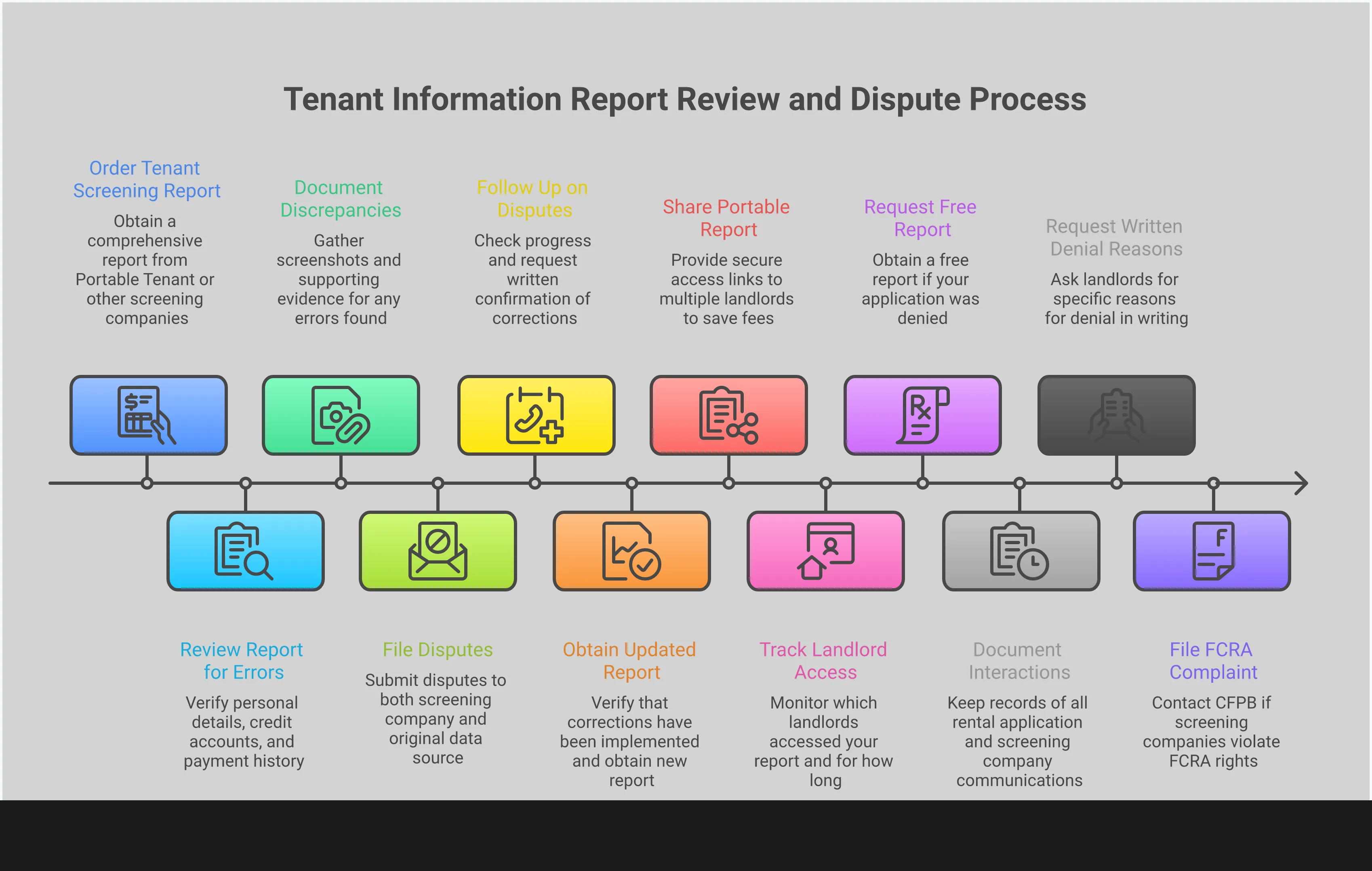
Finding a mistake on your tenant information report can feel like a major setback, but don’t worry. You have the right to a fair and accurate report, and there are clear steps you can take to correct any errors. By being proactive, you can ensure landlords see the real you, not a version distorted by a data mix-up. The process is straightforward: gather your proof, file a dispute, and follow up to make sure the changes stick. It’s a manageable process that’s well worth the effort to protect your rental prospects.
The first step in fixing an error is proving it exists. When you spot a mistake, your best defense is solid evidence. Start by collecting any documents that show the information is incorrect. This could include payment receipts proving you paid rent on time, court papers showing a case was dismissed, or emails from a previous landlord clarifying a misunderstanding. Having this proof ready will make the dispute process much smoother. Think of it as building a case—the more organized your evidence is, the faster you’ll get a resolution.
With your documents in order, it’s time to take action. You’ll need to contact both the company that ran the background check and the original source of the incorrect information. Write a clear, simple letter or email explaining the error and what the correct information should be. Make sure to include copies—never the originals—of your supporting documents. The Consumer Financial Protection Bureau offers excellent guidance on how to structure your dispute for the best results, ensuring your claim is handled properly.
After you file your dispute, the reporting agency generally has 30 days to investigate. During this time, they will work to verify the information you’ve challenged. If they can't confirm the item is accurate, they are legally required to remove it from your report. Don’t just file it and forget it. Set a reminder to check back in after a few weeks. Once the investigation is complete, request a free copy of your corrected report to confirm the changes were made. Staying on top of the process ensures your record is clean for your next application.
Fixing errors is important, but preventing them from derailing your apartment search is even better. This is where a portable screening solution puts you in control. Instead of letting every landlord run a new, unknown report on you, you can use a service that lets you see your information first. With a portable report, you can review your credit, criminal, and eviction history before you even apply. This gives you the chance to spot and fix any errors ahead of time, so you can share a clean, accurate report with confidence.
After going through the effort of checking and correcting your tenant report, the last thing you want is to lose control of it. Every time you apply for a new apartment, you hand your sensitive information over to a new landlord or property manager, paying a new fee each time. But there’s a better way. Choosing a screening service that lets you own and reuse your report puts you in charge of your rental journey.
Portable tenant screening services are changing the game for renters. Instead of filling out a new application and paying a fee for every single place you like, you can use a single report to share with multiple landlords. This approach saves you significant time and money, especially in a competitive rental market. More importantly, it gives you complete control over your personal data. You decide who sees your information and for how long. With a service like Portable Tenant, you can even revoke access instantly, ensuring your private details stay private once an application is no longer active. It’s a modern, secure, and efficient way to apply for your next home.
A trustworthy screening service should provide a complete picture for landlords while protecting your privacy. Landlords need to feel confident in their decisions, so a great report will include all the essentials: a comprehensive credit report, a nationwide criminal background check, and a detailed eviction history. Some services also offer income verification to streamline the process even further. When a screening service provides a thorough report for landlords, it builds trust and makes your application stronger. This transparency helps landlords make informed choices and shows that you’re a well-prepared, serious applicant.
The most immediate benefit of a reusable report is the cost savings. Application fees add up quickly, but with a portable report, you pay one fee for a report that you can use for 30 days. This allows you to apply to multiple properties without breaking the bank. Beyond the savings, using a personal background check service lets you proactively manage your application. You can ensure all the information is accurate before a landlord ever sees it. Plus, you’re protected by law. If a landlord denies your application based on a tenant screening report, they are required to tell you, adding a crucial layer of transparency to the process.
What if my credit score isn't great, but I've always paid my rent on time? Landlords look at your report as a whole, not just one number. While your credit score is important, a strong history of on-time rent payments and a steady income can show that you are a reliable and responsible tenant. Your rental history is powerful proof of your ability to meet your obligations, and many landlords weigh that heavily when making their decision.
How long does negative information, like an eviction, stay on my report? Typically, an eviction can remain on your public record and tenant screening report for up to seven years. The same seven-year rule generally applies to other negative financial information. This is why it's so important to regularly check your report for accuracy and ensure that old information that should have expired is properly removed.
If a landlord rejects my application, do they have to tell me why? If a landlord denies your application because of something they found in your tenant screening report, they are legally required to inform you. This is called an adverse action notice. They must also give you the name and contact information of the screening company they used, which allows you to request a free copy of the report to see the information for yourself.
Why should I get my own report instead of just letting the landlord run one? Getting your own report first puts you in control of your rental search. It gives you the chance to review all your information for errors and fix them before a landlord ever sees them. Using a portable report also saves you money, as you pay one fee and can share that same report with multiple landlords, rather than paying a new application fee for every apartment you like.
Is a tenant report the same thing as a credit report? No, they are different. Your credit report is just one piece of a more comprehensive tenant screening report. The full report also includes your rental history, any past eviction records, and a criminal background check. It’s designed to give a landlord a complete picture of your background as a potential renter, not just your financial habits.