
If you’ve ever searched for a rental, you know the drill. You find a place you love, fill out an application, and pay a fee, only to repeat the process again and again. It’s expensive, time-consuming, and you have no control over your personal information. But what if you could do it differently? A modern approach allows renters to purchase one comprehensive report and share it with multiple landlords. This process still involves a thorough tenant screening with credit and criminal check, but it puts you in the driver’s seat. For landlords, this means getting instant access to verified applicant data, helping you fill vacancies faster with qualified candidates.
Handing over the keys to your property is an act of trust. Tenant screening is the process of making sure that trust is well-placed. It’s about moving beyond a gut feeling or a friendly first impression to get a clear, factual picture of a potential renter. A thorough screening process balances objective data from credit reports and background checks with the information you gather from an application and references. This isn't about being invasive; it's about being diligent. The goal is to find a reliable tenant who will pay rent on time, respect your property, and be a good neighbor.
Effective screening is the foundation of a successful rental business and a positive landlord-tenant relationship. It helps you comply with housing laws while ensuring you choose qualified applicants who meet your established criteria. By setting clear standards and applying them consistently to everyone, you create a fair process that protects both you and your applicants. Ultimately, taking the time to screen tenants properly is one of the most important steps you can take to protect your investment, minimize risks, and ensure a steady, predictable income from your property. It’s a business best practice that gives you confidence in every lease you sign.
A truly comprehensive screening report gives you a holistic view of an applicant, going far beyond a single credit score. A Portable Tenant Screening Report (PTSR), for example, bundles several key pieces of information into one verified document. This typically includes a full credit report, a nationwide criminal background check, and a search for any past eviction records. It also often includes income verification to confirm the applicant can comfortably afford the rent. By combining these elements, you get a much clearer picture of an applicant's financial responsibility and rental history, allowing you to make a more informed and confident decision.
Think of tenant screening as your first line of defense for your property. Its primary job is to reduce risk. By reviewing an applicant's history, you can identify patterns that may signal future problems, like a history of late payments or property damage. Finding a responsible tenant who pays on time and cares for the property helps you avoid the costly and time-consuming process of chasing down rent, making unexpected repairs, or pursuing an eviction. The small, upfront cost of screening is minimal compared to the potential thousands of dollars in lost rent and legal fees that can come with a difficult tenancy. It’s a proactive step that secures your investment for the long term.
The term “background check” can sound a bit mysterious, but it’s really just a way for landlords to get a clearer picture of a potential tenant. It’s not a single, all-knowing report. Instead, it’s a collection of documents that cover a few key areas of an applicant's history. Think of it as a resume for renting. Landlords use this information to find someone who is likely to pay rent on time, take good care of the property, and be a responsible neighbor. For renters, knowing what’s in these reports helps you prepare and present yourself in the best possible light.
A truly comprehensive screening report pulls together three main pieces of the puzzle: your financial history, your public and criminal records, and your past rental experiences. Each piece tells a different part of your story, and together, they help a landlord make a fair and informed decision. By understanding what these checks actually show, both landlords and renters can make the application process feel much more straightforward and transparent. Let’s break down exactly what each of these reports contains.
Your credit report is a detailed summary of your financial life. It shows how you’ve managed money and paid back debts over time. Landlords aren't looking for perfection, but they do use this report to gauge your financial stability and responsibility. It includes your history of paying bills (like credit cards, car loans, and student loans), any accounts that have gone to collections, and public records like bankruptcies or court judgments against you.
A landlord will look at this to see if you have a reliable track record of meeting your financial obligations. A history of on-time payments is a great sign, while significant outstanding debts might raise questions about your ability to consistently afford rent. Your credit score is part of this, but the full report provides the context behind that number.
A criminal background check scans national, state, and local databases for a history of convictions. The primary goal here is to ensure the safety and security of the property and the other residents. Landlords are typically looking for serious, relevant offenses that could pose a risk to the community, such as violent crimes or a history of property destruction.
It’s important to remember that this check is just one part of a holistic review. Effective screening combines criminal history with income verification and reference checks to create a complete picture. For landlords and property managers, this step is about due diligence and protecting their investment and tenants. For applicants, it’s a standard part of the process focused on maintaining a safe living environment for everyone.
Perhaps the most direct indicator of a great tenant is their past rental behavior. A rental history report focuses specifically on your track record as a renter. It will show a landlord if you have any prior evictions or court cases related to a tenancy, such as judgments for unpaid rent or property damage. This information is pulled from public court records.
For a landlord, this is incredibly valuable information. A clean rental history with no evictions is one of the strongest indicators that you’ll be a reliable and responsible tenant. It shows that you understand and respect the terms of a lease agreement. A Portable Tenant Screening Report puts this information, along with your credit and criminal history, into a single, reusable document that you control, making it easy to showcase your excellent rental past to any landlord.
When you start looking at tenant screening options, you’ll quickly find that not all services are the same. The traditional method of running a background check for every single applicant is becoming outdated, especially as new, more efficient options become available. Understanding the differences in how these services work, what they cost, and what information they provide will help you choose the right path for your rental business and create a better experience for your potential tenants.
The classic screening process usually involves a landlord collecting an application fee and then running a new background check on each applicant. For renters, this means paying fee after fee while searching for a home. For landlords, it can mean a delay in getting the information you need.
A portable tenant screening report (PTSR) changes this dynamic completely. It’s a reusable report that a renter obtains on their own and can then share with multiple landlords. This approach gives renters control over their personal information and saves them from paying repeated application fees. For landlords, it means you get instant access to verified applicant data, helping you fill vacancies faster and more efficiently.
Cost is a major factor for both renters and landlords. With traditional screening, a renter might spend hundreds of dollars on application fees before they find a place. This can be a huge barrier, especially in competitive rental markets. Landlords might also absorb some costs depending on the service they use.
Portable reports offer a much more cost-effective solution. A renter pays a single fee for a report they can use for up to 30 days with many different landlords. This model not only helps renters save money but also gives landlords a wider pool of qualified applicants who aren't discouraged by high upfront costs. Services that accept PTSRs, like Portable Tenant, allow landlords to review comprehensive reports at no cost to them, streamlining the entire process.
A screening report is only as good as the information it contains. A simple credit score doesn’t give you the full picture of an applicant. A truly comprehensive report provides a holistic view, giving you the confidence to make an informed decision.
The best screening services offer detailed reports that include a full credit report, nationwide criminal and eviction histories, and income verification. In states like California, these components are required for a report to be considered a valid PTSR. It’s also critical that the service uses top-tier security to protect sensitive personal data. A complete report from a trusted provider ensures you have all the necessary information while maintaining compliance and security for everyone involved.
Finding the right tenant is only half the battle; you also have to make sure your screening process is fair and legal. Going through the laws around tenant screening can feel like a lot, but it’s essential for protecting your rental business and treating every applicant with respect. Think of it as your rulebook for making sound, defensible decisions. When you understand the legal landscape, you can build a screening process that is both effective and compliant, giving you peace of mind. The key is to have a consistent, documented system that follows federal, state, and local guidelines.
Two major federal laws govern tenant screening: the Fair Credit Reporting Act (FCRA) and the Fair Housing Act (FHA). The FCRA regulates how consumer information, like credit and background reports, is used. If you use a tenant screening report to make a decision, you must follow FCRA rules. This means working with a trustworthy provider that ensures reports are accurate and up-to-date, which protects both you and your applicants from legal risks.
The Fair Housing Act is about preventing discrimination. It prohibits you from denying housing to someone based on their race, color, national origin, religion, sex, familial status, or disability. This means you need to establish screening criteria and apply them equally to every single applicant. You can’t have different income or credit requirements for different people; consistency is your best friend in staying compliant.
On top of federal laws, you also need to be aware of your state and local regulations, which can be even more specific. For example, a growing number of states, including Colorado, Washington, and California, have passed laws related to Portable Tenant Screening Reports (PTSRs). These laws give renters a reusable report they can share with multiple landlords, saving everyone time and money.
To qualify under a state law like California’s AB 2559, a valid PTSR must include a credit check, eviction and criminal history, income verification, and proof of identity. Using a service built to meet these standards is crucial. A compliant portable report helps you meet these specific legal requirements without having to become a legal expert yourself, streamlining your process while ensuring you follow the rules.
You can only run a tenant screening report with the applicant's explicit consent. This is a hard-and-fast rule. Typically, you’ll get this permission through a signed rental application that clearly states you will be running a background and credit check. Without that authorization, you cannot proceed. Services that are renter-initiated, like Portable Tenant, have consent built directly into the process, as the applicant is the one who orders and shares their own report.
If you decide to deny an applicant based on information in their screening report, the FCRA requires you to provide them with an "adverse action notice." This notice must inform the applicant of the denial, provide the name and contact information of the screening company you used, and let them know they have the right to obtain a free copy of the report and dispute any inaccurate information. This step is a critical part of a fair and transparent screening process.
Once you have a screening report in hand, the real work begins. It’s tempting to look for a single number or a simple "yes" or "no," but a comprehensive report tells a much more nuanced story. Reading it effectively means looking at all the pieces together to build a complete picture of your applicant. It’s about understanding their financial habits, their history as a renter, and any potential risks. By taking a holistic approach, you can make a confident, fair, and well-informed decision that protects your investment and complies with the law. Let’s break down how to interpret the key sections of the report.
A credit score is a helpful snapshot of an applicant's financial habits, but it’s just one piece of the puzzle. A high score doesn’t guarantee they’ll be a great tenant, and a low score doesn’t automatically disqualify them. Instead of fixating on the number, review the full credit report to understand the context behind it. Look for patterns like consistent, on-time payments for utilities and other bills. A lower score might be due to past medical debt or student loans, which may not reflect their current ability to pay rent. While income is important, a person's history of meeting their financial obligations often provides a clearer view of their reliability.
Seeing a criminal record on a report can be jarring, but it requires a thoughtful and fair assessment, not an immediate rejection. The key is to consider the context. Look at the nature of the offense, how long ago it occurred, and whether it’s relevant to their ability to be a good tenant. A minor infraction from many years ago is very different from a recent, serious conviction. It's crucial to have a consistent, written policy for how you evaluate criminal histories to ensure you treat all applicants equally. Remember that local and federal laws provide guidelines on using criminal records in housing decisions to prevent discrimination, so make sure your process is compliant.
Your goal is to distinguish between genuine red flags and acceptable risks. Red flags are patterns that suggest a high probability of future problems, such as a history of evictions, consistent late rent payments, or falsified information on the application. These are often legal reasons to reject an application, provided you apply your criteria consistently. On the other hand, an acceptable risk might be an applicant with a thin credit file because they are young or new to the country. They might have a steady income and great references that outweigh the lack of credit history. Creating clear, written screening criteria before you even list your property is the best way to evaluate every applicant fairly and objectively.
Having a solid tenant screening process is your first line of defense as a landlord. But even with the best intentions, it’s easy to make mistakes that can lead to difficult tenancies or even legal trouble. The key is to be consistent, thorough, and fair with every single person who applies. Avoiding these common slip-ups will not only help you find a reliable tenant but also protect your business and ensure you’re following the law. Think of it as building a strong foundation; getting these basics right makes everything that follows much smoother. It’s about working smarter, not harder, to find the right match for your property while treating every applicant with respect.
One of the biggest mistakes you can make is applying your screening standards unevenly. If you run a full background check on one applicant but only glance at a pay stub for another, you’re opening yourself up to a potential fair housing complaint. Your best practice is to create a written list of screening criteria and apply it uniformly to everyone. Relying solely on a credit score is another common trap. A low score might be due to past medical debt or a student loan, but that person could have a flawless rental history and stable income. A comprehensive screening report gives you the full picture, allowing you to make a decision based on all the relevant facts, not just one number.
In the world of property management, if you didn’t write it down, it didn’t happen. This is especially critical when you have to deny an applicant. You must have a legitimate, non-discriminatory reason for the denial, and you need to be able to prove it. Keep organized records for every applicant, including their application, the screening report you used, and your notes. If you decide to deny someone, your notes should clearly state how they failed to meet your pre-established criteria. For example, "Applicant's income is 2x the rent, but our written policy requires 3x." This paper trail is your best defense if your decision is ever questioned and demonstrates a professional, consistent process.
Finding a criminal record on a background check can feel alarming, but it doesn’t always have to be an automatic disqualification. It’s important to look at the context rather than making a blanket decision. Consider the nature of the crime, how long ago it occurred, and whether it’s relevant to the safety of the property or other residents. A conviction for disturbing the peace a decade ago is very different from a recent conviction for arson. Many housing providers are moving toward an individualized assessment to ensure they are making fair and relevant decisions. Remember, a high credit score doesn't automatically make someone a great neighbor, and a past mistake doesn't automatically make them a bad tenant. It's about reviewing the complete picture of an applicant.
A fair screening process is your best tool for finding a great tenant while staying compliant. It’s not about being lenient; it’s about being consistent. When you apply the same objective standards to every applicant, you remove guesswork and potential bias from your decision. This protects you from discrimination claims and helps you choose a qualified renter based on legitimate business reasons. Building a standardized process makes every rental cycle smoother. It all comes down to defining your rules, using the right tools, and keeping good records.
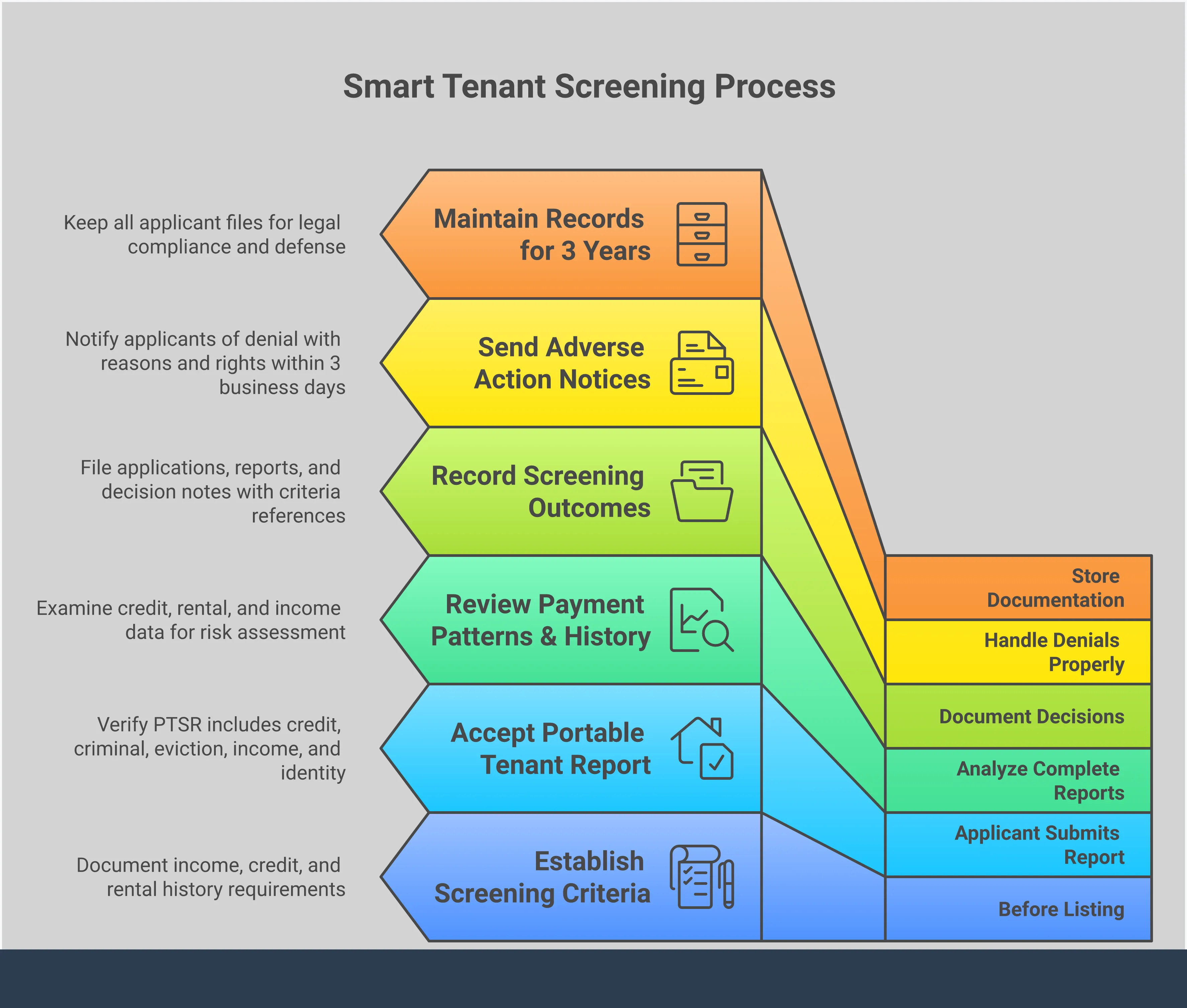
Before you even list your property, decide what your ideal tenant looks like on paper. Establishing clear, written criteria is the foundation of a fair screening process. This means defining your minimum requirements for factors like income, credit history, and rental background. For example, you might require an income that is three times the monthly rent or a minimum credit score. Writing these standards down creates an objective yardstick to measure every application against. This simple step helps you comply with the Fair Housing Act by ensuring you treat every applicant equally.
Once you have your criteria, you need a reliable way to verify an applicant's information. A professional screening service gives you a complete picture that goes beyond a simple credit check, compiling reports with nationwide criminal and eviction histories and income verification. This allows you to make an informed decision. Modern solutions like a Portable Tenant Screening Report (PTSR) streamline this step. The renter purchases one comprehensive report to share with multiple landlords, saving everyone time and money. For you, it means receiving a verified, in-depth report at no cost.
Documentation is your best friend in the rental business. Keeping consistent and thorough records of your screening process for every applicant is non-negotiable. A simple checklist helps you apply your written criteria uniformly to each person, ensuring you don't miss a step. If you decide to deny an applicant, be sure to document the specific, business-related reason why they didn't meet your criteria. Was their income insufficient? Did their report show a history of property damage? Keeping these notes creates a clear paper trail that can protect you if your decision is ever questioned.
Why should I accept a portable report instead of just running my own? Accepting a portable report, like a PTSR, can make your life much easier. It means the applicant has already done the work of getting a comprehensive, verified report from a trusted source. This saves you time and gets you the information you need instantly, helping you fill your vacancy faster. Since the renter pays for their reusable report, it also removes the cost from your plate and creates a wider, more equitable pool of applicants who aren't burdened by multiple fees.
Can I deny an applicant just because of a low credit score? Relying only on a credit score can be misleading and might even get you into legal trouble. A score doesn't tell the whole story. It's better to review the full credit report to understand the context. For example, a person might have a lower score due to student loans or past medical bills but have a perfect history of paying rent on time. Your decision should be based on the complete picture of their financial responsibility, not just a single number.
I have a strict "no criminal record" policy. Is that a problem? Yes, a blanket policy like that can be a problem and may violate fair housing guidelines. It's important to assess a criminal record on a case-by-case basis. You should consider the nature of the offense, how long ago it happened, and if it is relevant to the applicant's ability to be a safe and reliable tenant. A fair process involves looking at the individual, not just checking a box.
What's the most important thing to do before I even start screening applicants? The most important first step is to create your written screening criteria. Before you even list your property, decide on your minimum requirements for income, credit history, and rental background. Writing these standards down and applying them consistently to every single applicant is the foundation of a fair, legal, and effective screening process. It removes guesswork and protects you from potential discrimination claims.
If I deny an applicant, what am I legally required to do? If you reject an applicant based on information found in their screening report, you are legally required to send them an adverse action notice. This is a formal notification that explains your decision. It must include the contact information for the screening company that provided the report and inform the applicant of their right to see the report and dispute any inaccuracies. This is a critical step for staying compliant with the Fair Credit Reporting Act.