
If you've ever been on the apartment hunt, you know the drill. You find a place you love, fill out a lengthy application, and then pay a non-refundable fee for a background check. Then you do it all over again for the next place, and the next. It’s expensive, time-consuming, and feels like your sensitive personal data is being scattered all over town. What if there was a better way? A modern approach to tenant screening with credit report and eviction history puts you in control. This guide explains how a single, reusable report can save you money and protect your privacy, all while helping you stand out as a prepared, serious applicant.
Think of a tenant screening report as a complete introduction to a potential renter. It’s a collection of documents that paints a picture of their financial and rental background, helping landlords make fair and informed decisions. While it might sound intimidating, understanding what’s inside is the first step for both renters and landlords to have a smooth and transparent application process. A comprehensive report goes far beyond a simple credit score, pulling together several key pieces of information into one place.
These reports typically include a detailed credit history, a nationwide criminal background check, and a search for any past evictions. Some, like the Portable Tenant Screening Report, also include income verification and a completed rental application. By gathering all this information upfront, landlords get the context they need to evaluate an applicant, and renters get a chance to present their full story. It’s all about creating a clear, complete, and accurate profile.
A credit report is a detailed summary of your financial history. It shows how you’ve managed borrowed money, from credit cards and car loans to student debt. It’s not just about your credit score, though that number is a key part of it. The report itself lists your accounts, your payment history, and any public records like bankruptcies or court judgments against you.
For landlords, this isn't about judging your spending habits. It’s about assessing financial responsibility. They’re looking for a pattern of on-time payments and manageable debt, which can indicate you’re likely to pay rent consistently. For renters, knowing what’s in your credit report gives you the power to correct any errors and understand what a landlord sees.
An eviction history report can feel like the most stressful part of a screening, but it’s important to know what it actually shows. This report details any time a landlord has started a formal, legal process to remove a tenant from a property. It will include the date the case was filed, the property address, and the names of the people involved.
Crucially, the report should also show the outcome. A filing is not the same as a completed eviction. Many cases are dismissed or settled without the tenant being formally evicted. The report will specify if a judge ruled against the tenant and if any money was owed. Understanding how to check for evictions helps both parties see the context behind the record, not just the record itself.
A thorough tenant screening report is a multi-layered document. Beyond credit and eviction histories, it includes a criminal background check. This search typically scans national databases for felony and misdemeanor convictions, providing a broader view of an applicant's history. It’s another piece of information that helps landlords ensure the safety and security of their property and community.
The report also often includes income verification and previous rental history. Verifying income helps a landlord confirm that an applicant can comfortably afford the rent. Meanwhile, rental history, often gathered from references from previous landlords, gives insight into what you’re like as a tenant. Together, these details help create a well-rounded applicant profile for landlords to review.
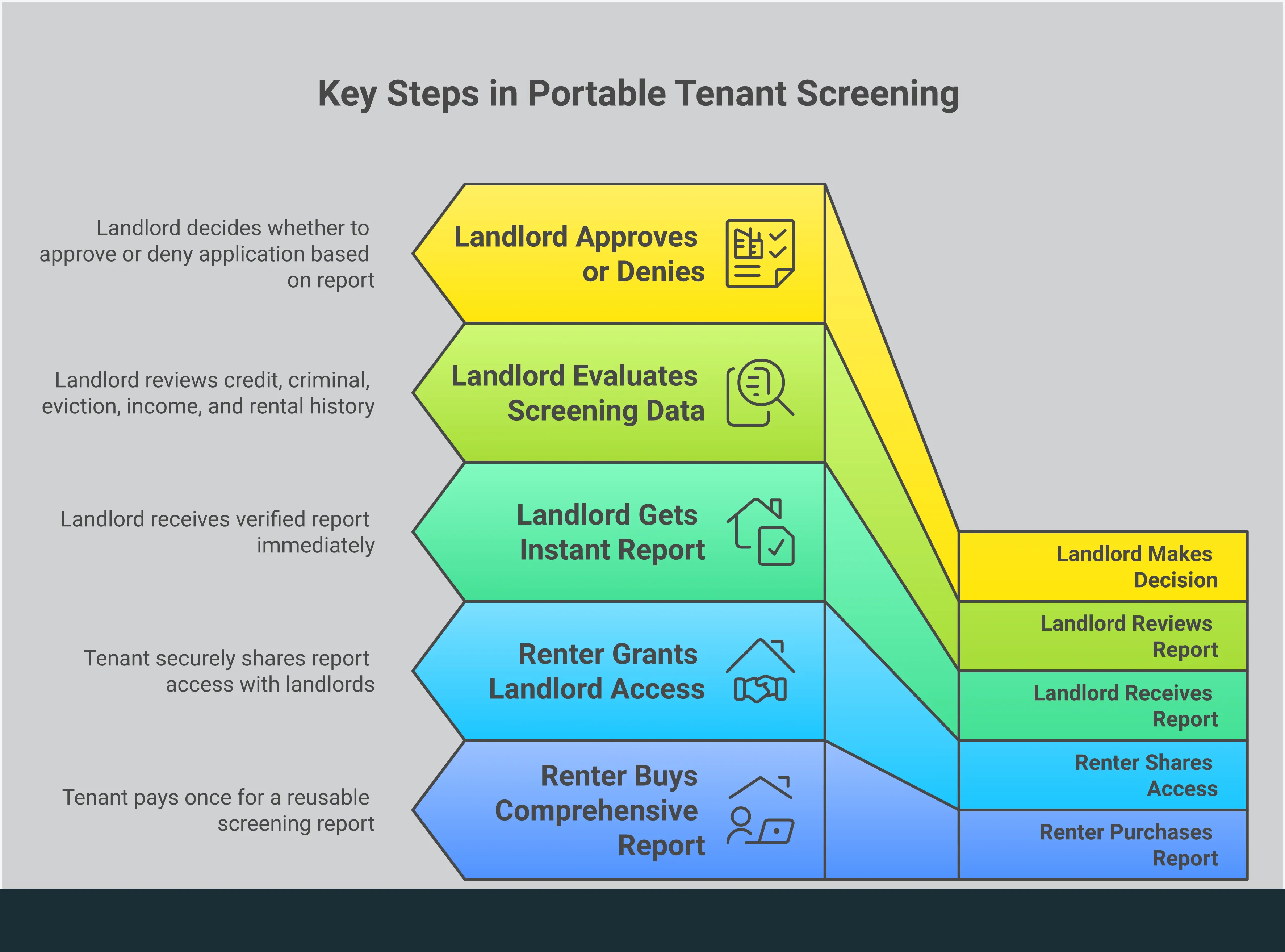
One of the biggest myths is that a tenant screening report is the same as a credit report. As we've seen, a credit report is just one component of a much larger screening package. A comprehensive screening report provides a more holistic view of an applicant’s background. Another common misconception is that a low credit score is an automatic rejection. Many landlords look at the entire report, considering factors like income and rental history to see the full picture.
Perhaps the most important myth to debunk is that renters have no control over their personal information. With modern services, that’s no longer true. A portable report gives renters ownership of their data, allowing them to share their single report with multiple landlords and even revoke access instantly. This saves time and money while putting you in control of your sensitive information.
Screening tenants isn't about finding a "perfect" person with a flawless record. It's about finding a reliable one who is a good fit for your property. Think of red flags not as automatic disqualifications, but as signals to pause and look a little closer. A comprehensive tenant screening report provides the data, but knowing how to interpret that information is what truly matters. This approach helps you protect your investment while ensuring every applicant is treated fairly. By understanding what to look for, you can move forward with confidence, knowing you have the right information to make an informed decision. It’s about balancing risk management with a human-centered perspective, which ultimately leads to better landlord-tenant relationships.
When you review a credit report, you're looking for patterns that tell a story about financial responsibility. A low credit score can be a concern, but it’s more important to understand the reasons behind it. Look for things like a history of late payments, accounts in collections, or significant unpaid bills, especially to former landlords or utility companies. These details might suggest a potential risk for paying rent on time. However, they aren't automatic deal-breakers. Instead, view them as points to consider within the larger context of the applicant's overall financial health and history.
An eviction history is a critical piece of the puzzle for any landlord. This report details if a previous landlord ever initiated a formal, legal process to remove the applicant from a property through the court system. An eviction filing is a serious indicator because it often points to a major issue, such as consistent non-payment of rent or significant lease violations. Most screening services show eviction history from the past seven years, though the exact timeframe can depend on state laws. For landlords, seeing an eviction on a report is a clear signal to investigate the circumstances more thoroughly.
Spotting a red flag shouldn't lead to an immediate rejection. Instead, it's your cue to consider the whole person and the full context of their situation. A single data point rarely tells the complete story. It's essential to weigh any negative marks against the applicant's current income, job stability, and references from other landlords. For example, a past financial struggle might have been due to a one-time event, like a medical emergency or job loss, from which they have since recovered. By putting all the information together, you can make a fair, well-rounded, and confident leasing decision.
Picking a tenant screening service is one of the most important decisions you'll make as a landlord. The right partner helps you find reliable tenants, while the wrong one can leave you with incomplete information and legal risks. It’s about more than just running a background check; it’s about creating a fair, efficient, and compliant process for everyone involved. So, what should you look for? Let's break down the essentials that separate a basic check from a truly great screening service.
First and foremost, you need a complete picture of the applicant. A quality screening service should provide a comprehensive report that goes beyond a simple credit score. Look for a service that includes a detailed credit report from a major bureau like Experian, a nationwide criminal background check, and a thorough eviction history. These three pieces of information form the foundation of a solid screening. A service that offers fast and accurate reports is also critical. You want to make timely decisions without sacrificing the quality of the information you receive, ensuring you can confidently choose the best tenant for your property.
A modern screening service should be fast. In many cases, reports can be generated in just a few minutes, allowing you to move forward with qualified applicants quickly. This is where portable, renter-initiated reports really shine. Instead of you having to request information and wait, the renter provides you with access to their pre-verified report. This approach not only speeds things up but also puts the renter in control of their personal data. This simple shift in the process shows respect for the applicant's privacy and streamlines the entire experience, which is a major reason why this model benefits landlords and renters alike.
A thorough screening process is your best defense against costly problems down the road. Evictions are expensive, averaging around $3,500, not to mention the stress and lost rent. Investing in a quality screening service helps you avoid these situations from the start. When a service uses reusable reports, it creates a more efficient system for everyone. Renters can purchase one report and share it with multiple landlords, which means you often attract more serious, prepared applicants. This saves you time sorting through applications and saves your potential tenants the hassle and expense of paying for multiple background checks. This fair and cost-effective pricing structure helps you build a better relationship with applicants from day one.
Screening tenants is a standard part of being a landlord, but it’s not a free-for-all. There are important federal and state laws in place to protect applicants and ensure the process is fair. Getting familiar with these rules isn’t just about checking a legal box; it’s about protecting your business from costly fines and lawsuits. Think of this as your go-to guide for staying compliant and making informed decisions with confidence.
The main law you need to know is the Fair Credit Reporting Act (FCRA). This federal law sets the rules for how consumer reports, which include credit checks and background screenings, can be used for housing decisions. Essentially, it ensures that the information used is accurate and that the process is fair to the consumer (your potential tenant). As a landlord, you are legally required to comply with the FCRA whenever you use a screening report to evaluate an applicant. This means you can only pull a report for a permissible purpose, like evaluating a rental application, and you must follow specific steps if you use that information to make your decision.
Before you run a background check, you need the applicant's permission. While a signed application form often includes a consent clause, getting explicit written permission is always the smartest move. This creates a clear paper trail and confirms the applicant understands you'll be reviewing their history. If you decide to take "adverse action" based on the report, like denying the application or requiring a co-signer, you have another legal duty. You must notify the applicant of the decision. This notification is a key part of the fair screening process and gives the applicant a chance to see the same information you did.
The FCRA is the national standard, but it’s not the only rulebook. You also need to follow the Fair Housing Act, which prevents discrimination, as well as your specific state and local laws. These can vary quite a bit. For example, states like Colorado and Washington have passed laws regarding portable tenant screening reports to make the application process more efficient and affordable for renters. Staying current on your local regulations is essential. Using a service that is built for compliance helps you meet these requirements without having to become a legal expert yourself. You can see how it works and how our reports are designed to meet these evolving standards.
If an applicant questions the information in their screening report, don't panic. The law has a clear process for this. If you deny an application based on the report's contents, you must provide the applicant with an "adverse action notice." This letter officially informs them of your decision and must include the name and contact information of the screening company that provided the report. It also lets them know they have the right to get a free copy of the report and to dispute any inaccurate information with that company. This process protects you and gives the applicant the power to correct potential errors on their record.
Making a bad leasing decision can be expensive, with the average eviction costing around $3,500. Proper screening helps you avoid that headache. But an even bigger financial risk can come from failing to follow screening laws. Non-compliance with the FCRA can lead to significant fines and private lawsuits. Using a compliant, reliable screening service is one of the best investments you can make in your rental business. It not only helps you find qualified tenants but also provides a secure, standardized process that protects you from legal trouble. It’s a simple step that gives landlords peace of mind and a solid foundation for a successful tenancy.
Once you have a tenant screening report in hand, the real work begins. Making a leasing decision isn't just about finding a reason to say yes or no; it's about using the information to find the right fit for your property while being fair to every applicant. A consistent, documented process is your best friend here. It helps you make objective choices, stay compliant with fair housing laws, and confidently stand by your decision. This isn't just good practice; it's a smart business strategy that minimizes risk and helps you find reliable, long-term tenants.
Think of it as a matching process. You have a property with certain financial requirements, and you’re looking for a tenant who can comfortably meet them. The screening report provides the data, but you provide the context. By establishing clear standards and applying them equally to everyone, you create a process that is both effective and equitable. This approach not only protects you from potential legal issues but also sets the foundation for a positive landlord-tenant relationship from day one. For landlords, a structured approach is key to long-term success and a healthier bottom line.
Before you even look at a single application, you should decide what your ideal tenant looks like on paper. Create a written list of your minimum requirements and apply it consistently to every applicant. This step is crucial for ensuring fairness and complying with housing laws. Your criteria might include a minimum credit score, a specific income-to-rent ratio (like an income that's three times the monthly rent), and a clean rental history.
Checking a tenant's eviction history is an important part of this. It helps you see if a potential renter has had problems paying rent, following lease rules, or damaging property in the past. By setting these benchmarks ahead of time, you can evaluate each report against a consistent standard, making your decision process much more straightforward and objective.
A screening report is a snapshot, not the full story. While an eviction history is important, it's only one piece of the puzzle. To make a fair and informed choice, you need to look at all the information together. For example, a low credit score might be the result of student loans or medical debt from years ago, not a pattern of financial irresponsibility. A past eviction could have been related to a job loss during a recession, and the applicant may have a perfect payment history since.
Look for patterns instead of focusing on a single negative mark. Do you see a long history of late payments, or was there a single difficult period followed by years of stability? Portable Tenant provides comprehensive reports that give you a clearer picture, but it's up to you to weigh the details and see the person behind the numbers.
The screening report is your starting point, but don't stop there. Always do your due diligence by verifying the information an applicant provides. If a tenant can't show proof of a steady job or enough money, they might struggle to pay rent. You can ask for recent pay stubs, bank statements, or an offer letter to confirm their financial situation. Services like Portable Tenant often include income verification, which makes this step much easier.
It’s also a good idea to call their previous landlords. Ask simple, direct questions: Did they pay rent on time? Did they take care of the property? Would you rent to them again? These conversations can provide valuable context that you won’t find in a report.
Whether you approve or deny an application, keep a record of your decision and the reasons behind it. This documentation is your proof that you followed a fair and consistent process. If you decide to deny an applicant based on information in their screening report, federal law requires you to provide them with an adverse action notice.
This notice must inform the applicant of the denial, provide the name and contact information of the screening company that supplied the report, and let them know they have the right to get a free copy of the report and dispute any inaccurate information. Keeping clear records tied to your pre-defined criteria protects you and demonstrates your commitment to fair and lawful leasing practices.
What's the real difference between a standard background check and a portable tenant screening report? Think of it this way: in a standard process, a landlord initiates a new background check for every promising applicant, and the applicant often pays a fee each time. A portable report flips that model. The renter purchases one comprehensive, reusable report and can then share it securely with multiple landlords. This saves everyone time and money, but more importantly, it gives the renter control over their personal data, including the ability to revoke access at any time.
Do I have to reject an applicant if I see a past eviction or a low credit score? Not at all. These are best viewed as signals to look closer, not as automatic disqualifications. A single negative item rarely tells the whole story. Consider the context: was the low credit score due to a one-time medical event years ago, or is there a recent pattern of missed payments? An eviction filing might have been dismissed or occurred during a period of unemployment from which the applicant has since recovered. A fair decision involves weighing these details against the applicant's current income, job stability, and references.
What are my legal obligations if I deny an application based on the screening report? If you decide against an applicant because of information in their screening report, you are legally required to provide them with an "adverse action notice." This is a formal notification that tells them about your decision. The notice must include the name and contact information of the screening company that provided the report and inform the applicant of their right to get a free copy of that report and to dispute any inaccurate information it contains.
How can I make sure my screening process is fair and consistent for every applicant? The best way to ensure fairness is to establish your rental criteria before you even begin accepting applications. Write down your minimum requirements for things like income-to-rent ratio, credit history, and rental background. Then, apply those exact same standards to every single person who applies. This creates an objective framework for your decisions, helps you comply with fair housing laws, and ensures you are evaluating each applicant on the same set of qualifications.
As a renter, what can I do if I find an error in my screening report? You absolutely have the right to correct inaccuracies. If a landlord denies your application based on the report, they must give you an adverse action notice. This notice will identify the screening company that prepared the report. You should contact that company directly to dispute the error. They have a legal obligation to investigate your claim and correct any information that is found to be inaccurate.