
Applying for a rental can feel like taking a test where you don’t know all the rules. Landlords want to find reliable tenants, which makes sense. The problem starts when their screening methods, even if unintentionally, create unfair hurdles for certain groups of people. A seemingly neutral policy, like a strict credit score minimum or a blanket ban on anyone with a past conviction, can have a disproportionately negative effect on qualified applicants. This is the core of tenant screening discrimination. This guide will help you understand these hidden rules, recognize when a line has been crossed, and ensure you’re judged fairly.
When you’re applying for a new place, you expect to be judged on your ability to be a good tenant. But what happens when the decision isn’t fair? Tenant screening discrimination is when a landlord or property manager uses biased practices to evaluate your rental application. This can lead to you being unfairly denied housing based on who you are, not on your qualifications as a renter.
These unfair tenant screening practices can make it incredibly difficult for people to find a safe and affordable home. This issue disproportionately affects Black, Latino/a/x, and other communities of color, creating significant barriers to housing. It’s not just about a single denial; it’s a systemic problem that can perpetuate cycles of housing instability. Understanding what screening discrimination looks like is the first step toward protecting yourself during your apartment search.
You might hear the terms "tenant screening discrimination" and "housing discrimination" used together, but they have a key difference. Housing discrimination is a broad term for being treated unfairly at any point in the housing process, whether you're trying to rent, buy, or secure a loan. It can happen before you apply, while you're a tenant, or even when you're trying to move out.
Tenant screening discrimination is more specific. It refers only to the biased evaluation that happens before you sign a lease, during the application and screening phase. It’s a specific type of housing discrimination focused entirely on the landlord's review process.
Federal law provides a baseline of protection for everyone. The Fair Housing Act makes it illegal for landlords to discriminate based on seven protected classes: race, color, national origin, religion, sex, disability, and familial status (which includes having children under 18 or being pregnant). This means a landlord cannot refuse to rent to you for any of these reasons.
Many states and cities offer even broader protections, adding categories like marital status, sexual orientation, gender identity, or source of income. Because these laws vary, it’s always a good idea to check the specific regulations in your city and state. Fair screening policies are designed to ensure everyone is protected from discrimination and given a fair shot at finding a home.
On the surface, many tenant screening practices seem like standard business. Landlords want to find reliable tenants who will pay rent on time and take care of the property. That makes sense. The problem arises when these screening methods, even if unintentionally, create unfair barriers for certain groups of people. This is a concept known as "disparate impact," where a seemingly neutral policy has a disproportionately negative effect on individuals protected by fair housing laws.
It’s not always about a landlord’s personal bias. Sometimes, the tools and criteria they use are the real issue. A landlord might think they’re just being cautious by setting a high credit score minimum or denying anyone with a past conviction. However, these rigid rules can end up discriminating against applicants based on race, disability, or family status, which is illegal. Understanding these practices is the first step in recognizing when a line has been crossed. From strict financial requirements to automated background checks, let's look at some common screening practices that can be discriminatory.
A credit score is just a snapshot of someone's financial history, and it doesn't always tell the whole story. Many landlords set a high minimum credit score, which can automatically disqualify great tenants. Because factors like medical debt or student loans can heavily impact a score, this practice often makes it harder to find housing for lower-income individuals and people of color. A low score doesn't mean someone is irresponsible; it could just mean they’ve faced challenges that have nothing to do with their ability to be a good tenant. A more holistic view of an applicant's finances provides a much fairer assessment.
Some landlords have a policy to automatically reject any applicant with a criminal record, no matter the context. These "blanket bans" are often discriminatory. According to housing advocates, these policies can violate fair housing laws because they have a disparate impact on protected groups. Fair screening involves a more thoughtful approach. It means considering the nature of the offense, how long ago it occurred, and what the person has done since. Rejecting someone for a minor, years-old conviction without any individual assessment isn't just unfair; it can also be illegal.
You’ve probably heard of the "3x the rent" rule, where landlords require your monthly income to be at least three times the rent. While it’s a common way for landlords to gauge affordability, it can be an exclusionary tool. In expensive rental markets, this rule can lock out responsible tenants who are perfectly capable of paying their rent, even if they don't meet an arbitrary threshold. This is especially true for those who receive housing assistance or are simply excellent budgeters. A more equitable approach considers an applicant's entire financial picture, not just a single, rigid formula.
More and more, landlords are using automated software to screen applicants. While this seems efficient, it can introduce a hidden layer of bias. These algorithms make decisions based on data, and if that data reflects existing societal inequalities, the algorithm can perpetuate them. Federal guidance notes that all screening practices, including automated ones, must be legally sound and non-discriminatory. If an algorithm uses factors that indirectly correlate with race, national origin, or another protected class, it could violate the Fair Housing Act. You have a right to know what information is being used to judge your application and to ensure it’s being applied fairly.
Screening discrimination isn't always as obvious as a landlord outright saying they won’t rent to you for a prohibited reason. More often, it’s woven into the application process itself. It can happen when a landlord’s screening criteria are vague, applied inconsistently, or rely on information that has little to do with your ability to be a great tenant.
Understanding how these practices work is the first step in protecting yourself. Discrimination can occur when landlords set different rules for different people, use irrelevant information to judge an application, or base their decision on outdated or flat-out wrong data. Let’s look at what each of these situations looks like in the real world.
Imagine you and a friend apply for similar apartments in the same building, but the landlord asks you for three months of bank statements while only asking your friend for one. This is a classic example of inconsistent screening. When a landlord or property manager doesn’t apply the same set of rules to every single applicant, they may be engaging in discrimination, even if they don’t realize it.
This practice often creates unfair hurdles for certain groups. For instance, setting an unusually high income requirement for a family with children but not for a single applicant could be a form of familial status discrimination. This kind of tenant screening discrimination can make it incredibly difficult for qualified people to find a home. Every applicant should be evaluated using the exact same objective criteria.
A standard tenant screening report includes your credit history, criminal record, and eviction history. While landlords can use this information, they must use it to assess your potential as a tenant, not to make broad judgments. Discrimination can happen when a landlord denies your application based on details that aren't relevant to whether you’ll pay rent on time and take care of the property.
For example, a low credit score caused by past medical debt doesn’t necessarily mean you’re financially irresponsible. Similarly, a single, old eviction filing from years ago, especially one that was dismissed, may not reflect your current ability to be a reliable tenant. Federal agencies have even suggested remedies for these kinds of tenant screening practices to ensure they are applied fairly and with proper context.
What happens if the information a landlord is using is just wrong? Tenant screening reports are not always perfect. They can contain errors, mix you up with someone else who has a similar name, or show outdated information like a dismissed eviction or a debt that you’ve already paid off. If a landlord makes a decision based on this faulty data, you could be unfairly denied housing.
This is why overbroad screening policies are so problematic. For example, a "zero-tolerance" policy that automatically rejects anyone with any kind of criminal record, no matter how old or minor, is often considered discriminatory. Recent HUD guidance warns that these blanket bans are likely to have an unjustified discriminatory effect because they don’t allow for any individual assessment.
Going through the rental application process can feel like you're constantly trying to prove yourself. It’s easy to feel powerless, but you have more rights than you might think. Several major federal and local laws exist to ensure everyone gets a fair shot at finding a home. Understanding these laws is the first step toward recognizing discrimination and knowing what to do about it. They provide a framework that holds landlords accountable and protects you from unfair screening practices.
Think of the Fair Housing Act (FHA) as the foundation of your rights as a renter. This landmark federal law makes it illegal for landlords to discriminate based on seven protected classes: race, color, national origin, religion, sex, familial status (like having children), and disability. This means a landlord can't refuse to rent to you for any of these reasons. According to new guidance from the U.S. Department of Housing and Urban Development, even a seemingly neutral screening policy can be discriminatory if it disproportionately affects people in a protected group. For example, a blanket ban on applicants with any criminal record could be challenged under the FHA.
Federal law is just the starting point. Many states and cities have their own fair housing laws that add extra layers of protection. These local laws often expand on the FHA's protected classes to include things like source of income (so you can't be rejected just for using a housing voucher), sexual orientation, gender identity, or marital status. Because these rules vary so much by location, it’s a good idea to look up the specific protections in your city and state. These local ordinances are often your strongest defense against certain types of screening discrimination that federal law doesn't cover.
While the FHA focuses on who is protected, the Fair Credit Reporting Act (FCRA) is all about the information in your application. This federal law regulates how tenant screening reports, including your credit history and background checks, can be collected and used. Under the FCRA, you have the right to know what’s in your report and to dispute any inaccurate information. If a landlord denies your application based on something in your report, they must tell you and provide the contact information for the company that created it. This ensures transparency and gives you a chance to correct errors that could unfairly cost you a home.
It can be disheartening and confusing to suspect you’re being treated unfairly during your housing search. Discrimination isn’t always obvious, but if you feel that a landlord or property manager is using your background information to unfairly deny your application, you have options. Taking clear, deliberate steps can protect your rights and hold landlords accountable. It’s about knowing what to look for and what to do when something feels wrong.
The key is to act methodically. Start by recognizing the signs, then move on to documenting your experience and seeking official help. You don’t have to go through this alone, and there are established procedures to support you. By understanding the process, you can approach the situation with more confidence and ensure your application is judged on its merits, not on biased assumptions.
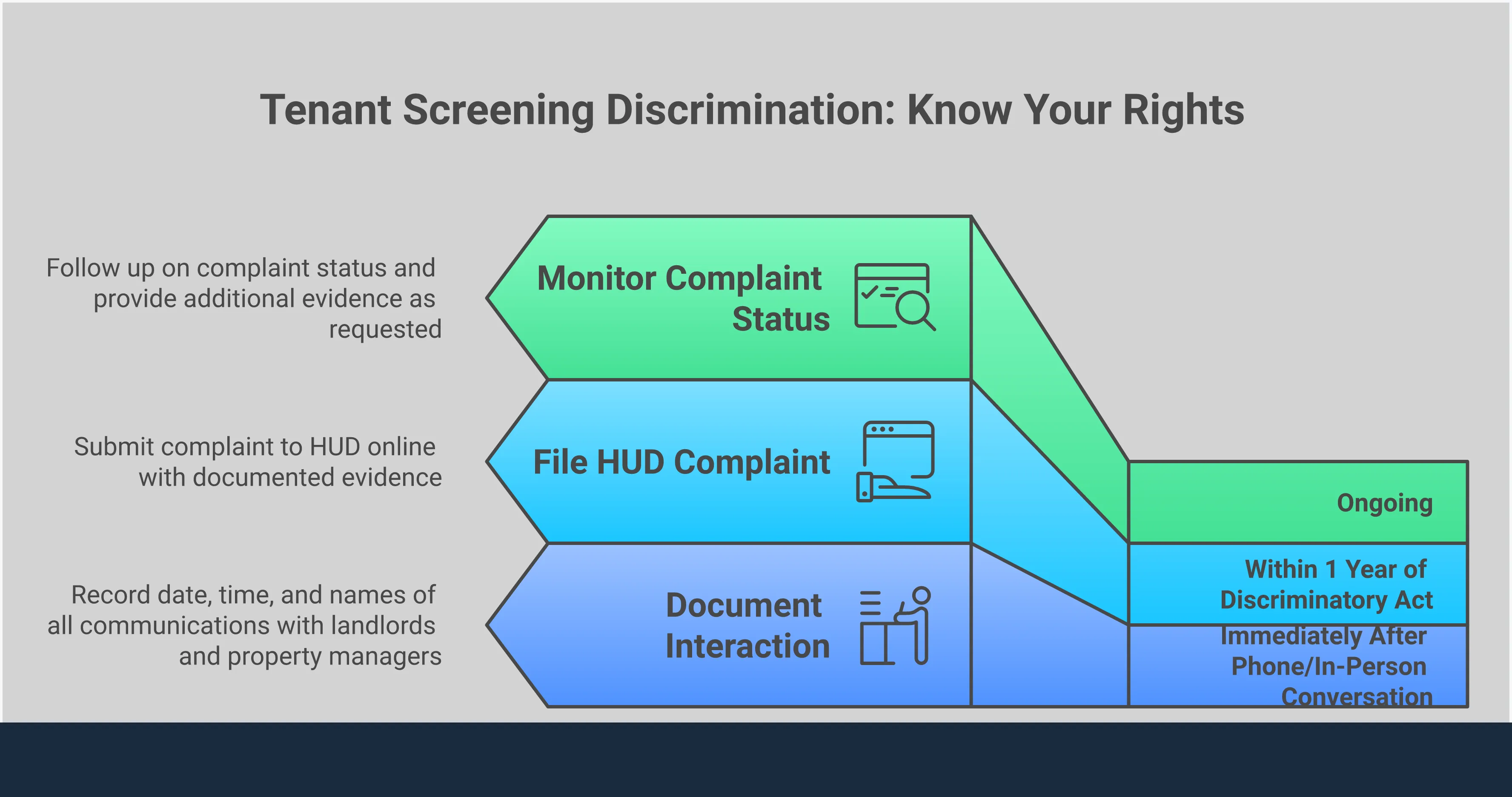
Discrimination can be subtle. A landlord might not state an illegal reason for denying you, but their actions can still be a red flag. For example, they might tell you an apartment is rented right after you disclose something about your background, only for the "For Rent" sign to stay up for weeks. Or perhaps you notice the landlord asks you for more information than they asked of other applicants. Overly strict screening policies can make it difficult for individuals to secure housing, especially when they create blanket bans based on credit history or past legal involvement. Trust your intuition. If the application process feels inconsistent or you’re being held to a different standard, it’s worth paying closer attention.
If you suspect discrimination, your best tool is a detailed record. Create a timeline of every interaction you have with the landlord or property manager. Write down dates, times, and the names of anyone you spoke with. Save all emails, text messages, and voicemails. If you had a phone or in-person conversation, make notes about what was said immediately afterward. Keep copies of your application, any fees you paid, and the screening report you provided. Having comprehensive records is critical if you decide to file a complaint. This paper trail provides concrete evidence of your experience and makes it much harder for a landlord to dispute your claim.
When you have your documentation in order, you can file a formal complaint with the U.S. Department of Housing and Urban Development (HUD). You can also file with your state or local fair housing agency. These government bodies are responsible for investigating claims of housing discrimination. As the National Consumer Law Center highlights, HUD has provided specific guidance on screening practices, noting that "overbroad screening based in [credit, eviction, or criminal] areas are especially likely to have an unjustified discriminatory effect." Filing a complaint initiates an official investigation into the landlord’s practices and is a powerful step toward enforcing your rights under the Fair Housing Act.
Navigating a discrimination claim can be complex, so getting legal advice is a smart move. Many non-profit organizations and legal aid societies specialize in fair housing law and offer free or low-cost assistance to renters. These experts can help you understand your rights, assess the strength of your case, and guide you through the complaint process. A fair housing organization can provide invaluable support and advocate on your behalf, ensuring that housing providers adhere to the Fair Housing Act. They can connect you with resources and help you determine the best course of action for your specific situation.
Finding a new home is stressful enough without worrying about unfair treatment. While you can’t control a landlord’s biases, you can take proactive steps to ensure your application is reviewed fairly. Being prepared and informed is your best strategy for a smooth and successful apartment search. It puts you in a stronger position and helps you present yourself as the qualified applicant you are.
Your first line of defense is understanding the rules of the game. The federal Fair Housing Act (FHA) sets clear boundaries for what landlords can and cannot do when screening tenants. The U.S. Department of Housing and Urban Development (HUD) provides specific guidance on how these laws apply to discriminatory tenant screening practices, especially concerning credit history, criminal records, and evictions. Knowing that a landlord can’t have a blanket ban on anyone with a criminal record, for example, helps you spot a red flag. Familiarizing yourself with these protections empowers you to identify unfair requirements before you even spend money on an application fee.
Instead of letting each landlord run a separate, costly background check, you can manage the process yourself. A renter-owned background report gives you complete control over your personal information. You generate one comprehensive, secure report and can share it with multiple landlords for a set period. This approach not only saves you time and money on application fees but also ensures the information is accurate and up-to-date. You see exactly what the landlord sees, and you can revoke access at any time. This transparency minimizes the risk of decisions being made based on outdated or incorrect data from questionable sources.
Presenting a complete and organized application package can make a significant difference. Before you start your search, gather all the necessary documents. This typically includes recent pay stubs or other proof of income, photo identification, and contact information for your references. Having everything ready to go shows landlords that you are serious, responsible, and prepared. When your information is clear, complete, and easy to review, it leaves less room for subjective judgment or misunderstanding. A polished application helps you make a great first impression and allows your qualifications to speak for themselves.
Is it illegal for a landlord to require a minimum credit score? Not exactly, but it can be. While landlords can set financial criteria, an unreasonably high credit score requirement can be discriminatory if it disproportionately screens out applicants from protected groups. This is known as "disparate impact." A fairer approach, and one that many fair housing advocates support, is for landlords to consider your entire financial situation, not just a single number that may not reflect your ability to pay rent.
What should I do first if I think my application was denied unfairly? The first thing you should do is document everything. Write down a timeline of your interactions with the landlord, save all emails and texts, and keep a copy of your application. If a landlord denies you based on information in a screening report, they are legally required to tell you. If their reasoning feels vague or inconsistent, or if you suspect it's a cover for discrimination, having a detailed record is the most important first step before filing a complaint with a fair housing agency.
Can a landlord deny me for an old eviction or criminal charge? It depends on the context. A landlord who has a "blanket ban" policy that automatically rejects anyone with any kind of criminal or eviction history may be breaking the law. Fair housing guidance suggests that landlords should perform an individual assessment, considering the nature of the offense, how long ago it happened, and what you've done since. A single, minor issue from many years ago shouldn't automatically disqualify a great tenant.
How does using a portable screening report help protect me from discrimination? A portable screening report puts you in the driver's seat. Instead of relying on different landlords to pull your data from various sources, you control one accurate, comprehensive report. This transparency allows you to see exactly what a landlord sees, so you can correct any errors before they cause a problem. It also helps ensure that every landlord is reviewing the same set of verified information, which promotes a more consistent and fair evaluation process.
My landlord asked for more documents than my friend who also applied. Is that allowed? No, that is a major red flag. Landlords must apply the same screening criteria to every single applicant. Asking one person for three months of bank statements while only requiring one month from another, for example, is a form of inconsistent screening. This practice can be a subtle way to discriminate, and it violates the principle of fair and equal treatment in housing.