
For many California landlords, the tenant screening process can feel like walking a tightrope. You need to gather enough information to make a smart decision, but you also have to be careful not to cross any legal lines. From the maximum application fee you can charge to the types of background checks you can run, every step is regulated. An unintentional mistake, like asking a prohibited question or applying your criteria inconsistently, can lead to serious consequences. This is where a clear understanding of the tenant screening laws California enforces becomes your most valuable asset. This article will serve as your guide, highlighting common pitfalls and providing the actionable steps you need to create a fair, consistent, and legally sound screening process for your rental business.
If you’re a landlord in California, you know that finding the right tenant is key to a successful rental business. The screening process is your first line of defense, but it’s also governed by a specific set of rules designed to keep things fair for everyone. California has some of the most detailed tenant protection laws in the country, and they cover everything from application fees to the questions you’re allowed to ask.
Understanding these regulations isn’t just about avoiding legal trouble; it’s about building a professional, transparent process that attracts high-quality applicants. When you have a clear and compliant screening system, you set the stage for a positive landlord-tenant relationship from day one. It might seem like a lot to keep track of, but breaking it down step-by-step makes it much more manageable. Let’s walk through what you need to know to screen tenants the right way in the Golden State.
When it comes to tenant screening, California landlords operate under a two-layer system of laws: federal and state. At the national level, you have regulations like the Fair Housing Act, which prohibits discrimination. Then, California adds its own specific rules that often provide even more protection for applicants. Think of the federal laws as the foundation and the state laws as the detailed blueprint you must follow.
California’s laws for screening tenants are in place to protect both you and your potential renters. They create a clear, equitable framework for how to handle applications, run background checks, and make rental decisions. Staying informed about both sets of rules is essential for running a compliant and successful rental business.
These rules apply to anyone involved in the rental process, whether you’re a landlord managing a single-family home or a property manager overseeing a large apartment complex. California law allows landlords to use credit reports and other tenant screening tools to make informed decisions about applicants. However, there’s a critical first step you can’t skip.
Before you run any kind of background check, you must get the applicant's written permission. This is a non-negotiable requirement. You are also permitted to charge an application fee to cover the actual costs of obtaining these reports and for the reasonable time you spend checking references. This ensures you can do your due diligence without being out of pocket, as long as you follow the state’s guidelines on fee limits.
Before you look into an applicant’s credit history or past rentals, California law requires you to take a crucial first step: getting their consent. This isn’t just about following rules; it’s about building trust and transparency with potential tenants from day one. Getting explicit, written permission protects you as a landlord and respects the applicant's right to privacy, setting the stage for a positive landlord-tenant relationship.
In California, a verbal agreement or a casual nod isn’t enough. The law is very clear that you must get an applicant's permission in writing before running any kind of background check. This requirement is your legal safeguard. A signed document serves as concrete proof that you have the applicant's express consent to review their personal information, whether it's a credit report, criminal history, or eviction record. This formal step is a non-negotiable part of the tenant screening process and helps ensure you are operating completely above board.
Transparency goes hand in hand with consent. Along with asking for permission, you need to give applicants a written list of your screening rules. This means clearly outlining your criteria, such as income requirements or specific pet policies, when they apply. Providing this information upfront helps manage expectations and ensures you are applying your standards consistently to every applicant. This practice is a key component of complying with fair housing regulations and demonstrates a commitment to an equitable and transparent process for everyone involved.
Timing is critical when it comes to consent. You must get the applicant's written permission before you run any credit or background checks. The best way to handle this is by including a consent form in your initial application packet so you have the signed authorization on file from the very beginning. Never run a check first and ask for permission afterward, as this is a clear violation of state law. Using a service that provides a portable tenant screening report can make this step seamless, as the applicant controls and shares their own report, which inherently includes their consent.
Handling application fees correctly is a huge part of staying compliant as a California landlord. These fees aren't meant to be a source of income; they exist solely to cover your direct costs for screening a potential tenant. The state has put specific regulations in place to ensure the process is fair and transparent for everyone involved. Following these rules not only keeps you on the right side of the law but also helps you build a foundation of trust with applicants from the very beginning.
Think of the application fee as a direct reimbursement for the services you use to vet a candidate, like running a credit check or a background screening. You can't charge more than your actual expenses, and there are limits on the total amount you can collect. Understanding these details is essential for running a smooth and legally sound rental business. Let’s walk through exactly what you need to know about charging application fees in California.
In California, there’s a cap on how much you can charge for an application fee. As of 2023, the maximum amount is $64.50 per applicant. It’s important to remember that this isn't a flat rate you can charge everyone. The fee must reflect your actual screening costs and cannot exceed this legal limit. This maximum amount is tied to inflation and is subject to annual adjustments, so it's a good practice to check for the current figure each year. This limit applies to each adult applicant, not to the rental unit itself.
The application fee is strictly for covering your out-of-pocket expenses for tenant screening. This includes the cost of purchasing a credit report, a criminal background check, or an eviction history report. You cannot charge for your time or any other administrative overhead. Furthermore, you can only charge an application fee if you have a vacant unit available for rent. The only exception is if you have a clear expectation that a unit will be available soon and you inform the applicant of that in writing. Using a streamlined service can help you manage these costs and ensure you're only charging for necessary screening reports.
Transparency is key when it comes to application fees. You must provide every applicant with an itemized receipt that breaks down the costs covered by their fee. If you don't use the entire fee for screening, you are required to refund the leftover amount to the applicant. If you end up not running a screening check at all (for example, if the unit is rented before you get to their application), you must refund the entire fee. Additionally, if an applicant requests it, you must give them a copy of any credit or background report you purchased with their fee. This is where a portable tenant screening report simplifies things, as the renter already owns and controls their documents.
Once you have an applicant’s consent, you can start gathering information to see if they’re a good fit. But this isn’t a free-for-all. California has specific rules about what you can and can’t look into to ensure the screening process is fair and unbiased. Sticking to these guidelines isn’t just good practice; it’s essential for protecting your business and treating every applicant with respect. Think of it as collecting only the necessary pieces of the puzzle to make an informed, objective decision.
The goal is to find a reliable tenant who will pay rent on time and take care of your property, but the path to finding that person is paved with regulations designed to prevent discrimination. Understanding these rules helps you build a consistent, fair process that you can apply to every single applicant, which is your best defense against potential legal trouble. It also builds trust with potential renters, showing them you operate a professional and equitable business.
Your rental application should focus strictly on information that determines if someone will be a reliable tenant. California law prohibits you from asking questions related to protected classes. This means you cannot ask about an applicant's race, color, religion, sex, sexual orientation, family status, disability, or national origin. The goal is to avoid discrimination, whether intentional or not. Keep your questions centered on relevant factors like rental history, income, and anything else that directly relates to their ability to meet the lease terms. A well-designed rental application helps you gather what you need without crossing any legal lines.
Before you pull anyone’s credit report, you absolutely must have their written permission. This is a non-negotiable step in the screening process. If you charge an application fee that covers the cost of the credit report, you are also required to give the applicant a copy if they request one. Transparency is key. Using a service where the applicant initiates the screening themselves can simplify this, as they purchase their own report and securely share it with you. This approach ensures consent is clearly given and empowers the renter by giving them control over their personal information.
When it comes to criminal history, California law is very specific. You cannot use arrest records that did not result in a conviction to deny an application. Your decisions must be based on convictions that pose a direct and demonstrable threat to the health and safety of other tenants or the property. For example, a history of property damage or violence could be a legitimate concern. The focus should always be on ensuring a safe community, not on penalizing individuals for minor or irrelevant past offenses. Always apply your criteria consistently to every applicant to remain compliant.
Verifying that an applicant can afford the rent is a standard part of screening, but you have to do it fairly. First, you should establish your income requirements (like the rent being no more than a certain percentage of their income) and provide these criteria to all applicants in writing. It’s crucial that you apply these standards uniformly to everyone. You must also consider all forms of verifiable, legal income, not just a traditional paycheck. This includes things like government benefits, spousal support, or pensions. The law ensures that you don’t discriminate against applicants based on their source of income.
Creating a fair and consistent screening process is the best way to find great tenants while protecting your business from legal risk. At the heart of this process are anti-discrimination laws. You’re likely familiar with the federal Fair Housing Act, but California has its own set of rules that provide even broader protections for renters. Understanding these laws isn’t just about checking a compliance box; it’s about building a reputable, ethical, and successful rental business that treats every applicant with respect. The goal is to make your decisions based on objective, business-related qualifications, not personal characteristics.
The best way to start is by establishing your rental criteria in writing before you even list your property. This document should outline your requirements for things like income, credit history, and rental references. When an application comes in, you simply compare it against your pre-defined standards. This practice ensures you treat every single person who applies the same way, which is your strongest defense against a potential discrimination claim. It removes guesswork and personal bias from the equation, allowing you to focus on what truly matters: finding a responsible tenant who will pay rent on time and take care of your property. This section will walk you through the key aspects of California’s anti-discrimination laws so you can screen applicants confidently and fairly.
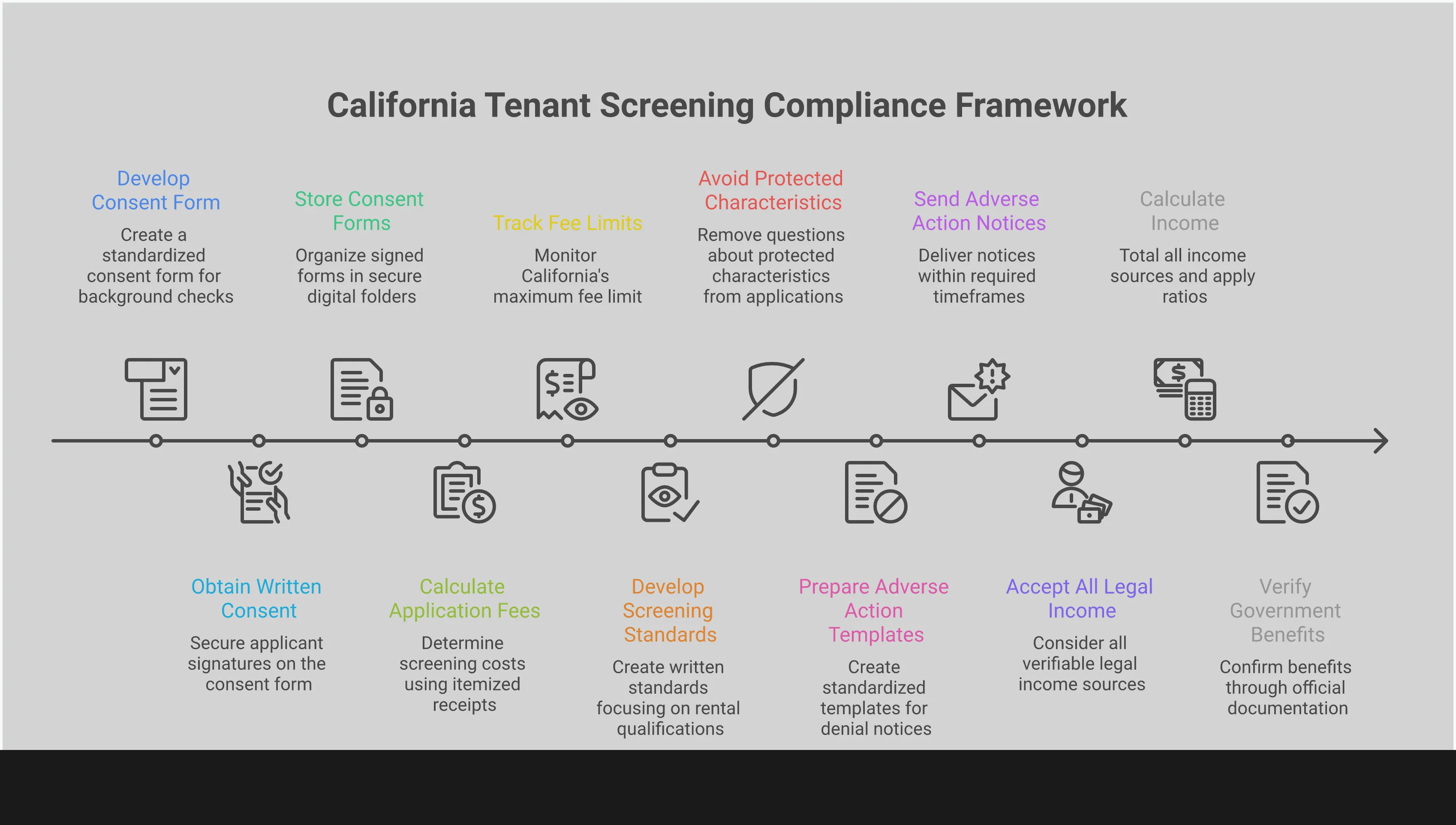
In California, you cannot make any rental decisions based on an applicant’s identity or background. The law identifies several protected classes to prevent discrimination in housing. These include race, color, religion, sex, gender identity, sexual orientation, marital status, national origin, ancestry, familial status (which includes having children), source of income, disability, and age. This means every part of your process, from the initial ad to the final lease signing, must be free of bias. For example, you can't set a different income requirement for a single applicant than you would for a married couple, or refuse to rent a second-floor unit to a family with young children out of a concern for noise.
One of the most important protections for California renters relates to their source of income. You cannot refuse an applicant simply because they use a Section 8 voucher, Social Security benefits, or other forms of public assistance to pay their rent. While you can still require applicants to meet a minimum income threshold, such as two or three times the monthly rent, you must consider all of their lawful and verifiable income to see if they qualify. The key question is not where the money comes from, but whether the applicant can reliably pay the rent each month. Refusing to even consider an applicant because they use a housing voucher is a clear violation of state law and can lead to serious penalties.
The questions you ask on your application and during interviews matter immensely. To avoid any appearance of discrimination, you should never ask questions that touch on an applicant's protected status. This includes inquiries about their marital status, whether they plan to have children, their religion, their country of origin, or the nature of a disability. Even a seemingly innocent question like, "What church do you go to?" can be interpreted as discriminatory. Stick to what’s relevant to their qualifications as a tenant: their income, rental history, and credit report. Using a standardized rental application is a great way to ensure you only ask for permissible information and keep your process consistent for everyone.
Transparency isn't just good practice; it's the law. When you screen a potential tenant in California, you enter into a process that requires clear communication. The state has specific rules about what you need to tell applicants, especially when their screening report influences your decision. Think of it as keeping the lines of communication open and honest, which builds trust and ensures you’re operating well within legal boundaries.
Failing to disclose the right information at the right time can lead to legal trouble. From explaining why an application was denied to providing copies of reports you charged for, every step is regulated. The goal is to give applicants a fair chance and a clear understanding of how their information is being used. This is especially important when you decide not to move forward with a candidate. You can't just say "no" without an explanation if their report was the reason. Following these disclosure rules protects both you and the applicant, creating a more transparent rental market for everyone. Using a portable tenant screening report can streamline many of these disclosures, as the applicant already has control and access to their own information, which simplifies your responsibilities.
If you decide to deny an applicant based on something you found in their screening report, you are legally required to send them an "adverse action notice." This isn't optional. An adverse action can be anything from outright denying the application to requiring a co-signer or charging a higher security deposit. The notice must clearly state that your decision was influenced by the information in their report. It also needs to include the name, address, and phone number of the consumer reporting agency that provided the information. This gives the applicant a chance to see their report and dispute any inaccuracies, a right protected under the federal Fair Credit Reporting Act.
Did you charge the applicant a fee to cover the cost of their credit report? If so, California law has a couple of important requirements. First, you must provide the applicant with an itemized receipt for the fee you collected. Second, if the applicant requests it, you have to give them a copy of the credit report you obtained. This ensures applicants aren't being overcharged and have access to the same information you're using to evaluate them. It’s a straightforward rule that promotes fairness. Services that allow renters to purchase and share their own reports simplify this, as the applicant already has the report and receipt in hand, reducing your administrative burden as a landlord.
You can't run a background check on a whim. Before you look into an applicant's credit history, criminal record, or eviction history, you must get their written permission. This is a critical step that can't be skipped. Your rental application should include a clear and distinct section where the applicant provides explicit consent for you to perform these checks. This ensures the applicant is fully aware that you will be reviewing their personal history as part of the evaluation process. Getting this consent in writing protects you by creating a clear paper trail that proves you had the applicant's permission before proceeding with the screening.
Even the most experienced landlords can make mistakes during the tenant screening process. While usually unintentional, these slip-ups can lead to legal trouble, fair housing complaints, and difficulty finding the right tenant. Understanding the common pitfalls is the first step toward creating a screening process that is fair, consistent, and fully compliant with California law. Let’s walk through some of the most frequent errors so you can confidently avoid them.
One of the easiest mistakes to make is treating applicants differently. You might feel you have a good gut feeling about someone, but applying different standards (like a higher income requirement for one person or a more lenient credit check for another) can be seen as discrimination. The best way to avoid this is to establish a clear, written set of screening criteria before you even list your property. Apply these exact same standards to every single person who applies. This consistency not only ensures fairness but also serves as your best defense if your decision is ever questioned.
California has specific rules about how much you can charge for an application fee. The amount is legally capped and adjusted for inflation each year, so it's important to verify the current maximum. As of early 2023, the maximum was $59.67, but you should always check for the latest figure. This fee is only meant to cover your actual out-of-pocket costs for things like credit reports and background checks, plus the time it takes to perform the screening. You can't profit from application fees. Always provide a receipt itemizing the charges to maintain transparency and stay on the right side of the California tenant screening laws.
Before you run a credit report or a background check, you absolutely must have the applicant's written permission. This is a critical step that protects both you and the potential tenant. Skipping it is a serious violation of their privacy rights. A well-designed rental application should include a clear and separate authorization section for the applicant to sign, giving you explicit consent to perform these checks. This signature is your proof that the applicant agreed to the screening process. Using a service that bakes consent into the application flow can help you streamline the process and ensure you never miss this step.
California has some of the strongest anti-discrimination laws in the country. As a landlord, you cannot make a rental decision based on an applicant's race, religion, sex, family status, disability, sexual orientation, source of income, or any other protected class. This means you should avoid asking questions related to these topics during interviews or on applications. Even a casual question about where someone is from or if they plan on having children could be interpreted as discriminatory. Familiarize yourself with California's fair housing laws to ensure your questions and criteria are always neutral and focused solely on the applicant's ability to be a good tenant.
California's tenant screening laws aren't just suggestions; they are strict regulations with serious repercussions for landlords who don't follow them. Staying compliant isn't just about good business practices, it's about protecting yourself from significant legal and financial trouble. A simple mistake or oversight in your screening process can quickly spiral into a major headache, costing you time, money, and your reputation.
Understanding the potential fallout is the first step toward building a compliant and fair screening process. From hefty fines imposed by the state to costly lawsuits filed by applicants, the risks are very real. These rules are in place to ensure every applicant gets a fair shot, and the state takes enforcement seriously. Let’s break down exactly what you could be facing if you fail to adhere to the law.
Ignoring California's tenant screening rules can hit your wallet hard. The state can impose substantial fines and civil penalties on landlords who are found to be non-compliant. These aren't just small slaps on the wrist; they are designed to be a serious deterrent. Depending on the severity of the violation, the consequences can even include jail time. Following the established California tenant screening laws is the best way to avoid these financial penalties and keep your rental business on solid legal ground. Think of compliance as an essential investment in your business's long-term health.
Beyond state-enforced penalties, non-compliance opens the door to direct legal action from applicants. If a prospective tenant feels they were unfairly denied housing because of improper screening practices, they have the right to sue you. A lawsuit can be incredibly draining, involving legal fees, court dates, and a lot of stress, even if you ultimately win. Something as simple as asking a prohibited question or failing to get proper consent can be grounds for legal action. This makes it crucial to have a standardized, fair, and well-documented screening process for every single applicant.
California has some of the strongest fair housing laws in the country, and violating them carries severe consequences. You cannot deny an applicant based on protected characteristics like race, religion, sexual orientation, source of income, or disability. The rules get even more specific in certain situations. For example, you generally cannot use a poor credit history to deny an applicant who receives government rental assistance, like a Section 8 voucher. There are also strict regulations regarding the use of criminal history, preventing landlords from using arrest records that didn't lead to a conviction to disqualify someone.
Keeping up with tenant screening laws can feel like a full-time job, but it’s one of the most important things you can do to protect your rental business. Staying compliant isn't just about avoiding penalties; it's about building a fair, professional, and sustainable operation. With the right approach and resources, you can handle the screening process with confidence.
California’s rental laws are always evolving, so it's essential to have reliable sources for the latest information. State and local government websites are your best starting point. The California Department of Real Estate, for example, offers publications and updates on landlord-tenant issues. You can also join local landlord or apartment associations, which often provide members with legislative updates, legal forms, and educational resources. These organizations are dedicated to helping property owners succeed while following the law, making them an invaluable resource for landlords. Staying informed helps you adapt your screening process as new rules are introduced.
While online guides are helpful, they can’t replace advice tailored to your specific situation. It’s always a good idea to have a qualified landlord-tenant attorney review your rental application and screening policies. A lawyer can help you spot potential compliance issues you might have missed, ensuring your criteria are fair, legal, and consistently applied. Think of it as a proactive investment in your business. Getting professional advice before a problem arises is far less stressful and expensive than dealing with a legal dispute down the road.
You don’t have to manage compliance all on your own. Using a reliable tenant screening service can help you get accurate reports while staying on the right side of the law. These platforms are designed to follow federal, state, and local regulations, taking much of the guesswork out of the process. A service that provides a reusable screening report not only saves time and money for you and your applicants but also ensures the process is handled correctly from start to finish. These tools help you gather consent, run compliant checks, and deliver necessary disclosures, letting you focus on finding the right tenant for your property.
Can I charge every applicant the maximum application fee allowed in California? No, you can't automatically charge the maximum amount. The fee you collect is strictly a reimbursement for your actual out-of-pocket screening costs, like paying for a credit or background report. The state-mandated maximum is a cap, not a standard rate. If your costs are less than the fee you collected, you are required to refund the difference to the applicant.
What happens if I forget to get written consent before running a background check? Running a background or credit check without explicit, written permission is a direct violation of California law and an applicant's privacy rights. This is a non-negotiable first step in the screening process. To protect your business, you should always include a clear authorization form in your application packet and wait until you have a signed copy before proceeding with any checks.
Do I have to consider applicants who use a housing voucher like Section 8? Yes, you do. In California, "source of income" is a protected class, which means you cannot refuse to rent to someone simply because they use a housing voucher or another form of public assistance. You can, and should, still apply your standard income requirements, but you must consider all verifiable, legal sources of income when determining if an applicant qualifies.
What are my responsibilities if I deny an applicant based on their screening report? If information in a screening report leads you to deny an application, require a co-signer, or charge a higher deposit, you must provide the applicant with an adverse action notice. This written notice must state that the decision was based on information in their report and include the contact details for the screening company that provided it. This gives the applicant an opportunity to review their report for any inaccuracies.
How can I make sure my screening process is consistent for every applicant? The best way to ensure fairness and consistency is to establish your rental criteria in writing before you even advertise your property. This document should outline your requirements for income, credit history, and rental references. By measuring every application against this same objective standard, you remove personal bias from the equation and create a strong defense against any potential claims of discrimination.