
The rental world is changing. With the rise of portable screening reports in states like Colorado, the application process is becoming more efficient and transparent for everyone. As these modern solutions become more common, a solid understanding of the legal fundamentals is more important than ever. The foundation of any good rental application process is a deep respect for tenant screening laws. These rules dictate everything from what you can ask on an application to how you handle a background check. Staying current helps you adapt to new trends, streamline your operations, and maintain a fair process that attracts the best tenants.
As a landlord, your goal is to find a reliable tenant who will pay rent on time and take care of your property. Tenant screening laws are the official rules of the road for that process. Think of them as a framework designed to ensure every applicant is evaluated fairly and consistently, based on relevant financial and rental history rather than personal biases. These regulations outline what information you can legally consider—like credit history, criminal background, and past evictions—and how you can use it to make your decision.
The core purpose of these laws is to prevent discrimination in housing. They create a level playing field for renters and provide clear guidelines for landlords. By following them, you not only protect applicants' rights but also protect yourself from potential legal trouble. A well-defined, compliant screening process is one of the best tools you have for running a smooth and successful rental business. It helps you build a system for choosing qualified tenants while treating every applicant with respect.
You’ll need to follow rules set at both the federal and state levels. Federal laws, like the Fair Housing Act (FHA) and the Fair Credit Reporting Act (FCRA), establish the baseline protections for the entire country. The FHA prohibits discrimination based on race, religion, sex, disability, and other protected classes. The Fair Credit Reporting Act governs how background screening companies collect and report information, ensuring accuracy and giving applicants the right to see and dispute their files.
State and even local laws often add more specific protections on top of these federal rules. They can’t offer less protection, but they can certainly offer more. This is where you’ll find regulations about things like the use of criminal records in housing decisions or the adoption of portable screening reports. It’s crucial to know the specific laws in your state and city, as they directly impact your application process.
These laws aren't just about avoiding penalties; they’re about creating a better rental experience for everyone. For you as a landlord, having a consistent, law-abiding screening process is your best defense against discrimination claims. It provides a clear, documented system for how you evaluate applicants, which helps you select reliable tenants who are more likely to pay on time and maintain your property. This structure reduces your risk and helps you avoid the high costs of eviction.
For tenants, these laws ensure they get a fair chance at finding a home. They are protected from being unfairly denied housing based on discriminatory factors. The rules also give them transparency into the screening process, including the right to review the information being used to evaluate them and correct any inaccuracies. This creates a more trusting and professional relationship from the very beginning. Using a compliant screening service helps you meet these obligations effortlessly.
When you're choosing a new tenant, you need to be confident in your decision. That's why collecting detailed information is a standard part of the application process. From financial stability to past rental behavior, you have the right to gather the facts you need to protect your property. However, this process isn't a free-for-all. Federal, state, and local laws draw clear lines around what you can ask and how you can use that information. Understanding these boundaries is key to building a fair, legal, and effective screening process.
A credit report gives you a snapshot of an applicant's financial habits. You can look at their credit score, payment history, and outstanding debts to gauge their reliability. This is also where application fees come into play. The rules for these fees vary wildly by location. For example, in Kansas, landlords can charge any amount for an application fee, and it's always non-refundable. In other states, there are strict limits. It’s your responsibility to know the local regulations. Using a compliant screening service ensures the credit data you receive is obtained legally and securely, helping you make informed decisions without crossing any lines.
Reviewing an applicant's criminal history is a common step, but it requires a careful approach. You can't just have a blanket policy that rejects anyone with a record. According to guidance from the Department of Housing and Urban Development (HUD), doing so can have a discriminatory effect. Instead, you should focus on convictions that are directly relevant to a person's ability to be a good tenant—things that might endanger other residents or the property. As NOLO points out, even in states with fewer regulations, landlords must be fair and not discriminate. This means assessing each applicant individually rather than relying on broad, exclusionary rules.
One of the best predictors of a future tenant's behavior is their past rental history. You can legally verify this by contacting previous landlords to ask about on-time rent payments, property care, and whether they gave proper notice before leaving. You can also check for prior evictions. The key to using this information legally is consistency. It's a great practice to create a list of screening criteria—like income requirements, pet policies, and eviction history—and apply it equally to every single applicant. This protects you from accusations of discrimination and helps you make objective, fair decisions based on a clear set of standards.
Confirming that an applicant can afford the rent is fundamental to protecting your investment. You can legally ask for proof of income, such as recent pay stubs, bank statements, or an offer letter from an employer. Many landlords use the general guideline that a tenant's income should be three times the monthly rent, but this is a standard, not a law. The most important thing is to verify the information you receive. The Federal Trade Commission emphasizes that you must have good procedures to ensure the information in your reports is as accurate as possible. A comprehensive screening report can handle this verification for you, giving you confidence in the data you're using to make your decision.
Running a background check involves more than just pulling a report. There are specific legal steps you need to follow to protect your business and treat every applicant fairly. Think of these rules not as hurdles, but as a clear roadmap for a professional and compliant screening process. They ensure the information you use is accurate and that applicants have a chance to understand and respond to your decisions. Following these key requirements helps you build a trustworthy reputation as a landlord and keeps you on the right side of the law, creating a better experience for everyone involved.
Before you do anything else, you must get clear, written permission from an applicant to run a background check. This is a non-negotiable first step. The easiest way to handle this is to include a specific authorization clause directly in your rental application. As screening experts advise, landlords must get written permission from every applicant before running a background check. Your rental application should have a dedicated section for this, with a clear statement authorizing the check and a line for the applicant's signature. This signed consent is your green light to proceed and serves as crucial documentation that you've followed the proper procedure from the very beginning.
The main federal law governing tenant screening is the Fair Credit Reporting Act (FCRA). This law sets the standards for how consumer information is collected, shared, and used. Any service you use to get background reports—including credit, criminal, and eviction history—is considered a Consumer Reporting Agency (CRA) and must follow strict guidelines. One of the most important rules is ensuring accuracy. The FCRA requires CRAs to "have good ways to make sure the information in your reports is as correct as possible." This is why choosing a compliant, reputable screening service is so important; they are responsible for maintaining accuracy and handling the data properly on your behalf.
If you decide to deny an application, require a co-signer, or charge a higher security deposit based on information in a screening report, you are taking "adverse action." When this happens, the FCRA requires you to notify the applicant. You can't just say no and move on. You must send an official Adverse Action Notice. This notice must include the name and contact information of the screening company you used, a statement that the screening company did not make the rental decision, and a notice of the applicant's right to dispute inaccurate information in their report. This gives them a fair opportunity to see the report and correct any potential errors.
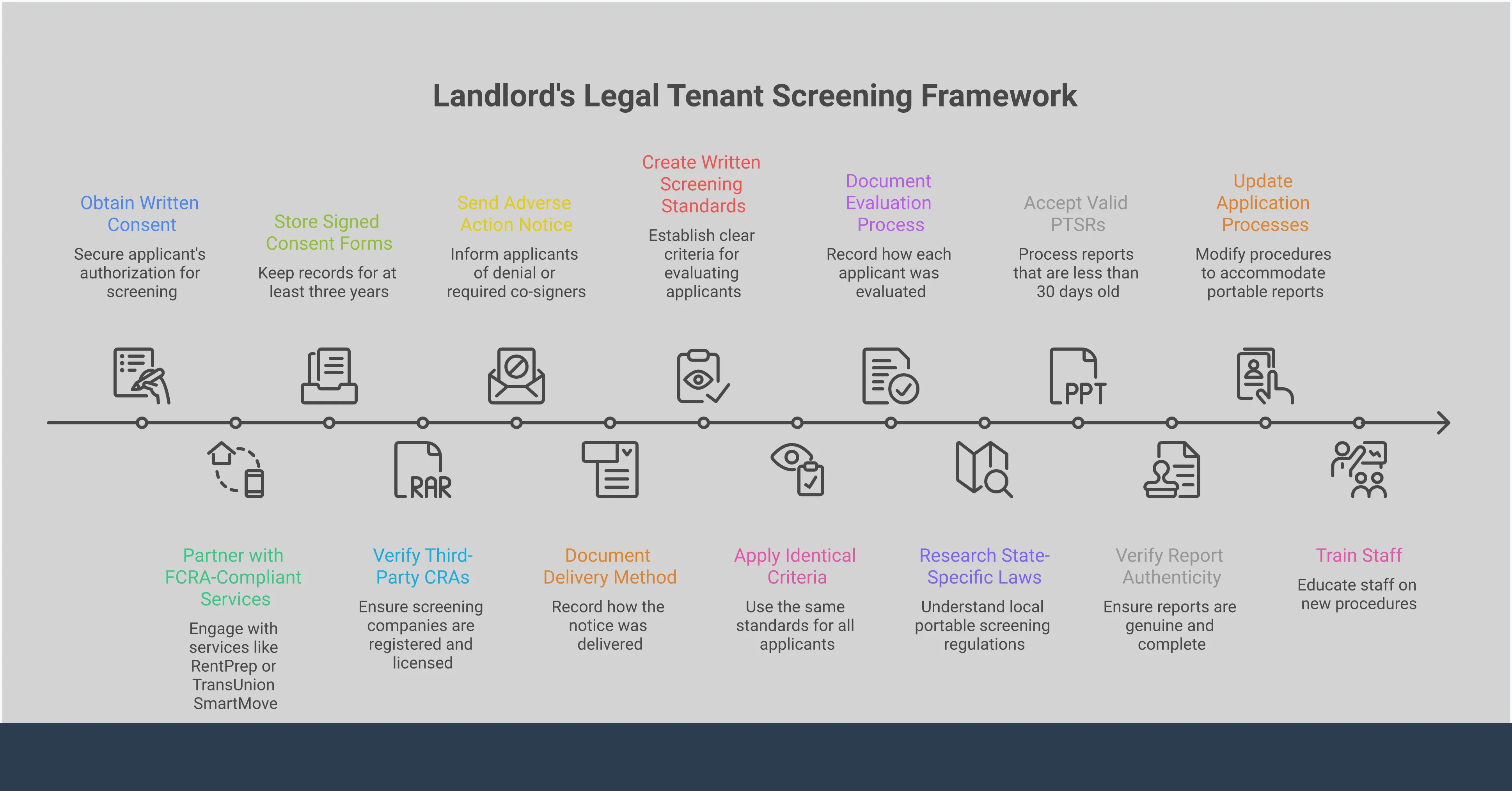
Finding the right tenant is about more than just filling a vacancy; it's about building a fair and respectful landlord-tenant relationship from day one. The key to this is a screening process that is both thorough and equitable. By treating every applicant with the same standards, you not only find qualified renters but also protect yourself from potential discrimination claims. Here’s how to ensure your process is fair for everyone involved.
The federal Fair Housing Act is the cornerstone of non-discriminatory housing practices. It makes it illegal to treat potential tenants differently based on certain characteristics, known as protected classes. These include race, color, religion, national origin, sex (including gender identity and sexual orientation), disability, and familial status (having children). Your decisions to approve or deny an applicant must be based on their financial and rental history, not on any of these personal traits. Many states and cities have their own fair housing laws that add even more protected classes, so it’s essential to know the specific rules in your area. Treating everyone equally isn’t just good practice—it’s the law.
To ensure fairness, create a written list of your rental criteria before you even list your property. This list becomes your objective roadmap for evaluating every application you receive. Your criteria should be directly related to a tenant's ability to pay rent and care for the property. Common examples include a minimum credit score, a specific income-to-rent ratio, and policies on smoking or pets. Once you’ve established your rules, apply them uniformly to every single applicant. No exceptions. This consistency is your best protection against accusations of discrimination. Good tenant screening services provide objective reports on credit history, past evictions, and criminal backgrounds, giving you the data you need to make consistent, fact-based decisions.
Think of your documentation as your proof of a fair and compliant screening process. For every application you receive—whether you accept or deny it—keep detailed records of your evaluation and the final decision. Note exactly how the applicant measured up against your pre-defined screening criteria and the specific, business-related reason for your choice. It’s a good practice to hold onto these records for at least three years. This paper trail demonstrates that you have a consistent process and can be invaluable if your decision is ever questioned. Using a compliant screening service can help you centralize applications and reports, making it easier to maintain organized and defensible records for your business.
Navigating tenant screening laws can feel complicated, but understanding the rules is one of the most important things you can do to protect your rental business. These laws aren't just suggestions; they are firm requirements designed to ensure the application process is fair for everyone. Failing to follow them can lead to serious consequences that go far beyond having to find a new applicant. From hefty fines to damaging lawsuits, the risks of non-compliance are significant. Let’s walk through what can happen if you don't follow the letter of the law.
One of the most immediate consequences of violating screening laws is the financial hit. Depending on the specific violation and your local regulations, you could face substantial fines. For example, some city ordinances impose penalties of up to $1,000 for each violation. If you make the same mistake across multiple applications, those costs can multiply quickly, turning a simple oversight into a major financial burden. These fines are designed to be a strong deterrent, and they can easily eat into your profits. Think of compliance as a critical investment in your business's financial health.
Beyond government-issued fines, landlords who violate screening laws open themselves up to lawsuits from applicants. If a prospective tenant believes you’ve handled their information improperly or denied their application illegally, they have the right to take legal action. This can lead to a long and expensive court battle, and if you lose, you could be ordered to pay damages to the applicant. In cases of serious or repeated violations, the consequences can escalate to criminal charges. While rare, these can include jail time, turning a business mistake into a life-altering event. Following proper landlord-tenant laws is your best defense.
Violating screening laws often goes hand-in-hand with violating fair housing laws. The federal Fair Housing Act prohibits discrimination based on race, color, religion, national origin, sex (including gender identity and sexual orientation), disability, or familial status. If your screening process isn't consistent and objective for every single applicant, you risk a discrimination claim. Even unintentional bias can lead to a complaint filed with the Department of Housing and Urban Development (HUD). These investigations are thorough, and if a violation is found, the penalties can be severe, including fines and mandated training.
The traditional rental application process, where tenants pay a new fee for a background check at every property they apply to, is starting to change. A growing number of states are introducing laws that allow renters to purchase one screening report and reuse it at multiple properties. This shift aims to make renting more affordable and efficient for tenants while streamlining the application process for landlords. If you’re a landlord, understanding these laws is key to staying compliant and adapting your screening process.
Colorado has set a new standard with its law, HB23-1099, which requires landlords to accept a Portable Tenant Screening Report (PTSR) from prospective tenants. These comprehensive reports, which include credit, criminal, and eviction histories, are valid for 30 days from when they are run. This allows a renter to apply to multiple properties using the same report, saving them from paying repeated application fees. For you, this change can lead to a faster application process and attract a wider pool of qualified applicants who aren't held back by high upfront costs. It’s a move toward a more efficient and fair system for everyone involved.
While Colorado was the first to enact such a sweeping law, it’s not the only state heading in this direction. States like Washington, California, Illinois, and Maryland have also introduced legislation related to reusable screening reports. The specific requirements can vary from state to state, but the overall trend is clear: making the rental application process more accessible and less costly for tenants. If you own or manage properties, it's smart to stay informed about these changes. Keeping up with emerging rental legislation will ensure your screening process remains compliant and competitive, no matter where your properties are located.
Portable screening reports might seem like just another regulation, but they offer real advantages for landlords. When tenants can reuse a single report, it removes a significant financial barrier, which can lead to more applications for your vacant units. This streamlined approach also speeds up your decision-making process. Instead of waiting for a new report to be generated for every promising candidate, you receive a comprehensive, pre-prepared file instantly. This efficiency helps you fill vacancies faster, reducing lost income and creating a smoother, more positive experience for both you and your future tenants.
Keeping up with the web of tenant screening laws can feel like a full-time job, but it doesn't have to be overwhelming. Staying compliant is all about creating a solid process and knowing where to turn for reliable information. Think of it as building a strong foundation for your rental business—one that protects you, your investment, and your future tenants. By being proactive, you can screen applicants fairly and confidently, without the constant worry of making a misstep. The key is to establish clear internal policies, partner with the right services, and stay informed about the rules that apply to your specific area. Let's walk through the actionable steps you can take to make sure your screening process is always on the right side of the law.
Consistency is your best friend when it comes to fair housing compliance. The best way to achieve it is by creating a written policy that outlines your screening criteria and applying it uniformly to every single applicant. This document is for your internal use and helps ensure every decision is based on the same objective standards. It’s important to remember that in some areas, you cannot share your specific rental standards before a prospective tenant submits a written application.
Once you have your policies in place, make sure every person on your team understands them inside and out. This includes anyone who answers the phone, gives property tours, or handles applications. Consistent training helps your team avoid discrimination and ensures everyone gives the same, compliant answers to common questions.
You don’t have to be a legal expert to be a great landlord. Partnering with a compliant screening service is one of the smartest ways to streamline your process and reduce your risk. A reliable service will provide comprehensive, accurate reports that cover everything from credit history to nationwide eviction records. More importantly, they handle the complexities of data security and legal compliance for you.
Services like Portable Tenant are built to meet the requirements of the Fair Credit Reporting Act (FCRA), ensuring the information you receive is obtained legally and is as accurate as possible. Using a professional service gives you the detailed insights you need to make an informed decision while providing peace of mind that you’re following the rules.
Tenant screening laws are not one-size-fits-all. While federal laws like the Fair Housing Act set a national standard, your state, county, and even city can have their own specific regulations. For example, some states have very few statewide rules about application fees, but a city within that state might have a strict cap on what you can charge.
It’s crucial to research the specific landlord-tenant laws for the area where your property is located. These local ordinances can cover everything from the questions you can ask on an application to how you must handle criminal history. Taking the time to understand these local rules is a non-negotiable step in building a compliant screening process.
Laws and regulations can change, so it’s wise to have a few go-to resources for staying current. Joining a local landlord or apartment association is a great way to get updates and advice tailored to your area. These groups often provide newsletters, training, and networking opportunities that can help you stay on top of any legal shifts.
You can also bookmark official government websites, like the Department of Housing and Urban Development (HUD) and the Federal Trade Commission (FTC). The FTC, for instance, provides essential documents for landlords, including the mandatory “Notice to Users of Consumer Reports,” which outlines your responsibilities under the FCRA. Regularly checking these sources will help you adapt your policies as needed.
My rental business is small, just one or two properties. Do all these screening laws still apply to me? Yes, they almost certainly do. It's a common myth that federal laws like the Fair Housing Act or the Fair Credit Reporting Act only apply to large property management companies. While there are a few very specific exemptions, most landlords are required to follow these rules regardless of the number of units they own. Treating compliance as a core part of your business from the start is the best way to protect yourself and your investment.
Is denying an applicant because of their credit score considered "adverse action"? Yes, it is. "Adverse action" refers to any decision that isn't an outright approval based on information found in a screening report. This includes denying the application, requiring a co-signer, or charging a higher security deposit. If you take any of these steps, you are legally required to send the applicant an Adverse Action Notice that informs them of their right to see the report and dispute any inaccuracies.
If my state requires me to accept a portable screening report, can I still run my own background check? This depends on the specifics of your state's law. In places like Colorado, the law requires you to accept a valid portable report provided by the applicant and prohibits you from charging them an application fee. The purpose of these laws is to reduce costs for renters, so requiring them to pay for a second report from you would undermine that goal. It's best to familiarize yourself with your local requirements to ensure you're compliant.
What's the most common mistake landlords make when screening tenants? The most common and riskiest mistake is inconsistency. It often happens without any bad intent—perhaps you have a great conversation with an applicant and decide to be a little more lenient on their income requirements, or you get a "good feeling" and skip a step in your process. This opens you up to discrimination claims. The best way to avoid this is to create written screening criteria and apply it identically to every single applicant, no exceptions.
Do I really need written screening criteria if I evaluate everyone the same way in my head? Absolutely. Having your criteria written down before you even start accepting applications is your best defense. It serves as concrete proof that you have an objective, business-related process for evaluating every applicant. If your decision is ever questioned, that document is far more powerful than simply saying you treated everyone fairly. It shifts the focus from a subjective feeling to an objective standard.