
The rental process isn't what it used to be. Renters are tired of paying separate application fees for every property, and new state laws are creating a more streamlined, renter-friendly system. As a landlord, adapting to these changes gives you a competitive edge. Accepting a reusable, portable screening report not only makes your property more attractive to top applicants but also simplifies your workflow. Finding the best tenant screening services today means looking for a partner that understands this modern rental market. You need a service that is secure, compliant with all regulations, and convenient for everyone involved. Let’s explore the options that help you stay ahead of the curve and fill your vacancies with qualified, prepared tenants.
Choosing a tenant screening service feels like a big decision, because it is. This is your first line of defense in protecting your property and securing a steady rental income. The right service gives you a clear, complete picture of your applicants, helping you choose a reliable tenant and start your landlord-tenant relationship on solid ground. But with so many options out there, the key is knowing what separates a basic report from a truly comprehensive one.
A great screening service does more than just pull a credit score. It gathers all the essential pieces of the puzzle, from financial history to public records, and presents them in a way that’s easy to understand. It should also operate securely and keep you on the right side of the law. Let’s break down the three non-negotiable components you should look for in any tenant screening service you consider.
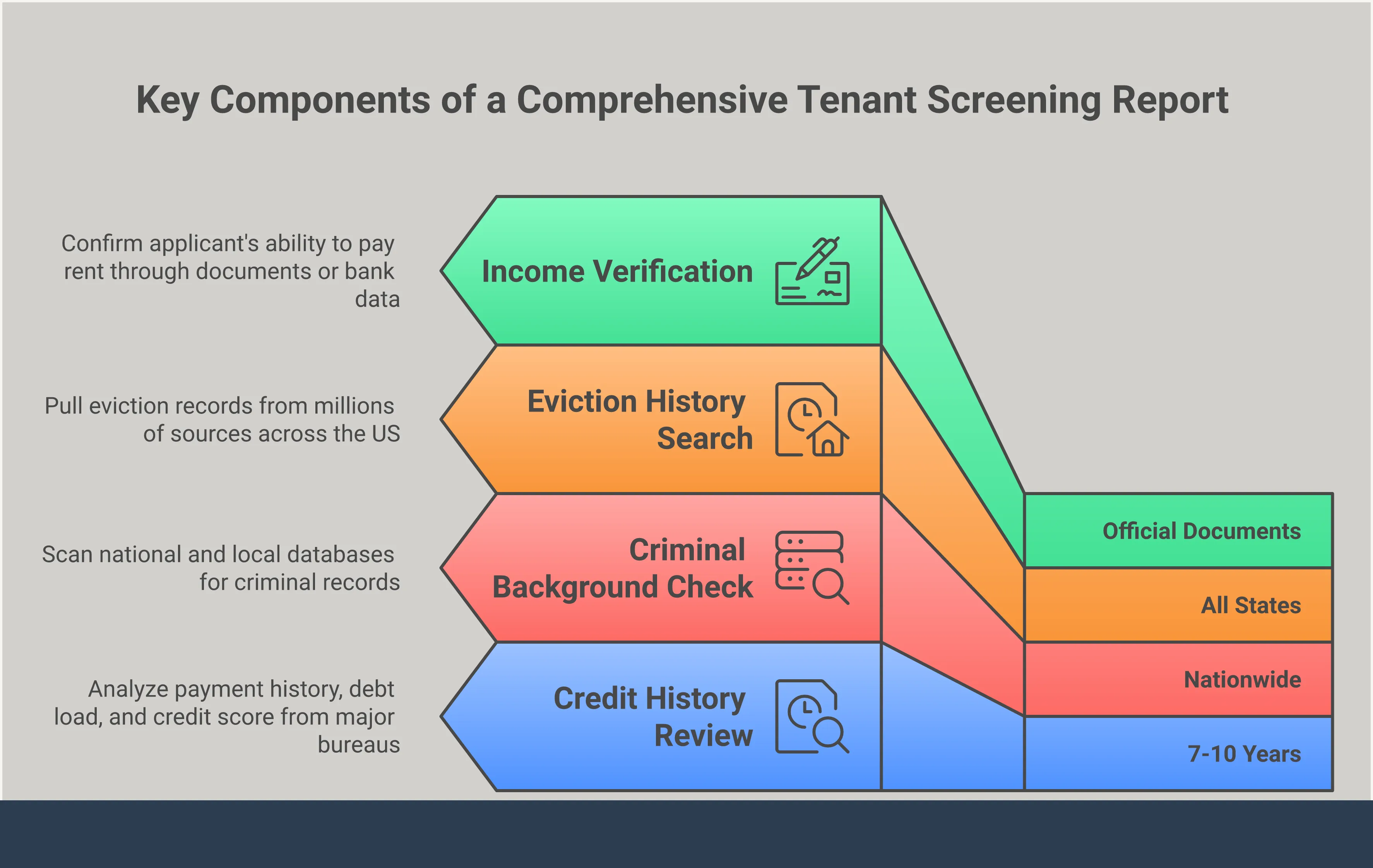
Think of this as the foundation of your screening process. You need a service that provides detailed reports to help you select a responsible tenant for your property. A comprehensive report will include a full credit report from a major bureau like Experian, showing you an applicant's payment history, debt load, and credit score. This gives you insight into their financial habits. Equally important is a nationwide criminal background check. This search should scan national and local databases to give you a clear picture of an applicant's history, helping you ensure the safety of your property and community. A thorough report gives you confidence that you’re making an informed decision, not just a guess.
The two most important questions for any landlord are: "Can the applicant afford the rent?" and "Do they have a history of not paying?" A quality screening service answers both. Look for a service that offers income verification. This feature confirms an applicant's stated income by analyzing official documents or bank data, ensuring they have the financial stability to consistently cover rent. You also need a service that checks for past eviction records. A reliable provider will search millions of records across all states to uncover an applicant's eviction history, which is one of the strongest predictors of a future eviction. These two checks are your best tools for protecting your cash flow.
This is where many landlords can get into trouble without realizing it. Any screening service you use must be compliant with the Fair Credit Reporting Act (FCRA). Using a non-compliant service for tenant screening can open you up to serious legal and financial penalties. A professional service will ensure its reports and processes meet all federal, state, and local regulations. Furthermore, data security is critical. The service should use bank-level security to protect both your information and the applicant's sensitive data. Choosing a service with strong FCRA compliance and security shows applicants that you are a professional and trustworthy landlord.
Finding the right tenant screening service can feel like a job in itself. You need a partner that delivers accurate, comprehensive reports without creating a ton of extra work for you or your applicants. The best services are fast, secure, and compliant with all fair housing laws. After looking at dozens of options, we’ve narrowed it down to four top contenders that stand out for their reliability, features, and overall value. Each one offers a slightly different approach, so you can find the perfect fit for your properties and your process.
Portable Tenant is changing the game by putting renters in control of their own data. Instead of paying for a new report with every application, renters can purchase one comprehensive, Experian-powered screening report and share it with multiple landlords. This model is a huge win for everyone. You get a complete picture of your applicant, including credit history, nationwide criminal and eviction reports, and verified income, all while staying compliant with new portable screening laws. Because applicants pay for and control their report, you attract serious candidates who are invested in the process. It saves time, reduces application fees for renters, and gives you the verified information you need to make a confident decision.
If you’re looking for data backed by a major credit bureau, TransUnion SmartMove is a solid choice. Because the reports come directly from TransUnion, you can trust you’re getting information from a reliable source with millions of records. One of its standout features is the ResidentScore®, a proprietary score that they claim is 15% better at predicting evictions than a typical credit score. This can give you an extra layer of confidence when evaluating applicants. SmartMove helps you check an applicant's credit, criminal, and eviction history, giving you the essential information to choose a great tenant for your property.
TurboTenant is a popular all-in-one platform for landlords, and its screening service is a big reason why. The platform is generally free for landlords because the applicant pays for the screening report, which typically costs between $45 and $55. This makes it an attractive option if you want to avoid upfront costs. TurboTenant provides detailed reports covering a tenant's credit, criminal history, and past evictions, all sourced through TransUnion. It’s a straightforward solution that integrates well if you’re already using their other property management tools. They also acknowledge that some states allow tenants to reuse their reports, aligning with the modern shift toward more renter-friendly practices.
For landlords who appreciate a human touch, RentPrep offers a unique advantage. While many services are fully automated, RentPrep employs FCRA-certified screeners to help verify information, especially when records are unclear or missing. This hands-on approach can be invaluable for catching details that an algorithm might miss, giving you a more nuanced view of your applicant. They offer a few different packages, so you can choose the level of detail you need. If you’ve ever been frustrated by an incomplete or confusing report, the added layer of human intelligence from RentPrep might be exactly what you’re looking for to ensure accuracy and peace of mind.
Okay, you've seen our top picks. Now, let's put them side-by-side so you can see exactly how they compare. Every landlord's needs are a little different, so what works for a large property management company might not be the best fit for someone renting out their first condo. This quick breakdown focuses on what makes each service stand out.
Portable Tenant is changing the game with its renter-centric model. Instead of you initiating a new report for every applicant, renters purchase their own comprehensive screening report and share it with you securely. This reusable report includes everything you need: credit history from Experian, nationwide criminal and eviction data, and income verification. The best part for renters is the cost savings and control; the best part for you is a streamlined, compliant process that attracts serious applicants. It’s a win-win, especially for landlords in states with portable screening laws.
Coming directly from one of the three major credit bureaus, TransUnion SmartMove offers a high level of trust and data reliability. Its standout feature is the ResidentScore, a credit score designed specifically to predict rental eviction risk more effectively than a standard score. You get a full picture of an applicant's credit, criminal, and eviction history. The process is straightforward: you invite the applicant, and they authorize the report, which is then sent directly to you. It’s a solid, traditional choice for landlords who prioritize deep credit insights.
If you're looking for more than just a screening service, TurboTenant is worth a look. It’s a full-service property management platform that’s free for landlords. You can market your property, receive applications, screen tenants, and even collect rent all in one place. The screening reports, which are paid for by the applicant, are comprehensive and powered by TransUnion. This is a great option for landlords who want an all-in-one tool to manage the entire rental lifecycle without a subscription fee.
RentPrep’s unique selling point is its human touch. While many services are fully automated, RentPrep has FCRA-certified screeners who manually review reports to ensure accuracy and compliance. This can help catch inconsistencies that an algorithm might miss. They offer different packages, so you can choose the level of detail you need, from a basic background check to a more in-depth report that includes judgment and lien searches. If you value that extra layer of human verification, RentPrep provides peace of mind.
Understanding the costs of tenant screening helps you set clear expectations for applicants and manage your own budget. The price can vary quite a bit depending on the service you choose and the depth of the report. Let’s look at who typically pays, the different pricing models you’ll find, and how new options are making the process more affordable for everyone involved.
One of the first questions landlords ask is who foots the bill for the screening report. The short answer is: it depends. Many services give you the flexibility to decide whether you or the applicant will pay. However, it’s very common for the financial responsibility to fall on the prospective tenant. Some services are structured so the tenant pays for the screening report directly, usually costing between $30 and $60. If you plan to have applicants cover the cost, the most important thing you can do is communicate this clearly and upfront. Being transparent about all application fees builds trust and ensures there are no surprises down the line.
Screening services generally fall into two pricing models: pay-per-report or a monthly subscription. If you only manage a few properties and don't have a constant stream of vacancies, a pay-per-report model is straightforward and cost-effective. You simply pay for a report whenever you have a new applicant. On the other hand, if you’re a property manager or a landlord with a larger portfolio, a subscription plan might offer better value. These plans often provide a set number of reports per month or discounted rates for bulk screenings. Services like TransUnion SmartMove offer different packages, allowing you to pick a plan that aligns with how many units you manage.
A growing trend that benefits both landlords and renters is the portable tenant screening report. With this model, a renter pays for one comprehensive report and can reuse it with multiple applications, saving them from paying separate fees for every apartment they like. For you as a landlord, this is a huge plus. It streamlines your process because applicants come to you with their information ready to go. This approach is becoming so popular that some states now have laws supporting it. A portable report empowers renters, reduces their application fatigue, and helps you fill vacancies with serious, prepared candidates faster than ever.
The word "free" is always tempting, especially when you're trying to keep your rental property expenses low. So, when you see an offer for a free tenant screening service, it’s natural to be interested. But before you jump on that offer, it’s important to understand what you might be giving up. Often, these free services come with hidden costs in the form of incomplete or inaccurate information, which can put your investment at risk.
Think of it this way: a comprehensive screening report is your first line of defense against potential rental headaches. Quality reports pull detailed credit histories, nationwide criminal records, and a full eviction history. Accessing verified, up-to-date information from reliable sources costs money, which is why many free services cut corners. They might provide a much more limited snapshot, skip over crucial data points, or fail to verify the information they provide. Making a decision based on faulty data could lead you to place a risky tenant or even unintentionally violate Fair Housing laws.
Ultimately, the small fee for a reliable, comprehensive screening report is an investment in peace of mind. While a free report might save you a few dollars upfront, the potential cost of a bad tenant, from property damage to lengthy eviction proceedings, far outweighs that initial savings. A better approach is to use a compliant screening service that provides a complete picture, ensuring you can make a confident and fair decision. In this case, what you pay for is what you get, and investing in a quality report is one of the smartest moves a landlord can make.
When you’re choosing a tenant, the screening report is your single most important tool. Your entire decision hinges on the information it provides, so accuracy isn’t just a nice-to-have, it’s everything. A reliable report helps you find a responsible renter, while an inaccurate one can lead to costly mistakes and headaches down the road. The challenge is that not all reports are created equal. You need to know what you’re looking at and where the information comes from.
Some services use their own scoring models to give you a clearer picture of risk. For example, TransUnion’s SmartMove uses a proprietary ResidentScore, which they state is 15% more effective at predicting evictions than a typical credit score. Other services, like TurboTenant, focus on providing comprehensive background checks that pull together credit history, criminal records, and past evictions into one detailed file. Ultimately, a trustworthy report is one that is both thorough and transparent about its data sources. Before you can feel confident in your decision, you have to feel confident in the report itself.
A screening report is only as reliable as the data it’s built on. That’s why it’s so important to choose a service that pulls information directly from verified, authoritative sources. For instance, getting reports directly from a major credit bureau like TransUnion ensures you’re receiving credible information from a massive database of credit and criminal records. It cuts out the middleman and reduces the chance of errors.
Some services also use modern technology to add another layer of verification. By using AI to analyze payment behaviors and assess risk, they can offer a more nuanced view of an applicant's financial reliability. At Portable Tenant, we ensure accuracy by having our reports powered by Experian, another one of the three major credit bureaus, so you can be sure you’re getting verified, high-quality data every time.
Beyond accuracy, your screening process must be secure and legally sound. This isn’t an area where you can afford to cut corners. The entire process is governed by federal and local laws, most notably the Fair Credit Reporting Act (FCRA). Using a service that isn’t FCRA-compliant can expose you to serious legal risks. This law also gives applicants specific rights, like the right to know if a report was used against them and the right to dispute any inaccuracies.
Following these rules does more than just protect you legally; it helps you build a fair and transparent process that attracts quality applicants. A thorough, compliant screening process is the first step toward creating a safe and secure community for all your residents. Choosing a service that prioritizes legal compliance ensures you’re making decisions based on fair, accurate information while protecting your business and respecting applicants' rights.
Once you have a screening report in hand, the next step is to interpret the information and make an informed decision. A quality report gives you a complete picture of an applicant, but it’s not just a simple pass or fail test. Reading it correctly means understanding the context behind the data. Your goal is to find a reliable tenant while following all fair housing laws. By focusing on a few key areas, you can assess an applicant’s financial responsibility and rental history with confidence.
A comprehensive screening report is your first line of defense in spotting potential issues. Most reports look back 7 to 10 years for credit history, bankruptcies, and past evictions. Think of this information as a conversation starter, not an automatic rejection. Common red flags include a history of late payments, collections accounts, or a low credit score. While these are important, they don't always tell the whole story. A single medical bill in collections is very different from a pattern of missed rent payments. Use these flags as a reason to ask clarifying questions and get a clearer picture of the applicant's situation.
The most fundamental question is whether the applicant can consistently afford the rent. A screening report should help you verify their income and employment status. Look for proof of stable income that is sufficient to cover rent and other living expenses. A common guideline is that an applicant's gross income should be about three times the monthly rent, but this is just a starting point. A report that includes verified income from pay stubs or bank statements gives you a solid foundation, saving you the time and effort of collecting and confirming these documents yourself. This verification is crucial for confirming that the applicant has the financial stability to meet their lease obligations.
Reviewing an applicant's criminal and eviction history requires a careful and balanced approach. A report might show past convictions or eviction filings, but it's essential to consider the context. When looking at a criminal record, pay attention to the nature of the offense, how long ago it occurred, and whether it could pose a risk to the property or other residents. Similarly, a single eviction filing from years ago might be less concerning than a recent pattern of non-payment. Always be sure you are following local and federal fair housing guidelines, as some jurisdictions have specific rules about how you can use this information in your decision-making process.
Selecting a tenant screening service is one of the most important decisions you'll make as a landlord. The right service protects your investment and saves you time, while the wrong one can open you up to legal risks and costly vacancies. To make a confident choice, it helps to know what pitfalls to look out for. Let's walk through a few common mistakes landlords make and how you can easily sidestep them.
It’s easy to find a background check service online, but not all are created for tenant screening. Using a service that isn't compliant with the Fair Credit Reporting Act (FCRA) for housing decisions is a serious legal misstep. You must use an FCRA-compliant company to screen potential renters. These services are designed to follow federal regulations like the Fair Housing Act, which prevents discrimination based on race, religion, national origin, and other protected classes. Beyond federal rules, you also need to be aware of state and local laws, which can have specific requirements for the screening process.
When you’re managing multiple expenses, a free or low-cost screening service can seem tempting. However, the price often reflects the quality and completeness of the report. The best screening services give you a full picture of an applicant’s financial stability and rental history, not just a surface-level glance. A cheap report might pull from outdated databases or miss critical information, like prior evictions or verified income. Investing in a thorough, accurate report from a reputable source is a small price to pay to avoid the much larger costs associated with a difficult tenancy down the road.
The rental market is changing, and top applicants value convenience and transparency. Many states now have laws allowing renters to use portable tenant screening reports, which means they can purchase one comprehensive report and share it with multiple landlords. Overlooking services that offer this feature can put you at a disadvantage. By accepting a reusable report, you make the application process faster and more affordable for renters, which can attract a wider pool of qualified candidates. It shows you respect their time and money, starting your landlord-tenant relationship on the right foot.
With so many options available, picking the right tenant screening service can feel like a big decision. The best choice for you will depend on your specific needs, the size of your portfolio, and the level of detail you require to feel confident about a prospective tenant. By focusing on a few key areas, you can find a service that protects your investment and simplifies your workflow. Think about what matters most to you: Is it cost, comprehensiveness, or convenience for your applicants? Answering that question is the first step to finding the perfect fit.
The needs of a landlord managing a single-family home are very different from those of a property manager overseeing 50 units. Some services are built for smaller-scale landlords, offering simple, pay-as-you-go models. For example, a platform like TurboTenant is often recommended for landlords with fewer than 50 properties. If you plan to grow your portfolio, look for a solution that can scale with you. You don’t want to switch services every time you add a new property. A flexible platform that works for landlords of all sizes ensures you have a consistent process whether you have one door or one hundred.
Before committing to a service, see what other landlords are saying. Real-world feedback on forums like Reddit or BiggerPockets can give you an unfiltered look at a service's strengths and weaknesses. One user might call a service "the best thing ever" for its thoroughness, while another might point out slow turnaround times. Beyond user reviews, verify the company's reputation for legal compliance. The best screening services provide a full picture of an applicant's financial and rental history while strictly adhering to all Fair Housing laws. A reputable service protects you and ensures a fair process for everyone.
A screening report is only useful if it’s easy to understand and gives you the complete picture. Look for a service that provides a detailed, all-in-one report covering the essentials: a full credit report, nationwide criminal and eviction records, and income verification. A service that just gives you a score without the data behind it leaves you with more questions than answers. You need to see the details to make an informed decision. A clear, well-organized report allows you to quickly assess an applicant's history and trustworthiness. Understanding how it works and what a sample report includes will help you choose a service that delivers the clarity you need.
What's the biggest difference between a basic background check and a comprehensive tenant screening report? A basic background check might only search a limited set of public records, which can leave you with an incomplete or even inaccurate picture of an applicant. A truly comprehensive screening report, however, is a multi-layered tool. It combines a full credit report from a major bureau like Experian, a nationwide criminal and eviction history search, and often includes income verification. This gives you a reliable, well-rounded view of an applicant's financial responsibility and rental history, all while ensuring the process is compliant with federal law.
Why should I consider a service with portable reports, even if my state doesn't mandate them? Accepting portable reports is a smart move that puts you ahead of the curve. When you allow applicants to use a single, reusable report, you attract serious candidates who are invested in the process. It saves them money and application fatigue, which means you get a larger pool of qualified people who are ready to move forward. For you, it streamlines the process, as applicants come to you with their verified information in hand. It signals that you are a modern, considerate landlord, which helps start the relationship on a positive note.
What should I do if an applicant has a low credit score or a red flag on their report? A red flag shouldn't always be an automatic "no." It's important to look at the entire report for context. A low credit score could be due to student loans or a past medical issue, which is very different from a history of unpaid rent. Use the report as a starting point for a conversation, but be sure to apply your rental criteria consistently to all applicants to stay compliant with fair housing laws. The goal is to assess risk fairly, not to find a perfect applicant, because they rarely exist.
Is it better for me or the applicant to pay for the screening? It's very common for the applicant to pay the screening fee, and many services are set up this way. This practice can be beneficial for you, as it tends to filter for applicants who are genuinely interested in your property. The most important thing, regardless of who pays, is transparency. You should clearly communicate all fees and procedures at the very beginning of the application process. No one likes surprises, and being upfront builds trust from day one.
Can I just ask an applicant for a screenshot of their credit score instead of using a screening service? I would strongly advise against this. First, a credit score by itself doesn't give you the detailed information you need, like payment history or public records. Second, and more importantly, using consumer credit information for housing decisions is regulated by the Fair Credit Reporting Act (FCRA). A professional screening service is designed to be FCRA compliant, which protects you from significant legal risk. Using a proper service ensures you get a complete, accurate, and legally sound report.