
The nature of work has changed, and so has the way people earn a living. With more applicants working as freelancers, contractors, or gig workers, the traditional pay stub no longer tells the full story. As a landlord, your screening process needs to evolve to accurately assess these modern income streams. Relying on outdated methods can mean overlooking great tenants or falling for fraudulent documents. Learning how to verify tenant income for landlords in today's economy is essential. This guide will walk you through the best practices for confirming all types of income, ensuring you make confident, informed decisions.
When you're reviewing rental applications, it’s easy to focus on a great credit score or glowing references. But one of the most critical steps in any tenant screening process is verifying an applicant's income. This isn't about being nosy; it's about making sure the rental arrangement is a good fit for both you and your potential tenant. A steady, verifiable income shows that an applicant can comfortably cover the rent each month, which is the foundation of a successful tenancy. It’s a simple check that confirms an applicant’s financial story matches what they’ve shared on their application.
Think of it as setting everyone up for success. For you, it means peace of mind and a stable return on your investment. For the tenant, it means they aren't stretching their budget too thin, which reduces financial stress and the risk of falling behind. Taking the time to properly verify income is a non-negotiable part of modern landlording. It protects your property from the ground up, minimizes financial risks like missed payments or costly evictions, and ensures you’re following fair housing laws. It’s a fundamental part of a thorough and fair screening process that benefits everyone involved.
Your rental property is a major asset, and consistent rent payments are what keep that investment healthy. The monthly rent covers your mortgage, property taxes, insurance, and maintenance costs, all while hopefully generating a profit. Verifying a tenant's income is the most direct way to confirm they have the financial stability to pay rent on time, every time. It moves beyond hope and into fact. By checking that an applicant has a reliable source of income sufficient to cover their obligations, you are actively protecting your investment from the instability that missed payments can cause. It’s a simple, proactive step that secures your cash flow and the long-term viability of your property.
Failing to verify income opens the door to significant financial risks. The most obvious is the loss of rent from a tenant who can't pay. But the costs don't stop there. The eviction process can be expensive and time-consuming, involving legal fees and court dates, all while the unit sits empty and generates no revenue. Tenant turnover is another hidden cost, with expenses for cleaning, repairs, and marketing the property again. Proper income verification helps you avoid these financial pitfalls. It confirms that the information on the application is true and current, helping you weed out fraudulent documents and ensure an applicant can genuinely afford the rent.
Having a clear, consistent process for verifying income is essential for staying compliant with fair housing laws. When you apply the same income standards to every single applicant, you protect yourself from accusations of discrimination. The Fair Housing Act prohibits discrimination based on race, religion, sex, national origin, and other protected classes. Some state and local laws also include source of income as a protected class. Using a standardized checklist and requiring the same documentation from everyone creates a fair and defensible screening process. This not only keeps you on the right side of the law but also builds a reputation as a fair and professional landlord.
Once you have an application in hand, the next step is to confirm the prospective tenant can comfortably afford the rent. The most straightforward way to do this is by reviewing key financial documents. While it might feel like you're prying, you're simply doing your due diligence to protect your investment and ensure a good fit for both you and the applicant. The goal is to get a clear and consistent picture of their financial situation.
Asking for the right documents can make this process smooth and transparent. For most applicants, a few standard forms will tell you everything you need to know. For those with less traditional income sources, like freelancers or gig workers, you may need to look at a different set of paperwork. Let’s walk through the most common and reliable documents you can request to verify a tenant's income.
For applicants with traditional jobs, pay stubs are the gold standard for income verification. They provide a real-time snapshot of what a person earns. I recommend asking for the two most recent pay stubs to confirm their current employment and see their year-to-date income. This helps you verify that their stated income is accurate and consistent. Look for the employer’s name, the applicant's name, the pay period, and both gross and net pay.
What if your applicant just started a new job and doesn’t have pay stubs yet? In that case, an employment verification letter is a great alternative. This official document should be printed on company letterhead and clearly state the applicant's job title, start date, and salary or hourly wage. It’s a reliable way to confirm future income before the first paycheck arrives.
While pay stubs show current income, tax documents give you a look at an applicant's financial history over a longer period. A W-2 form is a great place to start, as it summarizes an employee's total annual earnings and the taxes withheld by their employer. For a more comprehensive view, you can ask for their most recent tax return, typically the IRS Form 1040.
Requesting the last one or two years of tax returns can help you assess income stability, which is especially useful for applicants whose earnings might fluctuate. This historical view shows you that they have a track record of earning a steady income, giving you more confidence in their ability to pay rent consistently over the long term.
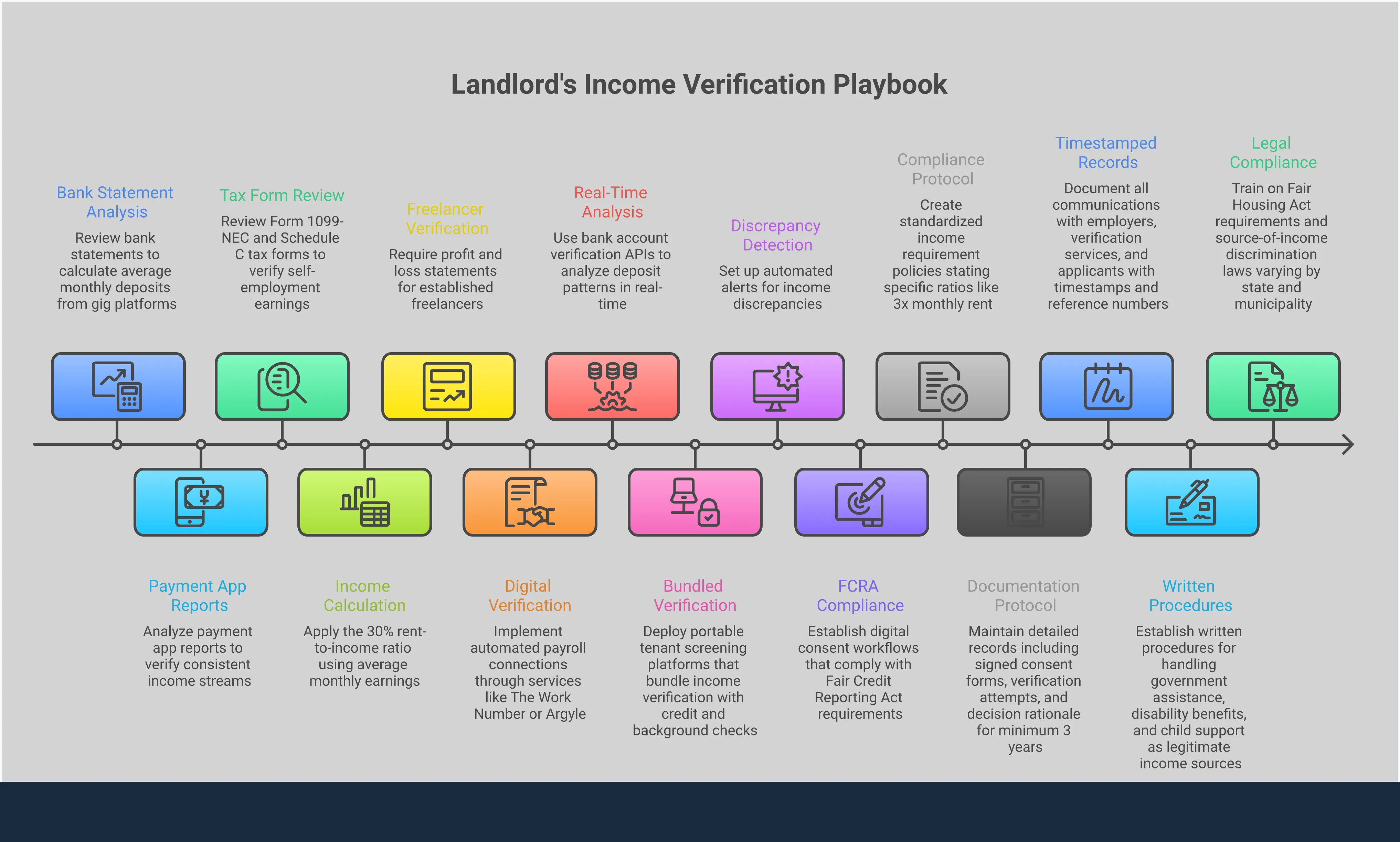
Bank statements offer a direct look at an applicant's cash flow and are particularly useful for verifying income that doesn't come from a traditional employer. Asking for two to three months of statements allows you to see regular deposits that should align with the income they’ve listed on their application. This method is perfect for understanding the financial situation of freelancers, gig workers, or self-employed individuals.
When reviewing bank statements, focus on the pattern of deposits. Are they consistent? Do they add up to the income claimed? You can also get a sense of their financial responsibility, though it's important to respect their privacy. Under the Fair Credit Reporting Act, you must handle this sensitive information securely and have a permissible purpose for requesting it.
Verifying income for self-employed applicants requires a bit more flexibility. Since they don’t have W-2s or traditional pay stubs, you’ll need to rely on other documents to piece together their financial picture. Along with bank statements and tax returns, you can ask for Form 1099-NEC, which details payments they’ve received from clients.
For gig workers, you can also request income reports from payment apps like PayPal or Venmo, or statements from accounting software they use. The key here is to look for consistency. A single great month might not be representative of their typical earnings, so it’s wise to review their income over several months or even the past year to ensure it’s stable enough to reliably cover rent.
Verifying income is one of the most important steps in the screening process, but it’s not always as simple as looking at a document. With so many digital tools available, it's become much easier for applicants to create fake pay stubs or alter bank statements. This means you need to be extra careful when reviewing an applicant's proof of income. Accepting a tenant based on fraudulent information can lead to months of unpaid rent, costly eviction proceedings, and significant stress. Your rental property is a major investment, and protecting it starts with a meticulous screening process.
Learning to spot the small inconsistencies can save you from these headaches and help you find a reliable tenant. It’s about more than just matching numbers; it’s about looking for signs of authenticity. Does the document look professionally generated? Are the calculations correct? Do the details on the pay stub align with what you see on the bank statement? A thorough and compliant screening process is your best defense against rental fraud. By taking the time to carefully examine every document, you set the foundation for a positive and secure landlord-tenant relationship. The following tips will guide you through what to look for in pay stubs, bank statements, and employer details.
Start by giving pay stubs a close look. Fake documents often have subtle giveaways. Check if the numbers seem too perfect, like deductions that are exact round numbers (e.g., $50.00). Real pay stubs usually have cents. Also, verify the math. Do the year-to-date totals correctly reflect the current pay period’s earnings? If an applicant provides multiple stubs, check that the check numbers are sequential. A huge red flag is a document that looks like a generic template you could easily find online. Professional payroll companies have specific, consistent formats, so anything that looks too simple or homemade deserves a second glance.
The details matter. Scrutinize the document for any odd formatting, strange spacing, or numbers that don't line up properly in columns. Are there different fonts or font sizes used in the same document? Simple typos or misspellings of the company name or address are also major warning signs. A blurry company logo can indicate it was copied and pasted from a website. Official documents are generated by software and are typically free of these kinds of errors. Any sloppiness in formatting should prompt you to dig a little deeper and ask for more information.
Bank statements are a great way to cross-reference the information on a pay stub. Ask for two to three months of statements to get a clear picture of the applicant's financial habits. You should see regular direct deposits that match the net pay and pay dates listed on their stubs. Be cautious if you see large, random cash deposits, especially right before the statement date. This could be a sign that money was borrowed to inflate the account balance. A consistently low balance or frequent overdrafts might also suggest that the stated income isn't stable.
Finally, confirm the employer's information. A legitimate pay stub will always include the company's full name, a physical address, and a phone number. If any of this information is missing or seems vague, be wary. For example, a P.O. box instead of a street address is a red flag. Take a minute to do a quick online search for the company. Does it have a professional website? Does the address on the pay stub match the one online? If you can't easily find and verify the employer, it’s a good reason to question the document's authenticity.
While pay stubs and bank statements are the traditional go-to documents, they aren't foolproof. Technology now offers more secure and efficient ways to confirm an applicant's income, giving you greater confidence in your decision-making. These modern methods can help you save time, reduce the risk of fraudulent documents, and get a clearer picture of a prospective tenant's financial stability. By adding these techniques to your screening process, you can create a more robust system for protecting your investment. Let's look at a few of the most effective modern approaches you can start using.
Sometimes, the most straightforward method is to go directly to the source. After getting written consent from your applicant, you can reach out to their employer to confirm their employment details. It’s usually best to contact the Human Resources department, as they are officially responsible for this type of information. You can verify the applicant’s job title, start date, and salary. This direct confirmation can quickly clear up any questions you might have from their application. Just be prepared that some companies have strict policies about releasing employee information, so this method isn't always guaranteed to work.
If you prefer to hand the task off to a specialist, a third-party verification service is an excellent option. Companies like The Work Number are dedicated to verifying employment and income information for credentialed businesses like yours. The process is simple: your applicant provides consent for the service to access their data, and you receive a verified report. This approach adds a layer of impartiality and security, as the information comes from a trusted, neutral source. While these services typically have a fee, many landlords find the cost is well worth the time saved and the added peace of mind.
Automated tools are becoming a popular choice for landlords who want fast and accurate results. These platforms use technology to streamline the entire screening process, including income verification. For example, a Portable Tenant Screening Report integrates income verification directly into a single, comprehensive report that the renter controls. These tools can often connect securely to an applicant's bank account (with their explicit permission) to analyze direct deposits from employers, providing a clear and reliable income history. This automation not only speeds things up but also helps catch inconsistencies that might be missed during a manual review.
For the highest level of accuracy, connecting directly to an applicant's digital payroll system is the new gold standard. With the applicant's consent, services can link to their employer's payroll platform, like ADP or Gusto. This gives you a real-time, verified look at their job status, pay rate, hours worked, and even bonus history. Because this data comes directly from the payroll provider, it’s nearly impossible to alter, making it one of the most trustworthy methods available. As more companies adopt digital payroll, this verification method is becoming increasingly accessible and is a powerful tool for any landlord.
Once you have an applicant’s financial documents, you need a consistent standard to measure them against. Setting clear income requirements from the start helps you make fair, objective decisions that protect your investment and comply with the law. While there’s no single magic number, a few industry standards can guide you in creating a policy that works for your property. These guidelines help ensure your future tenant can comfortably afford their new home without financial strain, which is a win for everyone involved.
A widely accepted guideline among landlords is the "3x monthly rent rule." This simple benchmark suggests that a prospective tenant's gross monthly income should be at least three times the cost of the rent. For example, if your property rents for $1,500 a month, you would look for an applicant earning at least $4,500 per month. This standard is popular because it provides a straightforward way to assess affordability. It helps confirm that tenants will have enough money left over for other essential expenses after paying rent, reducing the likelihood of late or missed payments down the road.
While gross income is a great starting point, it doesn’t tell the whole story. To get a clearer picture of an applicant's financial health, it’s smart to also consider their debt-to-income (DTI) ratio. This figure measures what percentage of a person’s income goes toward their debt payments, including things like car loans, student loans, and credit card bills. A lower DTI is always better. Many landlords look for a DTI of 30% or less (including rent), as it indicates the applicant isn't overextended and can manage their financial obligations responsibly.
It’s important to remember that income standards aren't one-size-fits-all. The 3x rule might be perfectly reasonable in one city but unrealistic in a high-cost-of-living area. Do a little research on your local market to set competitive and fair requirements. Most importantly, you must always remain compliant with fair housing regulations, which prohibit discrimination based on the source of income. This means you must treat income from employment the same as income from sources like disability benefits, child support, or housing vouchers. Applying your standards consistently is key to staying compliant.
The rise of the gig economy means you’re likely to see more applications from freelancers, contractors, and other self-employed individuals. While they might not have traditional pay stubs, verifying their income is straightforward once you know what to look for. The key is to get a clear picture of their earnings over time to ensure they can consistently afford the rent. With the right documents and a consistent process, you can confidently assess these applicants and find great, reliable tenants for your property.
Since self-employed applicants don't have a single employer to verify their salary, you'll need to ask for a different set of documents that paint a complete financial picture. For gig workers, ask for reports from payment apps like PayPal or Venmo, or statements from the accounting software they use to track their earnings. This can show a steady flow of income. You can also request their two most recent tax returns (Form 1040 with a Schedule C), 1099 forms from their clients, and several months of business and personal bank statements. A profit and loss statement is another excellent document that summarizes their business's financial health.
Manually sifting through bank statements and tax forms can be time-consuming and open to error. A better approach is to use secure online tools for income verification to make things easier and safer. Modern verification services can connect directly to an applicant's bank account (with their permission, of course) to instantly confirm their income. This technology checks bank data in real-time, which helps confirm all kinds of income, whether it's from a regular job or gig work. Using a portable tenant screening report that includes this feature saves you time and provides a more accurate, fraud-proof assessment of an applicant's financial situation.
With freelance or gig income, consistency is more important than a single high-earning month. Instead of just one or two pay stubs, it’s better to look at their income over a longer period, like the last six to twelve months. Review their bank statements to see the regularity of deposits and check their savings to see if they have a cushion for slower months. A common guideline is that a tenant's rent should not be more than 30% of their average monthly income. By calculating their average earnings, you can apply this rule fairly and make an informed decision based on their long-term financial stability, while making sure you follow Fair Housing Act guidelines.
Verifying a tenant's income is more than just checking a few pay stubs. It’s a process governed by specific rules designed to protect everyone involved. Staying compliant isn't just good practice; it’s the law. It helps you avoid legal trouble while ensuring you treat every applicant fairly. By following a clear, consistent, and legally sound process, you can protect your investment and build a positive relationship with your tenants from day one. Here are the essential steps to keep your income verification process compliant.
The federal Fair Housing Act is the cornerstone of non-discriminatory housing practices. A key part of this law is the protection against discrimination based on the source of income. This means you cannot reject an applicant simply because their income comes from sources other than a 9-to-5 job. Legitimate income sources can include government assistance, child support, disability payments, or retirement funds. Your focus should be on whether the applicant’s total income is sufficient and stable enough to cover rent, not on where the money comes from. Applying your income criteria uniformly across all applicants, regardless of their income source, is essential for compliance.
Before you contact an applicant’s employer or run any kind of background check, you must get their permission in writing. This is a non-negotiable step for complying with privacy laws like the Fair Credit Reporting Act (FCRA). A signed consent form shows that the applicant has authorized you to verify their information, which protects you legally. This document should clearly state what information you will be verifying and which third parties you might contact. Using a service that builds consent directly into the application process, like a portable tenant screening report, can help streamline this step and ensure you have the proper documentation for every applicant.
Housing laws can change quite a bit from one place to another. While federal laws provide a baseline, your state, county, or city may have additional protections and requirements. For example, states like Colorado and Washington have specific laws regarding portable screening reports and how they can be used. It’s your responsibility to stay informed about local regulations, including any updates to anti-discrimination laws, privacy rules, and what counts as acceptable income documentation. A great first step is to check the website for your state’s housing authority or attorney general. When in doubt, consulting with a local landlord-tenant lawyer is always a smart move.
To ensure fairness and avoid discrimination claims, you need to establish a clear, written policy for tenant screening and apply it consistently to every applicant. This means if your income requirement is three times the monthly rent, you must apply that same standard to everyone, without exception. Your policy should outline your income requirements, what documents you accept, and how you verify information. Documenting your process and decisions is crucial. Having a consistent standard not only helps you find reliable tenants but also serves as your best defense if your screening decision is ever questioned. Regularly review your policy to keep it up-to-date with current laws.
Finding inconsistencies in an applicant's income documents can be unsettling, but it doesn’t have to be a dead end. Instead of immediately denying the application, there are several clear, fair, and legally sound steps you can take to get the clarity you need. Handling these situations professionally protects both you and the applicant.
If a pay stub seems off or you’re just not feeling confident about the information provided, it’s perfectly reasonable to ask for more proof. You can request recent bank statements, a formal job offer letter, or a signed employment contract. The goal is to see if these additional documents support the income claimed on the initial application. If the numbers and details align, it can clear up any confusion. If they don’t match, you have a clear reason to be concerned and can factor that into your decision.
Sometimes an applicant is a great fit in every way, but their income is just shy of your requirements or comes from non-traditional sources that are tricky to verify. In these cases, suggesting a co-signer or guarantor can be a great solution. A co-signer is someone, often a family member, who signs the lease with the tenant and is legally responsible for the rent if the tenant fails to pay. This option provides you with an extra layer of financial security while giving a promising applicant the chance to rent your property.
Your best defense against potential discrimination claims is a consistent and well-documented screening process. Create a written policy that outlines your income requirements and apply it equally to every single applicant. Using a compliant screening service helps ensure every applicant goes through the same verification process, which is key to staying compliant with fair housing laws. When you treat everyone the same, you can make decisions based on objective criteria, which is always the safest and fairest approach for your rental business.
Whether you approve or deny an applicant, keeping meticulous records is non-negotiable. Your files should contain the completed application, screening reports, any documents used for verification, and notes from your communications. If you deny an applicant, be sure to document the specific, business-related reason why. This paper trail is incredibly important. It demonstrates that you have a standardized, fair process and can protect you if your decision is ever questioned. It’s a simple habit that can save you a lot of headaches down the road.
Verifying tenant income doesn't have to be a time-consuming chore. With a repeatable system, you can make the process faster, more accurate, and less stressful. A streamlined approach saves you administrative headaches and helps you treat every applicant fairly, which is key for staying compliant with housing laws. When your process is clear and consistent, you reduce the risk of errors and can make confident rental decisions. Here are three simple steps to get your income verification process running smoothly.
Consistency is your best friend in tenant screening. A standard checklist ensures you don't miss a step and apply the same criteria to every applicant. Having a clear, written policy for income verification helps you comply with privacy and fair housing laws. Your checklist should outline required documents, your income-to-rent ratio, and your verification steps. This simple tool helps you maintain a fair process, reducing the risk of accidental discrimination and giving you a solid framework for making objective decisions.
Manually sifting through paper pay stubs is a thing of the past. Using digital tools to check income is faster, more efficient, and helps prevent fraud. Modern services can connect directly to an applicant's bank or payroll provider to confirm their income in real-time, giving you a clearer picture of their financial stability. This is especially helpful for verifying income from gig work or freelancing. A portable tenant screening report bundles everything you need, including verified income, into one secure package, saving everyone time.
Good record-keeping is non-negotiable. It’s your proof that you followed a fair and legal process if a decision is ever questioned. You should maintain comprehensive files for all applicants, including their application, screening reports, and notes on your rental decision with specific reasons. Using a dedicated platform for landlords makes this much easier, as it automatically keeps a digital paper trail of all applications and screening results. This way, your records are always organized and easy to retrieve, giving you peace of mind.
Is the "3x the monthly rent" rule a legal requirement? No, it's not a law, but rather a widely used industry guideline to quickly assess affordability. It helps ensure a tenant has enough income to cover rent and other living expenses comfortably. While it's a solid starting point, you should also consider your local market conditions and an applicant's overall financial picture. The most important thing is to apply whatever income standard you choose consistently to every single applicant to stay compliant with fair housing laws.
What should I do if an applicant is hesitant to share their bank statements? It's understandable for someone to be concerned about privacy. If an applicant is uncomfortable providing bank statements, you have other options. You can ask for different forms of proof, like their most recent tax returns or 1099 forms if they are self-employed. You can also suggest using a secure, third-party verification service that can confirm their income history by connecting to their bank account with their permission, which often feels more secure for the applicant since you don't see the full details of their spending.
My applicant's income comes from sources like disability benefits or child support. How do I handle that? You must treat all legal sources of income equally. Fair housing laws protect applicants from discrimination based on where their money comes from. Whether it's from a traditional job, government assistance, alimony, or a retirement fund, your job is to verify that the income is consistent and sufficient to meet your requirements. The focus should always be on the amount and stability of the income, not its source.
How can I be sure an employment verification letter is real? A legitimate letter should be on official company letterhead and include a specific contact person in the HR department. The best way to confirm its authenticity is to do a quick online search for the company's main phone number (don't use the one on the letter) and call to verify the applicant's employment status and salary. This extra step provides direct confirmation and helps protect you from fraudulent documents.
How long do I need to keep records for applicants I deny? It's a smart practice to keep all application records, including screening reports and your notes, for at least two to three years. This creates a clear paper trail demonstrating that you have a fair and consistent screening process. If a denied applicant were to ever file a discrimination complaint, these organized records will be your best defense in showing that your decision was based on legitimate, business-related criteria.